


Changing the ending? The issue is not with ‘books’, so to speak, but with stories, where changed endings are only one form of a work, which must exist through history as ‘translations, versions, or adaptations of works’ that involve ‘a conversation with an earlier writer’. Let’s choose, then, as so many have already done, a story where conversations with the original are ‘an encounter … across the span of two-and-a-half millennia’. Part One of an examination of three versions of ‘The Oresteia’ before Simon Stone’s brilliant version: the Psychopolitical Orestes and Sartre.
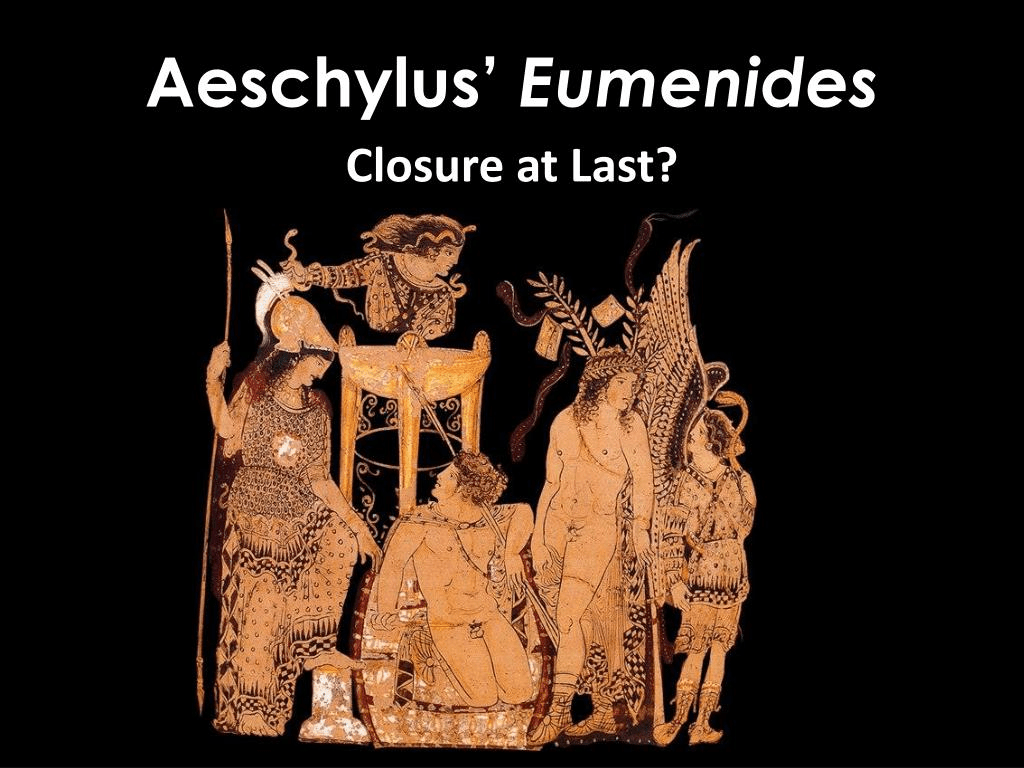
The Oresteia, or the story of Orestes (the last generation we know of the House of Atreus which ruled in Argos, from its palace at Mycenae) is associated with Euripides because a trilogy of plays by Aeschylus still exists of that story, though every Greek dramatist, some unknown to us, would in all probability have had their own version, all (as far as we know, taken from an original story in Homer’s The Odyssey). Here is how his story from Homer is described in Wikipedia’s entry on the mythical son of Agamemnon.
In the Homeric telling of the story, Orestes is a member of the doomed house of Atreus, which is descended from Tantalus and Niobe. He is absent from Mycenae when his father, Agamemnon, returns from the Trojan War with the Trojan princess Cassandra as his concubine and thus not present for Agamemnon’s murder by Aegisthus, the lover of his wife, Clytemnestra. Seven years later Orestes returns from Athens and avenges his father’s death by slaying both Aegisthus and his own mother, Clytemnestra. / In the Odyssey Orestes is held up as a favorable example to Telemachus, whose mother, Penelope, is plagued by suitors.
In Aeschylus, Orestes is more complex and must be punished for his matricide, by female Furies: immortal demi-gods, which a fiunction fitting the name Furies (Erinyes Ancient Greek: Ἐρινύες), seen in action in Bougereau’s hyper-realistic painting below.
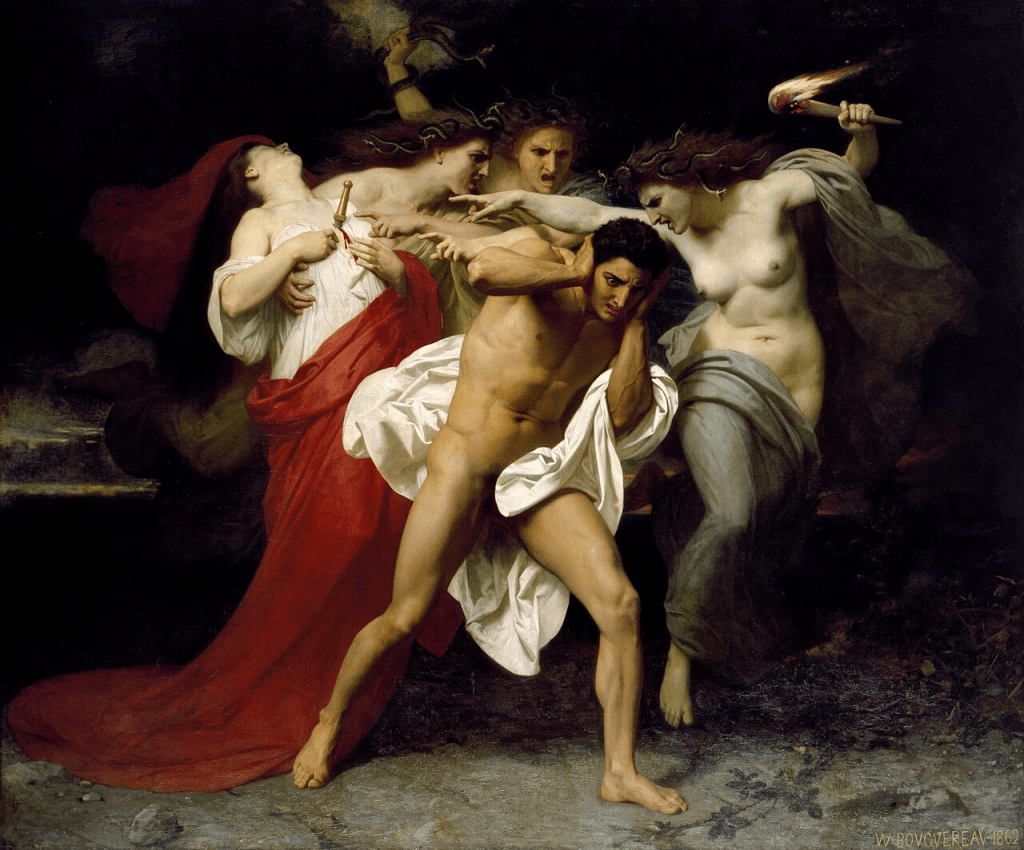
Aeschylus’s trilogy is noted for using the ending of Orestes’ story as a means of propaganda for heightening the significance of the newly emergent form from internal threats in the city-state of Athens of a more confident democratic form of governance. The final play’s ending is based on a resolution in court which is forced quite undemocratically (for a play proud of democracy over the chaotic fate of aristocratic dynasties like the Atreides) upon a vote count split in exact halves. Athena (the presiding Goddess of the State housed in its Parthenon temple) uses her deciding vote to rule against the claims of the Furies who represented Orestes’ mother Clytemnestra, and who pursued and persecuted him in vengeance for her death at his hand.
Athena and Athens together not only accept Orestes as a citizen of their state (in which aristocrats had (ideologically if not in reality) no greater power than other citizens) but also redeem the Furies, housing them in an underground sacred cave where they dedicated themselves to the good of Athens, knowing well (as they did) the passions that underlie powerful families and which threaten the welfare of states those families governed badly. The were given a new name . To be know as the Kindly Ones (Εὐμενίδες, Eumenídes) is quite a turn around for a group associated with naked bestial violence in acts of punishment for transgression. They become part of the mythology of Athenian justice. Edith Hall, in the programme to Simon Stone’s The Oresteia says the political resolution was timely for a play first performed in Athens in 458 BCE where awareness of the ‘threats to democratic and inclusive values‘ was heightened, given that ‘the Athenians had also only just emerged from a brutal civil war within their own city-state, and the struggle between rich and poor, oligarchs and democrats, had by no means been fully resolved‘.
As an ending, a foem of psychosocial closure too, that isn’t in the Homer original (how could be it be: Archaic Athens was a monarchy too at the time) it has been roundly critiqued by feminists. Athena decides for Orestes on the grounds that murdering a mother is a lesser crime than murdering a husband. It is also critiqued by those resistant to an enforced ‘happy ending’ resolved in psychopolitics and its ideologies. Aeschylus’s insistence that even dark feelings like revenge, fury and hatred can be accommodated in democratic politics, if systems of justice are flexible is not one that suited twentieth century expression of a pyschopolitics. By psychopolitics, by the way, I mean the aspect of external politics that is introjected as a variation realised in the intwrnal psychology of the person: this process is that wherein the individual who feels, thinks and acts as if they were independent of the external world builds an inner world that is the mirror of external political order, with ordered hierarchies including highly guarded value systems, and who then considers it the natural order that it merely perceives rather than co-produces from its introspection and projection outwards of what it sees, as if it hadn’tcome from tne outside originally anyway.
This blog illustrates it with the version of the Oresteia, that includes only the material of Aeschylus’s The Libation Bearers, the second play of Orestes trilogy. It addresses the Europe of the mid-twentieth century and the struggle against nascent Fascism. Because of this, it cannot have an ending into which political kindness and resolution could be lauded as in an Eumenides-like ending, but only a new psychopolitics of individual commitment and engagement against occupation by an oppressive regime, and the support for it in populist feeling and all organisations of The Vichy state and the French Catholic church for Fascism. That play is Jean Paul Sartre’s Les Mouches (The Flies). It is a full statement of existential psychopolitics which for Sartre was a form that combined individualist humanism, communism and existentialism. Nothing in that combination would predict the fostering of emergent consensus about direct democracy particularly edpecially in that Athe can democracy combined all class contributions to the Athenian polis that Aeschylus promoted in The Eumenides, and as tne end of The Oresteia story.
The Flies is rather programmatic play in terms of its psychopolitics, though its comedy raises it from being merely a statement by Sartre of his philosophical position, despite some long expositions of key Sartrean concepts. At its first rehearsals in Paris, Sartre met Albert Camus, who traced his debt to Sartre philosophy and its exploration in his 1942 novel. L’Etranger [The Outsider in its first English translation]. Those concepts are those explained simply but well enough in a Philosophy Institute web-page linked here, and named in its contents list. I illustrate points of contact in the play itself to these concepts under each of these headings listed below:
- The starting point: no God, no essence, no moral blueprint
- In The Flies, the gods are a sham – their statue figures more authentic than the embodied actor playing Zeus (Jupiter in the French text). Zeus is a negative figure given the name of the arch-demon, sometimes the second to Satan himself, of Judaeo-Christian mythology Beelzebub, ‘dieu des mouches et de la mort‘ (God of Flies and Death, although modern English translations go for The Lord of Flies and Death, perhaps to make the link to William Golding). Apollo barely gets animated in the final scene in his sanctuary, though the light of day has a heroic role for Orestes as he engages with his own freedom, authenticity and self-defined responsibility. Zeus hates humanity and has no belief in its dignity, seeing its role, as the French Church urged on the Occupied population, an attitude of contrition to the fact that they needed the German army to come to their salvation and enforce their role as penitents to suppliants to higher powers (in state as well as Church). His aim aligns with Aegisthus, or any ruler ready to learn their norms from his moral framework based in the need for obedience, guilt and shame before the State, Church and the dead inherited from the past. The flies released by Zeus are a reminder of the putrid nature of human flesh. In the wonderful Act Two set on the celebration of (really ‘subjection to’) The Day Of the Dead, where the latter return and take vengeance on the living but who are already as abject and forgotten as they – reinforcing an attitude of double abject servility. One Man in the crowd says, for the masses standing there: ‘[falling on his knees] I stink, oh how I stink! I am a mas of rottenness. See how the flies are teeming round me, …‘. To the dead, The High Priest , says: ‘You, the forgotten and forsaken, all you whose hopes were dupes, who creep along the ground darkling like smoke-wraiths, and have nothing left but your great shame – you the dead arise: …’. Sham Gods, kings and Priests pretend they represent the true essence of man – of Fallen flesh rightly swathed in the guilt and deathly decay of its own Fall (the attitude of French Catholicism in Sartre’s view. The role of the Church and State is to force the people to atone for sins – in becoming at-one with God, who represents the moral norms of the past and the powerful in the present who benefit fro others following those norms.
- Radical freedom and the creation of moral values
- If there is no human essence, except for the sham one that rulers and leaders and the traditions of the past impose on us, the moral value has to be created by an act in which individuals take sole responsibility for their actions and the evaluation or judgement of those actions, using no guidance from others. This is what defines Orestes as a creator of his own moral values. Rather than atoning for moral failings by becoming at-one with God, he is at-one in himself, responsible for not only his actions but the creation of the values that support them. Whilst Zeus in Act 3 attempts to make Orestes identify with the thoughts, feelings and actions of ‘a criminal atoning for his crime’ (succeeding in doing this entirely with Electra), Orestes abandons even the law that Zeus uses to define what is transgressed and which for which transgression must be atoned. What Zeus fears is Orestes knowing that he is free to think, feel and act for himself on his own responsibility. The elements of existentialist psychology here are explained in a quotation from Gary Cox in Wikipedia’s entry on The Flies and in the explanation that follows the quotation:
- ‘”The play explores the key existentialist themes of freedom and responsibility through the radical conversion of Philebus the peace loving intellectual into Orestes the warrior. A person may not be prepared for present crises by his past experiences, but it is nonetheless bad faith for him to declare, ‘I was not meant for this’ or ‘This should not be happening to me.’ Orestes resists bad faith and achieves authenticity by rising to the demands of his circumstances and fully realizing his being-in-situation.” ‘
- ‘Sartre’s idea of freedom specifically requires that the being-for-itself be neither a being-for-others nor a being-in-itself. A being-for-others occurs when human beings accept morals thrust onto them by others. A being-in-itself occurs when human beings do not separate themselves from objects of nature’.
- If there is no human essence, except for the sham one that rulers and leaders and the traditions of the past impose on us, the moral value has to be created by an act in which individuals take sole responsibility for their actions and the evaluation or judgement of those actions, using no guidance from others. This is what defines Orestes as a creator of his own moral values. Rather than atoning for moral failings by becoming at-one with God, he is at-one in himself, responsible for not only his actions but the creation of the values that support them. Whilst Zeus in Act 3 attempts to make Orestes identify with the thoughts, feelings and actions of ‘a criminal atoning for his crime’ (succeeding in doing this entirely with Electra), Orestes abandons even the law that Zeus uses to define what is transgressed and which for which transgression must be atoned. What Zeus fears is Orestes knowing that he is free to think, feel and act for himself on his own responsibility. The elements of existentialist psychology here are explained in a quotation from Gary Cox in Wikipedia’s entry on The Flies and in the explanation that follows the quotation:
- Three existential emotions: anguish, abandonment, and despair
- Accepting that you are free, means accepting you alone are responsible for your actions and must live with them. This is a lonely position, living in a universe as described by Nietzsche, where God is dead, and there is no guidance, assurance nor comfort about the correct moral choice to take. This is the very thing that takes Electra into bad faith and back to Zeus. the existentialist must feel both angst (anxiety up to the point of anguish), abandoned by a world that seemed to offer security for making your own choices, and human despair – in that sense Orestes must always be pursued by the Furies, and they cannot become Kindly Ones – hence the change in ending and meaning of this existentialist Oresteia, in which the political killer (like those in the French resistance) must take responsibility for things they do without recourse to seeing them framed as ‘sin’ by the Church, or ‘crimes’ by the Church.
- Bad faith: fleeing from freedom
- Since as I said above ‘moral value has to be created by an act in which individuals take sole responsibility for their actions and the evaluation or judgement of those actions, using no guidance from others’, those who refuse to take that step act in ‘mauvais foi (bad faith)’. Since, this is a step Electra is unable to take she represents the worst oinstance of ‘bad faith’ in the play, saying to zeus: ‘I will obey your law, I will be your creature and your slave, I will ebrace your knees. Do not leave me lonely, and I will give up my whole life to atonement’.
- Authenticity and the freedom of others
- The puruit of an ending to one’s Oresteia means pursuit of an illusion. The worst illusion is that one created by Arschylus, where the Furies, who drive your search, resolve i to Kindly Ones who collude in bolstering up the ideal state of governance of spirit, body and humanity in the model of fifth century BCE Athens and the Attic state. Sartre’s Orestes does not refuse to.give into and follow Zeus, giving up his freedom, in order to end up giving in to Apollo, or Athens. Authentic endings are necessarily open endings where nothing is finally resolved but keeps on being, coming to a never achieved emergence, that is never reached in real time and which an individual’s death cannot end either. In The Flies, The authenticity of anyone’s freedom is proven in the anxious need to share that freedom with others, and this is why Orestes seeks to.liberate Argos, and on finding that population to craven to work with others who seek it. Hence both Sartre’s commitment French Communism and to the liberation of Algeria, in the latter case a commitment already made by Camus
The play is programmatic apart from its need to.illustrate existentialist psychopolitics, in that most agree that it contained a concealed allegory of the Occupation period in which Clyemnestra plays the role of the Vichy Government who had invited in the Nazi occupiers, in this play Aegisthus, in to rule France oppressively. It is Aegisthus’s murder, rather than Clytemnestra’s, that is more central in Sartre’s version where political murder and political resistance is more the issue than matricide in Aeschylus. That the allegory is concealed was a necessity., under the oppressive regime imposed by German Fascism in action in France, and in a ‘softer’ way, but just as ruthless by tje collusive French Vichy government
Wikipedia’s entry on The Flies quotes an authoritative assessment of the first production in Paris during the German Nazi occupation by Sartre’s partner, Simone de Beauvoir:
The Flies was first produced in Paris on 3 June 1943.The production ran at the Théâtre de la Cité. Sartre had to get German censors to approve the play, because Paris was occupied by the German army…. Simone de Beauvoir’s assessment of the play’s effectiveness and reception was as follows: “It was impossible to mistake the play’s implications; the word Liberty, dropped from Orestes’ mouth, burst on us like a bomb. The German critic of Pariser Zeitung saw this very clearly, and said so, though at the same time taking the credit for giving the play a favorable notice. Michel Leiris praised The Flies in a clandestine edition of Les Lettres francaises, and emphasized its political significance. Most reviewers pretended not to have noticed any such allusion; they pitched into the play viciously, but, so they alleged, on purely literary grounds . . . “
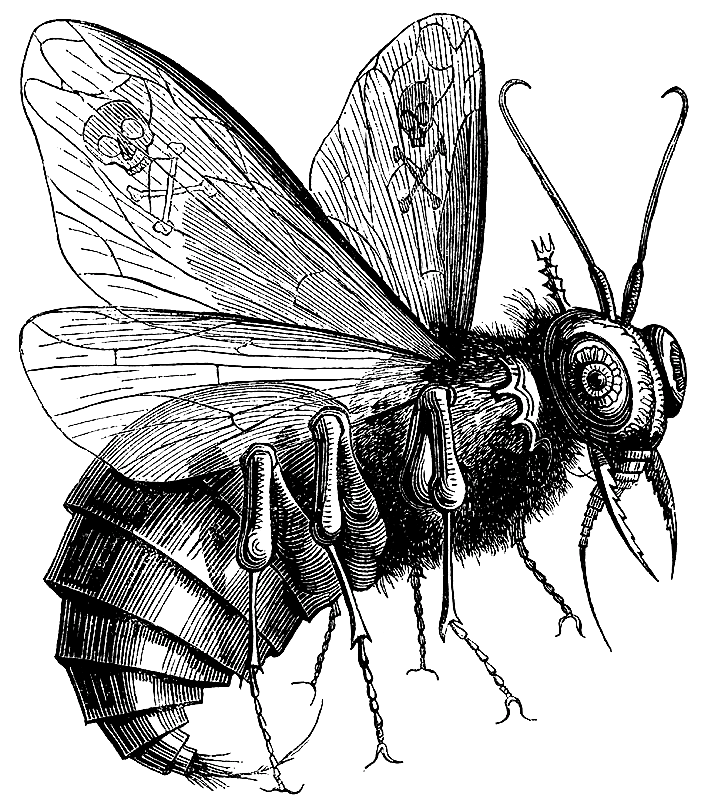
Central to the play is its picture of how abject humanity can be made to seem, and then actually made to feel ‘to be’, which is why Zeus’s Furies are actually as much the common houseflies, though as big as bees, he send to torment the Argive people in service of oppressive states who promote oppressive religions, that of Zeus in fact, as opium for the masses. In Act Two, Scene One, Orestes’ tutor observes of them to his learner, Orestes, not with any empathy at all, where poverty, sickness, depression and anxiety because of physical; want are seen as aesthetic faults. Indeed he feels he is superior to them because of his look in being paid to serve a prince – and keep him out of the way of his royal family:
What an ugly lot! Observe, young master, their sallow cheeks and sunken eye. These folk are perishing of fear. What better example could we have of the effects of superstition? just look at them! And if you need another proof of the soundness of my teaching, look on me and my rosy cheeks.
Electra’s revolution in Act Two, by dressing in white on The Day of the Dead and dancing is likewise self-serving. She can say she is redefining what is ‘sacrilegious’ or ‘impious’ in English translations, but it is a shallow freedom to merely invert the values of oppression to ones of affordable joy and, I hate to say it, being ‘gay’, a term justified from the French text:
Est-ce un sacrilège que d’être gaie? Pourquoi ne sont-ils pas gais, eux ? Qui les en empêche?
If only it were possible to be ‘happy’ and ‘positive’ in a world haunted by oppressive power of the few, and the poverty and ignorance they employ to rule as they do. It is a far cry from the ‘despair’ felt by those truly free. There is no ending to the play except Orestes accepting that if people refuse liberation, he must take with him their oppression, their flies, taking them elsewhere, like the Pied Piper took all the rats away: the story he tells at the end of the play, which ought to encourage us to read Browning’s poem more deeply than we have. The point is there is no closure to this Oresteia at all – the Furies still lust for blood, the flies for human sweat, though even one man becomes identified as their true enemy – the free man they pursue, who remains free even as he goes on running: ‘But what matter? i am free. Beyond anguish, beyond remorse. Free. And at one with myself’.
Though I have resisted using the French text of the play, the terseness of the written style is I think, superior to the English translation I mainly use (even though I know the French text will not support the way I use the English word ‘atone’ if I used the word expier from the French text. However, I thought I would therefore try other kinds of possible superiority in the original by reading a conversation between Zeus, named in the Roman fashion by Sartre in his text, perhaps to distance the play from its Greek setting and the psychopolitics of democratic Attica, and at the same time dare comparison to modern politics and religion, including the Judaeo-Christianisation of ideas of the Creation and Governance by One God not many, who even subsumes his double, Beelzebub, lord of the flies and death. For this God, the sickness or disease (le mal) afflicting Orestes is his embrace of freedom rather than bondage to the established and oppressive state, church, and religion.
JUPITER
Le mal n’est pas si profond : il date d’hier. Reviens parmi nous. Reviens : vois comme tu es seul, ta sœur même t’abandonne. Tu es pâle, et l’angoisse dilate tes yeux. Espères-tu vivre ? Te voilà rongé par un mal inhumain, étranger à ma nature, étranger à toi-même. Reviens : je suis l’oubli, je suis le repos.
ORESTE
Étranger à moi-même, je sais. Hors nature, contre nature, sans excuse, sans autre recours qu’en moi. Mais je ne reviendrai pas sous ta loi je suis condamné à n’avoir d’autre loi que la mienne. Je ne reviendrai pas à ta nature : mille chemins y sont tracés qui conduisent vers toi, mais je ne peux suivre que mon chemin. Car je suis un homme, lupiter, et chaque homme doit inventer son chemin. La nature a horreur de l’homme, et toi, toi, souverain des Dieux toi aussi tu as les hommes en horreur.
The concepts of existential loneliness and abandonment, by an incestuous loved sister as well as elder family., are establish in simple and basic French words. The concept of being estranged, like that in Camus’s novel, emerges through the rich meanings and feelings of the noun,’Étranger’, used as a descriptor. Rhetorically, dramatically, and in terms of a prose poetry of repetition and rhythm the French seems to me much richer
In the second and Third Parts of this blog, I will the Psychological ‘Familialisation’ of The Oresteia in Eugene O’Neill’s Mourning Becomes Electra, and the ‘Womanisation’ of it in Zinnie Harris’ This Restless House. My final objective is to read, when it is out, Simon Stone’s text. I may need to return to Sartre with these too, and perhaps Aeschylus.
Bye for now with love
Steven xxxxxxxxxxxx


2 thoughts on “Changing the ending? The issue is not with ‘books’, so to speak, but with stories, where changed endings are only one form of a work, which must exist through history as ‘translations, versions, or adaptations of works’ that involve ‘a conversation with an earlier writer’. Let’s choose, then, as so many have already done, a story where conversations with the original are ‘an encounter … across the span of two-and-a-half millennia’. Part One of an examination of three versions of ‘The Oresteia’ before Simon Stone’s brilliant version: the Psychopolitical Orestes and Sartre.”