


Regardless of the fact that ‘reason’ may mean different things to different people, the point is to wonder whether it is a process we apply to ‘all things’, or just those things to which reason is pre-determined to apply. Richard Hooker, for instance, in defence of the English church and state status quo post reformation says: “They that seek a reason of all things, do utterly overthrow reason”.
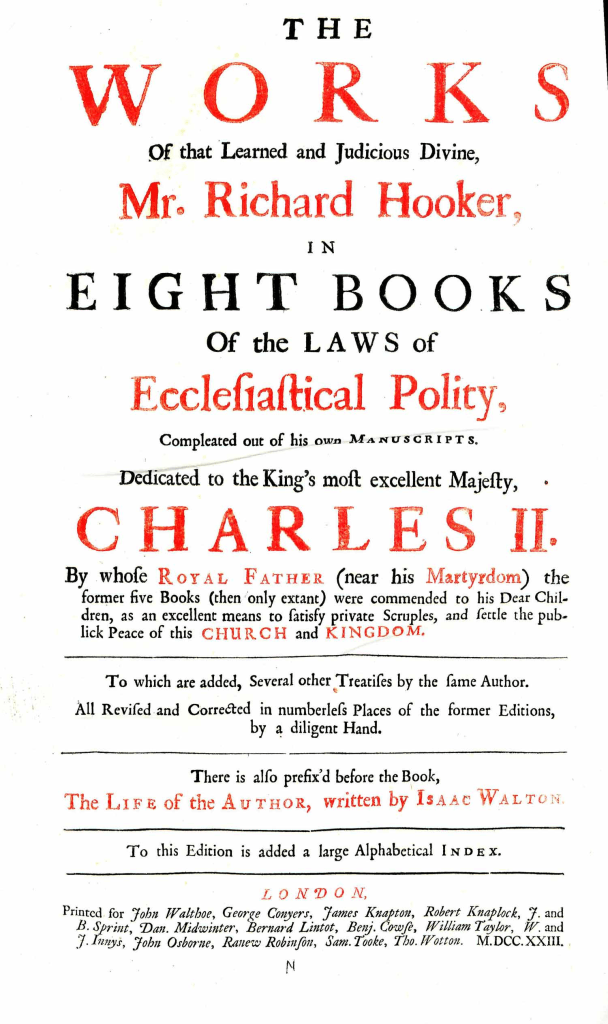
I should apologise for hi-jacking this question: on first sight it poses an answer to a problem more often asserted in folk psychology than in anything approaching philosophy, in any branch of the latter. Usually, I hear it said by people who want to come to terms with events that had not foreseen nor wanted but which have happened anyway (such as failing to gain a promotion at work we felt well qualified for and better so than other candidates). We sit back and say – “well, it has happened. There must be reason for it so I will seek that reason, since everything happens for a reason“. But that too can mean different things, and that has to do with varying applications of the word, some of which can be encountered in the Online Etymological Dictionary account of it, from which (it will be obvious) I take the title quotation from Richard Hooker.
reason (n.): c. 1200, resoun, “the intellectual faculty that adopts actions to ends,” also “statement in an argument, statement of explanation or justification,” from Anglo-French resoun, Old French raison “course; matter; subject; language, speech; thought, opinion,” from Latin rationem (nominative ratio) “reckoning, understanding, motive, cause,” from ratus, past participle of reri “to reckon, think” (from PIE root *re- “to reason, count”).
The meaning “sanity; degree of intelligence that distinguishes men from brutes” is recorded from late 13c.; that of “that which recommends itself to enlightened intelligence, a reasonable view of a matter” is from c. 1300.
The sense of “grounds for action, motive, cause of an event” is from c. 1300. The Middle English sense of “meaning, signification” (early 14c.) is preserved in the phrase rhyme or reason. For stands to reason see stand (v.). A reason of state (1610s) is a purely political grounds for action.
The Enlightenment gave reason its focused sense of “intelligence considered as having universal validity … so that it is not something that belongs to any person, but is something partaken of, a sort of light in which every mind must perceive” [Century Dictionary]. Reason itself has long been personified, typically as a woman. Age of Reason “the European Enlightenment” is by 1794 as the title of Tom Paine’s book.
“They that seek a reason of all things, do utterly overthrow reason.” [Hooker, translating Theophrastus (‘Metaphysics’), in “Ecclesiastical Polity,” 1594]
Reason is never a root, neither of act nor desire. [Robinson Jeffers, “Meditation on Saviors”]
Hooker was the sixteenth-century apologist for Reformed English Church and State law and politics as it was under Charles I. His books (The Laws of Ecclesiastical Polity) were used ro support the restored Church and State under Charles II (in memory – as you will see above of the martyrdom of the second Stuart monarch of the United Kingdoms of Scotland and England). It justified the right to the use of private acts of reason by philosophical individuals (in so far as it left the established law alone, other than in established and safe processes of changing it) in the community. while binding the rest of us to the established national Church and State and their respective statements of law:
The axiom I quote I my title is in line with Hooker’s thinking generally I believe, though I am not even a novice, let alone expert, in ecclesiastical polity and its philosophical and theological underpinnings.However, Robert K. Faulkner probably was such n expert. For Hooker all moral decisions could not rely on man’s reason alone, and reason could be evoked by what it is reasonable (or as it seems to me, what is pre-established) as the result of both a different kind of reason – the latter that dictates that this must be so because it was God demands, as established by revelation and the solifification of that revelation into the laws of Church and State. Here is how Faulkner expresses that, ginning with the words at the end of the first visible line: “Speculation of Truth” (by all means disagree with my interpretation and let me know if you wish to): [1]
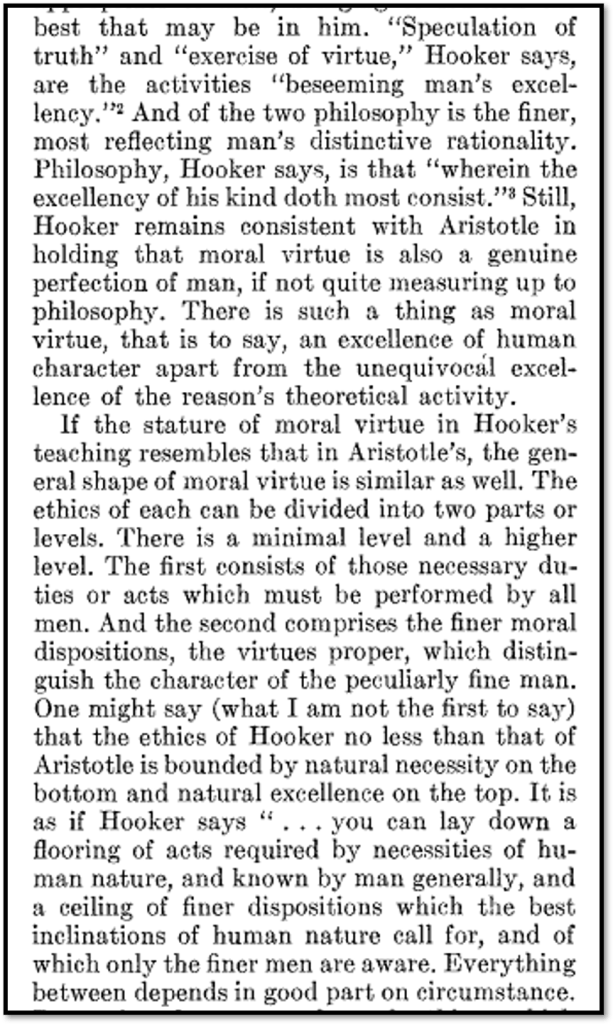
In effect, I interpret this as telling us precisely why ‘reason’ on its own is not applicable to ‘all things‘ and that to pretend otherwise, in Hooker’s estimation, is to refute what reason tells us ro be that part of revealed truth (or ‘natural necessity’) that applies to all things for all people (and not just men – that pesky sexist generic – that is in the quotation ). It is clear however that ‘reason’ will mean different things in its two uses in this axiom from Hooker in my title. I. The first , it is that superior exercise of thinking that only finest of ‘men’ can exercise, understand and value but that is not in any way contradictory to established access to the reason that supports the divine and secular order of things.
Aa its etymology, cited above, suggests, the word reason has two broad senses even in order use. First, a reason can be the stated root cause of an event or phenomenon, as in this sentence (merely mine): ‘evolution is the sole reason that humans developed an advanced consciousness ‘. Second, it is the name of tne mental faculty which both reasons and, by that process finds reasons, in our first sense and others, that explain phenomena. There is help on this, or obfuscation if that is how you find it, in another essay by Faulkner, wherein he says in relation to how God imprints in ‘man’, the knowledge they need:
Hooker speaks of the imprinting of knowledge in two senses, neither of which implies any grasp by a practical intellect of nature’s precepts. Usually, imprinting refers to the inquiry by which reason obtains knowledge. “The soul of man being therefore at the first as a book, wherein nothing is and yet all things may be imprinted; we are to search by what steps and degrees it riseth unto perfection of knowledge.” The term also indicates God’s impression upon man of the natural faculties, reason especially. Only the faculty of reason is the “infallible knowledge imprinted in the minds of all the children of men, whereby both general principles for directing of human actions are comprehended and conclusions derived from them.” The Law of Reason is imprinted only as reason, by whose discourse the law’s precepts may be discovered. Perhaps Hooker’s distrust of anything like the reformers’ internal light made him avoid synderesis [2, 3].
Whether Faulkner aids you at all, or shows I have misunderstood the thesis proposed here, one thing is clear: that is, that you annot answer this question without knowing what the terms I embolden in it below refers to:
Do you think everything happens for a reason?
The prompt repeated
We can rule out that the term ‘a reason’ refers to the name of the mental capacity of reasoning, because the use of the indefinite article ‘a’ proposes that there may be many reasons that you think ‘everything happens’ you wish to select only one, even if it is unnamed. But not every ambiguity is resolved in this manner. Is the reason thye question proposes the same reason that explains everything that happens, or is the reason for each thing that happens different even thought there is always one singular reason for each thing happening. In each case ‘a reason’ refers to ‘ the stated root cause of an event or phenomenon, as in this sentence (merely mine): ‘evolution is the sole reason that humans developed an advanced consciousness ‘. Yet is does not tell us if everything that happens is motivated by the same singular root cause, in the way God was conceived by Aquinas as the Primum Mobile or ‘prime mover’, nor rule that possibility out in favour of the alternative stated above. The idea of the Primum Mobile is defined by Britannica on its web-page thus:
In philosophy, a “prime mover” is the ultimate source of all motion and change. This concept, notably explored by Aristotle, posits an unmoved being that initiates all movement without itself being moved. This idea is foundational to many arguments for the existence of God, suggesting that finite processes require an uncaused cause or an ultimate ground of being. While the term can also refer to an initial source of mechanical power, its philosophical significance lies in its role as the first cause in a chain of motion and existence
In the case where each thing is conceived to have a motivating reason, some things may share the same reason but not all and every thing. Thus the reason I failed to get the job may be because it would have limited my future development in ways I am not at present aware. Another reason may be that I overestimated my abilities at a main requisite task for the job and the interviewing team noticed that. Now, these are not, in the particular example, exclusive of each other as explanations of a real case – they are only so because we are looking in the prompt for ‘a reason’ not more than one reason. But this illustrates that another ambiguity in the idea of the term. If we learn later that the job would have limited us or our development, the reason is a reason we have no access to until that awareness of its limitations of what we are capable becomes clear in the future. It is a reason that only has existence as a specific and stateable thing over future time. This does not apply to our over-estimation of our past and present abilities – they were not sufficient even if we did not recognise them as such and a sufficient reason fully specific and stateable, indeed the interviewing team may state them to us if we ask for feedback and address how we might remedy the pre-existing deficiency.
But Hooker’s axiom is helpful to me in ways that address this very problem:
They that seek a reason of all things, do utterly overthrow reason
Hooker
It is helpful because it insists on the idea that reason as a faculty exercised by any one person does not have access to all the possible reasons a thing happens as it does (knowledge can never be, I think we should insist, only ever partial not fully comprehensive) and or is command of every process of reasoning required to address every question – physical or metaphysical though that event may be (our mental powers that is can only ever be partial to the nature of many problems, not to mention ‘every’ problem, either. This is perhaps because some problems are out of our experience, knowledge or capacity, though there may be other reasons or limitations on knowledge and capacity in reasoning on them.
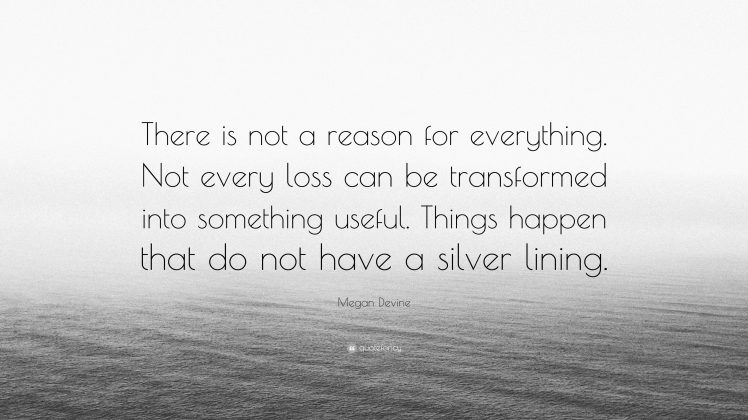
Now if there a generalised or abstracted idea of ‘reason’, such as the phrase implies that is so beloved in describing the period know as The Enlightenment in the late eighteenth century (The Age of Reason), then that reason must comprehend the fact that the human faculty of ‘reason’ is limited, and if not so, actually incomprehensible, as divines began to say God was incomprehensible to human consciousness (indeed Plato says something similar of the Ideal mental Forms that are the metaphysical overdrive of ‘reality’). The world such as it is surely can be explained in ways not available to us. That idea is a product of Reason and if we overthrow it, perhaps we overthrow the very idea of Reason, as a superior faculty that can be partially learned by partial beings, if not by an omniscient one. Hence just because we seek ‘a reason’ for everything happening to us, it does not mean that we will find one, nor that there is one other than the product of contingent random forces, however marvellous the results, as in evolution. Even in evolution, our reasoning about its processes from fossil evidence, cannot know that it comprehends the reason or a reason for any process, and rules out others for which the evidence available gives us a window to see them. That fossil evidence continues to gow does not mean it will grow to comprehend everything – for of some losses there is no reason. As one grief counsellor (Megan Devine) states:
Bye for now & with love
Steven xxxxxxxxxxxxx
__________________
[1] My photograph of Robert K. Faulkner (1965) ‘Reason and Revelation in Hooker’s Ethics’ in The American Political Science Review (Vol. 59, No. 3 (Sep., 1965), pp. 680-690 (11 pages) Published By: American Political Science Association, https://doi.org/10.2307/1953178. Available at: https://www.jstor.org/stable/1953178
[2] Faulkner traces the term ‘synderesis’ to St. Thomas Aquinas,thus; ‘Thomas’s views about the place of speculative reason in moral reflection are subtle and difficult to plumb. His obvious teaching holds, nevertheless, that practical reason is self-sufficient, without need of speculative inquiry. It is guided by naturally known principles of practical conduct, from which other precepts of the natural law may be deduced. These basic principles are grasped by a natural faculty of practical principles, synderesis, which corresponds to the speculative intellect that grasps the natures or ideas of things. Conscience is the application to specific instances of the practical principles grasped by synderesis. Simply put, Thomas holds that a natural conscience imposes basic principles of conduct upon man’s reason’. Note that for Hooker, this faculty seemed to evoke the concept of inmer light argued by radical Protestantism
[3] SOURCE: Faulkner, Robert K. “Knowing What is Good: Rational Deduction and Rational Will.” In Richard Hooker and the Politics of a Christian England, pp. 83-96. Berkeley: University of California Press, 1981. Available in extract: https://www.enotes.com/topics/richard-hooker/criticism/criticism/robert-k-faulkner-essay-date-1981
 Steve_Bamlett_blog