


Cassandra’s Song as ‘Wif of purchase’.
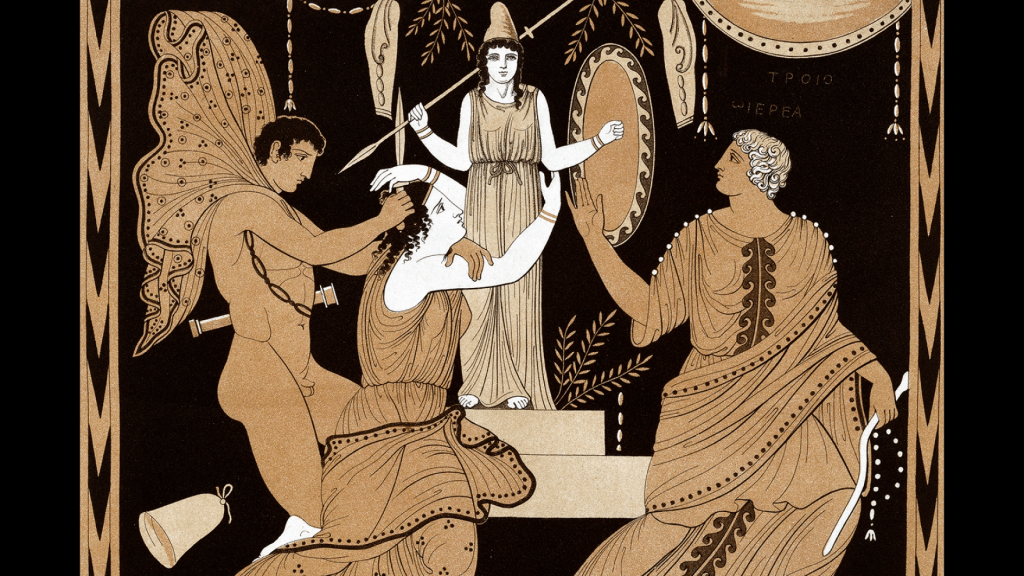
Let’s think about what the Online Etymology Dictionary has to say about the noun ‘purchase’ before we turn to play with the ideas in second hand Browningesque verse, in the voice of a thing of Agamemnon’s purchase, the best he ever made – not paying a thing for ‘it’.
purchase (n.): c. 1300 (late 12c. in surnames), purchas, “acquisition, gain;” also, “something acquired or received, a possession; property, goods;” and especially “booty, spoil; goods gained by pillage or robbery” (to make purchase was “to seize by robbery”). Also “mercenary soldier, one who fights for booty.” It is from Anglo-French purchace, Old French porchaz “acquisition, gain, profit; seizing, plunder; search pursuit, effort,” from Anglo-French purchaser, Old French porchacier (see purchase (v.)).
From early 14c. as “endeavor, effort, exertion; instigation, contrivance;” late 14c. as “act of acquiring, procurement.” The meaning “that which is bought” is from 1580s. The sense of “hold or position for advantageously applying power, firm hold by which power may be exerted” (1711) is extended from the nautical verb meaning “to haul or draw (especially by mechanical power),” often used in reference to hauling up anchors, attested from 1560s. Wif of purchase (early 14c.) was a term for “concubine.”
Of course, no cash was passed between us: Took,
His purchase I became without the dirt
Of Grecian coins to price his aim to fuck
Me irregularly. Pretense to flirt
Demanded from me, prize possession now
To boast the pillage of that city's gold
With benefits: wifs of purchase just bow
To masters, taking it where his big bold
Prick desires penetrate. Such life purchased
Goods must lead.
                                       Prophet though I am I could
Not see that purchases will in time taste
Delight in being priced the same as wood
He buys to burn his hearth clear of the old
Waste that lies there, like last year's burnout logs.

He thinks with me he'll have a place to hold
His own and win against the rabid dogs
That still are fucking his cold formal wife:
The peerless haughty dear Clytemnestra.
Dear because she knows the price her life
Can make from men in want of that extra
Lift powerful women give to men's dicks.
They think thereby they have bought a thing
Worth holding forever. Poor blokes. A hound licks
Its parts more than she will deign to once bring
Him off without some new purchase power
Being proposed.
                                  Prophet though I am I could
Not see that being bought, holds no more good
In lives to come than loss of their girlhood
In words that purchase cold shafts from his wood.
Cassandra of course was shafted by Clytemnestra for being inconveniently around when she killed her husband Agamemnon in his ritual bath. Nevertheless, that may be the fate of things men think they can purchase either by robbery or money, or just by entitlement. I am haunted by the early 14th century term ‘wif of purchase’. Here is a feminist conundrum.

