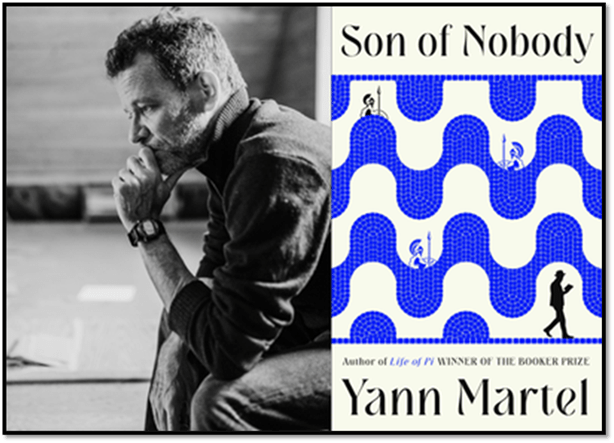
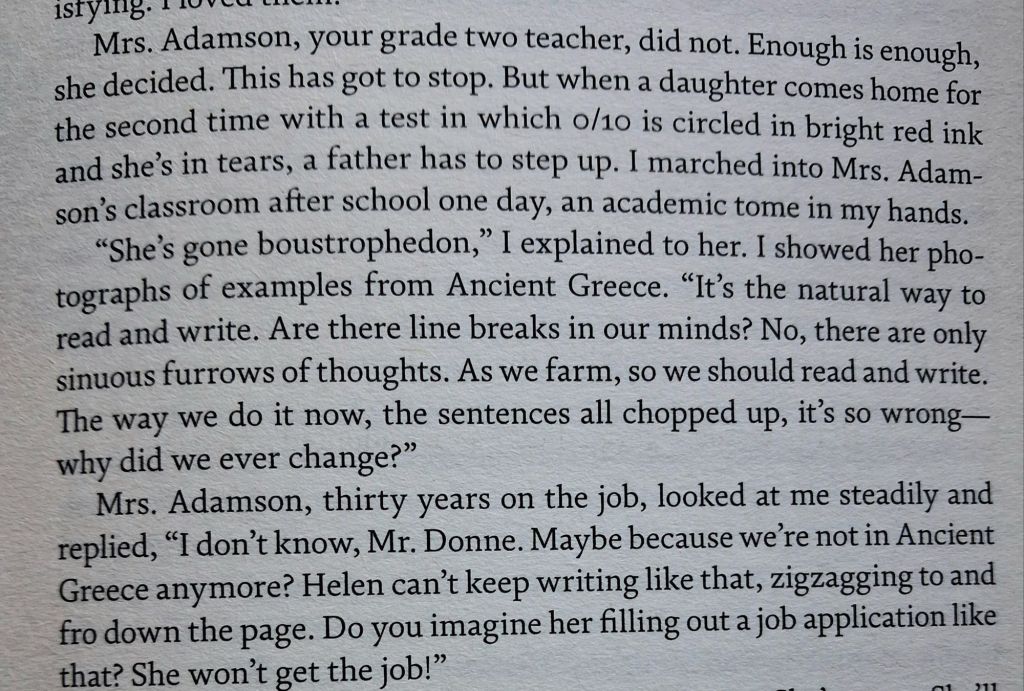
‘boustrophedon, one of the loveliest words in the English language, …’. If only the aims of life were not so ‘chopped up’, end-stopped and linear, we might realise that ‘in our minds’ are ‘only sinuous furrows of thought’. This blog reflects on Yann Martel’s novel, ‘Son of Nobody’.
‘boustrophedon, one of the loveliest words in the English language, …’. If only the aims of life were not so ‘chopped up’, end-stopped and linear, we might realise that ‘in our minds’ are ‘only sinuous furrows of thought’. [1] This blog reflects on Yann Martel’s novel, ‘Son of Nobody’.
Of course, writing is about giving or receiving ‘direction’ isn’t it? We are driven by aims, goals, and achieving that end we desire, aren’t we? Perhaps writing should be the same. In another answer to this prompt, I thought about the aimless Eugene Onegin, man and poem and Russian national icon (see that blog at this link). Here the literary work considered plays with the concept of having a direction throughout, in awfully complicated and multi-directional ways, even ones that aim backwards from where it appeared that they were heading. One simple way it is about ‘direction’ is cited, without her intention being to illustrate my point, by Lucy Hughes-Hallett in her review in The Guardian:
In Yann Martel’s fifth novel, a Canadian classicist, Harlow Donne, has been offered a year’s fellowship at Oxford University. His wife, Gail, has a full-time managerial job, and they have a seven-year-old daughter, Helen. Who will pour out her breakfast cereal and pick her up from school while Harlow is away? He and Gail quarrel. He leaves for England, and as she sees him off Gail whispers in his ear: “Don’t come back.” / So far, so everyday: … [2]
It is true that in a strange way, and despite Hughes Hallett quip that this is all ‘everyday’ stuff in her second paragraph, the first paragraph here shows that at least one feature of this work is to situate itself in the many ways, human beings seek direction – pursuing academic qualification and the glittering prizes that might follow by following opportunities for a ‘fellowship’ at a prestigious university, by travel to somewhere that represents a partial achievement of a goal, by determining which way we want our relationships to move and to what end. And perhaps too choosing that our dirction is one-way and that we ‘don’t come back’ to where we started, as Gail suggests to Harlow. This extends to the directions that are fought for at the cost of war, from the Ancient to the Modern World, from fictional accounts to fact and back through fictionalised accounts of fact (whether of the Trojan War or the life of Christ – a comparison often invoked in the novel), all theologically organised with some motivated end in sight. But we sometimes forget that direction is a formal consideration in art.
This can be to do with the organisation of narrative to achieve that thing which always seems so simple and obvious when we first come across it in Aristotle, only to discover later that it is a basic formula of the arbitrary nature of what narrative selection means: ‘a beginning, a middle and and end’ are not predetermined, they are consciously selected and ordered telologically, for they must end at the end, we insist, surely!. The ordering of the narrative in this book couldn’t be more focused upon as a matter of chance and the contingency of found accounts, which can’t even be guaranteed to come from the ‘same’ source, let alone guaranteed that they are put in the right order, as so many repetitions show in the stitched together account that is The Psoad, the supposed narrative that corrects nearly every presumption of the story of Homer’s The Iliad, and reassesses its motivated order and events. And then ends may be complicated, and not that for which we searched at all. For instance on the broken pot that introduces the story of Psoas is this inscription: ‘”Psoas fought on until he won his doom’.” His doom – dark stuff’. [3] We are all contented that we fought on to the end, but most of us might not consider ‘doom’ a thing we would want to win at this end.
Hughes-Hallett describes the import of The Psoad, that text-within-a-text in this novel:
This is not just a novel about a poem: it actually contains that poem. The Psoad makes up half of Martel’s book in terms of word count, and most of it in terms of creative energy. The poem’s fragments are printed across the top half of the pages, while below the line are footnotes, in which Harlow sets out to comment on the text, but is soon finding in it prompts for reminiscences about his relationship with Gail, and reflections about his home life addressed to his daughter. The two narrative strands – the ancient epic and the modern domestic drama – tug at and distort each other, until finally they merge in a doubly mournful conclusion.
…, we readers become suspicious of the scholar’s motivation: is Harlow actually fabricating this supposedly ancient text as a vehicle for his own resentments, his own love, guilt and grief? Certainly his supervisor thinks so; he compares the Psoad to Frankenstein’s monster, “a corpse with a thousand stitches”. … [2]
Clearly questions of direction are raised here – where is the narrator going with this manner of narrating, and where at another remove is Martel going? These questions remain open, lost in textual gaps and absences that are stitched together into as a revived body of work, and hence totally like Frankenstein’s monster which queries the motivation of creation in both Frankenstein (text and character) and Mary Shelley. The making of, or freeing from within, a Frankenstein’s monster is an analogy deep within this text linked to Harlow’s memory, that arises early but is never forgotten as the war on the plains of Troy begin in The Psoad to look more like that in twentieth-century Vietnam, and armed heroes more like that type made popular in the media on that war, the military ‘grunt’, of his grandfather, who fought in Vietnam, who tells him: “We are hiding places for monsters.”[4]
However, Hughes-Hallett perhaps should take her common-reader-like suspicions further and have reread the novel, after she had finished and absorbed the end of the novel; an end which emerges as the final end-notes to the verse of ThePsoad peter out. Had she done so, she would find already that the Prologue of The Psoad reads as much as a fictional autobiography (using the third-person in grammar to represent the first-person narrative it supplants, about a scholar Harlow , himself the son of lower class stock, whose is now forgotten in a yellowing room that seems to him worse than the classical underworld hell of Hades.
That story emerges intermittently as interruptions to the notes otherwise. On second reading then it is less a candidate for a poem found amongst fragments of papyrus in Oxyrhynchus than a story motivated by self-talk. By the way, the technique of ‘using the third-person in grammar to represent the first’ is called according to Harlow’s ‘Author’s Note’ by the name of ‘illieism‘, indicating that method in academic prose writing that, quite explicitly, he renounced for writing the notes. It is up to us to notice that it hasn’t been ruled out for the fiction that is The Psoad. When he gives that definition in The Author’s Note’ (itself an illieism) he sees the convention as ‘projecting my voice as from one of those outsize masks of Ancient Greek theatre, my authority loud and clear’. But, he continues, as he drops the illieism altogether ‘Who am I kidding? The Greek mask kept slipping’. [5] This is perhaps the secret of The Psoad
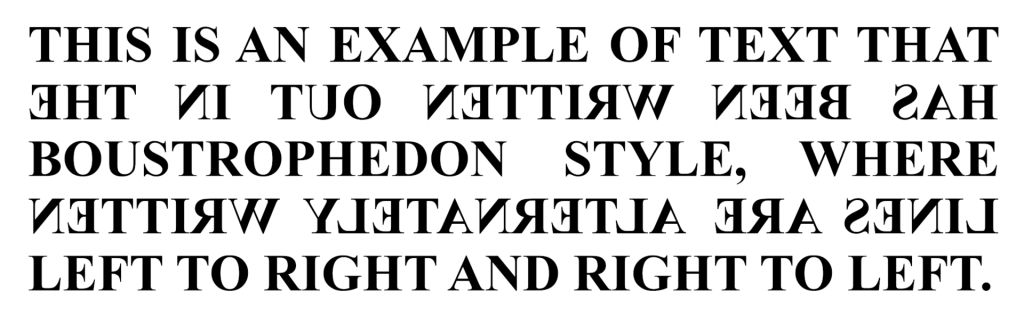
However, direction is also a matter in much smaller units in writing (and stitching come to that), which query even more radically what we mean by showing how it gives direction to the reader. If reading from left to right and from front to back can easily be demonstrated as a mere socio-cultural convention by comparing Western traditions to ones from the Ancient East, where texts follow the opposite direction, The Son of Nobody becomes fascinated by the fact that the unidirectionality of written text, and the idea that words are as separate from each as we insist, are also conventions hiding continuities of process in some ancient traditions, and why the novel is fascinated (though some readers forget this as the proceed through it, in the conventionalised direction, by the phenomenon, called boustrophedon (βουστροφηδόν).
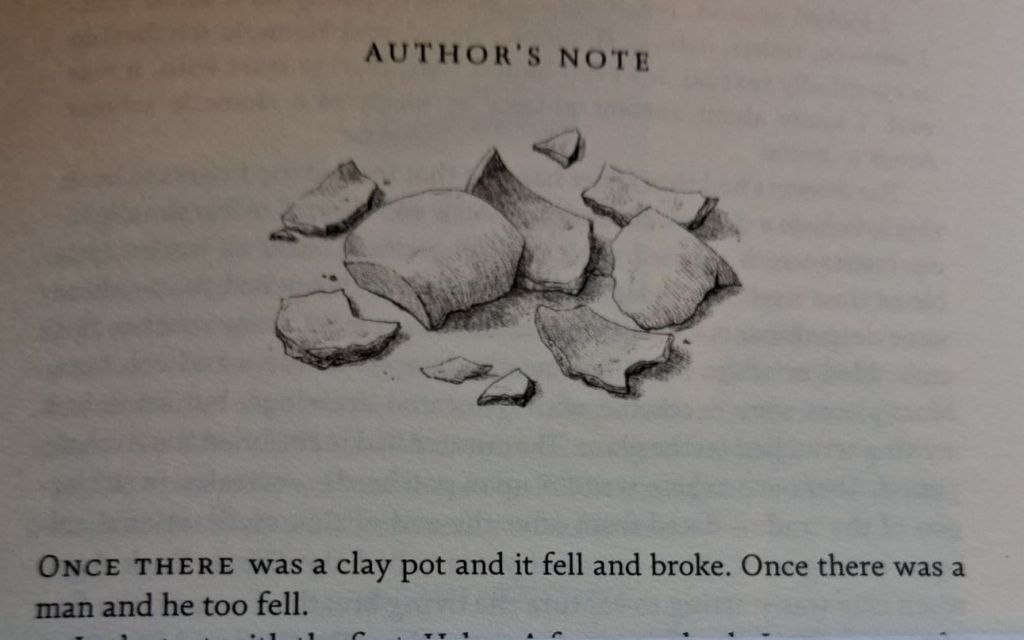
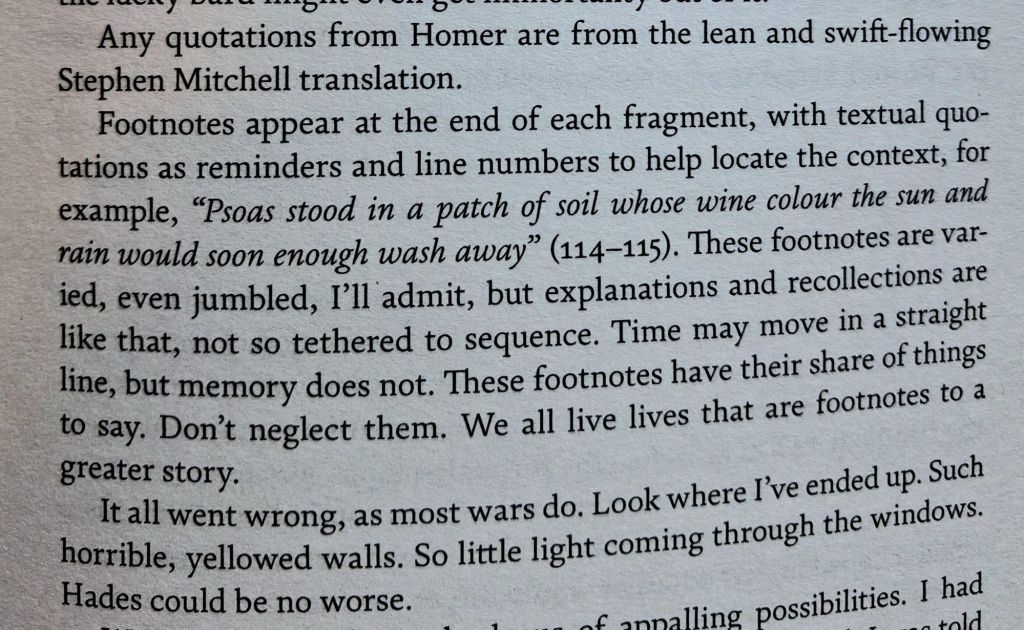
The explanation of the term in the book is in the supposed ‘Author’s Note’ serving as a preface to what pretends to be a scholarly translation and edition of the text of which is always printed in good size font above the mid-line drawn across the page, whilst under it, at the end of the verse sections are explanatory endnotes (he calls them footnotes though they are not that as far as each page is concerned) on the poem, which on reading often morph into a contingent memoir of the scholar’s life, treated as a found broken pot from an archaeological site: ‘These footnotes have their share of things to say. Don’t neglect them. We all live lives that are footnotes to a greater story’. [6]
My photograph with the opening text of the Author’s Note (actually the fictional author’s note) in queered colours, illustration, as they are throughout, byKima Lenaghan.
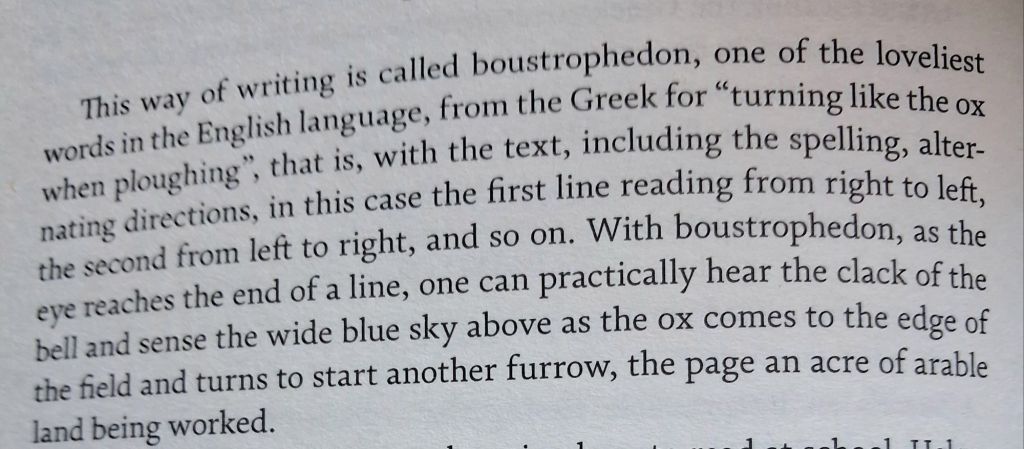
Here is the explanation of the word boustrophedon [7]:
It is uncertain, to say the least, whether readers will go along with the judgement of Harlow Donne that this word is amongst the loveliest in English, though they will not only find the explanation lucid but be caught up short as they realise, consciously, that the way we read is a convention of teleological ordering repeated over and over again where each line starts on the left, ends on the right and the next starts again on the left, ends on the right and so on ad infinitum, or to some other kind of imposed ending – a chapter end, the end of a book and so on. What we perhaps become conscious of are the over-learned muscular control of the eye direction as it saccades back and forth over the line, each in reality ‘chopped up’ from the one before and the one after it. On the next page, Harlow says this was true of the initial attempts at writing of the second Helen of the book (he may cause of first to regret giving Helen of Troy primacy over the name later) his daughter, to whom he addresses this book as ‘your Daddy’ when he isn’t re-seeking the ‘authority of ‘The Author’. [8]
If Harlow wishes to live in a world where the ‘sinuous furrows of thought’ and motion, even of eye direction, is a ‘natural’ move to a point from which it then returns in the opposite direction to that which brought it here, ends are not so repetitively encountered. Suddenly we realise that modernity, from the time of the left-to-right writing and reading convention has ‘chopped up’ our world into fragments it needn’t appear as, although such wanton returns to nature may mean Helen may not get the job she later seeks, and unlike Mrs Adamson, Harlow has neither a chance of getting or keeping an academic job, or even finishing his Ph.D. thesis, the source of his tragedy, which is like that of Psoas in The Psoad: ‘Muse, have you forgotten him? Psoas was his name’. [9]
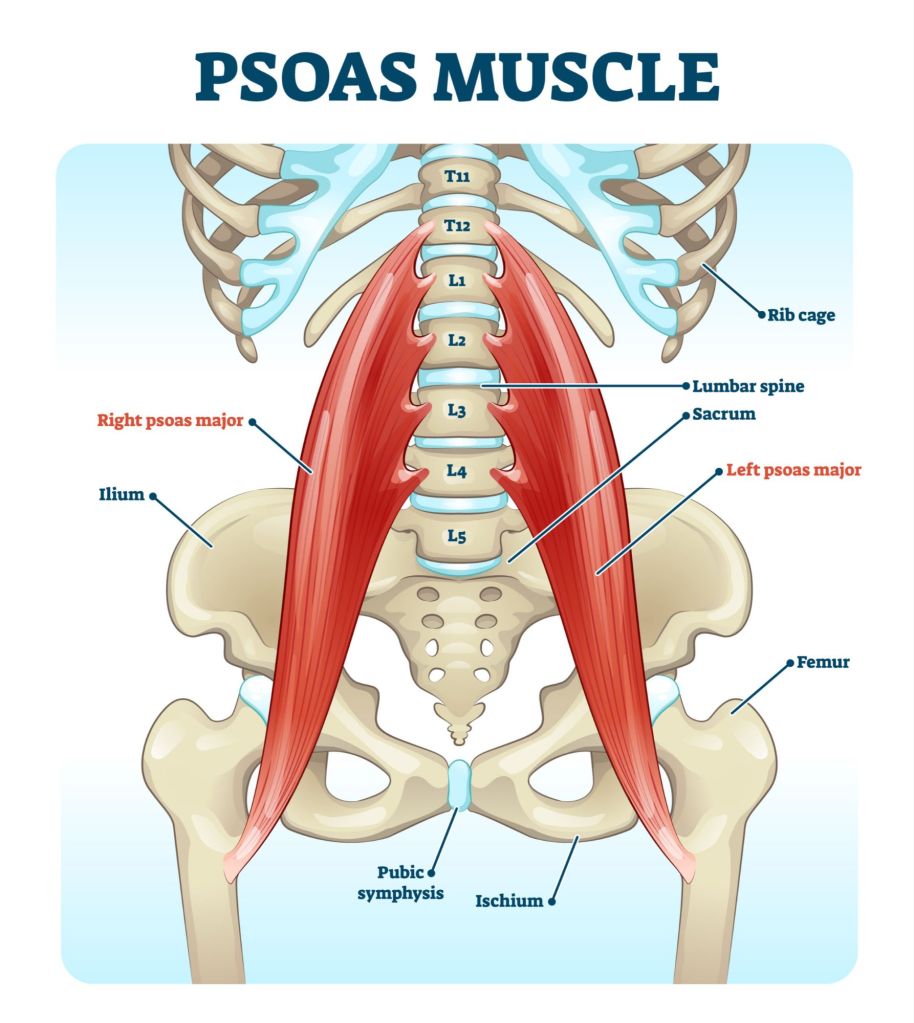
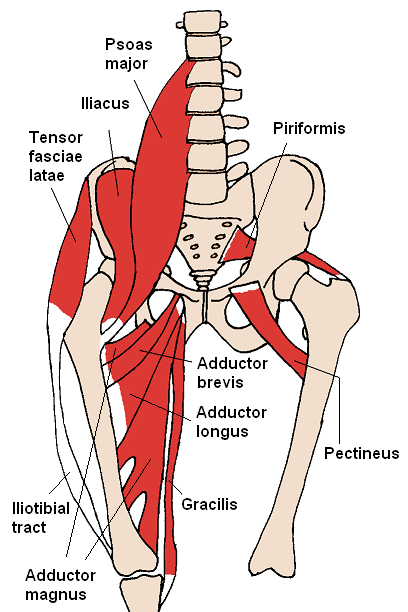
Harlow Donne is forgotten. Before I go on though, let’s think about the name Psoas, which the novel insists in its subtext may be a fiction, for it too bears relation to muscles involved in the re-flexion of the body like eye muscles. The psoas is in contemporary language use a muscle of the loins involved in any movement of the upper leg against the spinal core and manifested in the area and in the arena of the loins. Let’s establish that first before speculating about it for the word itself has a metamorphic history, wherein it changes sex/gender as a response to modern ignorance of its Greek root. Below, after the image of the left and right psoas muscle in the loins of a anatomist’s skeleton figure, the common use of the word in contemporary language from medical Anatomy, there is a passage of definition that is Google AI’s attempt at deriving and etymology of psoas. The addition in italics is my own, representing an element of the etymology.com explanation of the transition occurring in the derivation of the modern from the Greek common usage of the word in history that is neglected by the AI tool but may have mattered to Yann Martel
psoas/ˈsəʊas/ Psoas major muscle: attachments, actions, innervation …The term psoas derives from the Ancient Greek ψόα (psóā), meaning “muscle of the loin” or “region of the loins”. Introduced into anatomical literature in the 1680s (or early 1600s by some accounts), it represents the singular form taken from the Greek plural psoai and the genitive form psóas. Wiktionary, the free dictionary Original Source: Ancient Greek psóa or psoai (ψόα/ψόαι), referring specifically to the loins. Anatomical Meaning: It refers to the deep muscles of the lumbar region that connect the vertebral column to the femur. Introduction to Anatomy: The term was popularized by French anatomist Jean Riolan, who, according to Etymonline, mistakenly used the genitive Greek singular psoas (“of the loin”) as the nominative singular, establishing it as “psoas” in Western medicine (and also therefore as a falsely gendered masculine nominative case of a noun derived from an original originally of feminine gender in Greek). Context: It is often paired in the context of the iliopsoas (iliacus and psoas) or as the psoas major and minor, functioning as the main hip muscles.
Whilst so much anatomy may not be necessary, it may emphasise that the ‘Son of Nobody’ is forever associated with those very muscles used in sexual procreation, whatever the sexual position chosen, another way of reducing of reducing the name of the hero to the visceral act of performative sex to ejaculation and other human motion of a basic sort, less sophisticated than the complex articulations of the mouth associated with Homer’s well-know named heroes, who when they appear in The Psoad, endlessly talk or clog up passages of that poem with lists of their fancy high-class names. This is a work where hierarchically organised categories of class, rank, and significance are inverted – body trumps abstract virtue, animal human and so on. Psoas is throughout a ‘runner’, a flexer of the psoas muscles alternatively on each side of the body, one with working men who work the sinuous furrows (furrows like muscles and sinew) with little or no interest in the upper class names gained in senseless war (and note that the boustrophedon image returns when this is said), the natural end of whose body flexions is the recreation of life (of secondary Helen children not primary rich idle but decorative women (Helen of Troy) and men (Achilles though admires Psoas in the poem though but he would wouldn’t he!, even to momentary forgetting of co-aristocrat and sleeping chamber guest Patroclus):
About them mortals worked the giving earth
ploughing deep furrows with teams of oxen,
casting wide net into teeming waters,
reaping from the earth, reaping from the sea. [10]
My guess is that Martel wants us to be clear that the name of Psoas (of the loins’ of anybody or nobody) was falsely masculinised in modernity and that this gender history makes us forget the stuff of life maintenance as feminine and masculine and sometimes non-binary. The notes blame Homer for deliberately writing in excuses for Achilles and Patroclus to sleep in the same room without incurring the interpretation of queer sexual activity and continually show how aristocratic traditions in writing cheapen life – for instance the link of aristocracy in large parts of history (and certainly in Greek history) with horses, even fake Trojan Horses. Hallett-Hughes yet again is on the cusp of this discovery, in saying:
There are exotic animals in this Troy, and animals, as readers of Martel’s Booker-winning Life of Pi know, are numinous beings in his fiction. In place of gods, he gives us giraffes and porcupines and elephants, the last being crucial to a bold variation on the familiar story. Why construct a wooden horse to get inside the city walls, when you have gigantic tusked creatures capable of tearing down the Scaean gate? These beasts introduce a picturesquely sacred dimension to the Psoad, … [2]
This is lazy. The animals are not so much ‘exotic’ as resisting that very Orientalism (as do the animals of Life of Pi) that Western values cast onto them to make them look the opposite of what they are. Even the ambiguous Harlow in a moment of attempted academic authority of an academic guess explains why the ‘Psoadic bard’ chose wildebeests to explain the Greek military phalanx formation rather than ‘sheep’, (compared to the epic aristocratic heroes who are ‘lions’ – both animals known in Greece) for the common people was ‘wilful (sic.) exoticism on the bard’s part’, giving room for any critic unaware of irony to say the same. [11] In fact the reason is plain in the verse : If a phalanx was a herd of wildebeest, / strong by size, then a hero was a lone lion.’ [12] my bolding] It is really clear isn’t it that the use of ‘sheep’ to denote common men, like Psoas – the muscle, was yet another of comparatively diminishing the world of men and women who work with muscle, like those in the ‘lower town’ of Troy, which Homer never mentions. And animals emerge as life-forces elsewhere (with the editor still calling it ‘animal exoticism’), whose actions are about practical continuation of life not fancifully self-serving self-comparisons to enforce social authority – like the porcupine design of Troy’s sea defences, the giraffes which elevate Trojan common men so that Greek common men can see and them and they wave at each other, and the use of elephants and ingenuity to break through the Scaean gate of Troy. The common human of animal muscle is a thing to reckon with – even naked and without arms as Psoas becomes.
That Harlow engages in all this wonder at why common men are being seen in strong and forceful imagery not heroes, who all come across as silly, is no excuse for critics to do so, and Hughes-Hallett, who is a novelist but not necessarily of privileged insight into the work of others, nor to continually ask of novels what novels can’t and shouldn’t try to do. This is the more heinous here, where she pulls rank to critique Martel’s: ‘Son of Nobody is a fine novel, but with an unbalanced structure’ [2]. She illustrates this in part thus:
but there is another less successful strand to the work, important both to the fictional Harlow Donne and the real Yann Martel, who has spoken publicly about the centrality of religious faith to his concept of a full life. Harlow suggests that the warrior heroes of the ancient epic “created the space” for the advent of Christianity, “the other half of the profoundly contradictory western character”. The idea is pushed insistently in Harlow’s notes, but Martel fails to make a persuasive case for it, leaving it insecurely tacked on to the exuberantly reimagined pagan material. [2]
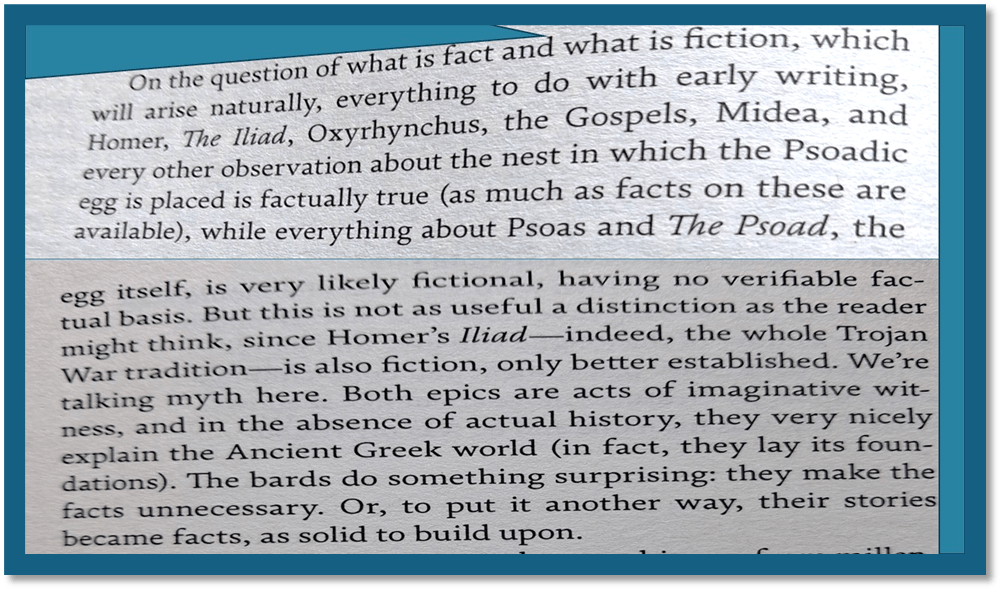
What Hughes-Hallett exploits here to win what she thinks is a clever point is that in fiction, the voice of the character can sometimes be the voice of the author, but though the critic is correct in saying Harlow Donne pushes ‘insistently’ for the idea that Psoas’s story ‘created the space’ for the story of another ‘Son of Nobody’, Christ, who subverts hierarchical categories in society and ideas (the last shall be the first and so on), Yann Martel cannot be blamed for failing ‘to make a persuasive case’ for this when it is never an author’s role, unless that of a fictive author like Harlow, to make ‘a case for anything’. A novel is not science, philosophy, theology nor history and in any of these cases objective fact is a questionable basis of relevance. Indeed Martel’s only role is to establish the main common link between the Trojan War storytellers and the Gospels – that they were as much imagined stories as hypothesised factual narrative, and may not have been the latter at all. Reread this: [13]
‘We’re talking myth here’, says Harlow in his fictional ‘Abstract’, but the point remains – neither the Gospels nor stories of the Trojan War depend on being regarded as ‘actual history’; even amongst Christians there are few who now need to believe this but which do depend on being the ‘witness’ to a truth, however imagined the sequence and details of the story, and therefore its distance from hypothesising literal truth. In both cases the ‘facts ‘ are ‘unnecessary’ to the act of witness – though the nature of what is witnessed is. The Psoad ends with a living man descending to the dead in Hades and staying there as witness to the ‘flesh’ on the bones of the fact of wars in the eyes of common man in all his nakedness of body. The Gospels each end with a dead man returning to life to ascend to the heavens to witness the fact of a superior life of redeemed values again in the body of a common man, exposed in nakedness to his peers on earth. Why Hughes-Hallett wants a more established case for “the other half of the profoundly contradictory western character” being witnessed is hard to fathom.It is an imaginative not an intellectual case that is provided, for me it provided as fully as it need be. If we are talking myth, there need not be equivalence between warring men and in a child’s eyes, warring parents, whose war is the cause of your neglect by them, but there is imaginative witness in the link. Hughes is just insufficiently awake to what fiction actually does to realise this and that is what feed her indignation at the flws of this work structurally.
The issue in the work throughout is the witness to ‘fear and trembling’ offered by literature, even when it goes whole hog for glory and virtue as The Iliad does, even fear of the descent to the Underworld of the dead too quickly and too unknown, which for Harlow is the flat he will live alone in without wife or daughter except in memory. The Psoad is born from scanning at first the ‘trembly (sic.) letters of early Archaic Greek’. [14}. It revels in the flexion of the body and the wonder of animals never seen before, and their witness to something larger than the horsey aristocratic ideal of Homer (or Aeschylus’ Hippolytus). Psoas works with hands and feet. Heroes run about, so does Psoas, but common men in war like the Author’s grandfather find fear and trembling witnessed in the flesh of the body as the stuff of war:
His breathing is noisy, quick, and shallow,
and from the pumping of the veins in his neck
you know his heart is jumping about his chest.
Suddenly he bends over and vomits,
which brings no relief. He stands again covered in a glaze of sweat, his teeth chattering.
His gaze is fixed, yet he seems to see nothing.
When you drape your arm over his shoulder,
you realize he is trembling all over.
He is consumed with dread, as if a Cyclops
were chewing him whole, and the main ingredient
ofthe monster's saliva, that which breaks down
the man's bones and melts his guts, is a herb called fear. [15]
The section I transcribe in bold above is visceral poetry , that understands that fear and trembling feel like being digested by a giant, literally ‘consumed with dread’, with the feel of being chewed part of the process. This is how Harlow’s grunt of a grandfather must have felt but Harlow does not feel it until he witnesses it himself, in the imagined role of that tough muscle, Psoas. The central experience of the work is the imagination of stripping a man down and to realise that beneath the decor of finery and clothes, even deodorant scents is a reality that makes us ‘pigs, grunting’, rich only in ‘lice, fleas, and rags’, that even a Trojan can be reduced to despite their wealth available to loo, out of which loot, Psoas never becomes actually richer or able o sustain his life with meaning: after all, after The Psoad describes the process involved ‘To strip the body of a Trojan fighter’ descending into awareness of our own status as ‘pigs in mud’ Harlow comments: ‘Hopelessness is not a good tale. You need some sort of redemption’. I don’t think that means the salvation of Christ necessarily but some imagined witness to some higher calling of human flesh. [16]
And I can’t persuade you to read this lovely book which many will tell you is an imaginative failure because it requires intensity of reading, but I can witness the love it left in me of our sad story waiting for a redemption that may not happen but which some of us aim to witness. There is little or no direction in this hope. It does not allow for the kind of linearity of expectations involved in beginnings, middles and ends, but makes us play games with time – rereading and revising (re-seeing) and going back as well as forwards like the practice of boustrophedon. At one point Harlow suggests this to us in his Author’s Note explaining why using the footnotes involve going back as well as forward, down as well as up, and zig-zagging from side to side like boustrophedon. They show us that some stories demand we unpack them literally and move haphazardly through them until they witnessto something that is significant, some greater story that acknowledges our own littleness and partiality woithout others in community. Read this sly prose below again: it is sly for even the praise of Mitchell translation of Homer as ‘lean and swift-flowing’ is meaningful, for such motion defies reflection and reflexion. It is clear though about how and why The Psoad is its notes as well as its text, for if it wasn’t we might fly headlong to its end and not know ourselves as we are ought to be reflecting on our ends and where might ‘end up’. The truth is little Helen needn’t have died had her parents not facilitated that death, but having done so, only an act of redemption where we witness to life and death as our significance might save us. [17]
This is a better book even than I say because it defies the description you give it, when you feel and sense it as well as think about it. Do read.
With love
Steven xxxxxxxxxxxxxxxxxxxxxxxxxx
__________________________
[1] Yann Martel (2026: 4f.) Son of Nobody Edinburgh, Canongate.