


As I said in an earlier blog, some books say we are already switching lives with a ‘fictional character’ in order to survive. The absolute best and most comprehensive writing of our time must ask, as Marlon James allows his characters to do, ‘Why am I writing this shit?’1 Is it because our characters switch to fictional form so often? This is a blog on Marlon James (2026) The Disappearers.
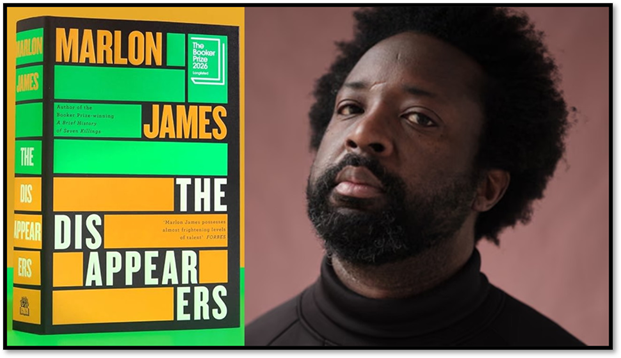
This book travels through experience without wishing, I think, to locate its own passing meanings or focus on them as more significant over the other meanings and foci of experience it throws up, and that, I also think, may be its point. From the start, the people in it seem not to be able even to adequately describe themselves. Moreover, the book is written to represent many voices who, for varied reasons certainly but always with a kind of self-interrogation in them, tell stories The first we hear is supposedly from a journal written by Edmond ‘Eddy’ Porteous, a near ‘white’ gay boy with a White Belgian mother and a black Jamaican father. He knows there is an issue of self-knowledge driving him because he says, ‘I can watch myself in a mirror while jacking off? Am I so gay that I turn myself on?’ Just after this he writes: ‘Why am I writing this shit?’[1] The mirror that sparks this never quite satisfying moment of uncertain recognition or misrecognition comes up only a few pages, after Eddy is thinking about different metaphors he can use in the journal by which to capture a picture of himself he can recognises. The prose slips between memory of scenes of mirror engagement he thinks might model how he reveals himself to others and himself to self-conscious play with a metaphor of concealment of the self’s content rather than revelation of its interior. Here is this passage of dual attempts of self-representation or representation by and of another:
Sometimes when I’m talking I catch myself in a glass and the reflection talks gay. I wonder if anybody notices. Also my head is box because you hide things in a box and I keep too many things up in there.[2]
The box is a metaphor that MIGHT be recalled when Schrödinger’s box (though called a room) is later evoked by another storyteller (Jordan Brown), without its putative cat except for the homophobic reggae singer who might be both dead and alive depending on one’s point of reference.[3] But Eddy moves from mirror-glass to box and on to the very activity supposedly represented in the moment of our reading and recapture of that that way: ‘This is why I start to journal in the first place, though I hate when people turn nouns into verbs, …’.[4] That is so self-conscious – the capture of an action (writing in a journal) as an object (the journal itself as the product of action). The play with words is beautifully complex.
I take time with this in order to show that critics may be entirely wrong when they, with this book, or any other, try to find a unitary focus for it. Let us take an excellent critic who does this; Yagnishsing Dawoor, in The Guardian. Early in the review, Dawoor writes:
Mounting a grisly exposé of Jamaican homophobia, this polyphonic 640-page doorstopper is an emotionally bruising narrative that roves “uptown, downtown, ghetto and gully” through Aids-era Kingston with sidetrack excursions to 1950s England and a closing leap to 2000s United States.
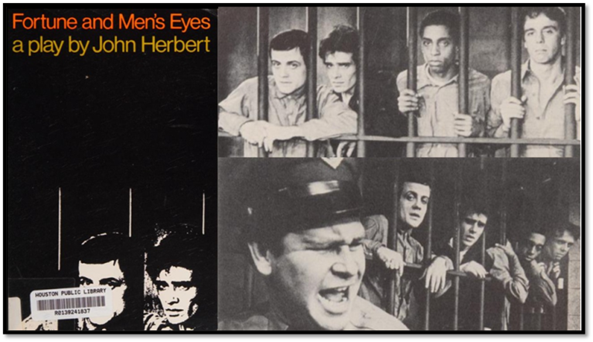
The novel’s defining event is a gruesome mob attack on eight queer men who have clandestinely come together to work on bringing John Herbert’s 1967 gay prison play, Fortune and Men’s Eyes, to the stage. The goal, in the words of director Havelock Titus, is to shatter “the whole fragile myth of Jamaican male sexuality”. “Because prison,” he explains, “is the ultimate male institution and yet masculine sexualities that could never happen outside in the normal world flourish in there all the time.”[5]
Of course I noticed the quoted statement in the novel, it makes itself prominent and noticeable, although it refers directly only to the play Fortune and Men’s Eyes that Havelock Titus is directing. It is said by Havelock about the play but even in that context it is a thin commentary even on the play (which isn’t in itself about Jamaica except as played in this production-to-be) and uses, to say the least, vaguely defined concepts. Perhaps the statement is doubly shadowy if Marlon James intended it to stand for the whole of his novel which makes the term ‘gay’ itself problematic. What, after all, does ‘crime’ and ‘criminal’ stand for as an identity, in the statement: ‘Does prison make the gay, does gay make the prison, or do homosexuals just have a criminal nature because our very existence is a crime?’ I had early reflections on this book as I was reading it, the blog on which can be accessed at this link, which in part referred to Nicholas Bogg’s account of James Baldwin’s production of this very play in Turkish (my blog on that book is at this link). At that time I was unaware that Bogg is the partner of Marlon James and that he is also the ‘Nicholas’ to which this book is dedicated. James tells us this in the Acknowledgements at the end of the novel and indeed references the biography of Baldwin, saying that Boggs whilst ‘he was writing Baldwin: A Love Story’ was ‘also laying out a blueprint for how to be an artist while staying true to one’s own soul’. Moreover, this blueprint has something to do with complicated intersections of themes which go well beyond Havelock’s description of what the play is about. Boggs, after all makes a fine case for the play moving way beyond a concern for homosexuality in prisons, although it also needs be conscious of that theme’ In my blog, I quote this passage from Boggs:
Beyond the opportunity to serve as director for the first time, it is easy enough to see why being involved in a production of this particular play was so appealing to Baldwin. Of course, the whole question of prisons—real and symbolic—was a major preoccupation of his, from the literal imprisonments of Maynard and Newton and other Black Panthers, not to mention his own frightening experiences behind bars in Paris and New York, to his interest in breaking out of the “prison house” of masculinity as articulated in his early essay on Gide and on display in all his novels. Apparently, Baldwin had attended the play during its yearlong off-Broadway run, most likely during his brief visit to New York in the summer of 1967. This means he must have seen the Black gay actor Robert Christian play the part of Mona, the most outwardly effeminate character in the play and the one who is by far the truest to himself; it is thus impossible not to wonder what complex feelings of identification and kinship this experience must have stirred in him.[6]
Can it be the case that Dawoor is correct to lay the focus so simply on Havelock’s statement of his intent in producing this play in Kingston of mounting ‘a grisly exposé of Jamaican homophobia’? I think not because James is not Havelock but more like Baldwin who was looking for ‘a blueprint for how to be an artist while staying true to one’s own soul’. That Herbert’s play continues to ‘haunt’ Havelock until the end, James knows that it is only the germ of an art that unites the voices of the excluded with the voices of tradition, which combination (in production at least with a cast and crew with other stories to tell) just about includes Herbert since Baldwin made it so. For this reason, the play takes on different colours for different actors in the cast, not least Orrin Turner who so despises being asked to play the camp queen, Queenie, but nevertheless sticks with it to the end in the aim of learning wherein sex/gender matters as an issue in art and life and their linkage, at least until his exile – an exile we know least about in the novel. The exile theme which instead focuses more on Matt Chin, who plays Smitty and who will in the play be smitten by Mona, Eddy Porteous in the novel. The non-relationship between these latter two, both combining different stories of the effect of loss and alienation as queer men, is so insisted upon that it is clearly the strongest actual relationship in the novel. And that ambivalence is played out through the actors and their shifts of identity. My own suspicion is that the novel never settles on any one theme, even for any one narrator, and its core is one of metamorphic instability at the core of what we call identity, other than an index of survival and emergence.
Before going further, let’s consider the issue of criminality, although in doing so we may cover many other issues associated with it in the novel’s writing (often about writing). This book is as Dawoor says capable of much back referencing and intertextual leaps, although he makes that appear as if it only referenced queer literature – in this paragraph for instance, which is actually the most problematic of the review for it is the inevitable paragraph where a critic proves their credibility by identifying ‘flaws’ in the novel:
The formal design, however, is not without flaws. The overlong narrative sags in places, tarrying where it should speed along, and the intertextuality – most obviously the revenge plot’s debt to Toni Morrison’s Song of Solomon – can veer into self-conscious pastiche. While the book’s conversation with the queer canon is richly rewarding (besides Herbert and Rechy, Gide, Genet, Vidal, Wilde, Baldwin and Holleran are some of the visiting spectres), I struggled with the fact that a significant chunk of the action is reported rather than dramatised. As well as the interview transcripts, we have letters from Havelock to a friend; some pivotal moments are thus experienced either at a temporal and affective remove, or inevitably somewhat summarised.5
The pastiche of Tony Morison is in fact played with quite a lot of irony as an idea of Jordan Brown’s that he only half understands.[7] And the use of the queer cannon has much intersection with other themes, including that of criminality, in Gide, Wilde and Genet, for example as well as Herbert, but not in any way that seeks a common issue in all of them. If anything, I cannot see why Dawoor mentions the positive presence of a queer canon alongside his punch at the novel for much of the ‘action is reported rather than dramatised’, and / or ‘experienced either at a temporal and affective remove, or inevitably somewhat summarised’. But what if the issue in the novel were not the immediate witness of action but the witness of the work of memory operative precisely ‘at a temporal remove’ or narration struggling to resurrect traumatic emotion in order to face that which could not be faced at the time of its inception (If anything the nearest thing to the project of telling a thrilling story and concentrating not on the action but the narration itself as subject is Robert Browning’s The Ring and The Book.) And clearly, since some stories are told many times from different perspectives, perhaps it is precisely the manner of summary by each perspective as in the case of the Browning epic that is the gist of the novel, though much more readable and exciting than Browning. Critics too often seem to make judgements based on a standard they use as if objective without sustaining any argument for it.
And to bunch into that kind of judgement the exception of the treatment of the queer canon is to stop looking at the fact that this book is a book that references many books irrespective of the sexual issue if not other kinds of queerness. Take this reference to criminality that singles out Dostoevsky’s Crime and Punishment, even though the context is a queer one in every which way. Briefly in flight from a mob that intend to Murder Jordan and Eddy as battymen, the community of Orrin whose flight they are investigating, they are saved by a vision that emerges as if from the Underworld or the imagination, a version of Botticelli’s Birth of Venus that Jordan names Birth of Bomboclaat Venus, that turns out to be a drag queen in high heels coming from a sewage and storm drain that will lead them to an exiled community living outside the ‘known’ and visited places of the city amongst refuse, sewage and the lost that the young men name as ‘battyboy Mad Max Beyond the Thunderdome’.[8]
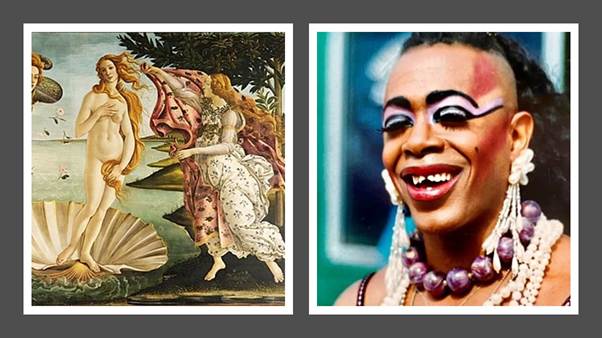
There the ‘exiled underground community show them a man from a rich house dying from AIDS and with advanced symptoms but who appears not to be able to die despite the filth that surrounds the plush mattress thrown out with him in fear of infection by the family and his many symptoms of opportunistic infection and near death. In the night the man howls with pain and Jordan is awoken by Eddy:
“It’s three in the morning,” Eddy said when I woke up. I was about to give him shit for waking me, but he pointed to the end of the gully and said the man sounded worse. Based on what, I didn’t ask, but I got up and walked slowly down into the dark. Shadows really do swallow you. I never noticed before. I was thinking about Crime and Punishment where it said that Raskolnikov was beyond thought. Except my thoughts were racing and crashing into one another and I wished I was as cold and quiet as the night.[9]
To be ‘beyond thought’ remains a puzzle in the Dostoevsky novel’s examination of crime no less than the crimes of the persons in the Herbert play and of the lives of the actors who live them in this. Jordan almost interprets his situation as being desirous to be like Raskolnikov as he plans the murder of an old lady in order to be go through with the mercy killing he wants for the dying man in terrible pain with the clarity but also mysteriousness of being ‘as cold and quiet as the night’. Only because Jordan is recounting this interviewer to an interviewer who tapes and transcribes the words do we know of this element of the story and it is this retelling from memory with its Gothic reinterpretations of whatever the event was that gets us close to Jordan, reading him at a remove as he remembers a reading of Dostoevsky at two removes. This is not a flaw in a novelist but a wondrous achievement, in the process of learning how modernity confronts its own models of Hell like those in Homer’s The Odyssey, Virgil’s The Aeneid, and Milton’s Paradise Lost, without demanding a belief in their tangible reality.
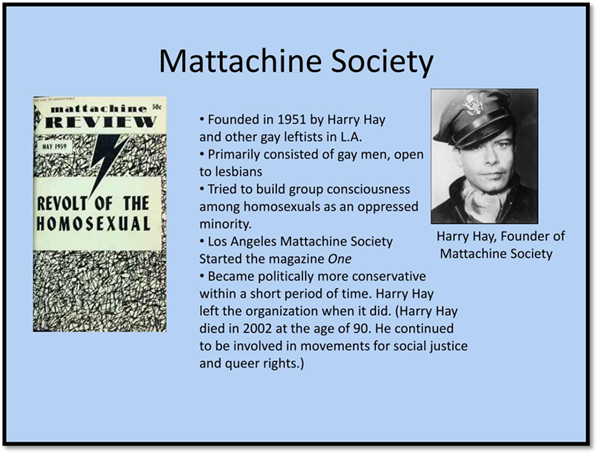
The images Jordan confronts are those that are the most numinous in this novel – the issue of disappearance, and the versions of ‘loss’ that theme covers psychosocially and in lived history, even the potential of planned loss perhaps aimed for in models of escape from responsibility in aliases, or, in the extreme, suicide, or forms of hiding and secretion sometimes in plain sight, as Matt Chin does it, with his various apartments and assumed lives, easily disposed of, and whose ‘real name’ if he can have one is only Matt Chin not because necessarily he was once the rather different Mat Chin-See, with its direct Asian reference, but because of his identification with a group, the Mattachine Society, in queer history and based on a concept from theatrical role-playing and ‘masking’ but now disappeared from memory so that even those who know the group may not recognise it in him until the end of the novel.
Dawoor quotes a brief passage (from the longer one I give below) that asserts that Disappearance is used as a paradigm of the condition of queer identity in heteronormativity.[10] However, I think the extension of that paradigm to AIDS and the identification of faceless and nameless and thoughtless murder, such as Jordan feels that he must commit in the name of love perhaps inflict on the dying man shows that the theme has much wider resonance, in terms of the aims of art to query the value that sustain a life worth living. Dawoor wants the novel to map ‘the beleaguered realities of queer existence with such psychological depth, harrowing realism and searing condemnation’ that he says in the same paragraph few books do.5 Yet, Dawoor’s evidence comes from a longer passage that starts off as referring to that murder – the one Jordan tries to prepare for with a memory of reading Dostoevsky – that asks much more fundamental questions of humanity beyond its sections and intersections of identity and power.
Could killing ever be an act of love? Yes, the answer is fucking yes. I gave him something to fight for, and putting up a fight was the last happy moment of his life. When I pulled away the pillow you know what I saw? A smile. A fucking smile. A fu—
Of all the fucked-up things happening in the world to us, you think that is the thing to not make me sleep at night. No, it wasn’t a question. I’m trying to find two gay men who just gone when battymen vanishing all around us. That is what AIDS is after all, isn’t it? One long set of disappearing acts. First is watching the friends and family disappear. Second act is when people try to disappear you. Third act is watching your body vanish from itself and wondering where the fuck you going, piece by piece, until all of you gone. I swear to God, at one point I used to think people with AIDS just evaporate. If there is a fourth act it’s when everybody erase your name as if you were never born in the first place. Certainly no Christian church ever christened you.
A canvas tote bag saying “Coke: The Real Thing.” That is what his entire life got reduced to. I was about to think how pathetic this was until I remembered that at the time I still lived in a car and that car was stuck in Waterhouse and who knew if the people didn’t burn the battyman station wagon down to nothing or raid it for parts. Five things in that little bag that said there was a time when his life was once so fucking big that the idea that it would be contained in some bag so little sounds ludicrous. But here he was, and here I am.
Roderick Crawford. That was his name. Old money, meaning older than Lebanese, Syrian, or Palestinian money. When you run across names like Crawford or Myers or Wray, you talking to old buckra massa himself. Massachusetts driver’s license dated June 9, 1977. Handsome man. No, make that beautiful man. Are all the tragic stories only about beautiful people? Can you tell me that? Or we only feel sorry for the good-looking ones? Even in fucking tragedy he who is prettiest makes the rules. But trust me, in the end he was just a see-through white sack holding bones. But in the ’70s he was Michael Manley cute.[11]
I find that entire passage beautiful and its point is not to show queer life as an exceptional state of victimhood in society, although clearly heteronormative or homophobic society does produce victimised queer individuals in an almost industrial manner, but as a redefinition of human life as the fight necessary to make life meaningful – a very Dostoevsky-orientated theme, if not the theme of most great literature (queer, black, intersectional or otherwise) when it does not fail us. Hence much of the novel conducts a hidden dialogue between Jordan Brown and Edmond ‘Portia’ Porteous, the two justice-seekers in the novel who are also readers, though Jordan often hides that fact. But the issue in the passage is that the disappearance of two queer men is a long way from unusual and hardly gets in the league of ‘all the fucked-up things happening in the world to us’, where ‘us’ may be queer men or the humanity of which queerness forms an inclusive part. The passage is a kind of prose poem about one man: only know do we know the man’s name as ‘Roderick Crawford’ because his nameless heretofore was part of the ‘disappearing act’.
The man has diminished in the qualities, and the quantities of each quality to ‘Five things … that said there was a time when his life was once so fucking big that the idea that it would be contained in some bag so little sounds ludicrous’. We get the idea – the qualities might have included money, status, attractiveness and power ‘to make the rules’, but in time (and not just because he was queer) he is merely the object left behind in either a tragedy or an atrocity. Disappearance might even relate to the fact of inequality between diverse kinds of humanity. As Brown says after this: ‘But here he was, and here I am’. Yet ‘what he was and I am’ is part of the same process of having the fight kicked out of us, by being unrepresented as a valid example of the human, but only by the tokens valued by the system of capitalist society: money, status and power.
That is why the reality of representation of the human as life-form in its intersections – including sexuality, race, class and embodiment – has to be ‘real’ and has to be materially ‘alive’ and that is why Portia is so hooked on the understanding of the real in Kant.[12] Havelock knows Dickens is a great novelist even though he hates him and prefers Trollope anyway, because if not as living in his characters, he ‘knows how real life.[13] Jordan would not have read Trollope but tells us about his ambivalence about Dickens. This, surprisingly, emerges whilst Jordan is thinking about Gareth Coombes, the closet queer gay basher if the second section (named Gareth C. here) and his insubstantiality in terms of both ‘life’ and the ‘real’, because he is locked in an internalised projection of queer character from other people’s fictions, whilst courting him and teaching him to be a more satisfied queer man for reasons that aren’t quite articulated, that takes Jordan to think about Dickens’ Bleak House.
It’s the fear, I tell myself. He is still in faggot fear. Still trembling at touch, still unsure, still thinking he can back out of this and become what God made men for. I have seen this before: head in one place, cock or ass in another, and wondering where to put his heart. Or his nerve. His blandness goes to the space in my head where I think about bad books. I have a theory about bad books. A good book, shit, a good story, does this thing where it just comes alive in your head. It’s why I’ve read Bleak House more times than that black-hating piece of dog shit named Dickens deserves.[14]
Faggot fear is a real thing and it inflicts queer men and even robs them of authentic character (what ‘God’, the ultimate omniscient author, ‘made them for’) in which what is sensible to all is not what he is, which has disappeared, even if just hidden or secreted. Roles and acting as well as masking (and masque-ing for the Mattachines, and their great pupil Matt Chin) are all part of the work of this great novel, where even the roles in Fortune and Men’s Eyes sees things better in the cast who play the roles than they see themselves (as locked up persons accepting criminal status for instance). My view of the novel then is that it is not only Eddy/Portia’s voice we hear in the question, ‘Why am I writing this shit?’. Part of the project of the whole is to use the insights James’ partner, Nicholas Boggs, discovered in the life of James Baldwin as why written art matters. It is why you get a perspective on why white literature sometimes fails Black readers, or heteronormative literature queer readers, or why sometimes ignorance of intersections between identity markers sometimes means some people aren’t addressed by work that calls itself explicitly gay or black or brown or yellow.
Writing in this novel is nearly always writing about loss of that space in which one hoped to live a real life. Matt Chin, under the false name C.H. Matthew (one of his names), is writing a book (‘autobiography? Novel?’) about different kinds of loss including murder, variously called ‘vanishing’:
Somebody here now gone, somebody missed, somebody that he thinks about too much. Obsession, masturbation, memory.[15]
There is an important sense too that themes of loss, disappearance or the vanishing of something felt real once, matters to anyone and everyone. There is a poignancy in the supposed generalisation about what it feels like to move on, or be moved on from (in cases of felt rejection) that is not specific to queer lives but felt more often perhaps because of the isolating nature of the connections queer people are made to form in lieu of visible opportunities and made to break from fear of the consequences of visibility. I cannot but think this brief passage below passingly beautiful and true by any standard of evaluation. I place it next to a triter meme version of the theme in contrast only.
Some people call it moving on with life, except each life moves in its own way so the cliché doesn’t fit. That’s when it hits you that you could have stood still and disappeared anyway. [16]

To Jordan, even literature itself is a loss, already made a commodity that can be adjusted to house and include only one type of person such that ‘all the books was white people with snow and bonnets and carriages trying to arrange marriages and bored out of their fucking minds’.[17] And to Jordan queer men live fictions because the status quo offers them no positive ones, ones not already jailed in as criminal or perverted. This is how Jordan reacts to what he hears about Matt Chin’s writing. It is a higher form of self-construction, which he calls fiction:
You hear about that, well, I read about that, gay men constantly constructing themselves. You could say they lying to themselves or refusing to accept their truth but then you just sound like Oprah. They not telling lies, they building fictions and no, it’s not the same thing. “Telling lies” implies that they have some kinda reality to distort, when the truth is they have nothing. Can’t judge it at all—I create a fiction every time some vile man gone inside me.[18]
The everydayness of fictive self-recreation is increased by being redone every time his desire is not matched by the filthy and vile reality in the containers into which queer sex is pushed. If you read my earlier blog, which I’ll link again here. The only quotation I will reuse, since they all speak of how queer lives intersected with marginal race, class and sex/gender dimensions are fiction by preference given heteronormativity and racism already constructs them as other than ‘reality’, is the one in the title: ‘Don’t get me into some philosophical bullshit about lie versus fiction. Fiction is creation. Lie is distortion. One don’t have a fucking thing to do with the other’.[19] It mirrors Brown’s words above, of course and it enables the perception that intersected gay sensibility is the only fictive manner of representing truths about that sensibility at a deep enough level, in James Baldwin for instance:
So the only gay with a gay sensibility is the white gay. James Baldwin is too deep in the depths for a shallow white faggot to see …[20]
Reading other than the fictive, other than it is often about categories from fictive realms used in social theories, like Judith Butler’s performance theories applied by later queer and feminist theorists, is also adduced, pulled into discourse by characters in the novel. Watch the flow of argument here, how it enacts thought, whilst drawing too on emotion it understands a little less than the thoughts involved, especially emotions of fear and sensations of the retreating, self-secreting or vanishing body – the way boys, especially queer boys, feel that they have strategies of disappearing from public notice at school is described in the novel by both Eddy and Jordan and even by Havelock of his younger self. In the following I feel as I read the retreat my body makes from being touched and / or seen whilst craving to be both felt , full of the internal feeling that sparks, and seen by eyes I wish on me:
In Jamaica you feel watched when nobody is looking. In the bathroom as your hand grazes your zipper, in the bedroom with the lights off and the curtains drawn.
Skinner, Offender, to wear either is to both stand out and vanish. Vivian Gornick wrote that over here everyone performs, which means everybody is putting on a show for people to watch, but nobody is in the audience to see. So it’s the people who make you disappear. You could cease and settle with this version of yourself if only people would let you. People as a mass and a concept: an idealized fear, not actual persons. But fuck people and fuck feeling fear. Today you felt all this damn tightness force your favorite self to bulge out.[21]
Can an imagined audience make you feel touched and seen? Likewise can the realisation to follow that that that audience is purely a thing of the imagination also make one feel not only untouched simultaneously and in the long withdrawal of bodily sensation not only untouched but untouchable and not only not seen but invisible? Only a miraculous prose poetry writer could achieve that and James is such a writer, but in oh so different way from his namesake of Henry James, who uses syntax to achieve those effects rather than phrases that cross boundaries between the conceptual and the sensational: like the ‘damn tightness force your favourite self to bulge out’, which is both an indication of phallic narcissism and a fine phenomenological prose like Sartre’s. Here is another example – so much more economic than the phenomenological philosophers but equally able to make you know the smell and seeing sensations it evokes:
This is how you do it. This is how you disappear completely. It’s not that you vanish, it’s that you make yourself into the kind of person nobody wants to see. Not a bum or a madman, because those are people one tries too hard not to look at, which is a different thing. But to ignore a person takes work and the trick is to turn blindness into an act of ease. Every gay man wishes for the trick where he could disappear at least once, especially around other gay men before they smell the homo on you. Sometimes it really does feel like a smell.[22]
Such a method of writing can make you recognise sensations mixed with though and feeling that you cannot think have ever been described before but of which you have sensed a version, at least if you have a penis:
… and you climb higher than any hill has ever been climbed, and the view of the city glimmering below makes you think you can conquer it. And if one can’t vanquish this city, then one can vanquish this fucking hill the way animals do, which is to whip out their cocks and piss on it. So you sigh the piss out long and loud because this has always been how men let other men know they have their dicks out, and pissing like yawning is contagious, so Eddy whips himself out, too. And this is the longest piss ever, meaning that you’re done but don’t tuck it back in because the breeze is blowing nice and it leaves you in that midland between hard and soft where every man looking knows but dares not say.[23]
After that passage the idiom, ‘pissing in the wind’, must mean so many more things than it once did, because it is always only applied to people with penises. I think I might make an end here except that the prose keeps drawing me back and I can’t leave without admiring a piece from much earlier in the novel, a passage which captures a queer teenager’s sensations in a prose that is written in the liminal space between what is kept underground, often unsuccessfully, and that which is its overt purpose on its visible surface. It records Eddy’s seeing earlier of Jordan Brown naked and his response, which he tries so hard to make asexual:
Knowing something about Jordan Brown that he doesn’t know I know is like finding a hundred-dollar bill on the ground. I try to hide myself better, expecting another car to pull up with a driver who came to do what men pull cars beside each other to do, on a quiet night on a posh hill. Jordan might still be naked. I don’t think about the size of his cock. Okay, maybe another me saw it and wonder how does he even walk with all of that in the way. I’m as close as I can be, at a fence so overrun with bougainvillea that it forms a canopy.
Jordan gets out of the car, still naked, and I remind my mind that I has bigger things to focus on but get stuck on the word “bigger.”
It is not only the fortuitous paragraph break after the physical symbol of the ‘canopy’ that forms a flowery shelter of that desired to be seen and yet the denial of having that disappear, letting shadows eat that which causes appetite in Eddy, even though his description is largely a physical one relating to physical size. There is a desire for closeness in the sentence about the bougainvillea that only can be expressed in ways that hide under metaphor. And of course the passage is about ways to ‘hide myself better’, whilst it uses as its metaphor things a teenager has already noticed about the coded ways adult queer men seek secreted satisfaction, achieved whilst hiding it under darkness and distance from the common gaze The humour of Eddy ‘not thinking about the size’ of Jordan’s ‘cock’ burgeons in the hilarious lines of self-deception uncovered here: ‘and I remind my mind that I has bigger things to focus on but get stuck on the word “bigger.”
If this novel is not shortlisted – indeed if it does not get the Booker Prize – we will have misrecognised the presence of genius once more. I hope I don’t overuse the term ‘genius’, but surely it applies to this writer, as much to Marlon James as Henry James.
With love
Steven xxxxxxxxx
[1] Marlon James (2026: 39) The Disappearers London, Hamish Hamilton (Penguin Books)
[2] ibid: 35
[3] ibid: 562. In fact Schrödinger is mentioned in another section by Brown, though he speaks not of Schrödinger’s cat, box or room but ‘Schrödinger’s butthole’ (ibid; 219)
[4] ibid: 35 (continued from the text end-noted by- note 2 above).
[5] Yagnishsing Dawoor (2026: 45) ‘Review: The Disappearers by Marlon James review – a scorching exposé of homophobia in Jamaica’ in The Guardian (Mon 24 Aug 2026 07.00 BST Last modified on Mon 24 Aug 2026 08.14 BST) Available at: https://www.theguardian.com/books/2026/aug/24/the-disappearers-by-marlon-james-review-a-scorching-expose-of-homophobia-in-jamaica. The quotation is from Maron James, op.cit: 14.
[6] Cited in Making you the man of nerve or nerves you are: from hard resilience to soft and fearful retreat. A case study based on Nicholas Boggs (2026) ‘Baldwin: A Love Story’ and the import he detects in Baldwin’s role as director of ‘Düşenin Dostu’ (‘Friend of the Fallen’ in English), the Turkish version of John Herbert’s ‘Fortune and Men’s Eyes’ in Istanbul. – Steve_Bamlett_blog
[7] See Marlon James op.cit: 513
[8] ibid: 323 & 324 respectively
[9] ibid: 354
[10] Dawoor quotes only ‘That is what AIDS is after all, …. no Christian church ever christened you’.
[11] ibid: 373 – 375
[12] See ibid: 37
[13] ibid: 475
[14] ibid: 328
[15] ibid: 308
[16] ibid: 600
[17] ibid: 364
[18] ibid: 384
[19] ibid: 300
[20] ibid: 392
[21] ibid: 568
[22] ibid: 591
[23] ibid: 596


3 thoughts on “As I said in an earlier blog, some books say we are already switching lives with a ‘fictional character’ in order to survive. The absolute best and most comprehensive writing of our time must ask, as Marlon James allows his characters to do, ‘Why am I writing this shit?’ Is it because our characters switch to fictional form so often? This is a blog on Marlon James (2026) ‘The Disappearers’.”