What’s one thing that would instantly improve your city?
Durham city lacks the cultural vibration of constant reinterpretations of great works that a living professional theatre company gives any city.
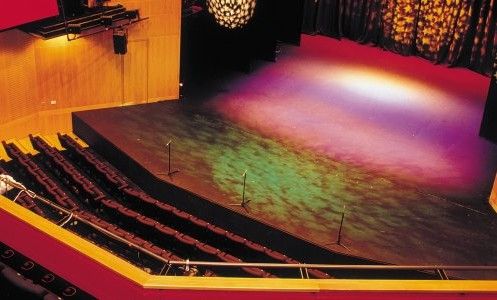
I am using this graphic of the Empty Space of the Gala Theatre in Durham to denote a wider absence, brautiful theayre though it is: that of a living professional theatre crew that consistently challenges audiences to rethink what theatre is and what it means. There ate such companies in the county. In the old coastal pit village of Horden lives a resident company with its own theatre-in-the round recently rere-interpreted Hamlet through the First Quarto text and followed it with a reinterpretation of the history of Hordern and its pit community. Using tne Quartos is a good way of relooking at tne text and I believe this production at Sheffield does that with those of Lear.
Durham City, though rich in visiting companies, sparsely spread across the calendar, lacks precisely that potential. However, how can a city hold riches within its extremely circumscribed boundaries a top-rate University with an ‘Oriental’ Museum, one of Europe’s finest Romanesque Cathedrals and a tradition of working class self-education fostered by a mining tradition and the NUM, and not have a resident theatre company. As obvious from the photograph above, it has a theatre, the Gala, named after what is known as Miners Big Meeting, annually, but it is poorly funded (more so under Reform) but it only hosts touring companies irregularlyand sometimes of low quality and experience.
Is that because Durham’s very creative soul has been neglected by crass Right-wing Labourism, earth scorched by Neoliberalism (Blatcherism being founded in the county) and now infected by having a council led by right wing fanatics? I admit that I wasn’t born here – though that gives me more hope that I could never be associated with pestilential Darren Grimes of Durham County Council other than we are both gay; if only I am proud of that fact – but the fact that today I am travelling to Sheffield to see a theatre production, near where I was raised, in Holmfirth, Yorkshire, in brief at the Sheffield Crucible Theatre makes my heart ache at the cultural deprivation of my home city.
Here on the train from Durham station on the way to my change at Leeds for Sheffield, I contemplate the day which I will chart throughout it, though mainly on my train journey there and back and through waiting times for the theatre and between connecting trains, and it is obvious what is the one thing that would immediately improve my city.
Today I see Shakespeare’s King Lear. It’s not, of course, for the first time, as scanning my blogs would show. That play has spoken to me since I first read it at 16. I am now just coming up to 72 and the intervening years has included many productions, re-readings and reflections of the play, such that to see it again is almost to sense the hand of tje old King himself who before proffering that appendage says he will ‘wipe it first’ for ‘it smells of mortality’. No great play exists in any one form, and defined by any one set of emotions or meanings. Hence, the need for constant reinterpretation using all the tools, and even the marked absence thereof (the ’empty space’ as Peter Brook once called it) to trawl its depths.
As usual I read about this production first but to sad effect at first, since I started with the now notorious, because so singled out, review by Holly Williams from The Stage, whose review is peevish to say the least. Whilst bowing to the common agreement of tne fact that Ian McDiarmid is a highly experienced actor and ‘compelling’, her assessment struggles to find in his performance anything of value:
There’s little menace, danger, or even much sense of power to this king: he is muttering and doddery from the off, his unreasonableness understood as an effect of demented old age. As a read, it is conveyed persuasively in McDiarmid’s compelling performance – he’s both fragile and irascible – but the choice somewhat limits the character’s journey. He doesn’t have far to fall.
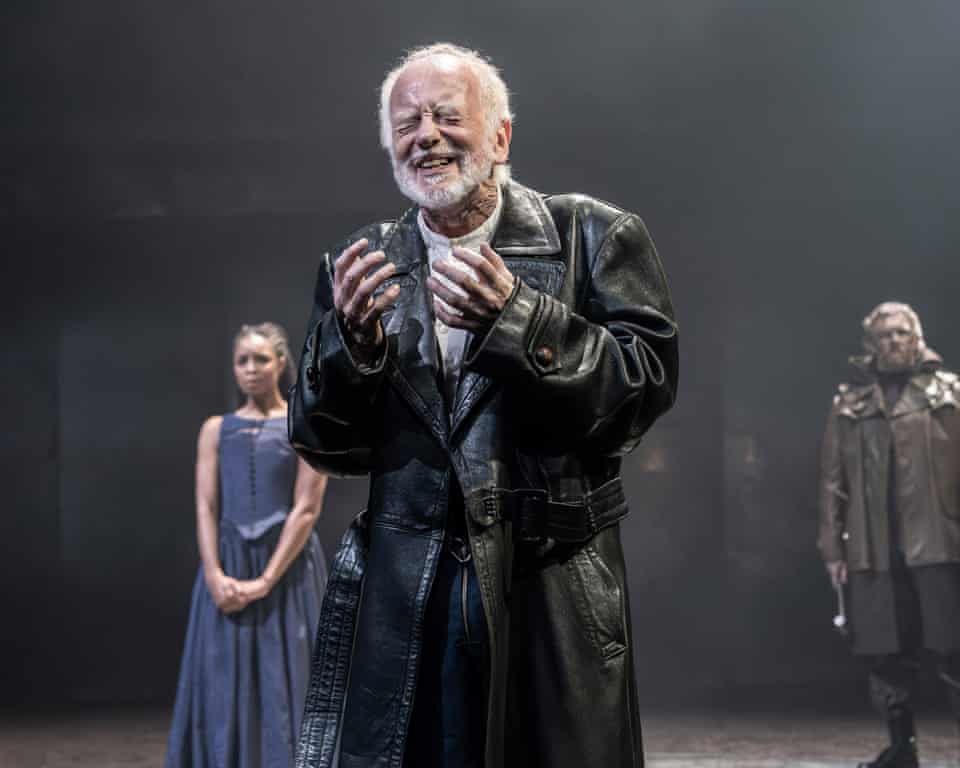
If this performance is nevertheless described as ‘compelling it is so from a deeply unsympathetic view of the performance of the actor OR the direction given by Titas Haldet: there is something slightly inhuman in the assessment that follows the above that the signs of senility are necer tragic but deeply comic, as she tells us that the Fool’s spirited performance as a ‘physical fool’:
amplifies the humour of McDiarmid’s increasingly barmy King; he spends a whole scene shuffling about with his trousers round his ankles.
It would seem that Williams believes that the fault is in the directorial interpretation for she says also tnat:
Elsewhere, some characterisation lacks detail: there’s scant sense of what motivates Justina Kehinde’s Regan or Katie Wimpenny’s Goneril, who seem almost understandably exasperated one minute, and psychotically sadistic the next. Their mutual erotic obsession with Fode Simbo’s Edmund – whose soliloquies are among the clearest, sharpest moments of the production – also seems to come out of nowhere, with little charge between the characters.
Williams summation is even more waspish than the details of her views, saing tha ‘for the most part, Haldar’s production’ is:
gloomy, ponderous and reverent. Perhaps we’ve become overly accustomed to crisply modernised Shakespeare played at speed, but the slow pacing on a large, empty stage saps the urgency and drama and fails to dig into the depths of tragedy. And what is King Lear for, if it fails to move you?
For a one-time schoolboy who first took to loving the stage through Peter Brook, the chatacterisation of an ’empty stage’ as a place also empty of ‘urgency and drama’ is disappointing to say the least. Fortunately, since reading this I came across other reviews. And on the subject of staging both contradict Williams. Take Mark Lawson in The Guardian, who even invokes Peter Brook to characterise setting and staging, which can be guessed at in the still below wherein Edgar and Edmund confront each other, where else but in an empty dark pit. First, here is what Lawson says:
The dark pit of Richard Kent’s design might be a nuclear after-blast. Like Peter Brook’s mid 20th-century stage and film versions, in a previous era of existentialist international tension, the interpretation radiates terminal uncertainty. Characters address pleas and prayers to “the gods” in the direction identified with heaven but with a growing knowing that nothing is there.
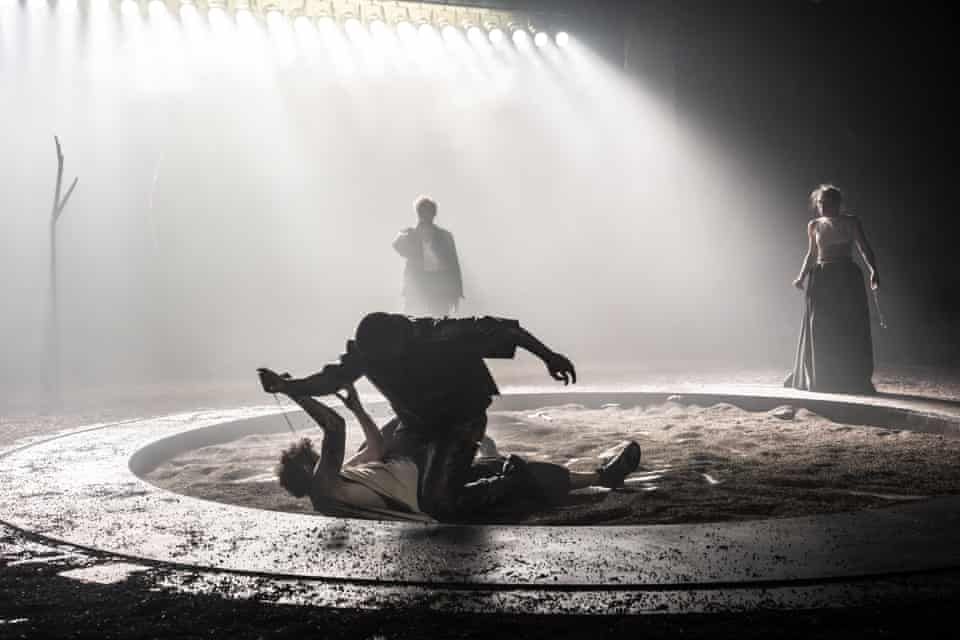
Fode Simbo as Edmund with Harry Redding as Edgar. Photograph: Johan Persson
Lawson hints moreover that Ian McDiarmid is a ‘titanic, heartbreaking wonder’ that interprets for us not ancient British but modern tyranny – like that of Donald Trump, and desired by Nigel Farage, at least before his repentance for some souls ate incapable of repentance, can never be forgiven.
Giggling dirtily when speculating about his daughters having “issue”, he grins manically out of sync with situations. His threat to inflict “terrors” on the world even though he “does not know yet” what they are is not, as often, the forgetfulness of dementia but political bullshitting that wins a knowing laugh from the audience. Leaving his court unsure what he will say or do next, the erratic head of state is also transactional, giving real chill to the dismissal of the banished Cordelia: “Her price has fallen.”
But, while it might be no surprise if this Lear suddenly imposed tariffs on France, the portrait of power is much broader: this demagogue, unfashionably, admits fault and reaches forgiveness.
And although Holly Williams was left cold by the production, Lawson promised better, because he says he was so moved by McDiarmid’s ‘absolute verbal clarity on the required range from explosion to self-reflective emotion’ that when ‘Lear’s heart broke, so did mine’. There is, even in the phrasing Lawson and Williams respectively use, a hint that the capacity, and limitation, of emotion is as often factored in as much by the qualities of the observer as the production observed.
Lawson views the play so that his generosity of complementary feeling alongside it noticed highlights of other performances besides that of Edmund, though liking Fode Simbo too, and praising tne dramaturgy in a manner typical of those knowledgeable about the processes of stage production that one would have thought to be the province of The Stage in commissioning theatre reviews
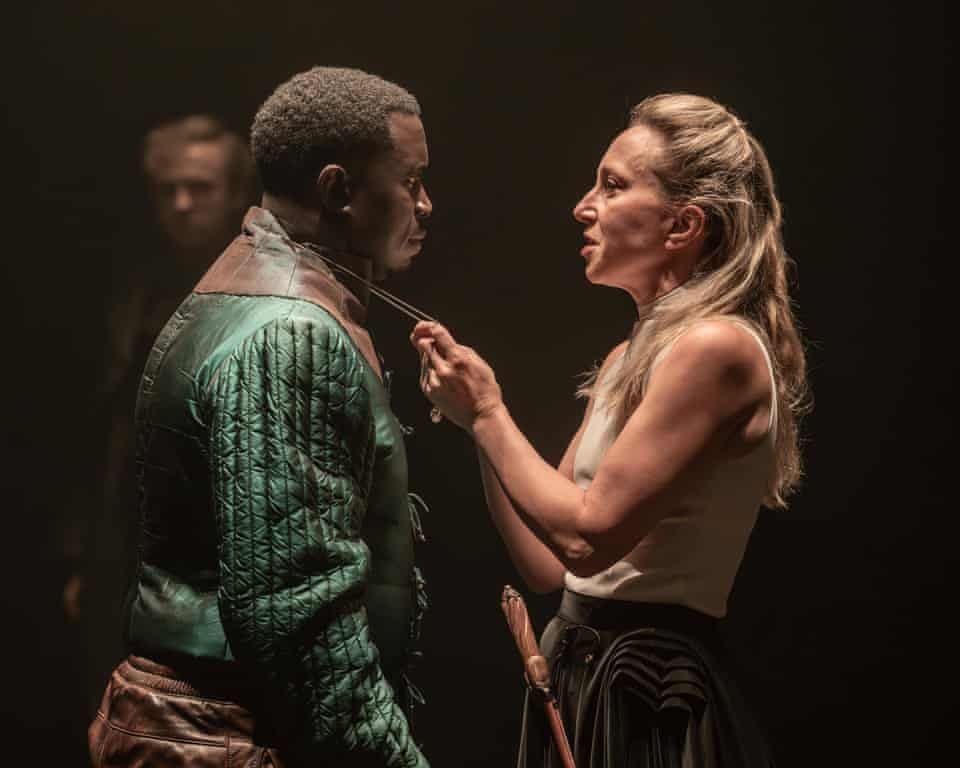
Fode Simbo as Edmund and Katie Wimpenny as Goneril. Photograph: Johan Persson
Dramaturg Sophie Duncan’s skilled elision of variant texts emphasises Edmund, played by Fode Simbo with a manipulative charisma suggesting Gloucester’s bastard son as a cousin of Iago in Othello.
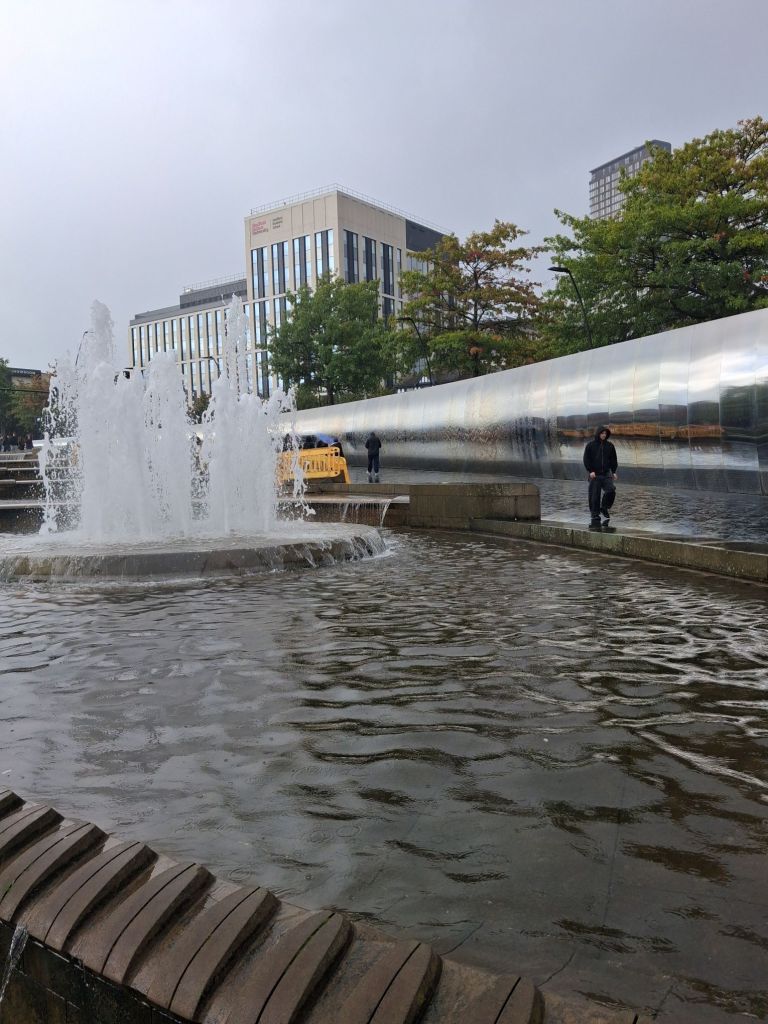
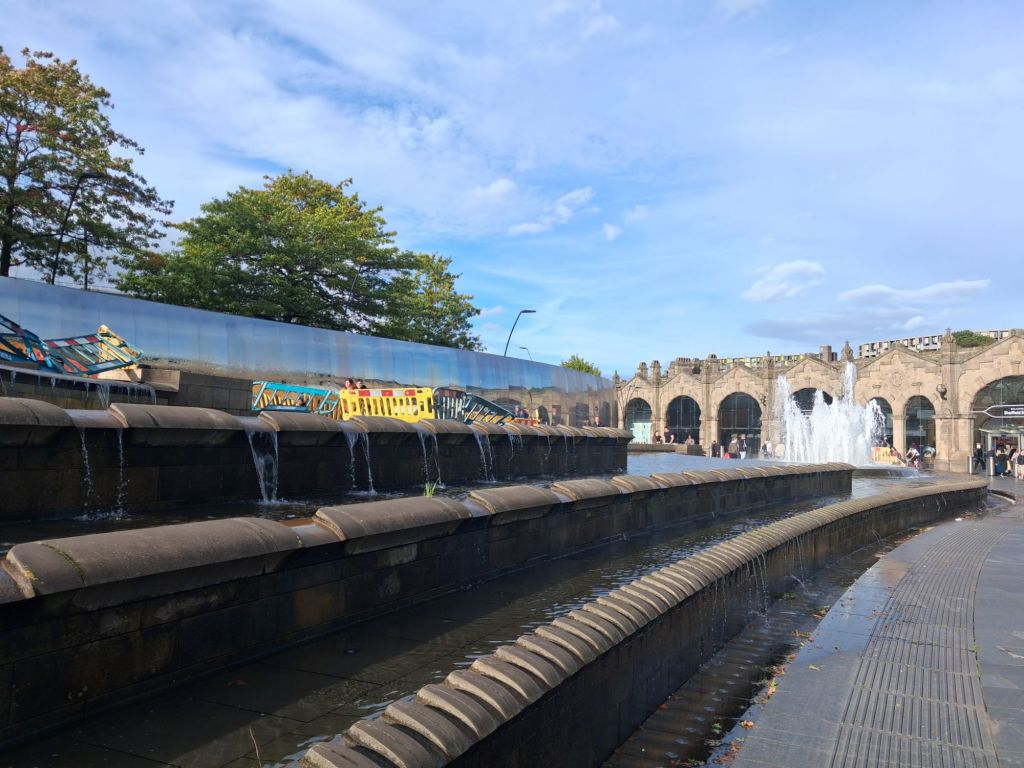
After writing that, I have arrived at the theatre and am sitting in the cafe area,near to a power point that enables to continue. Here are the visuals of city journey where it eas raining.g by the city station fountains, as if Sheffield weren’t wet enough:
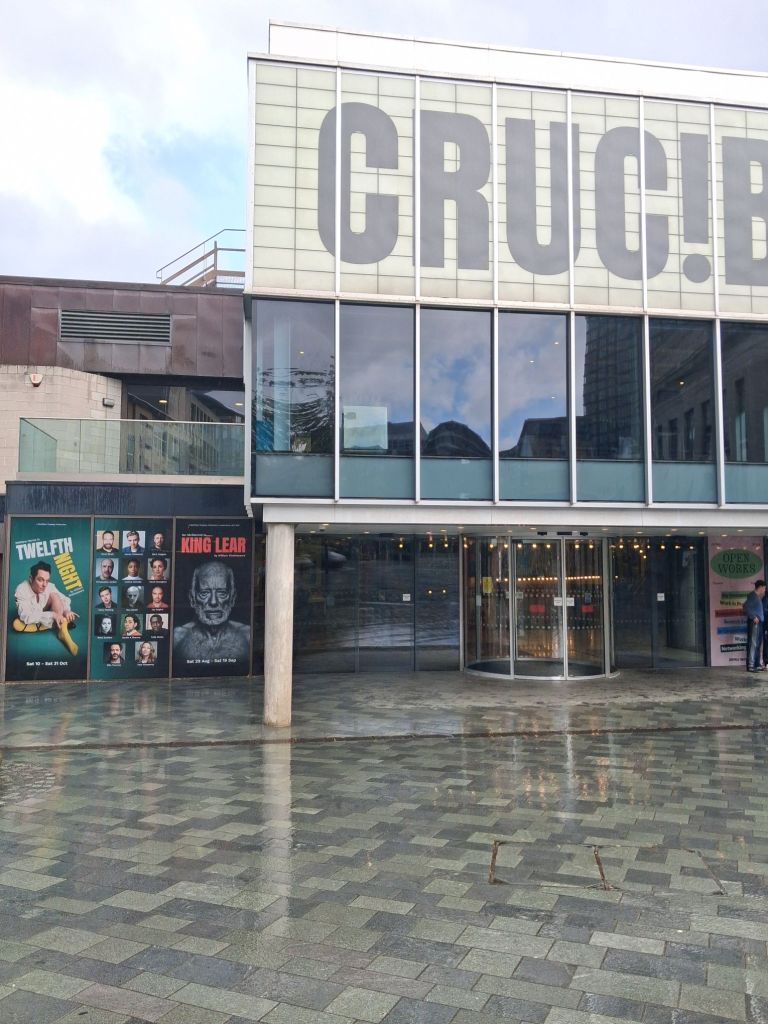
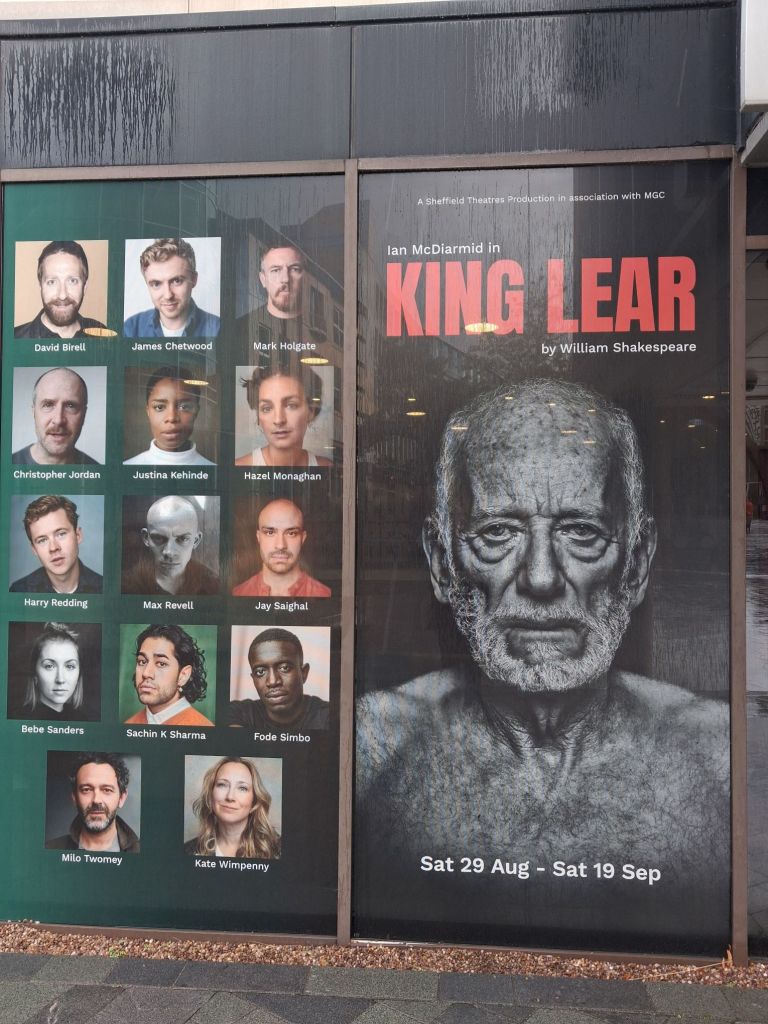
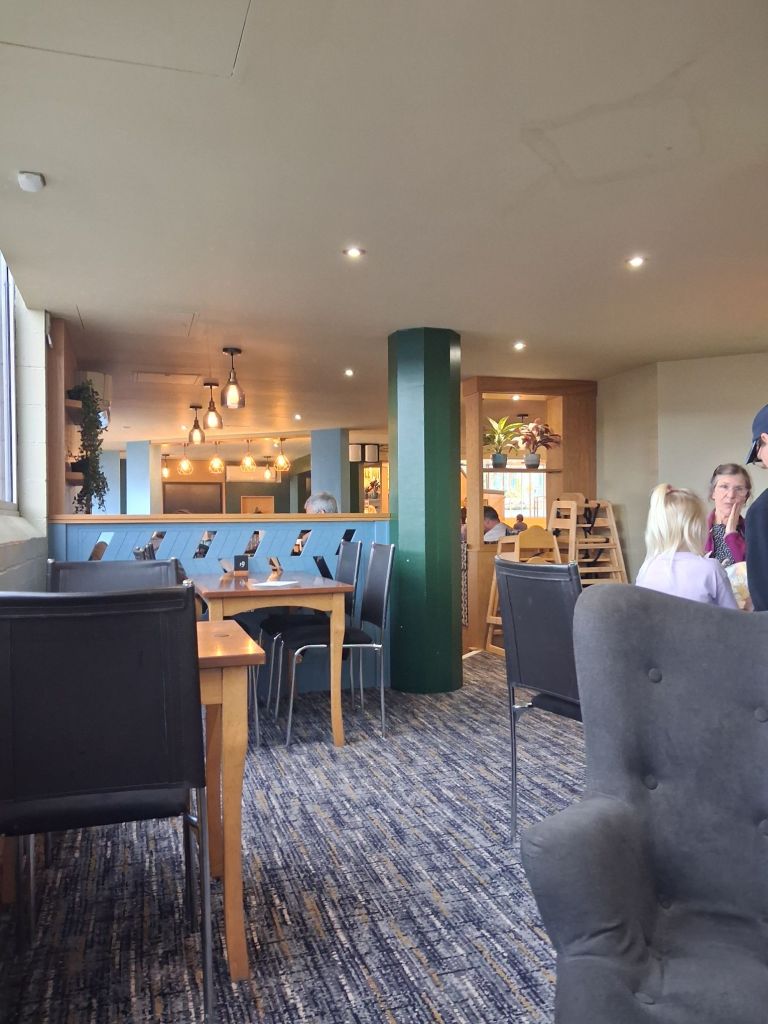
As I sat here, ready too read my pre-ordered programme, I have found another review by Benedict Pignatelli in Theatre Weekly. It chimes with Lawson rather than Williams. Again he praises the play as a finely tuned and directed ensemble, with even warmer words for Fode Simbo as Edmund:
The cast is generally very good. Mark Holgate is a force of nature as Kent, Max Revell uses his impressive athletic abilities to reinvent the Fool to great effect, and the rest of the ensemble provide unique performances that pair well with each other. Fode Simbo takes the most complex character of the play and makes it his own, pulling characters and audience members alike into Edmund’s web of lies while walking a tightrope between hero and villain. Give Simbo fifty years and he’ll be playing Lear.
I glanced at the programme after reading this to find that it contains an article arguing that as a play about an overreacher, like Marlowe’s characters Tamburlaine and Doctor Faustus, a Tragedie of Edmund, Bastard Son of Gloucester, would make a fine contribution union to that genre of Renaissance plays, if one simplified from tne great and humane human tragedy of King Lear. However, Pignatelli admits as he must that,despite the finesse of the whole McDiarmid shines: ‘McDiarmid is sensational, unsurprisingly’, he says.
But, as I wait, both the sympathetic critics I have cited and made me year to see Max Revell’s Fool, clearly much more than a ‘physical clown’, whatever belittlement of talent this involves in Williams.

Lawson, for instance, calls him a ‘fool’ who is ‘also seemingly a chief of staff cum carer to Lear’, praising Max Revell’s use of the skills of:
a dancer with a background in breaking and popping. The result is a spectacularly gymnastic Fool, backflipped by the storm winds and illustrating the jester’s metaphor about a crab by twisting himself into one.
Pignatelli also like Lawson praises the imaginative absences of the mise-en-scène, making a point that contradicts Williams view tbat is a stultifying traditional production, saying that:
… the lack of props refuses to let King Lear be tied to a single era. Ryan Day’s lighting, and the use of ample dry ice, helps complete the spartan scene, leaving the play in the murky world of dreams and nightmare. The use of real fires for the torches is a nice touch, which helps to pull the audience into the drama without it feeling like they are at the theatre.
And how gratifying to read that the director here, after working on the vision of other peoples ‘ Lears:
has returned to make the play his own. King Lear is a triumph. In a time where world politics are increasingly becoming polarised, the world seems to be on the brink of collapse and very possibly war, and the last two American Presidents have been accused of senility, King Lear is as relevant as it’s ever been.
It is now 1 p.m. and the production starts in 30 minutes. I wait enthused and hoping to be pleased. I will let you know once I am on the train back to Durham.
However, the discussion of the reviews was not just a diversion in this blog. It relates to the relevance of having a home for theatre companies to be resident and to re-interpret tradition as well as lived history tbat I am sore missing in Durham, whete differences in critical reading relate to a gift to the community, so hard to find now but in major centres and cities. Shouldn’t Durham be one such?
Anyway, here is the set from my seat. What a space?
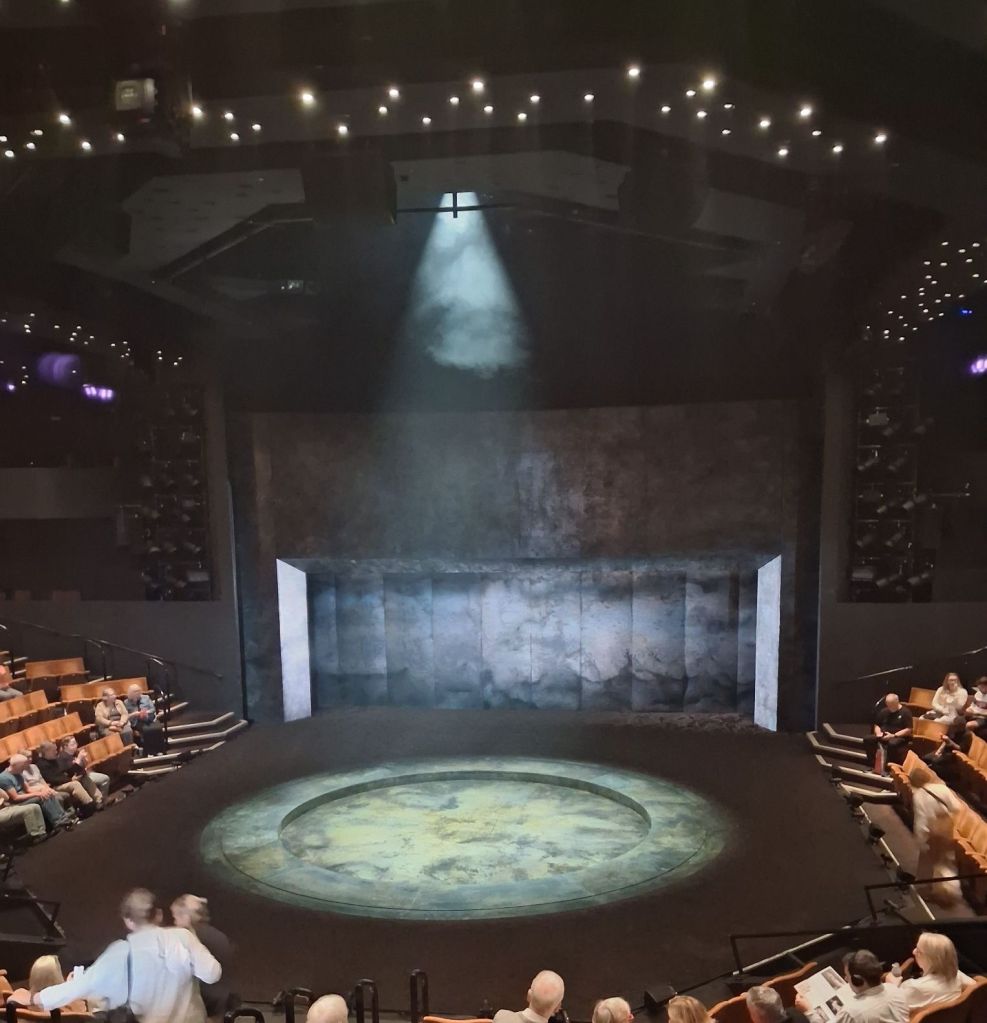
Now, tne first half is over, I realise the subtleties that underly that simple setting. You return to the second half to find tne pit in tne circle filled with black-grey grit and mark tne fact that we have moved from tne marbled halls of governance to elements more basic, nearer to the ground and less decorative, in tne way power like Lear’s beed decorative show until it falls under the weight of the realities that make power what it is, naked violence.
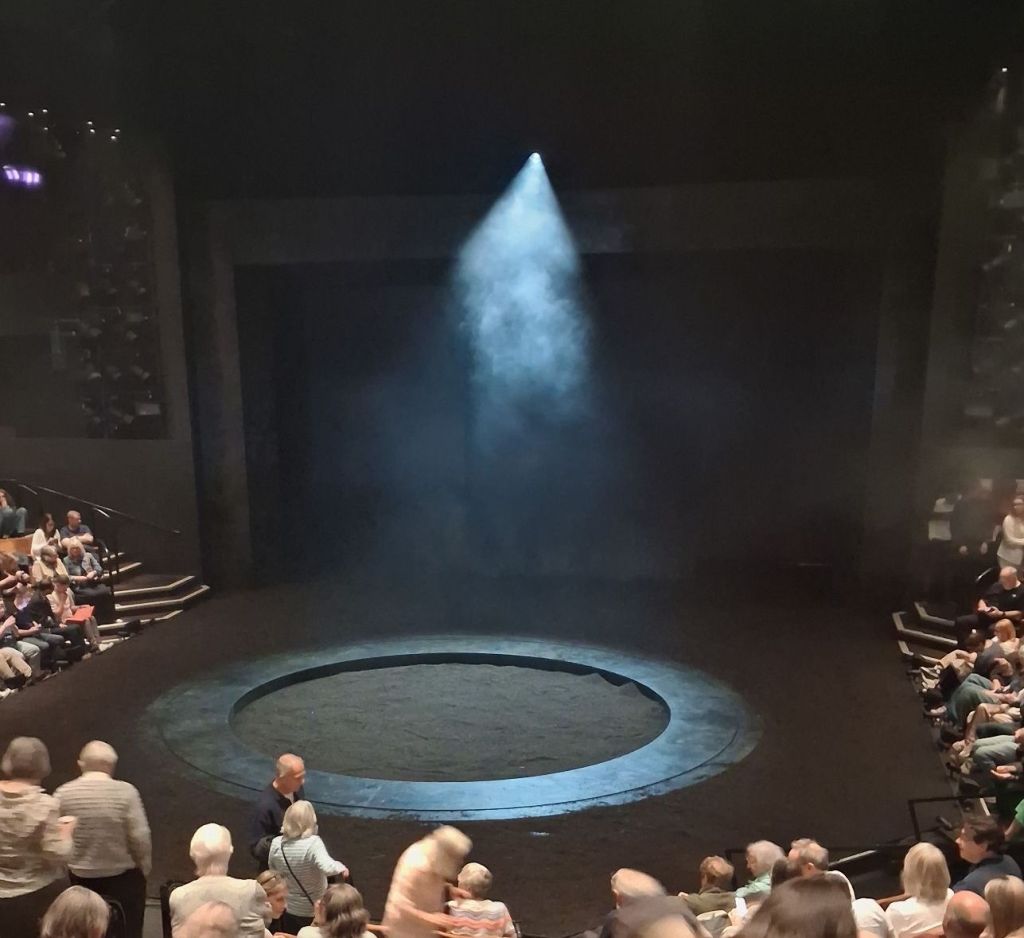
Now for tne next part. This is the finest version of the play I have ever seen, and, now it is over, I still think that, not least in relation to types of unconventional behaviour whether for entertainment of others, play in one’s own interest and what the play calls ‘madness’. The point about this is that the cusp between humour and tragedy is such a thick and fuzzy one. That is what this showed.
As for performances, they were exceedingly fine. It looks likely th Cross-Country delays will make me miss my connection. The play was worth, as it was to see a city with heavy, a square with heart holding three theatres and two galleries around it.
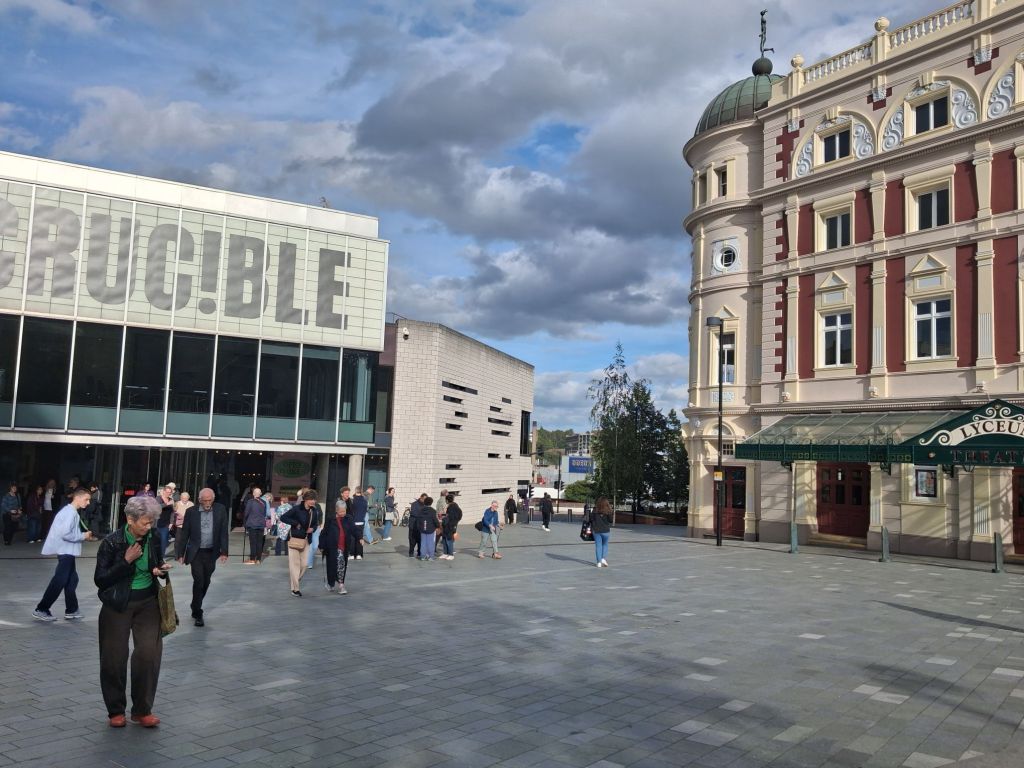
Do I really want to go back to Durham? I must – my heart, my husband, is there!, and Baz our dog, but oh the sense of civic deprivation. Bye for now.
With love
Steven xxxxxxx

