
Let’s assume that ‘who we are’ can release an agency that shapes us beyond ‘who we are and were’ into some refined or reconfigured version of that self in the near or distant future. However, it can only do this by its response to experience. Do novelists deal with the kind of problem any more?

What are the real issues in the relationship of teachers and learners?
I am in the process of reading Elizabeth Strout’s latest novel (published in 2026) The Things We Never Say. Last night I came across this passage in which something like that authorial voice is heard, just as we hear it in Henry Fielding and George Eliot, as it pushes aside the story, sits in front of us (centre-stage as it were) and orates wisdom on the basis of what it as a storyteller has just narrated, shaping that narrated experience into a piece of moral knowledge. I can’t remember when I saw that in a contemporary novel last – at least as plainly authorial and not a kind of extrapolation of the consciousness or point of view of one of the characters.
The character Artie Dam, a high school teacher, has just intervened into a situation in which one of his students, Rhonda Lazarre , has been, as he sees it, shown disdain by fellow students whilst in the corridor. He intervenes even though he was not involved in the situation but not to chastise the girls who did the supposed offence but to single out Rhonda for his attention and give reason for her to able to raise her self-esteem in public. We are told, and this feels like George Eliot, that Rhonda at the moment made the decision to seek to become a minister and that ‘she carried with her that memory and connected it to the future, and it was a good future for her; …’. [1] The paragraph ends with the sentence: ‘God bless, Mr Dam’, which might be a record of how Rhondda from thence responds to her memory of Artie Dam, her teacher, or an authorial statement. Because of the fact that the statement requires for its full force, the authority of someone with a religious vocation, we tend to think it must be a statement channelling Rhonda’s point of view, either now or in her future ministerial role. But that may be because we don’t have much faith any more in the analogy that allows us to believe in omniscient authors – the model of that mode of being, God the Creator.
Then follows this: [1]

Maybe I am easily shocked, but this shocked me just as much as the beautifully choreographed rhythmic prose delighted me (a common thing in Elizabeth Strout’s novels and why she is so admired as a novelist by other novelists). There is a modernity to the prose, of course, in the use, for instance, of a chattily formed present participle for a verb in the last sentence, even though it represents a considered moral aperçu or insight (the French term still seems more acute a word for what it is): ‘Thinking all the while we can see’. But this sentence rolled out into Victorian periodic sentences could have been like this from Chapter XX of Book 2 of Middlemarch. And indeed Victorians allowed themselves prolixity when morality is concerned (in prose or verse). This is so much the case that George Eliot extends her most well-known moral insight to cover her authorial intrusions into two consecutive chapters of her novel.
The piece I am thinking of concerns can be represented by two well-known extracts both of which have launched haunting phrases that can still be used as novel titles in our century, especially The Other Side of Silence. Dorothea Brooke, newly married, has become Dorothea Casaubon, her husband being an older man and a scholarly cleric, though a rich one with a fine house and estate. Edward Casaubon decides to combine his honeymoon with Dorothea with the chance of doing research in the dusty archives of the Vatican, even though Dorothea’s sensibilities are, as might have been expected of someone whose idea of art was ‘chiefly of the silkscreen sort’, under stress of the ‘weight of unintelligible Rome’ expressed not only in its art but the burdens of both Imperial and Papal power, and yearn for guidance under this weight. The advent onto the scene of Casaubon’s ward, the artist Will Ladislaw, a young and sexually attractive man, might seem a boon in providing such guidance, but Casaubon, seeing the common youth of his wife and ward in one place, suddenly falls into a jealousy he cannot even recognise, so shallow is the flow of his sexual interests. Dorothea is not only vulnerable but surprised that she could, so soon after her wedding, find something to criticise in her husband, whom she still barely knew, could hardly see. In Book 2 Chapter XX, before Ladislaw has yet disturbed things further, Eliot sits back to consider how significant are Dorothea’s feelings when she falls into solitary tears in her chamber, given they must be common in ‘souls in their young nudity’.

Not that this inward amazement of Dorothea’s was anything very exceptional: many souls in their young nudity are tumbled out among incongruities and left to “find their feet” among them, while their elders go about their business. Nor can I suppose that when Mrs. Casaubon is discovered in a fit of weeping six weeks after her wedding, the situation will be regarded as tragic. Some discouragement, some faintness of heart at the new real future which replaces the imaginary, is not unusual, and we do not expect people to be deeply moved by what is not unusual. That element of tragedy which lies in the very fact of frequency, has not yet wrought itself into the coarse emotion of mankind; and perhaps our frames could hardly bear much of it. If we had a keen vision and feeling of all ordinary human life, it would be like hearing the grass grow and the squirrel’s heart beat, and we should die of that roar which lies on the other side of silence. As it is, the quickest of us walk about well wadded with stupidity. [2]
No-one has improved I believe on the rhetoric of this moral aperçu, in its full extension, the latter being something Strout would not dare to try in our age of literature. The idea will almost obsess Eliot – how sensitive are we supposed to be to feelings that are common enough (the subject of a convesation betwen Hamlet and his mother and stepfather at the opening of that play)!
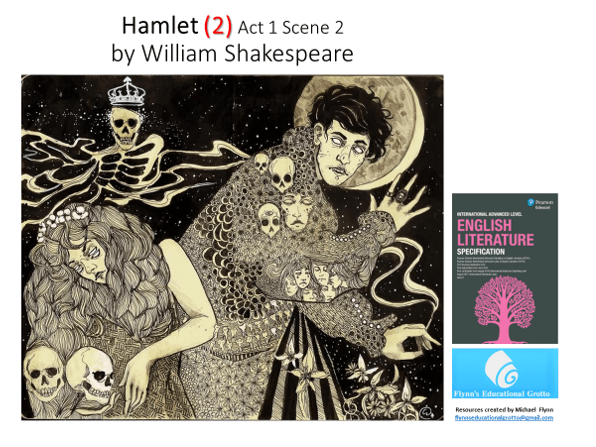
KING: How is it that the clouds still hang on you?
HAMLET : Not so, my lord; I am too much in the sun.
QUEEN : Good Hamlet, cast thy nighted color off,
And let thine eye look like a friend on Denmark.
Do not forever with thy vailèd lids
Seek for thy noble father in the dust.
Thou know’st ’tis common; all that lives must die,
Passing through nature to eternity.
HAMLET : Ay, madam, it is common.
QUEEN  If it be,
Why seems it so particular with thee?
HAMLET : “Seems,” madam? Nay, it is. I know not “seems.”
’Tis not alone my inky cloak, good mother,
Nor customary suits of solemn black,
Nor windy suspiration of forced breath,
No, nor the fruitful river in the eye,
Nor the dejected havior of the visage,
Together with all forms, moods, shapes of grief,
That can denote me truly. These indeed “seem,”
For they are actions that a man might play;
But I have that within which passes show,
These but the trappings and the suits of woe.
KING : ’Tis sweet and commendable in your nature, Hamlet,
To give these mourning duties to your father.
But you must know your father lost a father,
That father lost, lost his, and the survivor bound
In filial obligation for some term
To do obsequious sorrow. But to persever
In obstinate condolement is a course
Of impious stubbornness. ’Tis unmanly grief.
It shows a will most incorrect to heaven,
A heart unfortified, a mind impatient,
An understanding simple and unschooled.
For what we know must be and is as common
As any the most vulgar thing to sense,
Why should we in our peevish opposition
Take it to heart? Fie, ’tis a fault to heaven,
A fault against the dead, a fault to nature,
To reason most absurd, whose common theme
Is death of fathers, and who still hath cried,
From the first corse till he that died today,
“This must be so.” We pray you, throw to earth
This unprevailing woe and think of us
As of a father; for let the world take note,
You are the most immediate to our throne,
And with no less nobility of love
Than that which dearest father bears his son
Do I impart toward you. For your intent
In going back to school in Wittenberg,
It is most retrograde to our desire,
And we beseech you, bend you to remain
Here in the cheer and comfort of our eye,
Our chiefest courtier, cousin, and our son.
QUEEN : Let not thy mother lose her prayers, Hamlet.
I pray thee, stay with us. Go not to Wittenberg. [3]
The same debate is there of course. The parents urge the ‘common theme / Of death of fathers’ to cut short Hamlet’s claim to see his situation as ‘tragic’, and to act his part as Prince, courtier and son rather differently, but he insists he has ‘ that within which passes show’.
George Eliot faces a different pressure. Is it wrong to demonstrate tragic feeling in a case so common a public figure ought to be tightening up the resolve of the one given to falling into tragic moods – or crying, the equivalent for a young woman. But there is another reason why we should not move too deeply into ‘that within that passes show’: the reason being that human psychology will not and perhaps dare not feel too much of the emotion in the world which it is possible to disregard: what, after all would ‘a keen vision and feeling of all ordinary human life’ be like? It ‘would be like hearing the grass grow and the squirrel’s heart beat, and we should die of that roar which lies on the other side of silence’. There is therefore good cause for the moral sensibilities to be ‘wadded with stupidity’.
Within the next chapter (XXI) an encounter with Will has led to a breakdown in Dorothea’s communication with Casaubon, but the ‘stupidity’ is not only located in the cleric’s ‘stupidity’ (already explained by Will, for it extends even to Casaubon’s outdated scholarship) but in Dorothea’s inability to see that Casaubon is not just the ‘great man’ she thinks he still is, but someone too who has feelings that can be hurt, even if he expresses his hurt differently. After their first marital argument, Dorothea begins to learn a lesson not yet completely absorbed by her – even though she is more sensitive than others (and obviously so Will and Edward, the men who claim to love her), and will remember what she has learned of the feelings of Casaubon as a general lesson in moral feeling – melting the wadding of stupidity and self-centredness so that she can see more clearly a world that requires morally informed eyes to see the nuance of light and shadows.
But Dorothea remembered it to the last with the vividness with which we all remember epochs in our experience when some dear expectation dies, or some new motive is born. Today she had begun to see that she had been under a wild illusion in expecting a response to her feeling from Mr. Casaubon, and she had felt the waking of a presentiment that there might be a sad consciousness in his life which made as great a need on his side as on her own.
We are all of us born in moral stupidity, taking the world as an udder to feed our supreme selves: Dorothea had early begun to emerge from that stupidity, but yet it had been easier to her to imagine how she would devote herself to Mr. Casaubon, and become wise and strong in his strength and wisdom, than to conceive with that distinctness which is no longer reflection but feeling—an idea wrought back to the directness of sense, like the solidity of objects—that he had an equivalent centre of self, whence the lights and shadows must always fall with a certain difference. [4]
It us easy to miss that Eliot equates ‘moral stupidity’ with wadding, a layer, presumably of fat, that covers a leaner sharper sensibility made up of nervous receptivity. When Eliot says as a general truth that the ‘quickest of us walk about well wadded with stupidity’, we imagine the personification of our moral selves as not only wadded but waddling on tubby legs. The satirical effect is the equivalent of the ‘fat sighings‘ described as emanating from Mrs Musgrove at the dire fate of daughter, Louisa, on her holiday in Lyme Regis in Jane’s Austen’s Persuasion and with the same ‘regulated hatred’ (as D. W. Harding described Austen’s attitude to bland and socially comfortable ordinariness).
When taken up again in our last quoted passage (from Chapter XXI in Book 2 of Middlemarch) we learn that ‘moral stupidity’ is innate – like baby fat perhaps. In a moral event she describes as epochal, Eliot shows that situations in our experience change us, or can do if (like Dorothea) we are receptive to them in order for us to see that any person has potential vulnerability and the demand (if not the right) for it to be observed – they have an ‘equivalent centre of self, whence the lights and shadows must always fall with a certain difference‘.
That latter phrasing is nearly as famous as that about ‘the other side of silence’, but it addresses a similar moral paradigm – that if we get out from under our too copious fleshly selves, we will see that others have needs as well as we, however hungry our ego, have needs. The same relation of selfishness to feeding is observed here – we use the world as a ‘udder’. It is the most astonishing perception that in showing that all babies (male and female, calves or humans babies), and in the interests of their own self-growth, abuse their mothers first and foremost before their selfishness has the ability to take wing and enjoy the scrunch or be scrunched morality of capitalism, as explained by Mr. Boffin in Charles Dickens’ Our Mutual Friend.
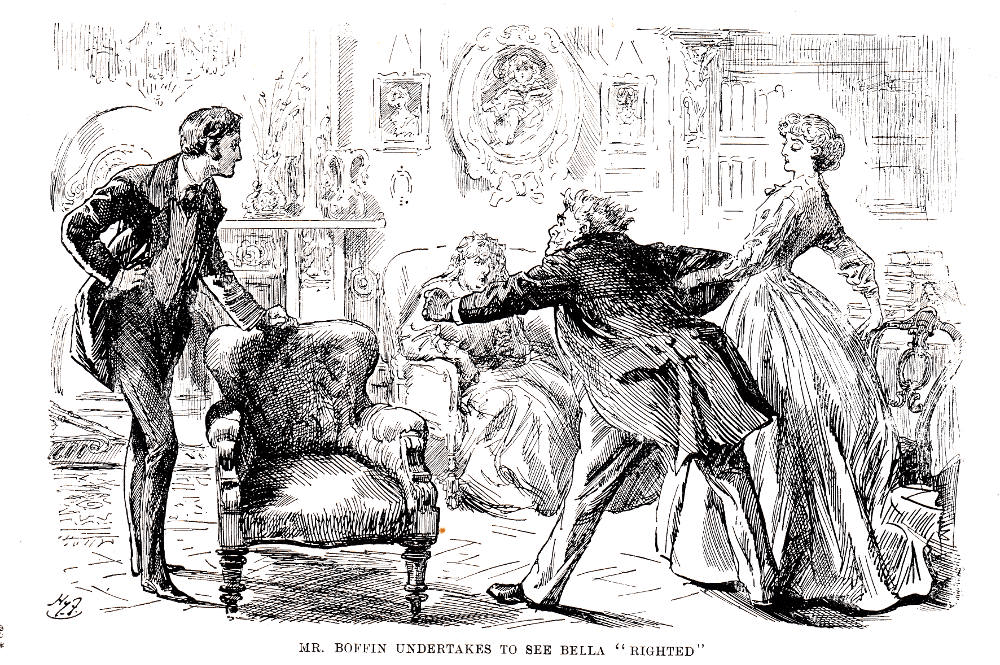
This idea that ethics equated with the capacity of seeing that the world appears differently to different persons is the basis of high Victorian morality, and it isn’t pushed as much in the modern novel as then, but let’s look at that passage from Strout again:
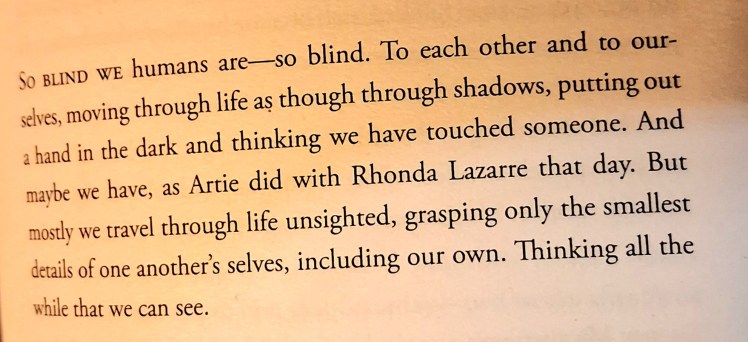
The difference in vision here is between ‘blindness’ and seeing, although it is clear that, as the application of that metaphor proceeds, Strout sees the range from full sight to blindness as a graduated one, in which differences of degree are shown by the accumulation of ‘shadows’, as perhaps with Middlemarch – because the shadows gather again for Dorothea Casaubon in the grounds of Lowood House, her husband’s home, just after his death. But the metaphor is extended beautifully because it varies the senses with which people people detect each other, including not only sight but ‘touch’. Those ‘unsighted’ may feel the need of ‘grasping’ objects around them all the more to test their solidity and reality, if auditory senses lack an appropriate object like the visual ones do. And isn’t Strout’s passage so like Eliot’s, if not in written style. She realises that most of us and most of out time satisfy ourselves only by ‘grasping only the smallest details of one another’s selves’, and in doing so, grasping is hardly a means of attempting to know someone with empathy. It sounds more like scrunching them before they scrunch you. I am still reading the Strout novel, but I have found in it a moment where the George Eliot moral metaphors appear again and in expression of an ethical paradigm wherein Artie learns that even a ‘good man’ like him sees the world of others perhaps more selfishly than he knows he is doing. Take this isolated sentence-long paragraph, for instance:
FOR ARTIE IT WAS as though he had lived these many years looking at things from one angle, and now it was as though someone had turned him partly in a different direction and everything – everything – looked different.
Just consider how that relates to the meaning of Eliot’s ‘authorial intervention’ about conceiving ‘with that distinctness which is no longer reflection but feeling—an idea wrought back to the directness of sense, like the solidity of objects—that he had an equivalent centre of self, whence the lights and shadows must always fall with a certain difference’. My preference is with Eliot but yet I see that Strout uses a new idea – one not articulated in 1850 but certainly well before 2026, which is Piaget’s account of how magical thinking and cognitive egocentrism is overcome in children. It is not about the loss of selfishness but it is cognate to the possibility of moral thought .
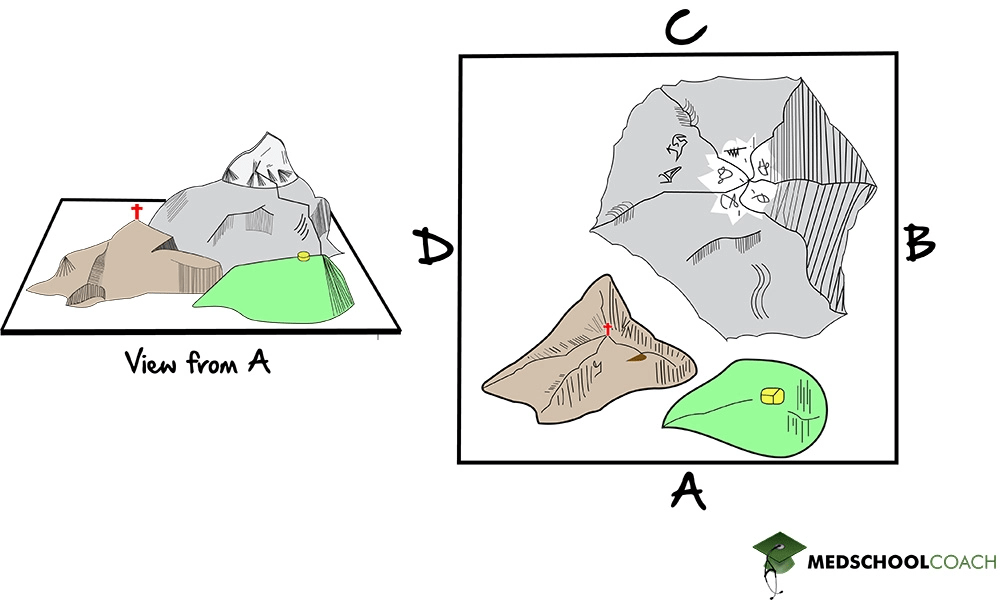
In Piaget’s magic mountains tests, the child is literally turned in different directions facing a scale model of three mountains with a hut-like building on one side of one and a cross on top of another and asked where the hut and cross is from the perspectives A, B. C and D. From C the child is ‘unsighted’ in relation to both hut and cross, from B only unsighted to the cross, but from D and A can see both. But how old is a old before it understands that perspective does not eradicate the existence of the unseeable. Piaget concluded that children ban do this once the are in the operational stage of cognition/ thinking and that this occurs on average at the age of 7, although, like all other development theories, this is contested.
How does this relate to our prompt question? It does so, first of all being being clear that we are shaped by the interaction of forces that compromise ‘who are are’ and our experience. The two are not even binaries, for whether we know ‘who we are’ until we experience certain things is an important idea – it is certainly raised in Strout’s wonderful novel, which I will return to after I have finished it (hopefully today – Tuesday) and after my visit to London for a culture-fest on Wednesday – Thursday, this week. It is not a question we should even attempt to answer, for it presupposes too much about both how we know and express our knowledge of both self and the world. Or perhaps everything we write is an attempt to answer it, utilising the dynamism between what our-self currently is and our current experience to see what both might develop into.
But read Strout. She is a miraculous novelist, and this novel really investigates whether the experience of a world that embraces the vile idiocy of the Donald Trump world view really can remain unchanged – whether is has the ‘free will’ to enable that. But then again does Trump have ‘an equivalent centre of self, whence the lights and shadows must always fall with a certain difference‘, that it is our duty to take into account. This is why I said that the answer to this is not whether anyone has the right to demand that of us, but whether our duty extends thus far. Never ever keep your mind off Gaza and its fate under Trump and his greedy hunger to turn it into a luxury beach resort and leisure venue for the rich (see the picture below for the Trump vision for Gaza film he commissioned for his social network Truth Social)- maybe sometimes you need to scrunch or be scrunched. Let’s pretend that is an open question! Bye for now.

With love
Steven xxxxxxxxxx
___________________________________
[1] Elizabeth Strout (2026: 57) The Things We Never Say London, Viking, Penguin.My photograph that follows it is of the subsequent paragraph on that page.
[2] George Eliot Middlemarch Book 2 Ch. XX (text available at: Middlemarch | Project Gutenberg https://www.gutenberg.org/cache/epub/145/pg145-images.html
[3] William Shakespeare Hamlet Act 1, Scene II, ll. 70ff. Availalable at: Hamlet – Act 1, scene 2 | Folger Shakespeare Library, https://www.folger.edu/explore/shakespeares-works/hamlet/read/1/2/?q=common#line-1.2.70
[4] George Eliot Middlemarch Book 2, op. cit., (Chapter XXI)
[5] Elizabeth Strout op. cit: 102


2 thoughts on “Let’s assume that ‘who we are’ can release an agency that shapes us beyond ‘who we are and were’ into some refined or reconfigured version of that self in the near or distant future. However, it can only do this by its response to experience. Do novelists deal with the kind of problem any more?”