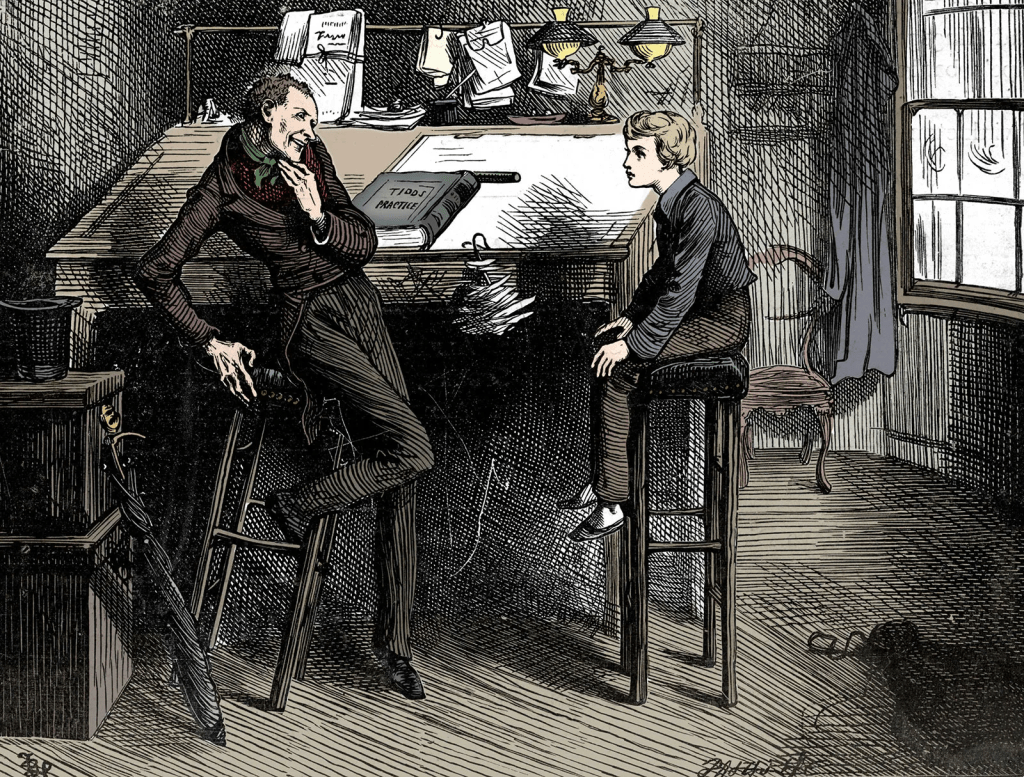
Invited to imagine ‘your life’ as a book, the convenient thing about what you’d call a ‘chapter’ in it, is that it ends and pauses before another chapter begins. Is that because your life changed at some point or because, after the event, you want to write it as if it had?
One of the great beauties of writing an autobiography, a written story of the life you have passed thus far, is that, in writing it, you have the advantage of interpreting it, or any part of it, with a different view of what it all means now, or should as far as you are concerned mean now, from what it seemed to mean either to you or to others as you lived through that life in part or whole. Another great beauty is that the convention governing novel writing allows you to segment your remembered life as if its meaning could change between segments. Great authors often exploit the notion the ambiguity in the term ‘my life’: when we see that term, we can refer to some supposed experience of living as it indeed was or to some objectified form of it embodied in a story. When that life is recounted in a way deemed publishable, ‘my life’ can be the name we give to our autobiography, the ‘book of our life’.
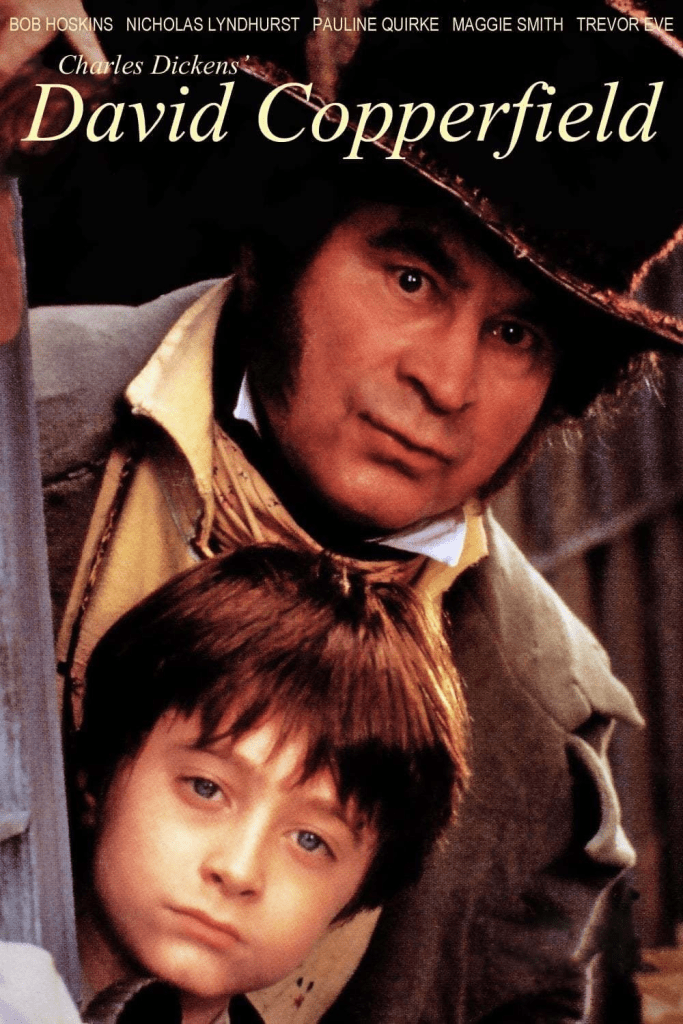
All of us however tend to talk as if every time we reflect on our memories about ourselves, those memories fall into sections divided from each other, each with its own beginning and end. Dickens in 1850 wrote David Copperfield, adding more than a little to David’s experience that was his own though much changed in detail, partly by imagining at least two Davids from the very start – David Copperfield the elder sitting down to to write his autobiography, ‘this life’ , and the person he was writing about at the time of which he was writing. From the start, it is clear that that second David Copperfield mentioned was not aware of what the writer thinks he knows in retrospect, in some cases because he was not fully a conscious being at the time. Take the opening three sentences of David Copperfield:
Whether I shall turn out to be the hero of my own life, or whether that station will be held by anybody else, these pages must show. To begin my life with the beginning of my life, I record that I was born (as I have been informed and believe) on a Friday, at twelve o’clock at night. It was remarked that the clock began to strike, and I began to cry, simultaneously.
Clearly, as a book made of pages turned by a reader, ‘the hero of my own life’ is a matter to be discovered, at the point of reading thus far. David shows that he can begin any chapter (this one is called ‘I Am Born’) in any way , as a writer, he thinks fit, though such choices were not open to the baby referred to, not yet born, gendered nor named. Whatever the time passing is to mean, the writer can make that time and the self he is currently writing about act together simultaneously – why presumably he shows us that a clock marking the time of his birth is striking simultaneously as he is born. It is not the first nor the last time David will find himself ready to cry as time strikes his progress.
However, this reflexive turn of phrase in which ‘your life’ is both the thing spoken or written about and the written or spoken story is a common enough thing. I like to hear even very young children say, as they often do, that this thing of which they speak is the best thing in ‘their WHOLE lives’, with that emphasis, especially when that life is a thing limited to very few years thus far. It is not a habit we drop, that of objectifying our LIVES as if they were being turned by a new experience into a new chapter of either events or understanding of the meaning of one’s ‘life’. What is clear is that ‘my life’ , even as we speak of it, is not one thing but, at the least, two things – the life as I tell it and the life as it is lived. The word ‘history’ has a similar ambiguity, as Thomas Carlyle never tired of saying as a historian, philosopher and biographer of ‘lives’ or life-histories, even his own in his Reminiscences.
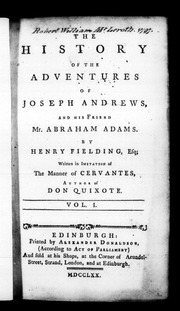
The matter gets extended when we start using the convention of writing that regulates how large accounts are to be divided up into segments – are used to reflexively describe our lives as we live them, when we refer in talk or letters to determining to ‘begin a new chapter’ in such lives or ‘turn a new page’ for lesser revolutions of events or consciousness of them. Henry Fielding was very conscious of this as a novelist of the eighteenth century, seeing the problem of ‘chapter’ writing developing even in the sectioning of long tales by Homer and Virgil, the latter with the example of the former behind him, and Milton with the ‘advantage’ of both models. In his first notable novel, Joseph Andrews, Fielding even makes a point of considering what chapters mean to authors and /or readers in that and other book when they are divided into connective ‘Books’, each of which is divided into chapters with headings such as would become, in books that had them, chapter titles like ‘The Hard Years‘ referred to in this prompt question. In Book Two of Joseph Andrews, Fielding interrupts the story of Andrew’s life with a chapter he entitles ‘Of Divisions in Authors‘. Here are the first few paragraphs:
There are certain mysteries or secrets in all trades, from the highest to the lowest, from that of prime-ministering to this of authoring, which are seldom discovered unless to members of the same calling. Among those used by us gentlemen of the latter occupation, I take this of dividing our works into books and chapters to be none of the least considerable. Now, for want of being truly acquainted with this secret, common readers imagine, that by this art of dividing we mean only to swell our works to a much larger bulk than they would otherwise be extended to. These several places therefore in our paper, which are filled with our books and chapters, are understood as so much buckram, stays, and stay-tape in a taylor’s bill, serving only to make up the sum total, commonly found at the bottom of our first page and of his last.
But in reality the case is otherwise, and in this as well as all other instances we consult the advantage of our reader, not our own; and indeed, many notable uses arise to him from this method; for, first, those little spaces between our chapters may be looked upon as an inn or resting-place where he may stop and take a glass or any other refreshment as it pleases him. Nay, our fine readers will, perhaps, be scarce able to travel farther than through one of them in a day. As to those vacant pages which are placed between our books, they are to be regarded as those stages where in long journies the traveller stays some time to repose himself, and consider of what he hath seen in the parts he hath already passed through; a consideration which I take the liberty to recommend a little to the reader; for, however swift his capacity may be, I would not advise him to travel through these pages too fast; for if he doth, he may probably miss the seeing some curious productions of nature, which will be observed by the slower and more accurate reader. A volume without any such places of rest resembles the opening of wilds or seas, which tires the eye and fatigues the spirit when entered upon.
Secondly, what are the contents prefixed to every chapter but so many inscriptions over the gates of inns (to continue the same metaphor), informing the reader what entertainment he is to expect, which if he likes not, he may travel on to the next; for, in biography, as we are not tied down to an exact concatenation equally with other historians, so a chapter or two (for instance, this I am now writing) may be often passed over without any injury to the whole. And in these inscriptions I have been as faithful as possible, not imitating the celebrated Montaigne, who promises you one thing and gives you another; nor some title-page authors, who promise a great deal and produce nothing at all.
This is hardly the best of Henry Fielding but it does strike an important note right at the beginning of novel-writing proper. It treats writing as a trade (the passage – for a joke presumably against the eighteenth century book trade – goes on to consider whether Homer wrote the Iliad in sections so he could have, ‘according to the opinion of some very sagacious critics, hawked them all separately, delivering only one book at a time (probably by subscription)‘. The note it strikes is that book conventions like division into sections and sub-sections may be a matter of imitation of models but has a function too – not least for the reader. Fielding wrote the novel in the manner of Cervantes’ picaresque adventures involving a journey – though The Odyssey isn’t far from that either – and Joseph Andrews’ journey with the wonderful sage version of Sancho Panza, Parson (Abraham) Adams, is a journey with many pauses at inns, where much often happens to the beautiful Joseph unlike the rests between chapters in a book.
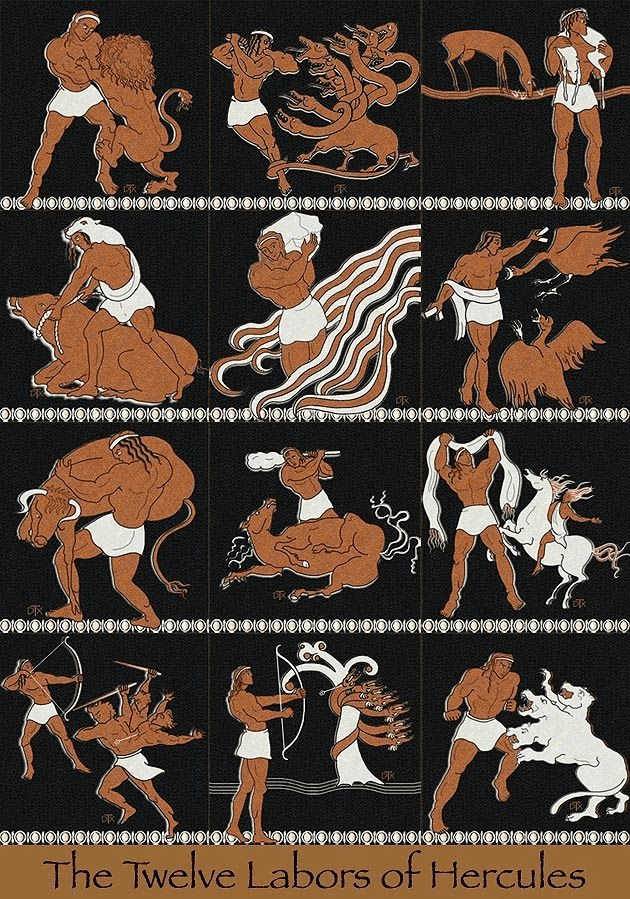
However, we are invited to title a chapter of our written life The Hard Years. Much is promised by the title though the attitude fostered by the promised ‘hard’ (by which I suppose is meant ‘difficult’, life-events is not foretold. Will this be a story of heroic progress through labours harder than those of Hercules.
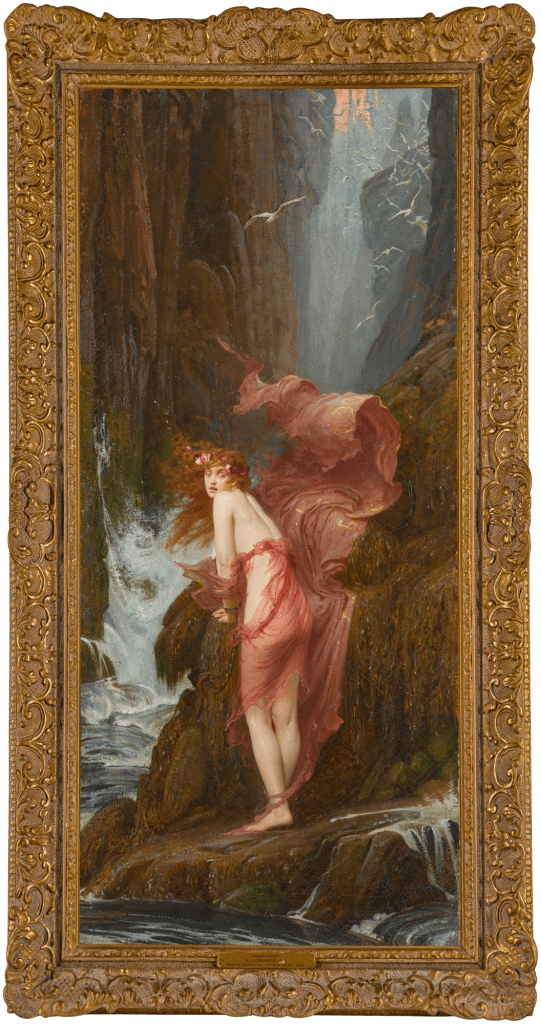
Or will this be a story not of a ‘hero’ of one’s own life, such as Copperfield wonders if he will be, but of a victim, struck down by hard years of being oppressed and put down, or cancelled as very rich and powerful people like Nigel Farage and J.K. Rowling pretend to be their past fate, merely for being proponents of fascist exclusion of otherness. Such a chapter presents the story’s passive focus as an Andromeda awaiting an end that might be being eaten by a sea-monster or saved by a hero like Perseus.
When will the ‘hard years’ end and how, asks Andromeda, looking back to find the monster she fears or the hero she desires, can I get through this.
The thing is that chapters end as surely as they begin and the point of a chapter you entitle The Hard Years is heading surely towards its rest up for reflection at the end of its chapter and the beginning of new one: The Soft Years , perhaps, but usually not thus titled because heroes oft hide their lax wealthy indolence – though I do not necessarily speak of Rowling and Farage – wherein they appear both ‘entitled’ and eventually, status quo institutions being what they, are literally ‘titled’ as Lord Farage and Lady Rowling. A good next chapter title more likely is The Path Upwards, or for faster movers The Years of Achievement. The idea behind my cynicism here is that the point of entitling your chapter The Hard Years is to presuppose that one ‘got through it’, by virtue that it is a chapter and not the whole book, unless it is the last chapter. It being the last chapter is not an endings assumed by the question as appropriatefor our life storybook, intended as it is for the peoples where lives are not deliberately being made difficult to the point of being ‘nasty, short, and brutish’ in Thomas Hobbes’ words, like the people, and particularly the youngest children, of Gaza and Lebanon.
We like oor happy endings in the North and West of the Globe. We like to attribute our good fortune to our own efforts – others’ misfortunes to their sins and errors (we call it the self-serving bias in cognitive psychology), whilst barely being aware that our systems depend on the success of the few at the cost of the many, and on the preservation of differentials of power by the powerful in their own interests. I suspect in our The Hard Years chapter, we will not necessarily mind that the reader guesses that the title really means something self-serving either in representation of personal heroism or victimhood.
Nevertheless, that assumption would make bad writing – writing obsessed with narcissistic images labelled ‘Heroic Me’ or ‘Poor Me’ – rather than writing with nuance: for, in truth, read properly, we never know if David Copperfield is ‘the hero of my own life, or whether that station will be held by anybody else’, so nuanced is his role between possible selfless redeemer or self-centred but soft-hearted villain, a version of the Uriah Heep (another man who cooks a book of accounts) he tries to distance himself from. Hence the greatness of Fielding’s jokey perception about Montaigne’s section headings and his determination about his own writing, saying:
in these inscriptions I have been as faithful as possible, not imitating the celebrated Montaigne, who promises you one thing and gives you another; nor some title-page authors, who promise a great deal and produce nothing at all.
In effect our narcissistic desires often mean what we call our ‘hard years’ may well be the years that could have been our best had we not turned them to our selfish advantage only thereafter rather than to those of everybody, or at least the ‘Many’ not the ‘Few’. Moreover, in greater likelihood (in this world of trivial tragedies, best forgotten) we romance our lives into significance when in fact they promised ‘a great deal and produce nothing at all‘.