What’s something you miss from the old days?
View all responses
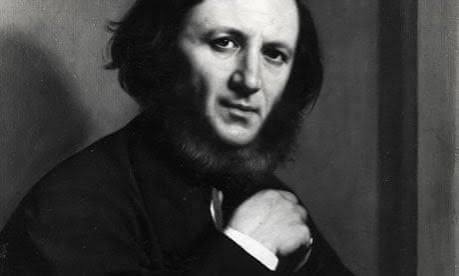
‘I wonder do you feel today / As I have felt since, …‘. The lost present tense of the act of feeling. How a great poem says it all: Robert Browning’s ‘Two in the Campagna‘!
The ‘old days’ is a far from innocent phrase – it bears with it its formulation of the ‘good old days’. According to the Online Etymology Dictionary that idiomatic formulation expressing ‘”former times conceived as better than the present,” sometimes ironic,” does not emerge fully into English language usage till the 1670s, although the sense that the what happened in the past was better than the present has haunted culture since its inbcept, it being impossible to have a tradition (the sense of values handed down from the past, without such an automatic veneration of that past in some manner and in relation to some aspects of life at least. THe idea is that we resolve our feelings of having missed out on the value of the past by perserving things and processes associated with it in the present and establishing their right to continue in the future. Given that, it is also interesting that the word derives from a root, according to the same source (quoted below) that applies not to reverence of the past but to the growth that overcomes limitations from the past, creating good out of coming of age as an adult, or maturity to wisdom, or having been nourished to grow (see the bolded element in the quotations first paragraph)..
old (adj.): Old English ald (Anglian), eald (West Saxon, Kentish) “antique, of ancient origin, belonging to antiquity, primeval; long in existence or use; near the end of the normal span of life; elder, mature, experienced,” from Proto-Germanic *althaz “grown up, adult” (source also of Old Frisian ald, Gothic alþeis, Dutch oud, German alt), originally a past-participle stem of a verb meaning “grow, nourish” (compare Gothic alan “to grow up,” Old Norse ala “to nourish”), from PIE root *al- (2) “to grow, nourish.” /…
The usual PIE root is *sen- (see senior (adj.)). A few Indo-European languages distinguish words for “old” (vs. young) from words for “old” (vs. new), and some have separate words for aged persons as opposed to old things. Latin senex was used of aged living things, mostly persons, while vetus (literally “having many years”) was used of inanimate things. Greek geraios was used mostly of humans; palaios was used mostly of things, of persons only in a derogatory sense. Greek also had arkhaios, literally “belonging to the beginning,” which parallels French ancien, used mostly with reference to things “of former times.”
Old English also had fyrn “ancient,” which is related to Old English feor “far, distant” (see far, and compare Gothic fairneis, Old Norse forn “old, of old, of former times,” Old High German firni “old, experienced”).
The meaning “of a specified age” (three days old) is from late Old English. The sense of “pertaining to or characteristic of the earlier or earliest of two or more stages of development or periods of time” is from late Old English.
As an intensive, “great, high,” mid-15c., now only following another adjective (gay old time, good old Charlie Brown). As a noun, “those who are old,” 12c. Of old “of old times” is from late 14c.
Old age “period of life of advanced years” is from early 14c. Old Testament is attested from mid-14c. (in late Old English it was old law). Old lady “wife, mother” is attested from c. 1775 (but compare Old English seo ealde hlæfdige “the queen dowager”). Old man “man who has lived long” is from late Old English; the sense of “husband, father, boss” is from 1854, earlier (1830) it was military slang for “commanding officer;” old boy as a familiar form of address is by c. 1600.
Old days “former times” is from late Old English; old time “times gone by” is from late 14c.; good old days, “former times conceived as better than the present,” sometimes ironic, is by 1670s. Good old with a person’s name is by 1837, “A familiar address, derisive or affectionate according to circumstances” [Farmer], often suggesting a nostalgic connection. / …
The meaning of such a basic English world, of course, hangs upon the nouns it is used to describe. For some nouns, it applies to the thing itself that changes as it grows and originally that clearly was thought a positive change (given the root meanings it derives from) but increasinginly it, being applied to things that are motal or subject to decay, to be ‘old’ has increasingly become a proximity to senescence and death. It can mauintain positive association in terms of celebration of longevity, of course, but the ‘sems of an ending’ has prominence. Let’s speculate that the obverse of this is to shift the positive meaning from nouns naming things vulnerable to deterioration in time, to a descripion of time itself, which is a concept robut against against the sense of inevitable ending, except in apocalyptic legends wherein supernaure takes control. Hence the sentimentality attached to the old, although when of persons still capable of ironic and even ‘ derisive or affectionate according to circumstances” [Farmer]‘ applications: as in ,’ I suppose we have to include ‘old Aunty Gwen in the family dinner- despite Gwen’s reputation for acerbity about the cooking or falling asleep into her pudding‘. THe word often carries such varied associations as a result of a conflict between the honour we feel we ought to old elders in, and the structural ageism of a progress-centred culture.
Time can age forever like Cleopatra in Enobarbus’s words in Anthony and Cleopatra (Act 2, Scene 2, line 375ff.), describing how men revere her very evergreen sexual allure to their appetites, giving it the colour of immortality and holiness:
Age cannot wither her, nor custom stale
Her infinite variety. Other women cloy
The appetites they feed, but she makes hungry
Where most she satisfies. For vilest things
Become themselves in her, that the holy priests
Bless her when she is riggish.
The old times can be fresh forever too, where unextraordinary persons born in them cannot. Cleopatra knows she is not now everlinkely to be in her ‘salad days’ (‘green and fresh’ and all that) but she can rely on adult men still yearning to be sexually active to make her seem frsh as she was then, though she is not and cannot be. What we ‘miss’ from ‘old days’ is what we felt, or imagine ourselves to have felt) when were in them, in the hope that the feeling is matched by bodily capacity – the subject of Commedia dell’ Arte, where young men prove they only can fulfil young women owned by very much older men. The room for illusion is vast if you transfer your biological age to the times and resume the appearance of one’s youth – through self-delusion, make up or even exercise.
It’s here that Iturn to Browning who understood the humam psychology of time illusions so well. It’s like a distillation of poems that had been less well appreciated in his past like Pippa Passes, the mature economy in its expression makes its egffects of interior and exterior drama rest in large degree in the play with the tenses of verbs used, occasionally using them to shift the time experience to an imagined present. Why not read it (hopefully again in these days where it is okay not to like the stuffy Victoriuans):
Two in the Campagna by Robert Browning
I
I wonder do you feel to-day
As I have felt since, hand in hand,
We sat down on the grass, to stray
In spirit better through the land,
This morn of Rome and May?

II
For me, I touched a thought, I know,
Has tantalized me many times,
(Like turns of thread the spiders throw
Mocking across our path) for rhymes
To catch at and let go.

III
Help me to hold it! First it left
The yellowing fennel, run to seed
There, branching from the brickwork's cleft,
Some old tomb's ruin: yonder weed
Took up the floating weft,

IV
Where one small orange cup amassed
Five beetles,—blind and green they grope
Among the honey-meal: and last,
Everywhere on the grassy slope
I traced it. Hold it fast!

V
The champaign with its endless fleece
Of feathery grasses everywhere!
Silence and passion, joy and peace,
An everlasting wash of air—
Rome's ghost since her decease.

VI
Such life here, through such lengths of hours,
Such miracles performed in play,
Such primal naked forms of flowers,
Such letting nature have her way
While heaven looks from its towers!

VII
How say you? Let us, O my dove,
Let us be unashamed of soul,
As earth lies bare to heaven above!
How is it under our control
To love or not to love?

VIII
I would that you were all to me,
You that are just so much, no more.
Nor yours nor mine, nor slave nor free!
Where does the fault lie? What the core
O' the wound, since wound must be?

IX
I would I could adopt your will,
See with your eyes, and set my heart
Beating by yours, and drink my fill
At your soul's springs,—your part my part
In life, for good and ill.

X
No. I yearn upward, touch you close,
Then stand away. I kiss your cheek,
Catch your soul's warmth,—I pluck the rose
And love it more than tongue can speak—
Then the good minute goes.

XI
Already how am I so far
Out of that minute? Must I go
Still like the thistle-ball, no bar,
Onward, whenever light winds blow,
Fixed by no friendly star?

XII
Just when I seemed about to learn!
Where is the thread now? Off again!
The old trick! Only I discern—
Infinite passion, and the pain
Of finite hearts that yearn.
Time is clearly a theme in a poem that ends with the admission of the limited grasp of anyone (even an ‘I’ who claims that privilege but may be fooling themselves – for after all play with time, as we have seen in etymology above is for humans cross-culturally, an ‘old trick‘, where the quality of being an elder is that of an elderly trickster out to deceive youth. The lyricist here claims to be able to seen unmeasured passion – the ‘infinite in a world usually ‘finite’ in its grasp of time and space, one necessarily bounded by endings. But the trick is in the first stanza too:
I wonder do you feel to-day
As I have felt since, hand in hand,
We sat down on the grass, to stray
In spirit better through the land,
This morn of Rome and May?
The key verb is ‘to stray’, with its moral associations, especially in relation to ‘hands’; that might wander when no longer held. It is an infinitive – a tense above time, whereas the verbs before this have been trickily shifty in tense in the progress of the poem: wonder (present), ‘have felt’ (continuous past), ‘sat’ (past perfect or completed). We are movedby the clinching rhyme on ‘to-day’ and ‘May’ (the month so used to youth’s play) to enter temporal associations ever younger than the present, such that the ‘morn of Rome’ might suggest not only a particular good morning for a walk in the deserted Compagna among its ruins of ‘old Rome’ but therecapture of that pagan Empire in its youth and latitude. The old trick here is one of seduction, or Ars Amortoria, no doubt, but then is a trope of the love poem to be thus tricksily seductive since Ovid and before – even using Time on your side as most cunningly done on Andrew Marvell’s To His Coy Mistress.
The poem’s importance however is is its grasp of how Time and desire interact and why we ‘miss’ something from, or the whole of, the ‘old days’, because it is longer present to be grasped as we believe we would have grasped it then. ‘Missing’ is an action that is, in Browning, extended to yearning in ‘finite hearts that yearn’, for they are no in the place wherein fulfilment might take place. In terms of ‘love’ we know Browning felt that male desire, even in himself was problematic. I read many years ago a letter from his correspondence that I can no longer find wherein Browning spoke of his fear of his own appetive desire – of not being able to smell a flower without the overwhemlming to take it in its entirety – to devour it. In this the lyricist in this poem is like that Browning in this lost (to me) letter. Certain of what he, and only he, feels about yearning passion, he can rely on no-one else to ‘grasp’ it as he does and in these circumstances he allows time to do its work in losing altogether what he thought he could not live without as the ‘good minute goes’. If he has not devoured the plucked rose, then Time has, for hearts live in a world of endings not the ‘endless’, though the Campagna offers a lot of what the sense of the ‘endless’ might feel like in its:
... endless fleece
Of feathery grasses everywhere!
Silence and passion, joy and peace,
An everlasting wash of air—
‘Endless’, ‘everlasting’ and ‘everywhere’ might cover the entirety of time and space – might feel like the ‘infinite’ – except that that feeling is undermined by the fact that the Campagna is a place of iold Imperial ruins: ‘Rome’s ghost since her decease’. When Death is in Arcadia too, the finite stakes its claim over meere fancy of the infinite. It’s a nuanced thing Browning’s view of male love – aware of its capture in images of possession and ownership by men he often satirised men who feel entitled to own not only their feelings of love but its object – such as the Duke in My Last Duchess, Porphyria’s Lover finally owns and controls Porphyria forever by strangling her, whilst the narrator in Evelyn Hope owns the arrested youth of the young girld he loves only by holding her ‘sweet cold hand’ in death. But there is no doubt either that he longed for some equivalence of everlasting and total love, such that Two in the Campagna, is the finest love poem of many others because it admits of limitations in what we name and call love:
I would that you were all to me,
You that are just so much, no more.
Nor yours nor mine, nor slave nor free!
Where does the fault lie? What the core
O' the wound, since wound must be?
Love is what we thought it took until the twentieth century discovery of psychodynamic perspectives to discover – a wound, whose lips can’t ever seal without a scar formation, in time and until the end of one’s personal time, and is ‘constant’ (in a temporising way) only in the acceptance of vulnerability to loss and its distributed partiality between two seperate persons, who can only be to each other ‘just so much, no more’. Lost in the numinous continua between pretended binaries (yours/mine, slave/free) love still has the capacity of measured partial not total being. That’s why I love Browning.
But his point about ‘missing’ ‘ol days’ goes further. He was the Radical friend of Radicals like William Johnston Fox from youth and a supporter of Mazzini in Italian politics (and supported his theortetical writing against that of Napoleon III, so beloved by his wife). He knew precisely why it is a dangerous ‘structure of feeling’ politically (firing the worst kinds of reactionary politics) to yearn for a fictive past – like that of Imperial Rome so much the lust of the Bonapartes. Global power is another illusion of the infinite in imperial aims – for the everlating Reich that holds everwhere as its entitlement. It’s an illusion that is tantamount to deception, for who wants the military might of a Roman Empire to guide the world but a trickster, as Hitler was in the vast building of the Third Reich.
In this poem what matters is to what extent and manner the lyricist plucked the rose of his lover’s seduction into silence – the most repressive silence in all poetry. It will justify not only the rose’s plucking but its abandonment thereafter in one way of seeing the paradigm of love discourse in this poem. But think too of the illusions the Roman Compagna allows:
Silence and passion, joy and peace,
An everlasting wash of air—
To read this as passionate is to musread the way that passion and joy are reduced to the meaningless in an ‘wash of air’, such that we begin to doubtthe reality of the terms – knowing that silence is also silence of the repressed and the ‘pax Romana’ the long enduring reason for ‘forever wars’.What is passionate is the animated and dramatic sense of play between people who in trying to ‘catch’ a spider’d thread, suffers its loss on every ocassion as a contribution to the joy of play. You are a true reader of Browning when you play the gane with his illusion-stuffed lyricist and see the point of poetry and love (and the infinite for finite persons) not in his search for bending his listener to the content of his wondering but in allowing them to, as he does less willingly, merely ‘catch at and let go’ of beauty, love, constancy, greatness and equate ourselves with time not one sad ‘good minute’. For after all, the Campgna in Roman times is though to have become a place of bonded serfs.
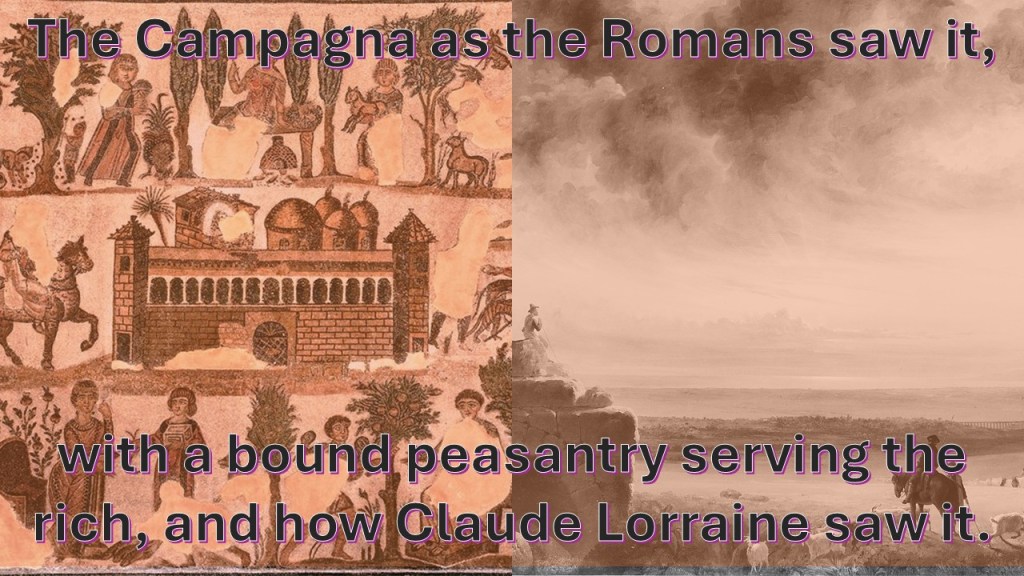
For Browning there was no way that we should stay static and wish, even worse, for return to past models of hierarchical power. In his time ‘acceptance of progression and ‘moving on’ was radical. We see it differently now – Flaubert even represented it as the ideology of a limited bourgeois radicalism in Madame Bovary. But it has truths in it about time even true radicalism needs to heed – in all politics, even sexual politics, which does not pretend finiteness is the problem of humanity but unfair distributions of power of control over time and space and the irrational sentimental or self-interested love of ‘old times’.
With love
Steven xxxxxx

