


Some books can be read till their end but still not be ‘finished’. Agathe, the first-person narrator of The Vivisectors tells us that she has ‘never been good at …bringing disparate events into a cohesive narrative’ , independently, thus to be gazed at or mixed up as if they were an ‘inchoate mass’. Perhaps you forever think about it because its she also tells us that her failing is also ‘thinking things over’ such that her ‘only thoughts’ , when turned into a book, are ‘stray and incoherent’. [1] Such a book cannot be ‘finished’ even when fully read but must be one about which, if you cannot forget it, or until such a relief occurs, be ever thought over, and rethought, and … so on ad infinitum. This is a blog on Missouri Williams (2026) The Vivisectors London, 4th Estate.
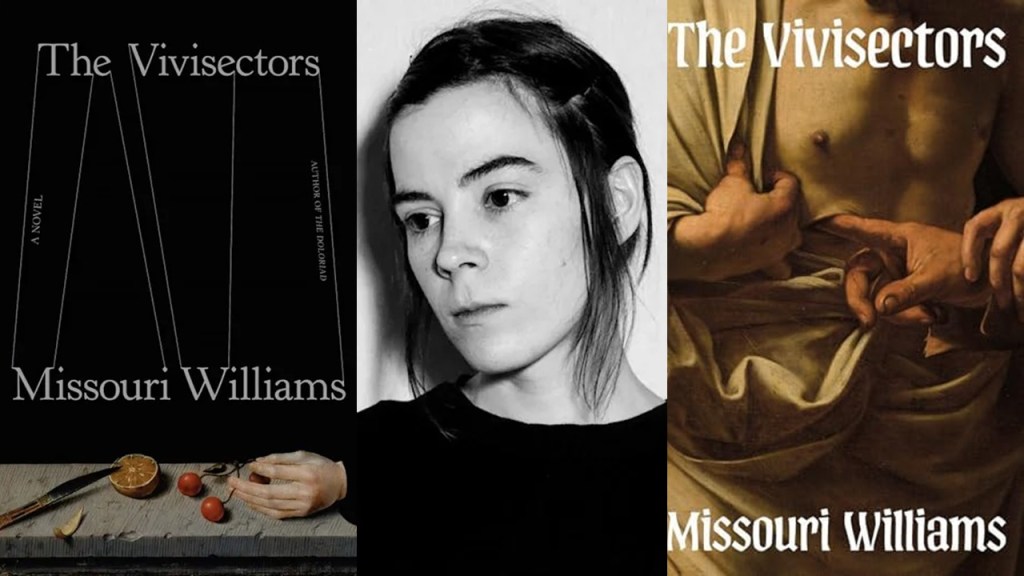
Ian Maleney makes an excellent point about the first person narrator, that she, like the university professor she ghosts in all her functions is not named until a long way into the novel when she gives her name to Adam, a student. He thinks that delayed name-=giving to be ‘no coincidence’ for, to him it reveals that throughout the novel’s ferocious world inventing, and interpreting through multiple events and viewpoints that populate different points of Agathe’s life is little more than a mask for what it becomes: a love romance between Agathe and Adam, that student from an alien city, the same city from which derived the professor she serves and for a short time a woman besotted herself with Adam. But I think Maleney rather oversimplifies the relationship between what he sees as a core romantic love story and the many-sidedness of Agathe as a narrator and interpreter of lives and institutions around her including those that make her the many things she is. he says of the plot of the novel this:
Agathe is employed as a personal assistant by an unnamed academic at the university, and she is rarely more cruel than in her comments on her employer, “a mountainous woman with huge, rolling hips” whom she finds unutterably pathetic. The academic seeks to become the confidante of a handsome young graduate student named Adam. She sets Agathe a mission: befriend Adam, find out what he’s thinking and relay it back to her. Thus, the romance plot is set in motion.
How Agathe navigates her feelings for Adam and asserts her independence from her family will define her arc – an outline which could sum up any number of novels. Williams does not unthinkingly recreate this classic formula, she deploys it with purpose, concealing it beneath the gothically overstuffed surface. Ideas are fired at the page: identity politics, family trauma, climate crisis, comic plays and fables, academia, labour, bureaucracy. There is a savage rush of description and dissection happening throughout. But for all the layers of alienation and abjection which encrust Williams’s tale, there remains a model campus romance novel at its heart. It is as if Agathe is burning through cover, until she is finally forced to confront the one story she really can’t comprehend: the love story. And if The Vivisectors is a love story, it is also about love stories – what counts as one, the form it should take, how it might come to be believed by its participants. [2]
If, when you have read this novel, you find the vast swathe underlying of all the dense and out-of-control thinking and storytelling (not just by Agathe – there are dialogical story-exchanges, and multi-perspectival interpretations thereof, in sessions of shared conversation first between a group of gardeners (of which more later); second one of university intellectuals and third, a group of foreign national students in revolt against the university’s exploitation of them. Beyond that is a discussion of the nature of the city state in which political.philosophybreturms to Platonic roots, the dialogue of nature and architecture, city values and natural values, mediated by iconic references to the role of the garden, and play with themes of inclusion and exclusion, also related to the cultural icon of tne ‘garden enclosed’.
I can’t feel all this to be reducible to a ‘gothically overstuffed surface’ (a wonderful paradox though that is – the idea of a surface that can be so stuffed it must have inner dimensions in more than the illusions of two dimensional space so championed by Clement Greenberg, in support of Jackson Pollock). Ideas are not ‘fired at the page’ after all, they seem to grow into monstrous form through the verbal and plot-based dynamics of characters in specific groupings and categorical identities.
The ideas even mirror certain debates in the world we know – of global climatic change, functional change in the institutions of learning that were birthed in feudalism but gained new meanings in capitalism, and the means of these institutions and their beneficiary personae’s survival through either exploitation of the marginalised lower-class city-carers (in the form of gardeners) and migrant consumers ( in the form of foreign high-fee paying but under-provided-for foreign students). The role in the state of intellectuals, workers, carer and producers takes a turn at prominence as if it had learned from Gramsci as well as Cardinal Newman. And of course the metaphoric values I laid in language are aired constantly and not just in hugely significant prose quotations by the seventeenth century English divine and scurrilous ‘metaphysical’ poet of love human and divine, thoeoughly embodied in both, John Donne.
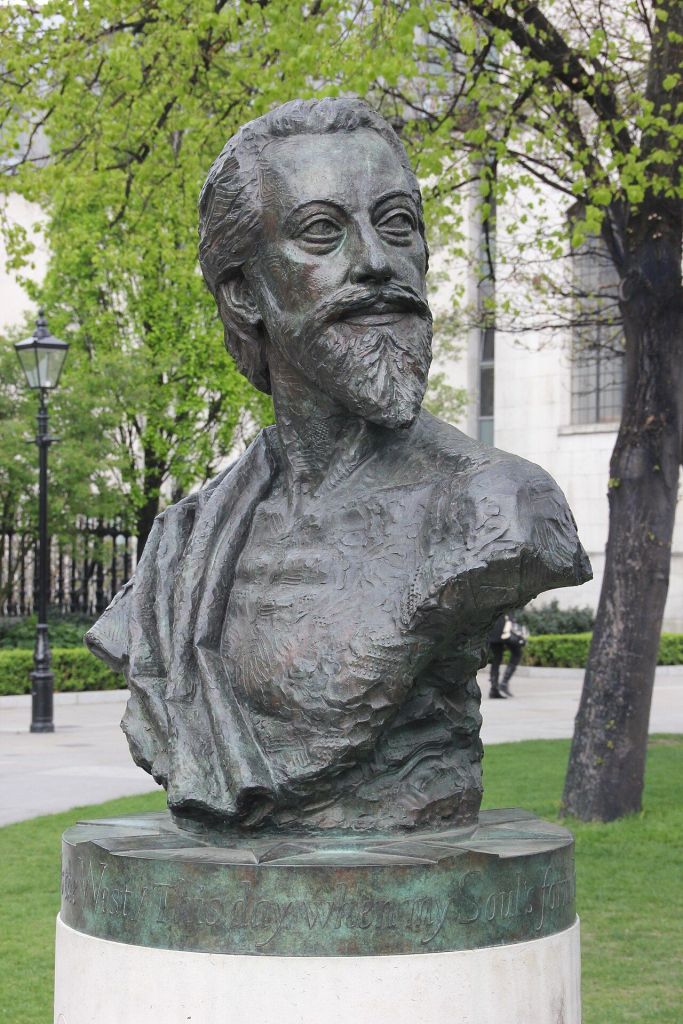
Maleney is just wrong to force the book into into JUST a reflexive examination of the kind of ‘love-story’ he thinks it is without seeing that reflexivity (endless self-examination of its own contents and their ‘architecture’, land design, and/or structuration, often at odds, of its exterior and interior scenes). Having said that, I am not sure I like this novel, however much I admire its vivisection of its own gargantuan volume, mass and Baroque (for it is this rather than either Gothic (pace Maleney) or Classical in architectural and painted feel and style) structuring. Nevertheless, if it truly is intended to be what Maleney says it is I do not only dislike it, I hate it.
There is no doubt that metaphysical but embodied love – at the touch of hands – at the end of the novel claims to resolve the problems that the novel exposes in intellectual and aesthetic culture. It does so in naming those problems of inner living using terms it dismisses in Agathe’s statement of having changed. They are stated in a ‘last page’ revolution of feeling and thought that concludes that ‘the world had no barriers, no enclosed fields, no emptiness. Everything around us was lit up with life’. [4] The sense in which the book defies enclosure and the refusal to cross boundaries into newness via change of externals and internals of life, even though we only see Agathe doing this at the end and then in a very conventional genre of how change occurs – heterosexual romantic love. Agathe from the beginning thinks of her city as something ’empty’ and emptying further to the point of being ‘deserted’ and without future. And just before that point she contrast human creative nature to that of natural fauna and flora:
By enclosing something you create emptiness. All at once a space that was full of motion and constantly subject to change has only two states: either there is something in it or there isn’t. Once something dies there’s nothing to replace it. the field is barren [5]
Of course the association of the empty and bounded with the barren does support the notion that the story needs to end in reproductive sexuality, or its potential, but that is not the same as to reduce it to romantic love-story, where the proven sexual attraction of Adam (he sleeps with every female student in his ken) suddenly gets realised on the final page as an opening for Agathe to change from sterile obsession with dead things to living ones.If anything Agathe gains nothing by becoming Adam’s potential woman, her sterile sense of possibilities that remain entirely binary (between presence and absence, something or nothing, sterility or fertility, made or natural) stay where they are. If I am to like this novel at all, I have to think Agathe’s final change is no great event and will not resolve the underlying dilemmas of the novel to make all things full of potential in endless range of being as entities, not that is single resolved identities, always the same thereafter.
If anything Maleny gets it right in his simpler descriptions of the novel’s events that don’t privilege Agathe and Adam as its focus. He says:
… The Vivisectors is set in an ancient and unnamed university town – we could call it Oxford or Cambridge, but let’s not – which is rapidly being overwhelmed by vegetation: avenues lined with “orange columns of flamevine and purple bougainvillea”, arches “dripping with wisteria”, the inescapable “stink of a distant magnolia”. A fraternity of mysterious gardeners seek to keep the chaotic foliage in check, but they are hamstrung by a bitter dispute with university officials. Power games and proxy battles ensue. It is a hot summer and decay is rampant: revolution is in the air.
…, this verdant backdrop casts an ominous glow over the action, though Williams writes with a singular brand of Ballardian ferocity – …. The locus of the novel’s intensity is its narrator, Agathe, an alarmingly cynical young woman. She views everyone she meets as a tragic case, and knows that nothing lies between her and the same sad designation but her ability to see through the stories they’re telling themselves. She rejects self-expression and desire, refusing anything that might compromise her sense of separation and superiority. Her judgments are swift, conclusive and brutal. [2]
For what is wrong with this world is not its diversity but a denatured lifeless response to it, a bit like Hamlet’s in the play of his name, whether it is on the side of the ‘unprofitable’ and barren, or an opposing belief in the ‘dumb growth of nature’: [6]
O, that this too too solid flesh would melt
Thaw and resolve itself into a dew!
Or that the Everlasting had not fix'd
His canon 'gainst self-slaughter! O God! God!
How weary, stale, flat and unprofitable,
Seem to me all the uses of this world!
Fie on't! ah fie! 'tis an unweeded garden,
That grows to seed; things rank and gross in nature
Possess it merely. That it should come to this! [7]
That nature unchecked and rampant (‘rank and gross’ even) is as much the belief of the city’s gardeners as Agathe, though the university decides control of nature – though desirable) is too costly for it, or the declining institutions of the city around the university which in the beginning contained nature in a cruciform garden structure (like that is an instrument of torture regardless of the later imposed meanings of redemption). As Agathe shows from the get-go, neither nature set up as a ‘park’ to contain (in more than one sense of contain) organic life nor the city set up as both dwellings and barriers to nature play their binary function to complement each other but sprout intermediate forms in which each appropriate the other:
Each rectangle was hemmed by buildings and long roads that supposedly kept the park in check, but that summer it seemed less as if the park was surrounded by the city and more as if the city, disintegrating into fragments, was being enclosed by the advancing wilderness in a merciless reversal of power. … Though the suburbs themselves were neglected, the border between unacceptable wilderness of the park and the acceptable decline of the neighbourhood was fiercely contested. [8]
We shall see the ‘dumb growth of nature’ (for ‘growth is what capitalism-serving politicians quite wrongly see as the answer to all problems) profliterate until it itself solves the ‘immigration’ problem that the city wants to blame all untoward events upon (even the effects of climate change), until the lack of immigration becomes itself the problem, being at an ‘all-time low’, with the ‘economy in tatters’: ‘half the roads in the city were strewn with branches and people were walking to work through the debris or staying at home altogether. The roof of a library in one of the university’s peripheral colleges had fallen in, crushed by the weight of the overgrowth that covered it and the incessant pounding of the summer storms.’ [9]
How are we to solve the binary of the ‘acceptable’ and ‘unacceptable’ if we cannot really do anything but set up non-meaningful borders and barriers that don’t and can’t work between them and throw the ‘dumb growth of nature’ at them as our only solution (which isn’t natural at all, despite the classical economists and those of Neo-liberalism. That is why the novel takes on marginally the role of migrants in defining what countries and cities are? And behind this issue is a discussion of what true ‘education’ means in terms of changing needs and the problem of establishments that cannot or will not change. And behind that is the field of human culture, and especially of language, which is why John Donne is so important as a theorist of how human and theological being are understood in metaphoric language. The debate about the making of cities is an old one but simmers through this novel, contrasting old and new cities and their ambitions for themselves. Some at the end of this novel (not perhaps Agathe) are almost claiming that they have built an ‘angelic city’ (like St. Augustine’s City of God but revised for times when we are aware of the ’emptiness that is God’ and put that at the city’s centre, transforming the angels that serve that empty centre into ‘mathematical entities, lines and squares, pure shape’). [10] For a central problem in this novel is not education, the city or nature but the discourses in which we describe them and their fate in speech, but mainly in writing in this book-obsessed book, where libraries matter. Among the store of reflexive novels (novels about novels, writing about writing, selves about selves) this one is most thorough in its deconstruction of conventional understandings of words we think of as simple. Agathe is, after all, a writer – she does it for other people she thinks but learns that she is also doing it to understand herself and the ‘world’ that lends her a substance in the way it reflects her. Take this momentous passage: [11]
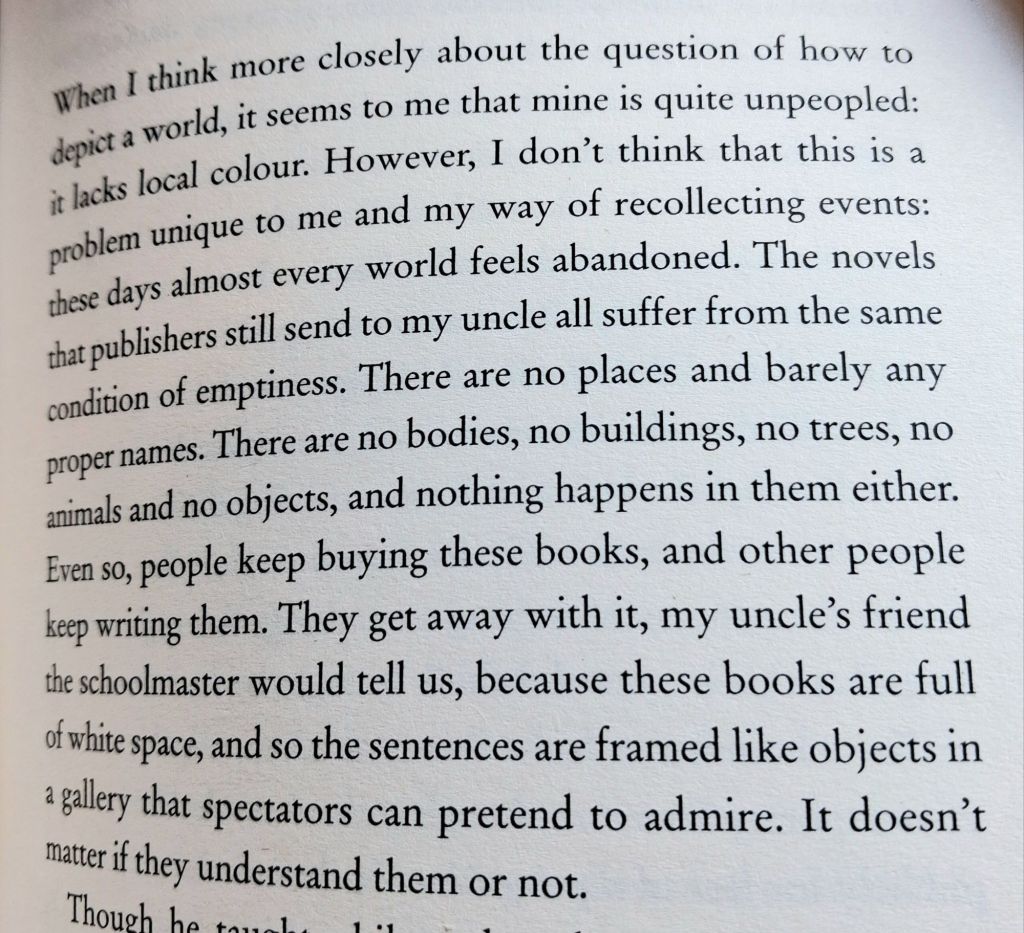
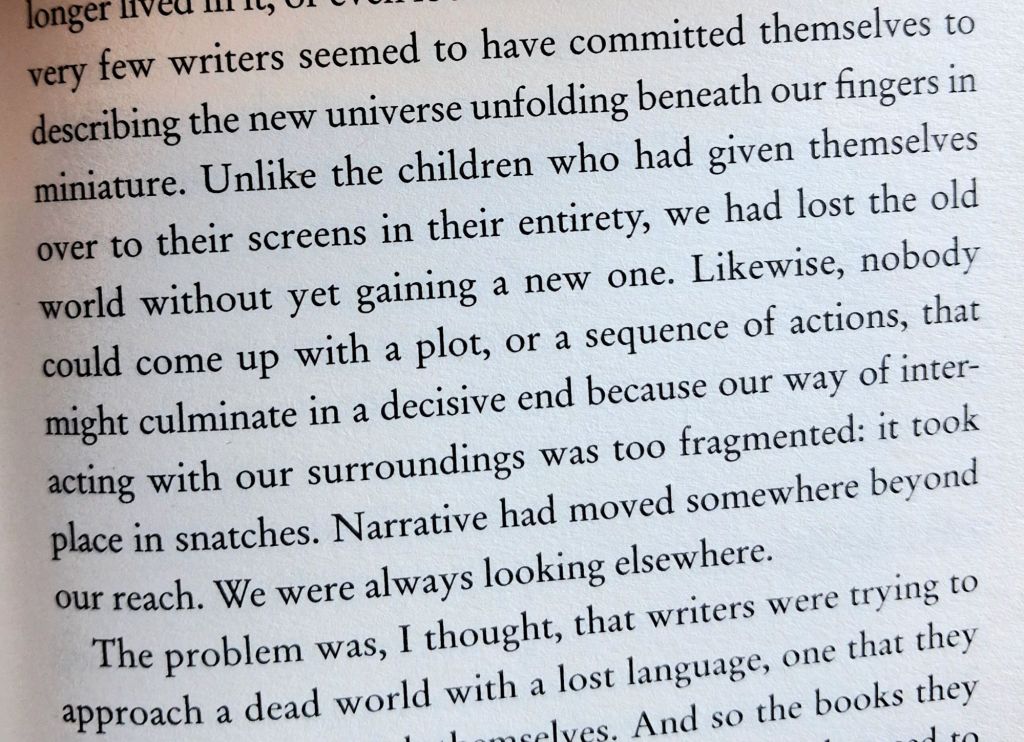
Colourless, empty writing is NOT what Williams writes for Agathe, but it veers that way sometimes in order to create a desert out of writing, a place of dis attachment from the world, that is more refined a kind of suicide than that spoken of by Hamlet in the quotation above, or the attempted but failed one of Agathe’s mother, who ends up as another ‘dumb growth of nature’, a ‘rock’, who would need many reflecting mirrors around her to make her seem whole, pushed around in a power chair until power fails in the city, and a wheelbarrow suffices. [12] A book which is mainly ‘white space’ lacks even black text to squeeze meaning out of the written. And what writing makes one capable of is a matter of education, and which has been for years merely the desire to ‘make an indelible impression’ for the ego, something Agathe escapes the destructive force of by never becoming a writer in her own voice – and not indeed until that time promised after the book is read and ‘ended’ if not finished – by writing as an editor, impersonating ‘other voices, hundreds of them’. [13] When she comes to describe her theory of the fate of modern writing she says that ‘books had emptied along with the world that contained them because now almost everything that mattered to us took place within our devices, on the abstract territories of the internet’. It leads she says to the fact that everyone now in the world has ‘lost the ability to describe the natural world when we no longer lived in it, or even looked at it that much, …’. [14]
The discussion of language, writing and narrative is very sophisticated and is truly, despite readers like Maleney, whatthe novel is about, which may make it a lifeless thing for many – perhaps even for me. but the dilemma it illustrates is a real one. It does not ‘finish’ at the novel’s end or a ‘reading’, and if it does at a reader, it is because that is a symptom of what this writer is saying. And it is what John Donne too is saying to any reader who reads his Devotions, as Agathe does, and does not see that writing that is not read as an entry to experience is not read at all – we have no hope if things and the words supposedly representing them remain only that and do not transfer from the surface reflection on a mirror to something solid inside us – not a ‘rock’ but something animate and emergent. [15]
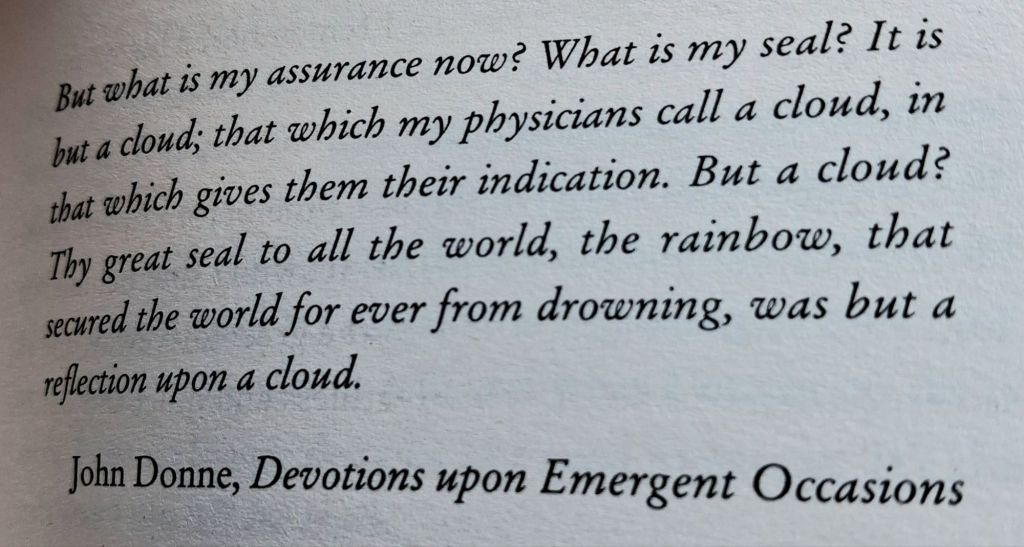
My problem with this novel is that I want to comprehend it all but I cannot. I want to know the significance of the story of the ‘little white whale’ as the ‘greatest love-story ever told’. I want to know the significance of the description of a known Annunciation painting to Agathe,the significance of towers (heavenly or hubristic), or the take on disability that runs through the novel with other themes (ranging between neurological damage post a suicide attempt, autism, immobility. [16] That I can’t is the nature of human comprehension and perhaps of the negotiation between the intentions of writers and readers. But Missouri Williams uses a kind of humility in Agathe that puts the blame of being overwhelmed by such a mass of narrative tangles on the unreliable narrator – in a wider way than usually intended with that description, which I describe in my title, as the narrator says that she has ‘never been good at …bringing disparate events into a cohesive narrative’ thus leaving the reader two choices, either to see each episode as a single statue to be gazed at, or to see everything mixed up in an ‘inchoate mass’. And if her failing is also a problem in ‘thinking things over’ such that any thoughts in her prose can only be ‘only thoughts’ which when turned into a book are ‘stray and incoherent’. [1]
I will leave you with this book. I am glad I read it but the experience was not to me a pleasant one. Was it for you?
With love
Steven xxxxxxxxx
_________________
[1[ Missouri Williams (2026: 223) The Vivisectors London, 4th Estate.
[2] Ian Maleney (2026) ‘Review: The Vivisectors by Missouri Williams – twisted love story from a cult writer’ in The Guardian (Tue 26 May 2026 09.00 BST Last modified on Thu 4 Jun 2026 09.27) available at: https://www.theguardian.com/books/2026/may/26/the-vivisectors-by-missouri-williams-review-twisted-love-story-from-a-cult-writer
[3] For instances see Missouri Williams, op.cit: 138, 143 (on metaphoric language) & 275.
[4] Missouri Williams, op.cit: 288
[5] ibid 10 & 6 respectively
[6] ibid: 3
[7] Hamlet Act 1 Scene 2.
[8] Missouri Williams, op.cit: 24
[9] ibid: 213f.
[10] ibid: 272f.
[11] My photograph of detail from ibid: 117.
[12] See ibid respectively: 66f., 163.
[13] ibid: 53f.
[14] ibid: 120 – 121. The photographed passage below is from page 121.
[15] My photograph of ibid: 275.
[16] ibid: 284f., 241 – 262, 86, 278 respectively


4 thoughts on “Agathe, the first-person narrator of ‘The Vivisectors’ tells us that she has ‘never been good at …bringing disparate events into a cohesive narrative’ , such that either its parts looked like statues standing independently, thus to be gazed at or mixed up as if they were an ‘inchoate mass’. This is a blog on Missouri Williams (2026) ‘The Vivisectors’.”