


In Djamel White’s novel All Them Dogs being ‘officially an adult’ is learning to no longer be ‘fighting an urge to pop’ and becoming in control of how you appear and how much you visibly react: ‘Keep it there and keep it steady’. But in that novel the desire to be ‘officially an adult’ is the reason we lose responsibility for ‘the child’ we find in the world or inside us, failing to safeguard
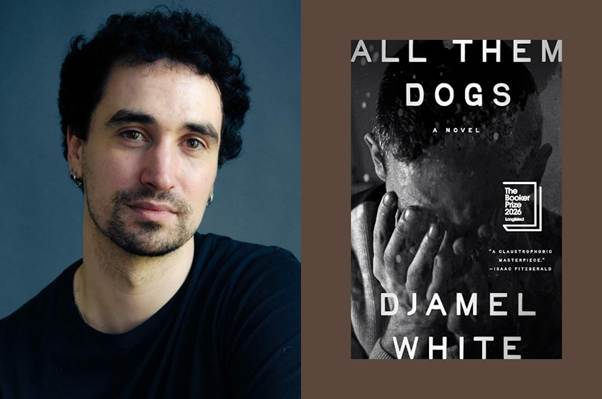
This prompt question can strike right to the heart, and it’s a rapidly beating one, of Djamel White’s All Them Dogs. Yesterday I was so taken by a particular review of that novel, by crime thriller writer Jake Arnott, with often a queer theme based in historical fact, that I had to write on that alone (see the blog at this link). But here I want to turn to dogs first on route to the childlike heart of the novel. There are, by the way if you doubt it, very significant dogs in the book – most prominently as an actual dog is Jacinta, the dog owned by the unprepossessing ‘Made-in-Turkey’ Finto Maher, but there is another – a loyal ‘old little terrier’ or ‘neckless Jack Russell’ who barks ‘like crazy’ in the taking of the derelict petty criminal, Patsy McDermott from his mottled bed, with his child crying in another room (it is the same child who in an earlier visit hits the floor with a ‘thunk’ when Patsy is violently aroused in his bed with the child sleeping beside him), to his public execution in the road of his estate outside his home by Tony’s accomplice and sometime leader (but into what number of realms of new experience particularly, we keep wondering) the gorgeous ‘Flute’ or Darren Lavelle who, as he floors Patsy, feels ‘Flute, come striding around me, fluid and purposeful, and fired a bullet …’.[1] This is the language of the novel that is also its subject. We tend to think of ‘purpose’ as driving to one ‘end’ in a straight line not as fluid, but that was before we come into contact with the attractive eddying narcissism of Flute, a living towering phallus-cum-deadly-weapon. And he directs purpose for others too: having ‘the sort of grip that makes up your mind for you’, a kind of leadership we need to examine in the novel later. But here we started talking about dogs, particularly the servile loyalty of dogs kinder than the men to which they are attached.
It helps to know that when asked if writing was his sole job now, White told Killian Fox of The Observer that:

Portrait by Brid O’Donovan for The Observer
I’ve started volunteering with [dog charity] DSPCA [The Dublin Society for the Prevention of Cruelty to Animals] on the weekends. I am a dog person but I’ve never had a dog, and I think it shows. I get a lot out of doing that.[2]
I am not sure it shows, for this book, its title onwards speaks of dogs and how we react to them. When Flute and Tony first enters Patsy McDermott’s filthy home stuffed with adulterated drugs they first meet a ‘neckless Jack Russell’, ‘older than I was by the look of it. We are meant to learn something of Flute when Tony tells us that he ‘bent down to give the dog a scratch before thinking better of it and straightened back up’.[3] That is my title in a short sentence – ‘officially adult’ men regulate their responses to the vulnerable and unlovable and straighten ‘back up’ – is the straightening also a reinternalization of Flute’s queer desire even, at least that part of it that contains anything ‘soft’. However, let’s just note now here is in this novel as we have seen a strange empathy for suffering dogs who nevertheless follow the lead of cruel men, as countless boys do in this novel – the teens that gather around even the chaotic lead of Patsy McDermott or those, like the Tony remembered by the ‘adult’ Tony who at the age 16 gathered around the more calm Philly, who allowed his favoured boys to buy his aftershave perfumes so that they could smell like him, like ‘Hollywood’.[4]
How boys feel and what happens to those feelings when ‘officially adult’ matters too they are control to the point of being killed off or so self-regulated that they can be turned to other objects, objects that satisfy without demanding ought of you. That is the import of dogs in novels about masculine control, and, I would argue, in life, having observed the toughest thug go gooey eyed over a dog as he doesn’t with his wife or children. Part of the ambivalence of Tony as a character is that he is overcautious of a dog like Jacinta, although he melts to her later (and is even offered a pup bred from her by Finto for ‘protection’ later) but otherwise reserves his own affinity for dogkind. One of my favourite passages in the novel is this, wherein the writing (both descriptive and dialogue) alone reveals how caught up by a dog he can be despite their cognitive role in the novel to show their usual blind loyalty.
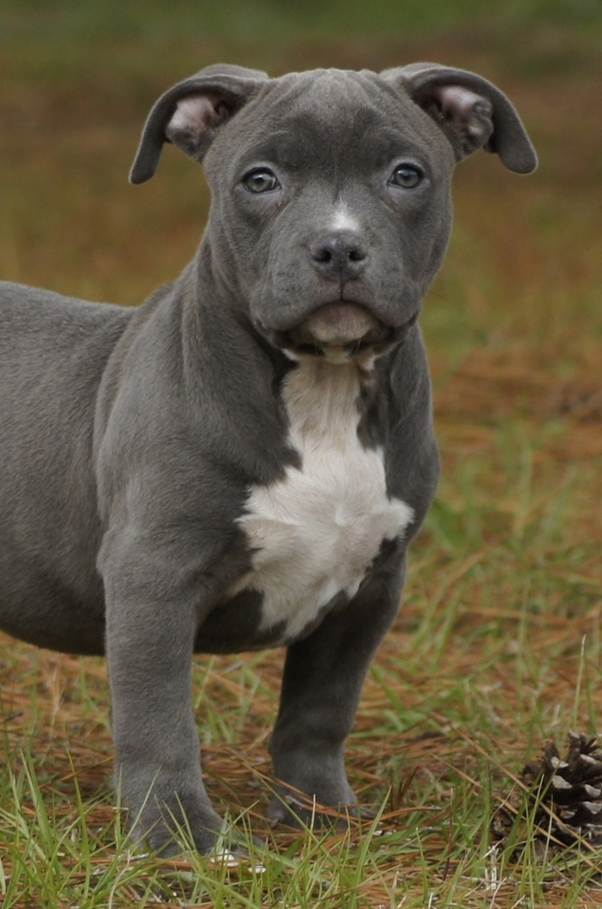
Jacinta was lying at his feet, licking one of her brutish paws. There was another dog, too, a Staffy with big, loving blue eyes.
“Here, don’t be smiling at my dog, pal,” chirped the skinny chap.
“I wasn’t.” I said.
Finto was off his box. “Shut up, Dickie,” he said.[5]
Why do I love that, because we know that Tony’s denial of his smile is entirely false, in part because we register semi-consciously the smile elicited in our own faces and the neuro-messaging that involves deriving from reading that soft phrasing of the Staffy’s ‘big, loving blue eyes’. It is an index too of concern about children, especially interest that get denied, and underlines the significance of this Staffy’s owner, Dickie Kilchild, whose name (get it – Kill-Child) hangs a monument to the children of the novel whether loved, as by the character Gemma or in varying degrees neglected – benignly (as in the case of Lizzie taught to fight at the boxing emporium that masks a gangland enterprise) or not so, as in the case of Patsy. Moreover, the boy-children of this very Peter Pan of novels who never grow up: which may not include Tony in the end of the novel as he boys to an authority, that of Eamonn Prendergast, once Police Liaison Juvenile Officer and who has known Tony from his earliest childhood and his hardly-coping mother when ‘on the sauce’.
But dogs that are more symbols of a facile veneer of deep-seated self-esteem and confidence of power matter too. Take those other lovely blue eyes of the novel, whose body Tony’s eyes size up, lingering on the thighs. Tony is nothing but drawn to fine detail as well as overall size, for he knows ‘Flute would tower over any of those little wannabes anyway, the size of him’. Take this detail though where dogs are a marker of pure visual beauty and amour-propre that makes everyone look on with caution:
The grey aul day did the place no favours, but it gave a sheen to Flute’s blue eyes – like a husky, or one of those pitbulls with the grey-blue coats. One of those dogs that stare at you without as much as a tail wag. The sort that’d make you think twice about reaching your hand out. They were something else to look at, all the same. Gorgeous animals.[6]
Flute is a gorgeous animal, and that is not to denigrate him in the terms of the novel but it sets out the ethical parameters of the novel about ‘them dogs’ that lead, like he would like to see himself, and ‘them dogs’ that follow no matter what. Flute is ‘stony and quiet’ when we first seen him in the cramped container of Tony’s The Opel (Corsa-A GSI) but he commands followers: he is a leader, however young and however resistant the led feel they are – as perhaps Jacinta sometimes feels when snarling. Was Flute ‘just an odd bastard with not much more to him’: the point Tony goes on immediately to make: “Didn’t stop me following his lead, though. Not that I enjoyed being told what to do’.[7] But being led on a lead by another ‘gorgeous animal’ is a dangerous game. For as Arnott realised there is an analogy throughout between the domains Flute (a man who is represented by a penis he wants others to see, and feel, and after which he is named after) leads Tony towards – the experience of his sexual attraction and force and the excitement of murdering other men, that it takes Tony, and Flute’s sister Fanny, a long time to see – indeed not until they weigh properly the fact that Flute was the paid killer of Tony’s first fascinated leading man, Philly.
And that realisation is a slow developing one that both sex and paid murder are for Flute impersonal fulfilments of needs that are childish in origin, as the whole of gangland culture is represented as dangerously childish, with its obsession with smells and the naming of ‘smelly bastards’, smelly cunts’ boys fighting outside kebab shops and boys who ‘touch willies’ for another thrill. Arnott cites this moment but only to tell us the sex is unconvincing (really!): ‘Amid a disjointed sex scene there’s an intriguing exchange when Tony tells Flute: ‘“I just didn’t know if you’ve done it before, that’s all,” and it’s uncertain whether they are talking about killing or sex with another man’.[8]
But there is a more telling scene where it is the unsaid learning of Tony that matters – that Flute does not discriminate between the fellas he fucks nor the fellas he murders: an essential lead up to the fact that Flute killed Philly, was prompting sex with other men since he was fourteen with men however unsuitable (the case in point being that it was Tony’s hated half-brother, Archie). It is the point he learns that Flute killed his sister, Fanny’s lover, without knowing that this lover was Philly – the man he loved too and who gave him his ring, the one he later tells Fanny was ‘your Philly, our Philly’. But when the half confession, of having killed Fanny’s lover is made, it is in the context of a chapter of repeated sexual adventure between the young men where Tony is just beginning to trust the man he now calls Darren. When they speak of how many men Darren and he has done before, there is the shadow of the sexual question again, with Flute admitting that there his tally was higher than Tony’s and that the last one was just ‘some fella’, to which Tony replies but in what tome: ‘They’re all just some fella, at the end of the day’.[9]
For much of the novel Tony is unsure how much is ‘just some fella’ in the end either as the next in a series of male partners for Flute or as a potential target for him to murder should Flute’s Father – the leader of all the crime networks we see in the novel – above Philly and Finto, who are in their turn the leaders of lesser men such as Tony and Patsy, the latter to be replaced by some other fella – perhaps Ritchie. But then Finto also invites Tony to kill Lavelle and his son, so leadership (however high in the criminal hierarchy of networks) too is a matter of ‘just some fella’ replacing another. When Lavelle commands Flute to kill Tony first, none of us know that whether he had the will to do it, and Fanny is certain he will not. But when Fanny knows who killed Philly her surety is that Flute will probably be capable of killing anyone of whatever sex/gender. But Tony is a different case. Even when Fanny stops her father killing Tony, laying Lavelle open to Tony’s knife, and Flute ‘jumps over the couch’ towards him, Tony is immediately ready ‘to embrace’ Flute, ‘ready for him to hold me and to thank him for looking out for me like that’, only to belatedly see ‘the cold empty fury in his face as his hands come out, ready to grab me’. It is then he realises Flute has rushed into kill his lover only to receive death from a gun in his own sister’s hand.[10] This embrace of Death is almost what the murder and sexual romance plots have all run up to.
As both a killer and a sexual being, Tony is at many points in the novel on the cusp of decisions about who he is, and whether what he decides he will be will force him into adult responsibility for another – a lover, a failure even as a criminal on someone’s hit list, a child, even the child who feels the pain of being abandoned and unstopped from a course of behaviour, thought and feeling that will in the end overwhelm them. For Tony is a ‘just a fella’ who fits all those potential ‘victim’ descriptions too as well as those of the perpetrators of violence. The issue is always however is whether he lead himself and/or others into decisions or follows the lead of another. Both Philly and Flute draw him into a path soon to become an irreversible trajectory, like that of a shot missile. At first it isn’t totally clear how and when makes the decision to have sex with another man and accept the consequences of a relationship to follow it. If Flute had ‘the sort of grip that makes up your mind for you’, what he sees in Flute’s eyes as this big man painfully penetrates him is ‘my own distorted reflection’. Yet he is sure that the pain he feels he chose: ‘It was mine to take not his to give’.[11] This is no rape, is it? Yet Flute plays with the idea for Tony to take in and consider that he has ‘trapped’ him.[12]
Yet when that trap is first set – his Opel being locked in Flute’s garage – Tony accepts that position in a fully informed way, and the attraction of a big man having him sexually helps make a decision but it is his to make: ‘There he was, all six feet and four inches of him, and I though fuck it, there were worse set-ups’.[13] What exactly does set-up mean here – an ambush or a mode of living your sexual life – surely both. And Tony takes responsibility for his own sexual drive. When they discuss the murder they are to commit it is alongside sexul play. Was it the job or his indecision that causes the moment when Flute pushes his fingers ‘further’ into Ton’s jocks only for Tony to stop him ‘centimetres short of my retreating mickey’ (the boyish term for the soft penis so right here). When Flute pushes on to grab Tony’s balls, he does so he claims to show that this proves he has the ‘manhood’, having ‘a pair of these’, to complete his second murder. Suddenly. Tony relaxes and ‘only then did I start to get hard’. The conversation continues about the job but half also about the oncoming sex with Flute saying he could ‘get someone else, if you’re going to keep shitting yourself over it’.[14]
Of course the equation of male sex with planned violent murder cannot please us, but we know that Flute does not just manipulate Tony into having sex or doing another murder (that ‘give and take’, leading and following has some mutuality ion both scenarios).How then does White hold onto his reader’s interest in these men? When Sarah Gill interviewed White for the Irish Online cultural magazine, Image, White gave some clues to the way he does it, by holding together another tension – that between inveigling the reader into the pace of the action but suggesting a resonance in the language that flows at that pace that equates with the considered ‘literary’ demand for a deeply subjective and intersubjective resonance, that some all style but has more of substance about it than that. Gill says:
Unlike so many male characters in Irish literature, whose inner lives are laid bare on the page, Tony is all about action. He doesn’t stop to analyse himself, he shoots from the hip and scrambles to cover his own back. As a reader, you’re rooting for him, but he doesn’t exactly make it easy.
“I had been trying to write these introspective, lyrical, very literary and quiet stories during my undergrad, and they weren’t working,” Djamel says. “They were missing that sense of meaning to me, that substantive emotional hook. Then I landed on Tony, and he’s the antithesis to all of that. He gave the story this propulsive quality with his non-stop momentum.”[15]
We needed to know about the practice of the writer with ‘introspective, lyrical, very literary and quiet stories’ to see just how the novel suspends you in arenas of intersubjectivity – the dynamic in the inner nature of two beings – as their actions and hence the narrative appears to skim over the surface of the inner beings of the characters. It surely helps to know what the models for his fiction were in his reading. In The Observer interview with Killian Fox he told him about key literary models:
The Heart Is a Lonely Hunter by Carson McCullers. I love Cherry by Nico Walker – I think that informed [All Them Dogs] without me realising it. It gave me permission to write in a voice that isn’t adhering [to more conventional ways of speaking]. I love stories about communities and how different characters intersect, quiet stories that gesture to something much larger, ….[16]
Of course the reference to ‘’quiet stories’ feels inappropriate because All Them Dogs is not quiet – not at all: rather it screams and bangs very often. But the role of unconventional voices – queered voices for instance – is appropriate for many character, some of whom are also quiet and complex like the unseen Philly, a magnet of desire in women and men. To Sarah Gill, he elaborated a little on why Walker’s Cherry mattered, after pointing out the role of Anne Enright as mentor and teacher, but said more about Charles Bukowski’s Ham on Rye. .
“Anne Enright was my first introduction to reading a character who wasn’t a traditional hero,” he says. “She presented normal people in a way that really let me see the grey areas of humanity and people’s desires against their better judgement. I fell in love with her voice on the page. It cuts, and it’s sharp but also funny. I was 19 when I was introduced to her and she was the start in my journey into Irish literature.”
“I read Cherry by Nico Walker a year or two before I started writing this, and it really stuck with me. I’ve always been fascinated by the down and outs in literature, especially as a younger guy. I read Ham on Rye by Charles Bukowski and that’s been a lifelong favourite. It’s more palatable than his later works, because he’s a child and you see his vulnerabilities and the circumstances that lead him to becoming this figure in his later books, where he’s doing basically abhorrent things. I was always attracted to those figures in literature, the people on the outskirts, whether by choice or by circumstance. They always resonated with me.”[17]
The themes of both novels lie in the description I embolden above – the idea of a young man led into things but also willing onto himself a marginalised anti-heroic identity that feels in part demanded by one’s own ‘vulnerabilities and the circumstances’ of one’s life. What matters in all the description is the ‘gesture to something larger’, the battle between desire and the judgement that goes into decision-making in a character, especially a young man kicking against the pricks. Into these hard knocks in a life style inserts some tenderness. After the scene where Tony joins Flute in the shower at the safe house for sex after their murder, that time in the shower grows in the reflective memorial narrative conducted in Tony’s mind:
In the shower Flute had held me. His chin rested on the top of my head and our hands rolled over each other while the hot water washed over us, getting rid of all the sweat and grime, the gunpowder residue, but not the fact of the matter. But with him touching me it was alright, it felt alright. We were in it together now. He wasn’t going to leave me.[18]
This takes up the idea White mention in his favoured books of the feelings and desires that are about community and stability under a better more critical judgement that shows that being ‘held’, as Winnicott talks about ‘holding’, and ‘in it together’, free from the possibility of being left and deserted as everyone else has done thus far, is here an illusion as much as the washing away of sin is a merely cosmetic matter of the smell and feel of gunpowder residue for the boys. This is beautifully written – notably that sentence that rolls stuffed with smoothly rhythmic flow like water down two bodies until it meets the ‘but’ and ‘the fact of matter’ – that these boys are murderers and their mutual desertion inevitable. In fact Tony is in training for absence over Christmas in ‘my gaff, Ma’s gaff, Archie’s gaff, whatever’.[19]
With a new chapter and Chrimbo upon him, Tony only has the ‘taste’ of Flute in his mouth that tells him that he’d ‘be left with only the company of his absence that day, as I had been every day of the week since the job’.[20] That is style and content and has the nuance of intervals of parting in a relationship that in their falling last phrase, also predict an absence that might in all eventualities last forever. This kind of lyrical moment in passing matters for otherwise it would all be pace. White told Fox that:
What I find interesting about Tony is that he can’t, under any circumstance, put his hands up and say, “All right, I’ve gone too far.” The only thing he can do is fight his way out or push deeper. As a young person, I found myself in those situations – not to the same extent – but situations where you’re so angry and, I guess, afraid of what you’ll admit about yourself if you back down, so you push through. [Writing it] there was some kind of mischief and glee in the things he gets up to.
That is all true about the moral dilemma of Tony and of the near pleasure of seeing him behave so badly with no ability to articulate his concerns about the evil he might be perpetrating, even though he senses it as in the moment with the abandoned child of Patsy’s – told as fast paced comedy but full of real child cruelty. That concern about cruelty only gets said semi-ironically in Tony’s thoughts, as does the concern for the little old terrier:
The kid had stopped screaming. Now it was looking at us with a limp finger in its mouth, as if to say are you going to help me here or what? Look at the state of me, give me a bath. The social would have him before long[21]
Abandoned children litter this novel and you are never sure they will ever see a social worker, though Tony has that kind of noticing made into satire instead of helping response. Everyone was to ‘officially adult’ not the child their inner vulnerabilities make them but the only way is the kind of self-regulation that is second nature to stiff Flute – always appearing hard. Avoiding the softness of need – the desire to be ‘held’ – cannot go on forever. Strangely all the novel offers Tony is something a voice’ that ‘was calm, it was gentle, it was a voice I wanted to follow. And I did follow it …’ . this is the guiding and leading voice not of Christ but the neighbour over the road, a police sergeant who had known Tony all his life. What are we meant to feel as Tony decides he ‘gone too far’. In a sense he does what he couldn’t do before this time, but in another he follows a man’s voice because it seems empathetic and worth succumbing to as he did Flute and Philly, so that, in the last enigmatic words of the novel: ‘Once more, someone else could decide’. [22] That is to say, nothing has changed in the dynamic of Tony’s life and it is a matter of core belief whether you think prison will be redemption for Tony. But let’s be honest – of course it won’t.
And Tony has stayed infantile in the hands of yet another male authority – indeed patriarchal authority. There is a level where what Tony wanted still survives – in images of light to which he is drawn – like the lights of Flute’s homes or, even more bathetic ‘an Aldi shining in a lighthouse before a storm’ before he sees the Lavelle house, from which he is ejected, but not before seeing, ‘Golden light beamed from the top window’. He wants some order. He will never get that light though, will he?
And how does Djamel White relate to all this To Fox he described himself when asked how he invented Tony’s voice, as more like Archie than Tony – a bit posh and educated. He says:
I sound the way I sound, but the rest of my family don’t. Whatever happened along the way in my development, I came out sounding quite posh. I had a bit of a problem with my “r”s as a young person, so I was self-conscious about the way I spoke. And I read a lot. Those are the things I try to blame for it. It could almost sound like I’m writing from somewhere up high, looking down. But, no, it’s very much my immediate world.
And for some commentators but only a very few – for I found only one in a very slight review – there is another aspect missing that Djamel could have offered Tony, his mixed-race heritage. Only Blessing Uwisike mentions that ‘his mother is Irish and his father is Algerian, giving him roots on the African continent through a country, Algeria, that is both North African and the largest by total area on the continent’.[23] Do such roots matter, yet at least in this writer’s career. I think it is not for us to judge, Djamel’s achievement being so great – as churlish as to inquire whether it matters if he identifies himself as ‘queer’ or not. But as a book about growing up male this is a fine book, asking the range of questions and for me locating them in that most unexamined of unreal or constructed binaries: adult / child. For it is a book where adults who think themselves ‘officially adult’ find the child in them in so many ways and their roles of responsibility for ‘kids’, externally and internally. Questions of class, family, community and sexuality are all geared round that binary, which may be better though of a plurality shifting in time, as in the wonderful short (1-page) chapter 15 wherein: ‘Time not here, time somewhere else’, together with all the perceptions across time-space that fill that gap of absence.[24]
Read this novel. It is my winner for the Booker now but I can see agreed to be early in a writer’s career.
With love
Steven xxxxxxxxxxxx
[1] Djamel White (2026: 129) All Them Dogs London, John Murray.
[2] Killian Fox (2026) “Djamel White: ‘Dublin gangsters have a folkloric quality’” in The Observer [online – Thursday 12 March 2026] Available: https://observer.co.uk/culture/books/article/djamel-white-dublin-gangsters-have-a-folkloric-quality
[3] White op.cit: 4
[4] Ibid: 7
[5] ibid: 190
[6] Ibid: 2f.
[7] Ibid: 1
[8] Jake Arnott (2026) ‘All Them Dogs by Djamel White review – murderous desires in the badlands of Dublin’ In The Guardian [online] (Tue 14 Apr 2026 09.00 BST, Last modified on Tue 14 Apr 2026 09.02 BST) Available: https://www.theguardian.com/books/2026/apr/14/all-them-dogs-by-djamel-white-review-murderous-desires-in-the-badlands-of-dublin
[9] White op.cit. respectively: 220 & 134
[10] Ibid: 221
[11] Ibid: 95
[12] Ibid: 99
[13] Ibid: 94
[14] Ibid: 97f.
[15] Sarah Gill (2026) ‘Dublin author Djamel White on his Booker Prize longlisted novel, All Them Dogs’ in Image [online] (07th Aug 2026) available: https://www.image.ie/living/dublin-author-djamel-white-on-his-booker-prize-longlisted-novel-all-them-dogs-998847
[16] Killian Fox op.cit.
[17] Srah Gill op.cit.
[18] Djamel White op.cit: 133
[19] Ibid: 134
[20] Ibid: 135
[21] Ibid: 7
[22] Ibid: 230
[23] Blessing Uwisike (2026) ‘“It’s a Bit Mad”: Algerian-Irish Writer Djamel White on His Booker Prize 2026 Longlisting for Debut Novel All Them Dogs’ [August 06, 2026] in Brittle Paper (online) Available: https://brittlepaper.com/2026/08/its-a-bit-mad-algerian-irish-writer-djamel-white-on-his-booker-prize-2026-longlisting-for-debut-novel-all-them-dogs/
[24] Djamel White op.cit: 187


5 thoughts on “In Djamel White’s novel ‘All Them Dogs’ being ‘officially an adult’ is learning to no longer be ‘fighting an urge to pop’ and becoming in control of how you appear and how much you visibly react: ‘Keep it there and keep it steady’. But in that novel the desire to be ‘officially an adult’ is the reason we lose responsibility for ‘the child’ we find in the world or inside us, failing to safeguard it: the mark of effective adult responsibility.”