


Relieving a man’s ‘urgent need’ on ‘Love Lane’: This is a blog about that ‘surprising book’ by Patrick Gale (2026) Love Lane London, Tinder Press.

I have long been a reader and fan of Patrick Gale, though I have only written a blog on one of his novels, Mother’s Boy, a fictional biography of Charles Causley (see the blog at this link). That blog itself is not terribly good but it was the first time I recognised that Gale was a long way from being the kind of novelist who makes apologies or propaganda for ‘gay identity’, creating positive images where none really exist, in the illusion that people need fictions that renounce the realities which any life choice or life allotment without apparent choice leads a person to face. His novels rather examine how polymorphous are gendered sexualities, though my belief is that he invokes female sexualities usually as a witness to his main interest the range of male sexed and gendered being. In Love Lane, this is in part manifest in the marvellous creation of a whole family of Aunts, who sometimes read Georgette Heyer, or at their most extreme, in Aunt Pattie, who enacts a ‘finishing school’ for Betty, the central female character of the book until that role is taken by her daughter Pip, as an impoverished version of the debutante, that specialises in books that address how the ‘facts of life’ including how female sexuality might be geared to staying safe (from pregnancy or other ties) whilst Keeping Men Happy, including slipping Betty:
… an invaluable little illustrated booklet, which did wonders for her schoolgirl French vocabulary, and encouraging her to read Colette, but also explaining the various ways a wife could avoid becoming pregnant whilst not denying, and even enjoying, her husband.[1]
Betty, schooled in this and Georgette Heyer from the less explicit aunts learns much about the meaning of heterosexual romance, not least that men express themselves most through the hardness of their phallus. What begins as a traditional romance of the Mills and Boon type with Terry, including eloping with that semi-military policeman with colonial whiteness, and choosing to get out of a relationship with a man, in Terry’s term, of the ‘concert party’ type (the aunts prefer the term ‘light on his feet’ to describe the dancer which Betty mistakes as a reference to dancing ability) soon shows that the lessons of stereotypical romance are much the same as those of the ‘little illustrated booklet’ before mentioned. The aunts recognise that Terry can, at least In Aunt Ju’s words (her name is pronounced in the French manner), keep a woman ‘happy in one department’.[2]
In the event Betty realises that male sexual power and vanity is not so simple a thing. The aunts at the very time they recognise Terry is a ‘goer’ try to teach Betty that she may need strategies like varying the meeting of his needs with oral rather than vaginal penetrative sex: ‘they would lapse into further French, as they always did when being filthy, saying things like, “La bouche, c’est toujours efficace …”.[3] Without the aunts Betty loses the practical side of their advice, making do with conversations between local women in the shops around the prison, of which she now has the role of Prison Governor’s wife, that showed women realising the troubles of married life in ‘a lack of sex or an excess of it’. It is clear to her where she stands with Terry who ‘prided himself on needing it every night’.
Pressed to find a term for that male need, she relies on a ‘trashy novel lent her by the charlady, that release was an accepted euphemism’. Both she, and now her daughter Pip (in fact Betty middle name like the long form of Pip’s name is Phyllis too – the stock name of a swain’s female lover in pastoral verse) related it to another term in romantic novels of the Georgette Heyer type, ‘His urgent need’: ‘As in He waltzed manfully around the crowded ballroom until she heard him sighing in her ear and felt his urgent need’. Such confrontations with male hardness are common in Mills and boon I found when I taught a course on The Literature of Romantic Love. This is telling in a writer who has succeeded in the stakes of what is called the ‘popular novel’ (particularly of novels read by women) rather than the self-conscious literary novel, though his novels have that latter character too. But it is his status as popular novelist that matters now, where there is a need to queer that form such that it more nearly describes complex networks of sexualities.
In the same chapter as the above (TWELVE) we see some hints of the secret about men that Gale often shares slyly with his largely female readership, when Terry having returned home late when she has fallen asleep with the light turned on for him over their tightly sized bed:
She woke to find the light off and Terry on top of her. There was no tenderness, although possibly that had happened while she was dreaming. He was hammering into her with such force that the bedboard was smacking into the wall. It hurt, rather, and, in the darkness and his haste, he had not reached into the drawer for the Vaseline she had left there to ease his way now that the change of life had dried her out. She knew the way to bring things to a close more quickly …[4]
That sentence that suggests that romantic dreaming is the only space for male tenderness for Pip is devastatingly cruel. I think here though it applies only to institutionalised men like Terry and Mike. By the way, if you don’t know the way she mentions (it works let me tell you) you need to read that chapter – but better read all of this overly wise novel. The point is that Gale here uses what he knows of male ‘urgent need’ to share with women; a knowledge they might not, except in exceptional single-sex spaces, share easily. This is typical of Gale’s sexual world – one that is queered in reality in all of its forms. Much more so, with younger Pip, who does marry a man with bisexual experience, and perhaps a longing for the choice of sex with his past lover at school and in the army, Titus, than with Pip. Yet Titus’s wife (Dagmar – she just HAD to be Scandinavian) knows and excepts her husband’s past, and possible present capacity for sex with men in English amities particulières (as Dagmar names them). Betty’s father, Harry himself is a ‘sexual deviant of the Oscar Wilde sort’ as Aunt George warns Mike.[5] Harry thus recognises Titus’s hidden queer behaviours straight away and shares with the priest-like prison Governor Mike, once Terry’s deputy now Governor of Wakefield prison on Love Lane, on a walk down the lane near the end of the novel.
Urgent need is not to moralise away in the men of this novel, gay, bi or straight queer, as they may be. When Harry informs Mike of Dagmar’s knowledge of his and Titus’ sexual past, he stays out on Love Lane, when Mike retires, shocked By Harry’s revelations but not necessarily the scene, home. Mike had noticed, as he had earlier in the novel, that at the leafy end of Love Lane, men were taking advantage of the clement weather and conditions of obscurity:
It was a warm evening and once again there seemed to be quite a few men loitering under the trees. There was hardly enough light to cross the rough patch safely, but every now and then one or another would light a cigarette, and the flare of his match would briefly reveal him,
Harry was now watching the men openly. “Like fireflies,” he said. …[6]
Dagmar and Titus accept poly-erotic attachment but not, openly at least – but who knows in such a novel of the secreted and reserved place – Mike. That is not to say that some men ‘love’ and are ‘tender’ at the same time. In this novel though this tends to be in relationships forcibly kept secreted for safety, notably that of Harry and Paul Slaymaker (met before in A Place Called Winter) but also secreted in marginalised queer communities somewhat concealed amongst homosocial communities, like the on-board facilities of a ship’s sailors and crew. These institutions are ambivalent and promote the concept of the ‘real man’. The Aunts make that concept central, when the easily give way to Betty cancelling her first engagement in favour of Terry, for “only a real man will do for Betty’ (the stress indicated by the italics is in the text). The idea of men as finished in homosocial communities, trading on ‘virility’ is brilliantly captured in Chapter 25 of E.M. Forster’s Howard’s End in a superb picture of sex/gendered behaviour aboard a saloon train caron the way to view Howard’s End, which takes in some of the male ‘finishing’ schools: those Britain confusingly calls ‘public schools’ and the Oxford colleges:
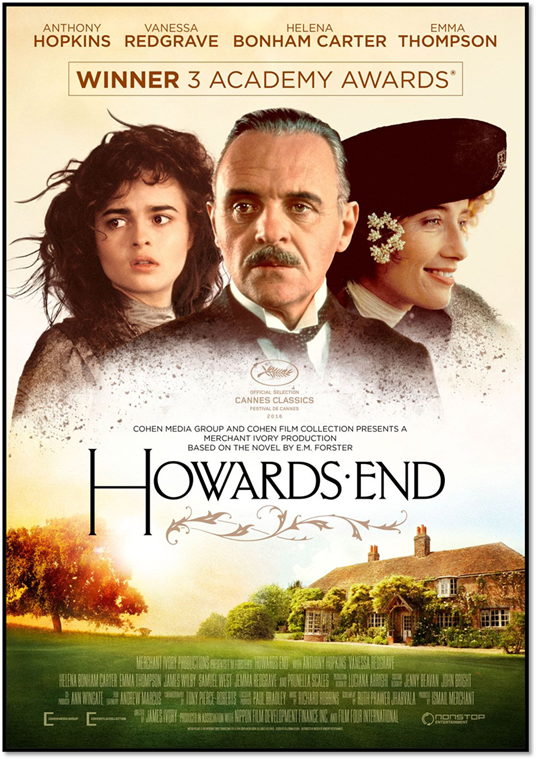
The low rich purr of a Great Western express is not the worst background for conversation, and the journey passed pleasantly enough. Nothing could have exceeded the kindness of the two men. They raised windows for some ladies, and lowered them for others, they rang the bell for the servant, they identified the colleges as the train slipped past Oxford, they caught books or bag-purses in the act of tumbling on to the floor. Yet there was nothing finicking about their politeness–it had the public-school touch, and, though sedulous, was virile. More battles than Waterloo have been won on our playing-fields, and Margaret bowed to a charm of which she did not wholly approve, and said nothing when the Oxford colleges were identified wrongly. “Male and female created He them”; the journey to Shrewsbury confirmed this questionable statement, and the long glass saloon, that moved so easily and felt so comfortable, became a forcing-house for the idea of sex. (my bolding)
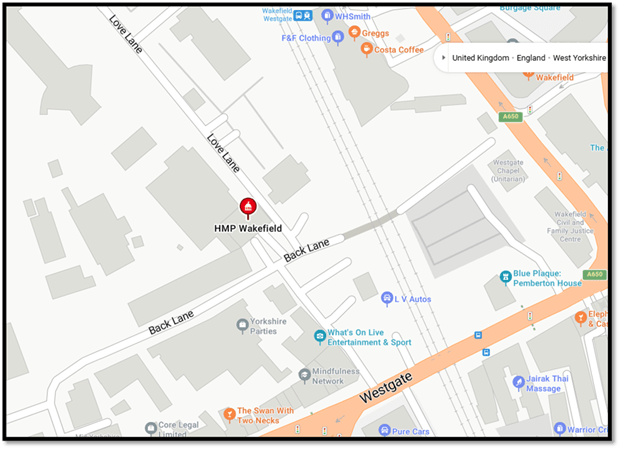
The prison on Love Lane in Wakefield
In Love Lane, the institutions are less those of the fading aristocracy in Forster and more those of the comfortable patriarchal bourgeoisie, where the bulk of the population is described anonymously as ‘the men’, although complicated by the heft of men, usually expressed in terms of their weight (in the comparison of Paul Slaymaker to Harry Cane for instance.[7] His female relatives had thought of Harry before they met him as a ‘Cowboy’ (an ideological construction of the social group of many men, until they see him. Instead Betty takes him o the Walker Gallery at Liverpool to find him more interested in rural real men figures than she: ‘He had circled a bronze sculpture of a half-naked farm labourer with a scythe, peering at its details so closely she had been afraid he was about to forget himself and touch it, …’.[8] Army men are key examples of such ambivalent groups usually described in the bunch as ‘men’, yet Mike and Titus conducted their silent secreted liaisons in the army. Terry was perhaps too dim to see through the ambivalence, although when Harry points out to him that the business partner of the ex-prisoner tailor Vance (imprisoned for being gay) is more than just a business partner, he recoils because that man being ‘a big-pawed bear’ does not fit with his stereotypical view of the queer man even if Vance does. Harry pointing out the matching signet rings on both men forces him into memories of his army life in colonial Malaysian Sarawak that suddenly unsettle him:
Terry was unsettled. The big partner had been so very like Frank Runciman, a totally dependable engineer who played prop forward in his Sarawak rugby fifteen, a man he had unthinkingly showered with times without number.[9]
Of course prisons, like colonial armies and rugby teams are also ‘forcing houses for the idea of’ sex/gender. Married to Terry, she is used to him enjoying ‘popping home … to see his girls’ (the italics are in original), a need emphasised by Betty becomes accustomed to managing contact with prisoners: ‘the men, she was to call them’ who appeared in her home in the role of servants (‘usually men on long sentences who had earned points for good behaviour’ to do semi-skilled men’s jobs in the house.[10] By the way, we know why ‘she was to call the’ the men came about, for later we are told that: ‘Terry had daily meetings with the prisoners. The men, as he preferred to call them, …’.[11] But grouping do not become ‘manly’ merely by being nominated ‘the men’ – and anyway plenty of well-muscled and big built men in this novel are queer, perhaps even Runciman mentioned once as having been naked in the shower with Terry in Sarawak. Some men are only seemingly right for a certain specialist kind of supposedly tender homosocial group, like Mike: ‘Mike was a dear man, dryly funny, kind, more suited to the priesthood, Terry s (especially the camp of the Oxford Movement into which Mike’s father left him to join) aid, …’.[12] Mike’s manliness, such as it is, is directed at dogs, especially Susie, the dog who, in one of the most moving parts of the book, he has to see executed in the vets (the scene mirrors the other sense-shocking one where Terry witnesses the execution by Hanging (at the hands of Albert Pierrepoint no less) of two young and probably innocent men.
But the key ambivalent homosocial group of the novel is that of male sailors and cabin crew. On his journey to England, Harry is invited by a barman concerned about Harry having to share with a retching fellow passenger to ‘another world’, that turns out to be the staff bar. It is a rather beautifully presented one: ‘It gave him the curious sense that – in transit from a young world to an older one – that he had stumbled onto yet another, that was altogether older and wiser than either’.[13] On the return journey Harry’s life is saved, perhaps even redeemed one might say, by that underworld, opening up for him a nursery to a life of self-acceptance as queer in a boarding house rum for people who do not fit the norm, and where the inhabitants welcome the sound of love, even between a man at home, Liam, welcoming his sailor partner Dermot back, since often away or a lesbian school mistress forgiving sexily and noisily her errant partner schoolmistress and taking her back to bed from the spare room.[14]
These special worlds are not those of the homosocial institutions that are little more than recognition of the ‘urgent need’ in men that Betty has to learn of Terry, though Pip less so with Mike.. This is expressed in a quire explicit paragraph which captures precisely my discomfort with the national love for the politically odious, but also deeply homophobic despite his love for Rupert Brooke, Winston Churchill:
…, just when (Terry had) thought the National Health and free milk in schools would have kept Labour in power for at least a decade of good will, the nation voted Churchill back in and, with him, the policy of imprisoning as many active queers as the police and sharp-eyed landladies could catch. There had always been that sort of thing in prisons, just as there had in boarding schools, the navy, and, for all Terry knew, monasteries. Men had need and would improvise to see them met. …[15]
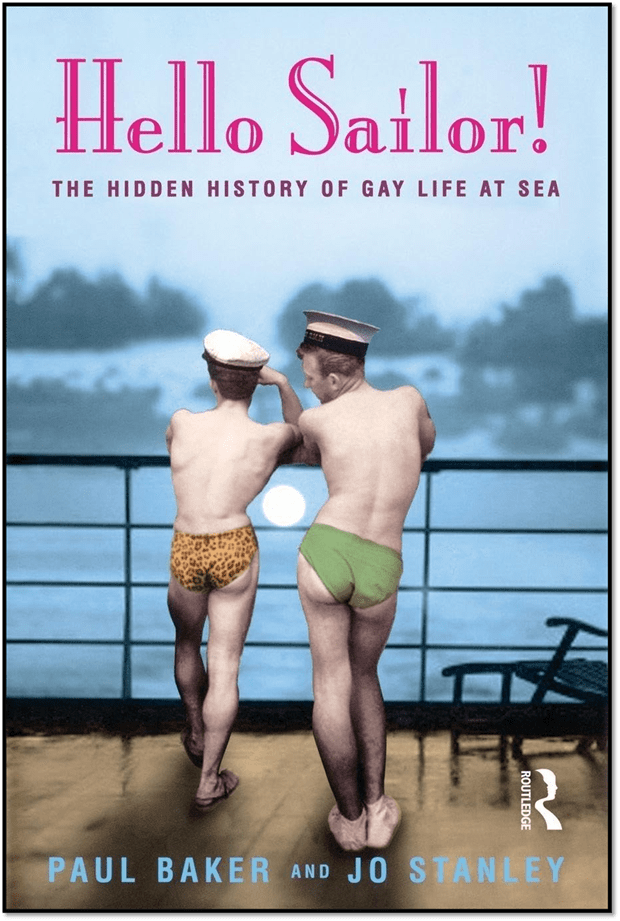
See my blog on Paul Baker and Jo Stanley’s book at this link.
The point made here is that male sexual ‘urgent need’ is a thing men recognize quite outside the binaries that organise the norms of sexual behaviour, and queer no more that that sexuality women know of in their husbands, however free they were of sexual experience, or consciousness of the desire thereof, with men. The novel does many other things with gender that I love. Not least amongst those is the role of the tender love of dogs in men, entirely non-binary and non-sexual. Another thing is discussion of relations of power around the Daddy myth in communities, but these need stronger discussion than I want to give. A final one I love is the treatment of the difference implied in the letter-writing of men and women, though this is a nuanced theme (with Aunts like Betty’s it has to be. Let’s instead end with recognising that tenderness lives in this novel in the secret conduits which allow unseen passage to each other for men that do not disconnect, as with Tery and Betty, Mike and Pip, tenderness and sex.
Take Harry and Paul, whose dream of evading loneliness in older age stops short of visibility as lovers at, perhaps: ‘adjoining houses with a discreetly knocked-through attic’.[16] The staff bar of the Ascania is another such secret place. The ex-navy tailor Vance and his bully boy sailor mate who treats Harry ‘as though afraid he might break’ such is nis tender manner makes the point too.[17] Even Mike has tenderness: ‘like one of the kinder priests in Trollope, or Mr Knightley’.[18] It is for this reason Harry is able to see there might be tragedy in Mike’s circumstances, that must be felt by Pip too. Speaking to Mike alone about him and Titus, Harry says things Mike pretends not to understand:
“It’s not easy,” Harry said, then fell quiet.
Mike stopped walking to relight his pipe. “What isn’t?” he prompted at last.
“When you’re so close to a man and you have to watch him grow away.”
“Well, we all grow up. Good thing too, probably.” He hated his falsely heart tone, like the worst sort of schoolmaster.[19]
But Mike may end his life frequenting Love Lane’s world lit only by fireflies. How can we know? The issue remains that closeness and tenderness are needs that may not be as urgent as sexual desire expressed to the point of felt erection but they do matter. Both Gale’s popular female and queer audiences know that this is the case and it is why they love him. Others just light a pipe or a cigarette and suck on it quietly. Perhaps the awful thing is that some awful specimen of life-hating male like Davy O’Connor will know the secret of a man’s handwriting better than he does, especially that ‘very fancy, queer way you write your E’s’, which leads even to the accusation that any real man you ever loved but have been fooled by you and his ‘urgent need’, as Davy suggests Paul Slaymaker was before he married his mother, Dimpy, ‘Paul was twice the man you were. Mother sensed it too’: ‘I was in the navy after all: I know men without women become animals’. [20] The creepy Davy evokes that ‘urgent need’ just like the Aunts, though he does so to curse it, not like them at all. But nevertheless, he as surely hurts all queer persons who just want to live a life with love by confusing it with that biological prompt alone. Dimpy does not do that. She is a beautiful character; despite leaving her first husband’s body to rot on the railway line it fell from their train-car hopping to lie bloodily on.
Do read this beautiful novel
With love
Steven xxxxxxxxxxxxxx
[1] Patrick Gale (2026: 26f.) Love Lane London, Tinder Press
[2] Ibid: 20
[3] Ibid: 120 (‘The mouth is always effective’)
[4] Ibid: 121 – 122
[5] Ibid: 189
[6] Ibid: 275
[7] See ibid: 56, 76 amongst other places (the latter one is where Harry expresses how much the weight of a cat in bed with him makes up a little for missing Paul when he is at war, and no longer able to lay with him in the bed reserved at night for him and his wife.
[8] Ibid: 147
[9] Ibid: 186
[10] Ibid: 90f.
[11] Ibid: 127
[12] Ibid: 96
[13] Ibid: 82 – 84
[14] Ibid: 289f,
[15] Ibid: 173
[16] Ibid: 4
[17] Ibid: 184
[18] Ibid: 229
[19] Ibid: 274
[20] Ibid: 72 – 73.


3 thoughts on “Relieving a man’s ‘urgent need’ on ‘Love Lane’: This is a blog about that ‘surprising book’ by Patrick Gale (2026) ‘Love Lane’ London, Tinder Press.”