Let’s concentrate on the word ‘raised’ and its rather frightening semantic history, to unpack the assumptions behind answering about how any actions of mine or their mode of occurrence differ from those I was supposedly ‘raised’ to do or not do them.
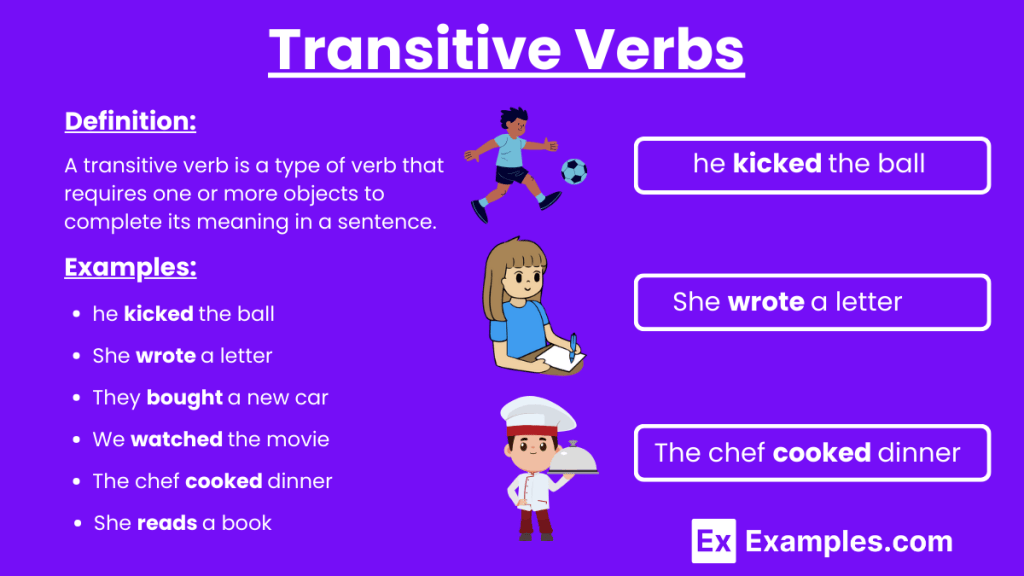
I am turning to the Online Etymological Dictionary today again for this prompt question, although the issues behind any use of the verb ‘raise’ are largely about its implication that the subject of a the transitive verb (see below) ‘raise’ is always in all the examples I can think of (but I’d love to be educated on this if you have other examples) the active agent of the verb, which operate on a grammarical object, even in metaphoric idioms, like ‘You raised the roof’.
In the case of the verb ‘to raise’, the action it describes is most often linked to a physical or metaphoric act of lifting, building up or causing more of a unit of meaning to be available, from ‘I raised your wages’ to ‘He raised her hopes’. Yet the Online Cambridge Dictionary also shows that it has a meaning relating to the agency of causing to exist, or indeed, and more complexly, ending the purposive action of an existing intermediary agent of that action (these problems you can puzzle out from the excellent list in the linked Dictionary entry for they are not my purpose here). They are perhaps linked to meaning B2 (see below) given by the Cambridge Dictionary, which uses the verb in relation to the growth and development of a living being, whether flora or fauna.
As for the subject of growth as itself a synonym for development, although not all things grow in relative size during development, there has always been a problem, especially the presumption that growth is caused by agencies known or unknown in full. Governments like to talk about the almost oxymoron of ‘raising growth in the economy’, an idea which is sometimes fallacious, in whole or part, in as much as issues of causation are concerned, whatever one’s ideological perspective. No one now anyway could write a book like Schumacher’s Small is Beautiful which I devoured in the sixth-form of my school and which still matters in true green politics.
However, of persons, whether that person is yourself as in our prompt, or another – someone for which we hold a ‘duty of care’ in some manner – it is doubly problematic. There is no doubt that the growth matter is somehow as submerged in that use as if it were actually said – we expect crops to grow bigger (under or over the soil surface) and cows to grow in size as mature functions that we wish to exploit, like meat or milk production also develop. There is no doubt that in that relationship we expect the thing cared for to be as passive as possible in any other way than the active one that feeds (literally) our adult needs.
Of children, it is a different matter. To ‘raise’ a child is, yes, in most cases to see that child grow, though even then that cannot be guaranteed given that not all the causes of child physical growth, like any other kind of growth, are within our control. But, in the Etymology Dictionary, there is one tributary in the history of the word’s usage and the meanings derived therefrom that have caused me to ponder again about the act of human child raising, as opposed to the raising of plants and other animals. Here is the full entry, in which I have bolded the problematic words:
raise (v.): c. 1200, reisen, “cause a rising of; lift upright, set upright; build, construct, bring into being,” from a Scandinavian source, such as Old Norse reisa “to raise,” from Proto-Germanic *raizjan (source also of Gothic ur-raisjan, Old English ræran “to rear;” see rear (v.)), causative of root *ris- “to rise” (see rise (v.)). At first sharing many senses with native rear (v.1).
Meaning “make higher” is from c. 1300 in the physical sense, as is that of “restore to life.” Of the voice, from late 14c. Of sieges, blockades, etc., “remove by or as if by lifting,” from late 14c. From early 14c. as “take up by aggregation or collection.” The sense of “establish contact with (someone),” originally by radio, is by 1929. Meaning “to elevate” (the consciousness) is from 1970. Related: Raised; raising.
Meaning “increase the amount of” is from c. 1500; from 1530s of prices, etc. Meaning “to bring up” (a question, etc.) is from 1640s. Card-playing sense is from 1821. In reference to plants, etc., “promote with care the growth or development of,” from 1660s; sense of “foster, rear, bring up” (of children) is by 1744.
Pickering [“A Vocabulary, or Collection of Words and Phrases Which Have Been Supposed to be Peculiar to the United States of America,” 1816] has a long passage on the use of raise and grow in reference to crops. He writes that in the U.S. raise is used of persons, in the sense “brought up,” but it is “never thus used in the Northern States.” Bartlett [1848] adds that it “is applied in the Southern States to the breeding of negroes. It is sometimes heard at the North among the illiterate; as ‘I was raised in Connecticut,’ meaning brought up there.”
Think of Pickering in the very early nineteenth century, up to Bartlett in the middle of the century, comparing English usage between the Northern and Southern (slave-owning) States of the USA. Only the illiterate use ‘raised’ as applied to persons in the North says Bartlett, because they are ignorant of what they consider its true signification, that it can only apply to beings (flora or fauna) under your direct CONTROL, wherein your responsibility for the growth and development is an economic one, akin to that of a farmer with his sheep – you raise a thing in order to raise its exchange value as a commodity.
One blogger I came across unknowingly developed this theme around the character Topsy in Uncle Tom’s Cabin and here quote their words below, together with their illustration and citation from the novel, which I just quote because I never want to read the novel again myself. I quote the words, knowing the (unconscious to the writer) racist implications of the commentary with diffidence but do so in order not to just ignore the issues still prevalent in uncritical reference to the period of modern human slavery and wage slavery.
To be ‘wild and uncivilized’ is perhaps to be undeveloped in terms of one’s human ‘being’ in as far as it names internal structures of thought and feeling, but it does illustrate the assumptions Stowe makes about whether or how to ‘raise’ the level of civilisation and cultivation of the ‘lowly’ (note the persistent elevation paradigms here too). The only joy in reading this book today comes from a radical identification with the resistance implicit in Topsy’s supposed undeveloped ignorance rather than in Uncle Tom’s well laid-in passivity before white cultural supremacy. For, after all, the only thing that Topsy ‘owns’ if she does is the inalienable propensity to grow despite the lack of cultural models like the White family (the Black ones being here miserably dismissed) and White governance that in the South limited its duty of care to Black people. Anyway, read the passage, and (though I will not comment) the presumptions about Black parents raising Black children in the illustration, if you feel you can.
In “Uncle Tom’s cabin, or Life among the lowly“, published in 1852, Harriet Beecher Stowe describes the character Topsy – a wild and uncivilized slave girl who Miss Ophelia tries to reform. In Chapter 20 the novel recounts a conversation between Ophelia and Topsy:
“Tell me where were you born, and who your father and mother were.” “Never was born,” re-iterated the creature more emphatically. “Never had no father, nor mother nor nothin'” “…Have you ever heard anything about God, Topsy?” The child looked bewildered, but grinned as usual. “Do you know who made you?” “Nobody, as I knows on,” said the child, with a short laugh. The idea appeared to amuse her considerably; for her eyes twinkled, and she added, “I spect I grow’d. Don’t think nobody never made me.”
At the time of its publication ‘Uncle Tom’s Cabin’ outsold every book previously published in the U.S. except the Bible and readers were charmed by Topsy’s declaration that she just “grow’d.” Soon “it grow’d like Topsy” had become a popular figure of speech to describe something that grew or increased by itself, without apparent design or divine intervention.
Did Stowe think twice before nominating Topsy a ‘creature’, and if she didn’t (even though that does not mean she didn’t care about the fate of black children) is it any worse than the more fulsome ‘wild and uncivilized’, which presumes she is like what humans think of as a ‘creature’ rather than a ‘person’. Yet neither writer thought of themselves as promoting racism no doubt. To be a person, one has to no longer think of your ‘growth’ as n autonomous activity but as something under the control / guidance of patriarchal authority, in the Northern States or the Federal Government following the Civil war, and ultimately of God – for physical growth turns into ‘raising’ (as one ‘raises’ a child) when some form of guidance of the interpretation of one’s growth is given and accepted by the growing entity as it becomes a gendered person. Topsy is brilliant. She is not a thing and will grow even despite those who think they want to ‘raise’ her to the level of entitled white ideology. And this is why Pickering and Bartlett were so specific about the true meaning of the word – it can only be used in economies where persons are objects and ultimately commodities for sale, exchange or use until done with.
That we no longer make that distinction about the word is not all to our advantage. For I resist talking about the comparison between the actions and their manner of delivery to which I was ‘raised’, being conscious that the explanation I just ‘grow’d’ to the kind of being I am owes as much to all kinds of causation, and some perhaps to my own auto-agency for good or bad, as to those who each in their way felt that they ‘raised’ me to be what they would like me to be. In truth whether one does things differently from the scripts built of expectations by people who consider themselves the authority on what it means to be raised has more to do with changes of which no one person has control. When they think they do, they become laughing stocks as King Canute realised by defying those who said he was all powerful or as President Trump should soon realise, if he hasn’t pressed the button of nuclear destruction as his only way of showing he was raised to be in charge – if but for a second, or a bit longer in a hermetically sealed underground chamber.
I am not saying just ‘be as you are’ not the scripted enactment of other authorities, but ‘raise’ yourself to see the world honestly and take responsibility for as much as you could change for the better for everyone.
One thought on “Let’s concentrate on the word ‘raised’ and its rather frightening semantic history, to unpack the assumptions behind answering about how any actions of mine or their mode of occurrence differ from those I was supposedly ‘raised’ to do or not do them.”




What a thought-provoking read. Thanks!
LikeLike