What’s the bravest thing you’ve ever done when no one was watching?
Can an action be brave if it is done in secret, unseen? Perhaps it can but only if you in some way also share the fact that you did it with others, as this prompt asks us so to do. Is it true that the secret act I performed was brave, in any sense of the word, if it remains secret?
The New York novelist Jon Acuff has written a blog to say that bravery has two parts and it cannot be defined as ‘brave’ if both parts are not performed. Here is what he says:
Bravery has two parts.
That last one is the least tweetable of the three, but it was the most surprising for me.
We’re taught that bravery only has one part. Like Nike says, you “Just do it.” And that is true. The first part of bravery is, “Just do it.”
Just write your book.
Just open your business.
Just start a blog.
Just learn photography.
That step is critical. You have to make the thing, but there are actually two steps to bravery:
Do it.
Tell people you did it.
If that second part feels easy to you, then you’ve never created something you deeply care about. I can’t explain it, but the more you care about something the harder it is to tell other people about it.
The free online PDF you created just to get email addresses? You’ll mention that thing a thousand times without worrying at all. If someone doesn’t like it you can always tell yourself, “Who cares? It’s just a dumb PDF anyway.”
The photo project you poured your heart and soul into? The business you dreamed about starting since you were a child? The poems you carried inside for years? The moment you actually dare to do those things, fear will launch a new campaign against you.
It will say things like:
Don’t be so self promotional.
Don’t bother people with the things you created.
People don’t care about what you built.
What if they laugh at what you did?
What if they don’t like what you made?
So books that are brilliant stay stuck on laptops. Businesses the world might have loved close their doors. Dreams die quiet deaths in forgotten notebooks.
Don’t let that happen to you. Tell us what you’ve done. Share with us in creative ways why it matters to you and to us. Be excited about the work you have finished. (Tweet it and tag me @JonAcuff so I can be excited too!)
And do step two with as much focus as you invested in step one.The Secret Part of Bravery People Struggle with Most
In fact, usage of the word doesn’t, in some authorities (if they are such) demand the act to be considered one of bravery to be visible in public or made known to a public audience afterwards. The online Cambridge Dictionary defines it thus:
Brave means showing or feeling no fear when facing dangerous, difficult, or unknown situations
Of course, how you read this depends on what kind of emphasis you put on ‘showing’. ‘Showing’ is not necessarily a synonym of’displaying’ but it does require acknowledgement of some sort of audience. If ‘self’ is a sufficient audience then showing is just a way of complicating feeling such that the appearance of feeling is all that is required to convince yourself enough to act. Thus, if I feel no fear in a place I experience as ‘dangerous, difficult, or unknown’ then I can tell self I am being brave without ‘anyone watching’.
But Acuff thinks this could be just self-delusion. If you were unwilli g to share the existence of the action, or the thing made by it – in his case a novel – you are not brave at all because if you fear being called out for boasting or made an example of that word for a self to-be-admired inventor created first in English, it is believed, by Edmund Spenser in The Faerie Queene, the Bragadocchio, then that has to be because you know, deep-down this was not an act of bravery but self-deception.
Things get complicated hete because Albert Bandura, the classic socio-cognitive psychologist, tells us in his book Self–Efficacy, that our abiity to do something, which he calls ‘self-efficacy’, always starts with unevidenced belief, that becomes its own evidence only in the discovery of the actual doing of the act. So is self-conviction as much a product of fiction potentially as bragging and boasting. If so what better test of it than to.put it to the judgement of an audience not otherwise inclined to believe in brave intentions without seeing consequent brave deeds.
We fear, it seems, being judged as much as doing things that might be beyond us makes us fear failure and perhaps fail as well, even when not seen. And animal.psychologists have supposedly proven that even observed cockroaches, as well as rats manage maze tests lesz well when observed, though these ‘experiments’ feel to me terribly flawed by assumptions that we know why the cockroach acts as its does in the presence of otherness which adaptive mechanisms easily interpret as a threat.
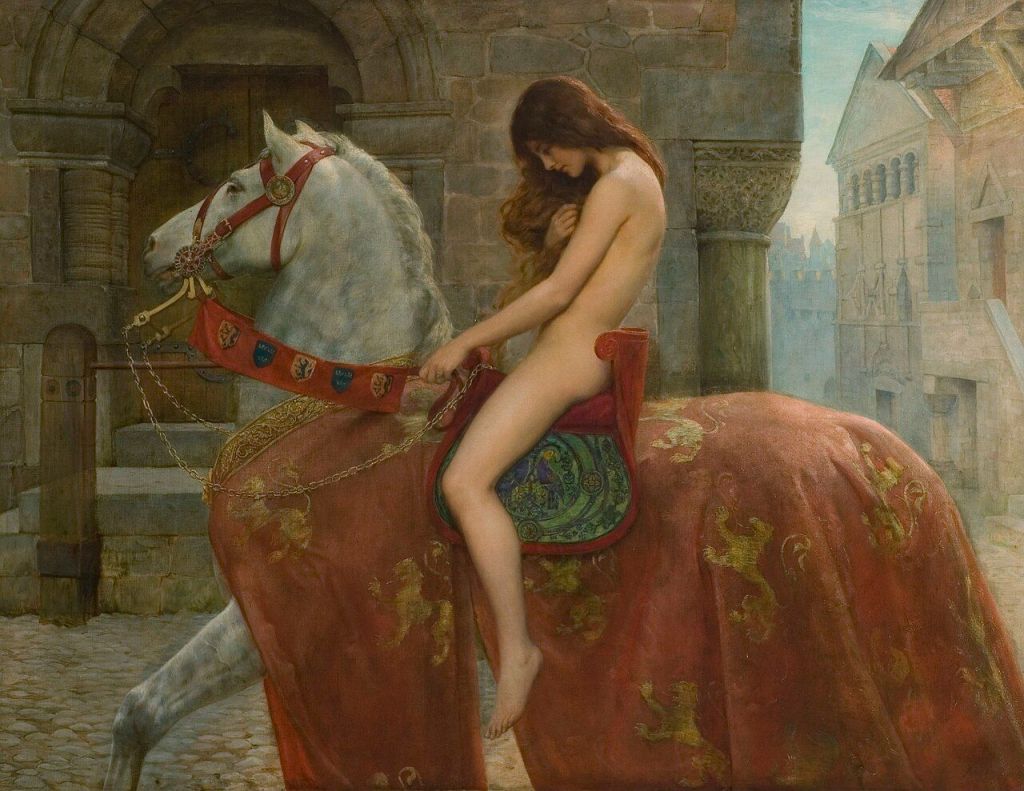
I think it is possibly true that bravery does has two parts. Let us, as a thought experiment, take the mythicised tale of Lady Godiva. Is it really brave to ride naked through a town where all eyes are turned away? Or is it brave only because we need a ‘Peeping Tom’ to observe what we risk in order for it to be brave, since the only risk is a ‘peeping Tom, witbhout which riding your horse whilst aked would be just a pleasure, at least o. A pleasa t day in Coventry?
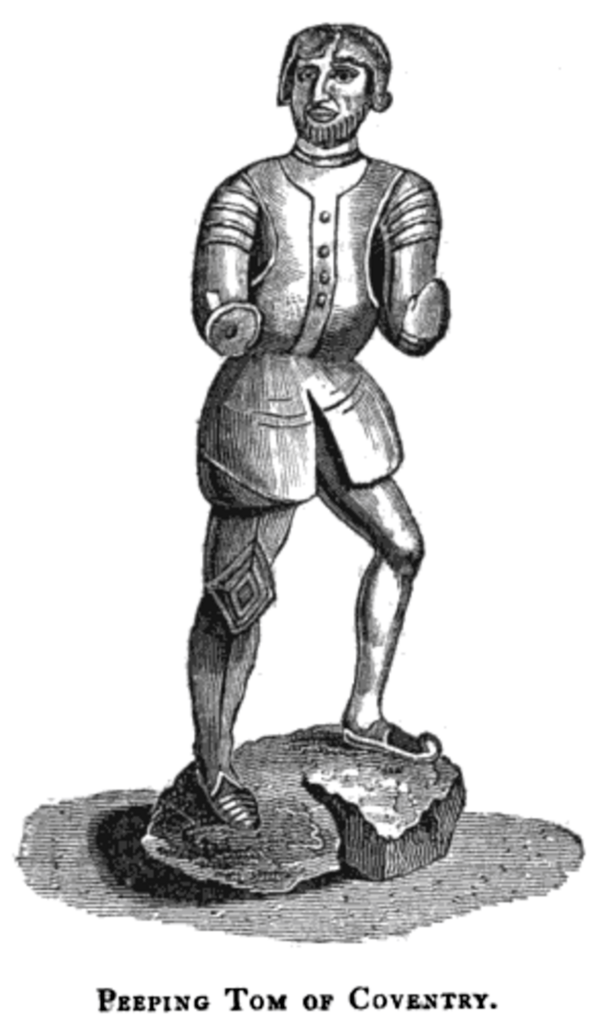
Do people do brave things only because they either hope that they will be things that are eventually witnessed in tbought or legend, or are witnessed by some supernatural other in which they believe and whose favour adds grace to their lives? Or perhaps one bopes thar one day a WordPress prompt will arise where one can bluushingly own ones own secteted achievement?
With love
Steven xxxxxx

