


The Kite in Time Space: describing the flying of kites in Gaza’s Great Return March of the spring of 2018 Ahmed Almaouq, explains that kites became and ‘opportunity to express defiance, even through [only symbolic ways’ citing Ramzy Baroud, going on to say himself that they became this kind of symbol because, ‘unlike the Palestinians in Gaza, they can fly free – high above the blockaded borders’.[1] How much I missed in invoking Refat Alareer ‘s poem ‘If I Must Die’ was made clear by reading Almaouq’ short article in We Are Not Numbers.

Saeed Ashraf bought this kite for himself and his younger brother, Murad [Ruwaida Amer/Al Jazeera][2]
Collages of news are often tricky to read correctly, as I may have made the hidden relationships between my title and its references above and the illustrative photograph of a Palestinian boy and his kite. The essay I use in my title was first published online in 2018, alongside other pieces by other authors about the Great Return March that are collected in We Are Numbers. The photograph is from Khan Younis in 2024, after the start of the genocidal attack on Gaza following the 2023 break out through the land Israeli land barricade By Hamas and those prepared to commit violent murder after the duration of their confinement in a space, like a prison, in which they felt like sitting ducks for IDF raids. I think the thing that reading We Are Not Numbers helps with is understanding how that latter event did not feature in their lives other than as a prompt for Israel to turn violent containment of Gazan Palestinians, with outbreaks of violence on both sides along the way, to a genocide. To the boy above, flying a kite it is hard to know how much the kite remained a symbol like those of the Return March of 2018.
But my mind returned to a blog I created a few days ago about my current reading in Gazan experience of recent history through writing (see the blog at this link). In this blog, I quoted the poem by the Palestinian poet and educator, Refaat Alareer, from which the poetry collection that was the partial subject of that blog takes its title: Tayseer Abu Odeh and Sherah Bloor (Trans. & Eds) & Jorie Graham (Guest ed.). [2026] You Must Live: New Poetry from Palestine Penguin Books Ltd. Here is the poem again:
If I must die,
you must live
to tell my story
to sell my things
to buy a piece of cloth
and some strings.
(make it white with a long tail)
so that a child, somewhere in Gaza
while looking heaven in the eye
awaiting his dad who left in a blaze -
and bid no one farewell
not even to his flesh
not even to himself -
see the kite, my kite you made, flying up above
and thinks for a moment an angel is there
bringing back love
If I must die
let it bring hope
let it be a tale.
In the blog I referred to above, I said this of the poem (I’ve tidied it up a bit):
The underlying motif of this poem is that although death happens, must happen – though not with the speed and purpose of his death – life is as much a necessity as death, justified by the living stories it tells of the dead. Who is this you who must ‘tell the tale’? We could think that ‘it be a tale’, which can also be a story, a poem, a memorial of a loved one or the ‘tale’ (that is also a tail) of a kite flying high. It is not the one thing nor about one person. It is about abandonment caused by anger – of a dad, or of the man he was – killed by the cold anger of the bombers who annihilated his flesh, whatever the cause of his leaving – of family and self that is never acknowledged but must be. The things sold of the poet’s remnant of things must be about the loss of the many and the few, who is death but can also be live resumed ‘bringing back love’. You can’t get more absolute than that and not, moreover, be, strictly speaking, the story of large numbers, even though we know it is.
As I re-read that, it seemed remarkably obtuse in its failure to take the kite itself seriously, partly, I think, because I had no grasp of the cultural depth of the ‘symbol’ of the kite might carry, and perhaps one that is more than it would be for a Palestinian Gazan father and man, boy and child. However then I had not read Ahmed’s essay in the book I mentioned in the blog alongside that new book of translated poems, nor looked elsewhere for prompts to the emotional sources in children of kite symbolism.

Tariq Khalaf had the sticks but not the paper to make a kite, so he made a deal so he could have a kite [Ruwaida Amer/Al Jazeera]: ibid.
There are remarkable positive emotions associated to kites, as Tariq Khalaf flying his manifests. I found him in that remarkable piece from Al Jazeera before mentioned. His story is told there by reporter and photographer Ruwaida Amer:
Rafah, Gaza Strip – The colourful kites fluttering in the skies of Rafah belie the reality they soar over: ragged tents packed tightly together, and lines of people trying to find food, water, and firewood. Running in and out of it all are children, brief smiles illuminating their exhausted faces as they look up at their flying miracles.
That such a simple toy can bring them moments of joy is in and of itself a miracle – and proof of the undefeatable spirit of children who manage this in the midst of rubble, death, displacement, hunger, and freezing cold as Israel’s brutal war on Gaza nears five months.
Tariq Khalaf, 12, has a kite, and he’s very proud of the fact.
“When the sun rose, I came out of the tent to sit here on the sand,” he says. “I saw some kids flying kites and I asked them how I could get one, too.
“I had sticks, but didn’t have the paper so I found someone who had some paper and asked him. He made one for me and one for his son and now I can come out and play all day with my kite.
“It’s so nice to watch it rise into the sky with the wind, and to run along with it, me and my friends from the tents nearby.”
Pride and happiness are in Tariq’s words, showing how much he missed playing and being outside doing everyday things with friends.
“We can’t play … we used to play football but there’s no space here between the tents. You can’t play and run like I used to in the field next to our house.”
Tariq and his family were displaced from their home in Nassr in Gaza, to al-Shifa Hospital, then to Khan Younis. Finally, they ended up in Rafah.
“I would spend my time running around the schoolyard [in Khan Younis] or just sitting in the corner waiting for the night so I could sleep.” [2]

We were screaming from the sound of the explosions,’ Tariq said of his family’s displacement [Ruwaida Amer/Al Jazeera]
People sometimes speak of the simple emotions of children, and might use to illustrate it the mix of hope and concentration in the two pictures bookending the journalist’s words above, but the emotion is complex, as much so in children in adults though they may articulate it more simply or need symbols or figures to do so, like those toys Anna Freud and Melanie Klein employed to understand them through the child’s manipulations and body language, as well as speech about them.
However, even without the remembered experience of t family screaming as Israeli drones neared them on a constant basis Tariq’s experience speaks truths about the confining ‘space’ of a refugee camp. Isn’t that space as near a concentration camp as the complex means of its supposedly free creation can be? The kite substitutes its use of space, now he is in Rafah (before it too becomes a target) that he and his friends lacked in Khan Younis when he was sent there from their family home as a safe space, for it too to become a target:
“It’s so nice to watch it rise into the sky with the wind, and to run along with it, me and my friends from the tents nearby.” / ….
“We can’t play … we used to play football but there’s no space here between the tents. You can’t play and run like I used to in the field next to our house.”
Tariq and his family were displaced from their home in Nassr in Gaza, to al-Shifa Hospital, then to Khan Younis. Finally, they ended up in Rafa.
Of course, it is the way the journalist tells the story that pits Tariq’s words about the free air, in which kites fly, against, in direct contrast, the constriction of space in the camp, and the story of his family’s serial displacements. However, consider that placement of the story’s elements also tells a truth not always articulated directly but definitively felt for some contingencies cannot be allowed to touch, at least explicitly, in our most vulnerable inner being.
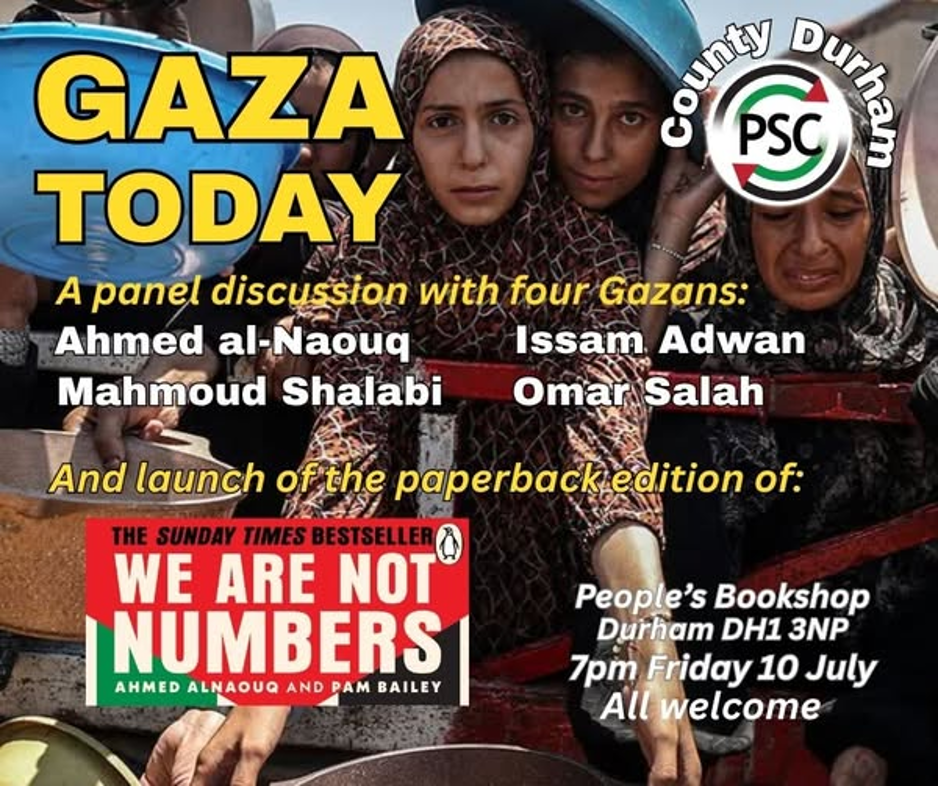
But it was the finessed journalistic prose of Ahmed Almaouq, whom I’d delighted to be looking forward to seeing in discussion of We Are Not Numbers, which he co-edited with Pam Bailey that really e forced the learning g of how political realities shape symbols in folk and aesthetic imaginations. He writes, in describing the flying of kites in Gaza’s Great Return March of the spring of 2018, that kites became an ‘opportunity to express defiance, even through [only] symbolic ways’ citing Ramzy Baroud, going on to say himself that they became this kind of symbol because, ‘unlike the Palestinians in Gaza, they can fly free – high above the blockaded borders’.[1]
This made continuity as an idea with another blog about the poems from the new Palestinian poetry collection, which can be read at this link: Space and time under the stress of oppressive power. – Steve_Bamlett_blog. It too explores how time and space conflate in symbols: therein the journey from Haifa to Nablus.
Ahmed Almaouq’s piece is less reserved in its political affiliation than a piece from Al Kazeera needs to be, but not because of greater bias but of greater present proximity to the larger story of post Nakba Palestine. The tight spaces in this essay are not just those of the gaps between tents in refugee cconcentrations, tbough these toovare an aspect of the larher spatial dynamic, but the forced enclosure of the tiny land-prison, the Gaza strip, with its walls on three sides and Israeli warships guarding ingress and exit by sea.
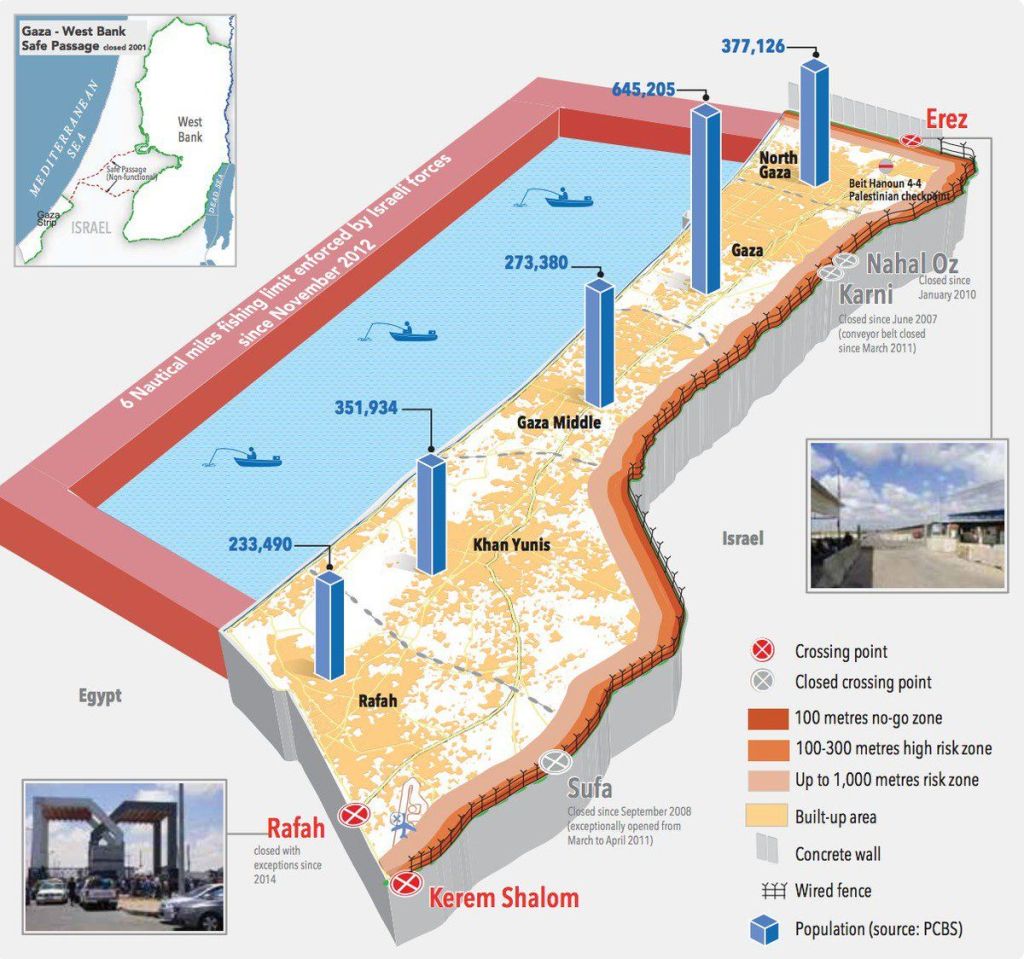
This being the case, the vision of a kite’s sway over land that ignores boundaries and borders becomes a symbol that renders all imaginations into a condition like that of a child who yearns, a thing that I find true even though I can only imagine both the suffering and the hopes of Palestinians in a world immune to calls for empathy. In the passage below Ahmed describes the collaborative making of the kites and the .modifications made to them to liberalism the presence of the martyrs and those dead from merely being in the way of aggression, few of which ever even imagined they would be labelled as terrorists.


The continuity of child to adult and the imaginary return journey, often across time and space, matter here. That is all the more so when you hear another, but surely not the primary one for the symbol is definitive of Palestine, for the kite display. Just as the IDF, which still thinks and acts like the terrorist organisation that gave it birth under the British Mandate, often claim all Palestine hospitals, schools and other previous safe spaces were cover for an opposing terrorist force, the kite-flights too are claimed to be ways Hamas launches Molotov cocktails into Israeli territory by the Israeli media. Hence, Rami Siam, who is 29 now with three children of his own, is quoted as saying of his kite-flying group tbat:
I wanted to show the world we are peacefully protesting and rejecting any idea of violence.
[1, p. 139].
Goodbye for now.
With love
Steven xxxxx
[1] Ahmed Alnaouq (2026: 139) ‘Gazans send kites over the border’ in Ahmed Alnaouq and Pam Bailey (Eds. 2026, paperback with new afterword after 2025 version) We Are Not Numbers: The Voices of Gaza’s Youth Penguin Books Ltd. 139 – 141.
[2] Ruwaida Amer (2024) ‘Kites fill Rafah’s skies, a symbol of hope amid Israel’s war on Gaza’ in Al Jazeera (online) Published On 20 Feb 2024 available at: https://www.aljazeera.com/features/2024/2/20/kites-fill-rafahs-skies-a-symbol-of-hope-amid-israels-war-on-gaza

