If you got to live inside a video game world, which one would you choose?
Once even John Berger reconciled himself to a role including ‘Grand Theft Auto, London 1969’ where he voiced the role of Albert Crisp, a Crisp version of Ronnie Kray. Could I even stomach being inside such a creation?
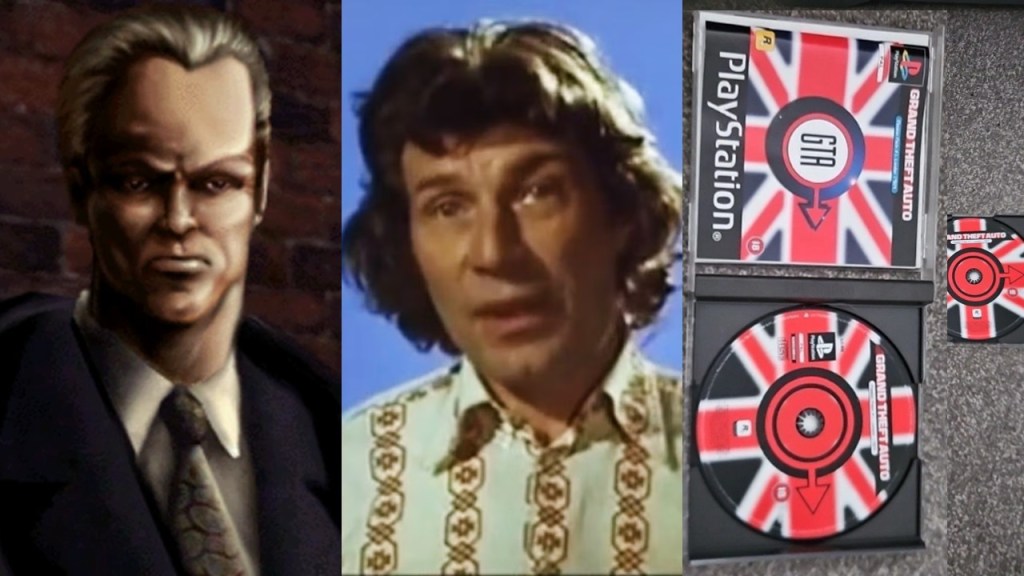
Left:Albert Crisp visualisation; Centre: John Berger as he was in 1972 on TV in Ways of Seeing, Right : The packaged Grand Theft Auto London 1969 game
As I said in the beginning of yesterday’s blog (at this link), I have just finished Tom Overton’s biography of John Berger named John Berger: From Life. One of its lesser pleasures, but a pleasure nonetheless as all unsought surprises are, is the chance to answer a question like this, for I have never nor ever will play a video game. Something about the intensity of the digitalised flashing images make them unpalatable and somewhat destabilising. A symptom like this, moreover, can often become a ground for ‘dislike’ and even of prejudice, perhaps even with a justification not unlike elitism, a thing that shocks as well as surprises if I feel anything that might be describedby that word.
Berger was a voice that set itself in grand and principled opposition to elitism and that might have pointed him to accept the voice over role of Albert Crisp, one of a pair of small time gangsters based on tne Kray twins, real people who were also a myth of working-class life, their violence sometimes seeming what the entitled bourgeoisie deserved, though in reality they were no Robin Hood figures. The episode is framed by Overton in terms of the way any discourse gets framed in public memory, sometimes simultaneously to its appearance in quite alien forms.It’s not a strightforward point because it uses Ways of Seeing as the text and video material on which BritArt figures were educated, which appeared first in 1972 only to then link it up with Berger getting involved in a videogame, some three years earlier thn that. clearly the point is not based on historical sequence but on an interpretation of the zeitgeist applying to the time duration between 1967 – 1974. The passages are from consective pages of the book – hence there re two photographs to cover them (pages 282f. Note that the index gets the location of the passage wrong claiming the reference to the videogame is on page 284).
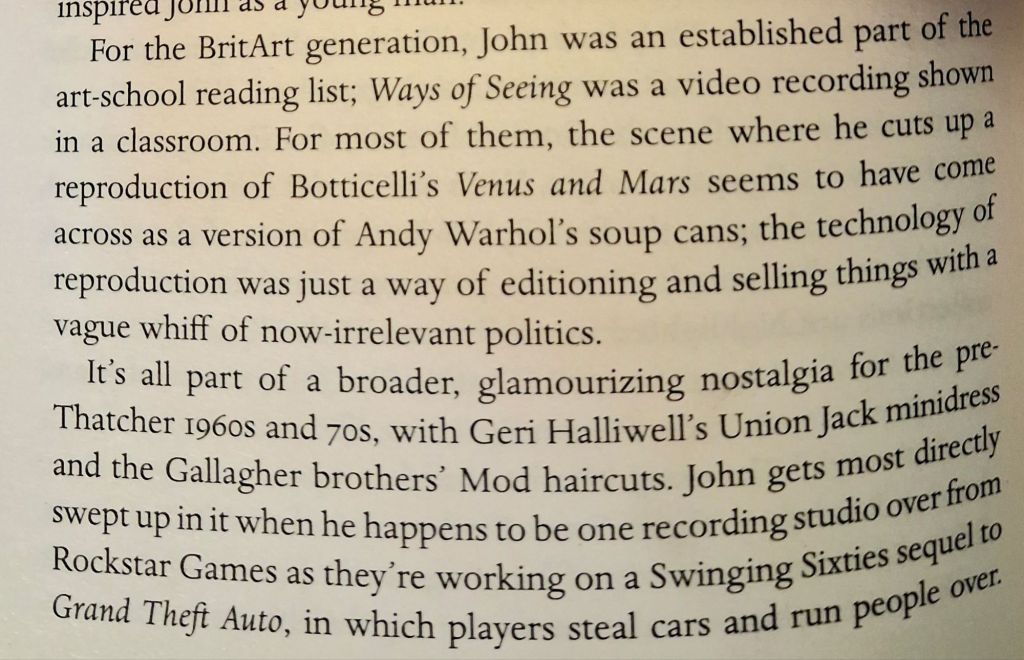
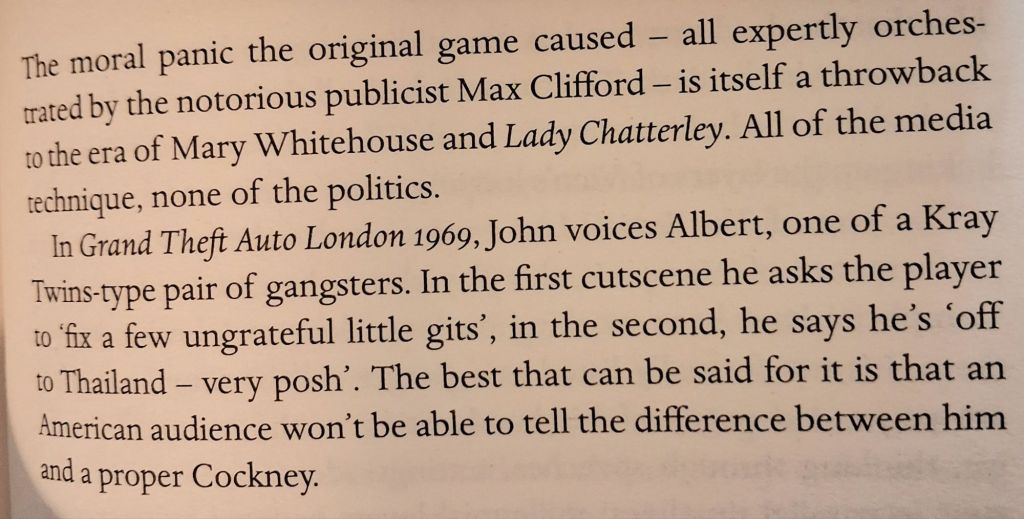
Overton can’t quite resist sneering at the project and perhaps at its participants for the point of the sentence of summary here: ‘The best that can said of it is that an American audience’ (read here ‘an audience ignorant of English dialectical variations including those of class’) ‘won’t be able to tell the difference between him and a proper Cockney’. Its is a cheap point in a book that avoids them more usually depending on our attitude of middle-class public-school boys (with an accent of Received Pronunciation to match) who ape working-class types, like the ‘proper Cockneys’ that the Kray Twins were, who say things like ‘very posh’ and describe their followers as ‘ungrateful little gits’, including presumably the working-class boys seduced by Reggie Kray.
The whole is a test case for all kinds of response ready to test on an elitism-gauge. There are better things to say of why Berger might have participated, apart of course from the fact there would have been a payment attached, that has more to do with the perpetual anxiety Berger continually revolved within himself about the aspiration to ‘greatness’ and to a superior classification of type based entirely on the accident of current class-distinctions. It is the kind of anxiety that only could resolve by absconding to live in Quincy in 1962 and absorn himself in ‘peasant’ life – the class continually undertheorised even in the kinds of Marxism he espoused. Moreover, there is true humility in Berger accepting that he cannot entirely control the discourse about him or his work, which will mean what it might mean as a function of its reception not of his design.
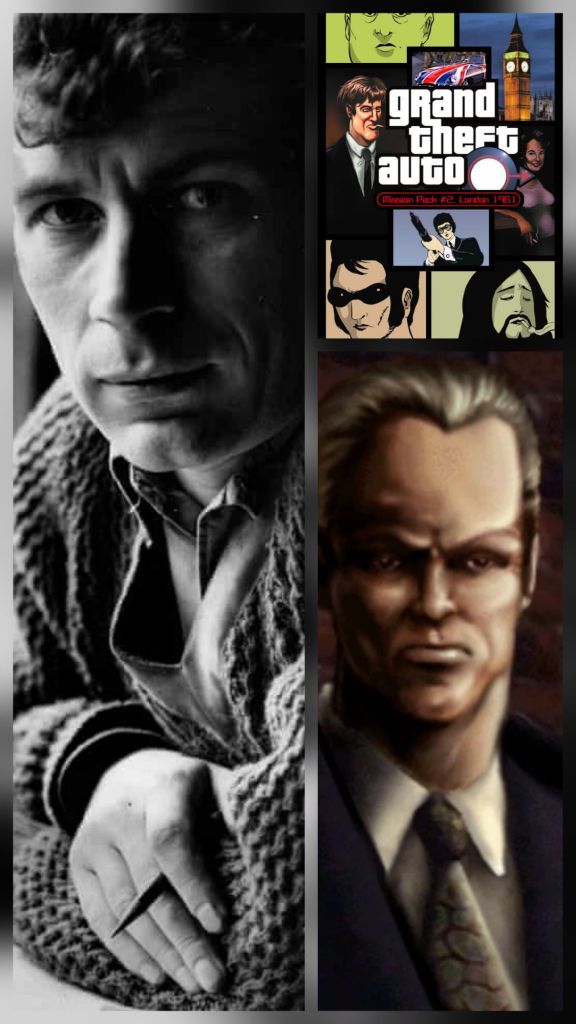
Left:John Berger as he was in 1962; Right top: the 1961 ideo game, Right bottom: Albert Crisp visualisation
I look at the above representation of Berger, photographed in the year he moved to Quincy and everything speaks the intellectual artist, critic and theorist, whio would wear his tie as crisp, even if he ever allowed himself to wear one at all, as Albert Crisp is shown doing, because unlike working-class mothers his left-leaning intellectual mother, whom he thought of as ‘ice-cold, would not have forced him to make something of himself before he was allowed out. I can see that he could nevertheless why cultural populism has its rebels placing in them a game that shunned the symbols of middle-class life – the possession of fancy and over-priced cars. That he might jokingly equate the criminal element of the lumpenproletariat (those not making money, minus its surplus value) by productive labour) with Albert Crisp, or Ronnie and Reggie Kray, but this would belie his true devotion to working miners and other groups of workers whose struggle he supported internationally.
Now, however, the videogame has so refined its violence in the hyperrealism of game-front-end-designs and in its levels of competitive nastiness that I have no doubt that Berger, were he living, would not participate and that he would not be asked to participate. Drone warfare has the design of videogames in its history and it is the warfare of choice of the states whose conduct of perpetual war in its own interests, for it eliminates all humanity ieven in the execution of horror, such that the moral turnaround of an Oppenheimer could never happen again – because the ‘computer says No’!
With love
Steven xxxxxxxxx

