Which relationship has taught you the most about yourself?
View all responses
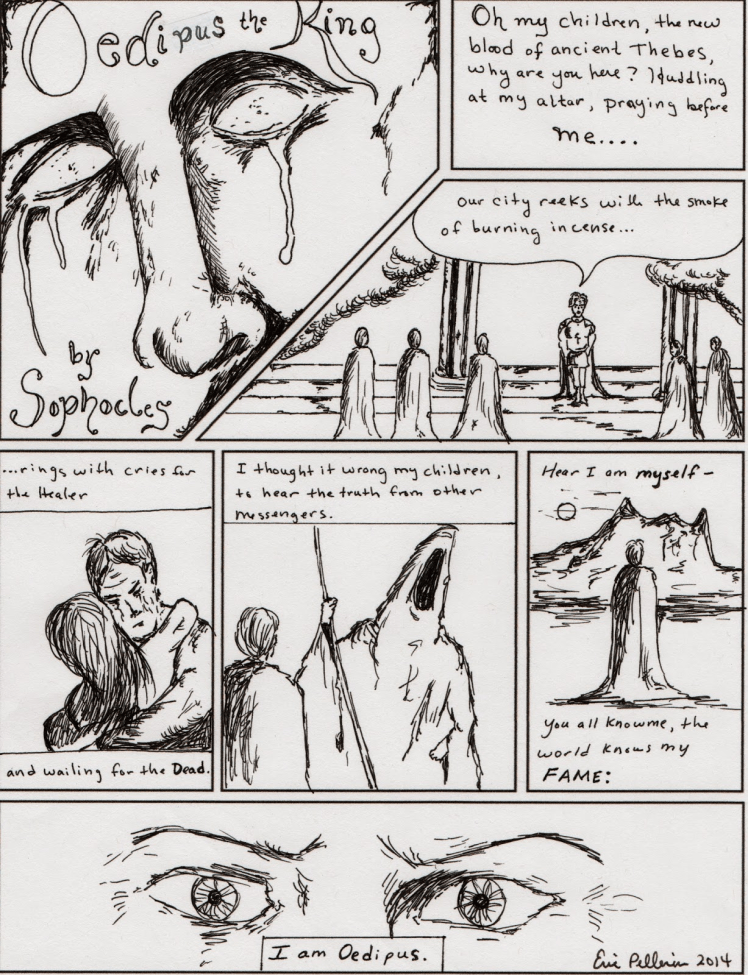
Relationships and their meaning for those who form a part of them are at the heart of dramatic fiction for a reason. Human culture has always judged itself in terms of how it articulates the worth and value of a person in relationship to how well that person measures up to the roles that are in part considered to be the constituents of the self and in contrast sidelined those who claim to be self-made and self-authorised.
The idea of a self that one could ‘be’ and is considered an essence (what I truly am being the essence of myself), found first in the self-justifiers who are often the villains in Shakespeare’s plays, irrespective of the roles such selves play and the relationships that sustain it is a relatively modern idea, though the ONE God has been said to claim it since the creation of the Judaic scriptures:
The name Yahweh comes from the Hebrew word for “I am.” When God met Moses at the burning bush and commanded him to go back to Egypt and lead the people out, Moses asked who he should say has sent him. “God said to Moses, ‘I AM WHO I AM.’ And he said, ‘Say this to the people of Israel: “I AM has sent me to you.”’ God also said to Moses, ‘Say this to the people of Israel: “The LORD [YHWH], the God of your fathers, the God of Abraham, the God of Isaac, and the God of Jacob, has sent me to you.” This is my name forever, and thus I am to be remembered throughout all generations’” (Exodus 3:14–15, ESV).
But human persons are not Gods or God and cannot be named simply through the accident of their being as if that was their essence. This is surely, to name an ancient analogue, the meaning of Sophocles’ Oedipus Tyrrannus (strangely enough best translated in the poet Shelley’s comic satire version Swellfoot the Tyrant). Oedipus named after the accident of his discovery, exposed, chained by the foot, on a hill to be food of wild animals. Rescued and brought up by humble people until adopted into the court of Corinth, he had a swollen foot to the end of his life.
Fearful of a prophecy that he would kill his father and marry his mother, he fled Corinth, thinking its King and Queen his biological parents, he fled Corinth, arriving at Thebes after killing an arrogant man in a chariot on the road, outwitting a Sphinx who was a curse upon Thebes and marrying the Queen of Thebes whose husband was lost. Oedipus held himself proud as self-made King (the term ‘tyrant’ coming from that role), untouchable in the truth of having earned the right to be himself, a worthy ruler, destined to that role. What leads to the tragedy is the learning that shows that the man he killed on the road was his biological father, King Laius, and that he had married his biological mother, Queen Jocasta, who had first exposed him as a child on the basis of the same prophecy that sent him from Corinth.
It is a keen awakening to the truth that drama tells that contingent relationships (appearing to be unplanned accidents in life to the person themselces) are those that, in the final analysis, are used to define ourselves despite our own agency in the world. They tell us more of ourselves than we wish to know, preferring to see ourselves as self-made, responsible only to and for ourselves – being the ‘I am that I am’. Oedipus learning the truth has found his children are also his siblings, his wife his mother, himself a patricide and the very definition of criminality wirh which he has always avoided contact.
The greatest and most profound drama of Western literature on the subject of self- definition tested against contingent facts of disavowed relationships that, nevertheless, still bind us in networks of responsibility is surely Shakespeare’s King Lear. The whole plot shines with those truths. Though it provides a standard subplot in which the self-justifier, Edmund, the illegitimate son of Gloucester, plays his part, abrogating all bonds and relationships to the interests of his own self-creation, this is just counterpoint to a more philosophical attack on notions of social duties bound up in prescribed contingent biological and social relationships.
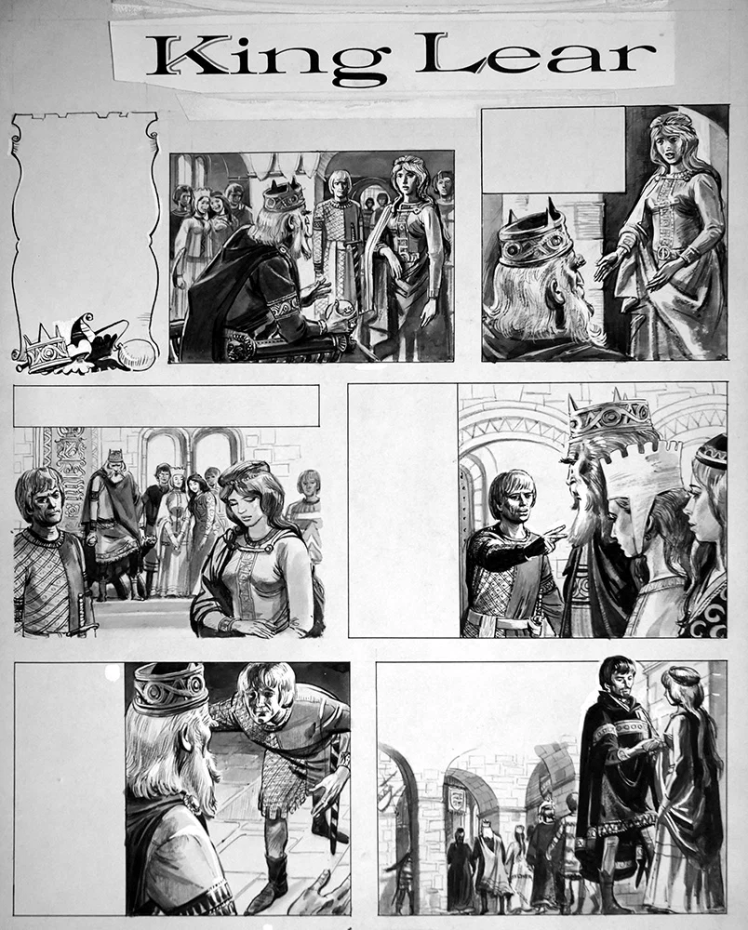
From the get-go, the play raises the idea of the folly that our relationships can be rewritten, or at least redescribed, in ways that give individuals a superiority in their interpretation over traditional social meanings of those networked relationships of bonds – bonds that create closeness but also constraints as in all bondage. Merely saying this, as Cordelia does, is enough to evoke unreasonable anger at those who don’t claim to be the author of those relationships, turning them into fancy words supposedly definitive of an individual choice as Goneril and Regan do. After all, the nub of the matter for Cordelia is that, she knows that all relationships bind her to persons within according to an acknowledged and pre-established social bond (‘no more nor less’), regardless of her personal choice and self-interest. People sometimes blame Cordelia for legalistic terminology like ‘bond’ when talking to her father but tbe point is that she is merely noting that once in relationships the bonds formed are not your choice to change but like any other bond stays tighly knotted until released by a contingency yet unknown, usually death.
CORDELIA
Unhappy that I am, I cannot heave
My heart into my mouth. I love your Majesty
According to my bond, no more nor less.
LEAR
How, how, Cordelia? Mend your speech a little,
Lest you may mar your fortunes.
CORDELIA  Good my lord,
You have begot me, bred me, loved me.
I return those duties back as are right fit:
Obey you, love you, and most honor you.
Why have my sisters husbands if they say
They love you all? Haply, when I shall wed,
That lord whose hand must take my plight shall carry
Half my love with him, half my care and duty.
Sure I shall never marry like my sisters,
To love my father all.
LEAR  But goes thy heart with this?
CORDELIA  Ay, my good lord.
LEAR  So young and so untender?
CORDELIA  So young, my lord, and true.
LEAR
Let it be so. Thy truth, then, be thy dower,
For by the sacred radiance of the sun,
The mysteries of Hecate and the night,
By all the operation of the orbs
From whom we do exist and cease to be,
Here I disclaim all my paternal care,
Propinquity, and property of blood,
And as a stranger to my heart and me
Hold thee from this forever. The barbarous Scythian,
Or he that makes his generation messes
To gorge his appetite, shall to my bosom
Be as well neighbored, pitied, and relieved
As thou my sometime daughter.
King Lear (Act 1, Scene 1, line 100ff.
It is the fact tbat a daughter admits that her duty must be divided once she is married that really upsets Lear and turns his attention away from the division of his inheritance to, in her case alone, her part of the inheritance is to acr as a ‘dower’, a price paid to the husband-to-be to cement the relationship, although a word with a complex history in shifting family legal arrangements. In Lear’s over-literal interpretation, since he pays for the husband, the daughter’s bond to her husband very much belongs to him still, though she be married. It appears Lear considers Cordelia’s insistence on ‘truth’ top the realities of her situation, a rebellion against his paternal right and which gives him leave to ‘disclaim all my paternal care, / Propinquity, and property of blood’ too. And look at how he does it – for the boast is that he is in control of the bonds owed to blood relation in families. Indeed, he even evokes some very dodgy anthropology from the time to show that if other cultures can eat their own young (or the young eat the old once out of other ises) to show he too can choose exactly whom he is related to, even if that person be a ‘stranger’. Note that his claim, thouugh using legal language also unvokes supernatural mysteries which govern what we are -that state of ‘being’ in existence or not. Though, of course, there is a look out to the powers of the astrological firmament, the:
The mysteries of Hecate and the night,
By all the operation of the orbs
From whom we do exist and cease to be,
Here I disclaim all my paternal care,
Also are a kind of invocation of the biological origins of supposed ‘paternal care’. The ‘orbs’ mentioned here are as much the gonads of the world – the source of paternal fertilty. I have thought this since I was in the sixth-form reading this play at 17-18 years of age, though others scoffed. After all this pl;ay often invokes the overturn of fertlity as if it were entirely a male gift. In the storm Lear rages:
Strike flat the thick rotundity o’ th’ world.
Crack nature’s molds, all germens spill at once
That makes ingrateful man.

King Lear (Act 3, Scene 2, line 9ff.
The ‘thick rotundity’ is one of ‘nature’s ‘molds’, the womb fulfilled in pregnancy, by the spilled male ‘germens’ (seed), the necessary origin of offspring that is not unlike the operation of the orbs at night in its function – making ‘ingrateful man’, who never looks to their creator in thanks. This constant harping on the father’s role in fertility is also part of the subplot – Gloucester playing jokes on the word ‘conceive (meaning ‘undertand’ or to ‘make a child in the womb’) in Act 1 Scene 1, though it is clear that the ‘whoreson’ is an accidental byproduct of the ‘sport’ that led to his ‘making’:
KENT  I cannot conceive you.
GLOUCESTER  Sir, this young fellow’s mother could,
whereupon she grew round-wombed and had indeed,
sir, a son for her cradle ere she had a husband
for her bed. Do you smell a fault?
KENT  I cannot wish the fault undone, the issue of it
being so proper.
GLOUCESTER  But I have a son, sir, by order of law,
some year elder than this, who yet is no dearer in
my account. Though this knave came something
saucily to the world before he was sent for, yet was
his mother fair, there was good sport at his making,
and the whoreson must be acknowledged.

King Lear (Act 1, Scene 1, line 12ff.
Let me be clear here. The issue at the base of law is a question about who makes ‘relationships’ matter – though Gloucester says the ‘whoreson must be acknowledged’, he was not bound legally to consider that the case. What Gloucester does is an act of free will, not unlike the casting off of his other son ‘by order of law’, Edgar; an act that, like Lear’s, reversed the bonds of both biology and social law: an act that meant in the end humans sometimes think they canm pick and choose the relationships they value and wish to prioritise or, at the least, acknowledge in some smaller way. And this is the play’s main theme
Why does this matter? I think it matters because King Lear is the greatest play of the Western canon because it takes on board the idea that if we can change the bonds that bind us in families and in communitiies, perhaps we can also see ourselves as related to those of whom previously we have ‘ta’en / Too little care’, even the homeless (‘houseless heads), the socially low and the poor, even the ‘mad’, regardless of their ability to dress themselves for the part of any social human. Lear things that if he exposed himself ‘to feel what wretches feel’, he would begin a process of redistribution of what he consider his, but is in fact ‘superfluous’ and institute a just world under religious sanction.
KENT Good my lord, enter here.
LEAR
Prithee, go in thyself. Seek thine own ease.
This tempest will not give me leave to ponder
On things would hurt me more. But I’ll go in.—
In, boy; go first.—You houseless poverty—
Nay, get thee in. I’ll pray, and then I’ll sleep.
Fool exits.
Poor naked wretches, wheresoe’er you are,
That bide the pelting of this pitiless storm,
How shall your houseless heads and unfed sides,
Your looped and windowed raggedness defend you
From seasons such as these? O, I have ta’en
Too little care of this. Take physic, pomp.
Expose thyself to feel what wretches feel,
That thou may’st shake the superflux to them
And show the heavens more just.King Lear (Act 3, Scene 4, line 25ff.
King Lear is a great play because it admits that the problem of ‘suffering’ is not that of Job, querying why he is made to suffer, but that other people than myself suffer more than I and I do nothing about it, barely even ‘care’ about it because we have never ever felt the suffering in the way others have. If you must choose to use your relationships as a source of learning, chooses ones that you have not previously cared enough about – not your biological or chosen family but those you shudder to feel you might be like, if you ever allow yourself to see them as related to you at all. If I truly want to learn about myself, avoid choosing a favourite person amongst your set as your mentor, but choose that person, you unwittingly choose to ignore, not knowing it was a choice. If there is superflux, why not let it run down to where it is needed and thus disburdened, see what you are then as you ‘crawl towards death’.

An evacuation in Gaza in 2025, and it still goes on …. If these people are wretched, it is because we colluded in them being so!
With love
Steven xxxxxxxxxxxxx

