
The Edinburgh Book Festival may be anybody’s kicking post for at least some of the time. For years, it was supported financially by Baillie Gifford with known assets in some very illiberal regimes and ethically if not legally (as far as we know) shady practices. That tie now severed, the right wing press led by The Telegraph have piled on to show how limited is a left vision in the arts, and are currently ‘beefing’ that up – with very fatty processed beef in my view – with critiques of its ‘antisemitism’ (that is, it unlike every other media outlet, offers a fair voice for Palestinian rights authors – which is the cry of antisemitism comes down to currently (despite the bloody and unequal attack on Palestinian civilians by Israel)) and unfairness to ‘gender-criticals’.
Another right wing paper, The Scottish Daily Express, highlights that last critique too. Take this piece from the rather mentally challenged David Walker, who features amongst the ways the Festival is ‘slated’ (why do the right wing press prefer that ugly adjective to describe the furor of their favoured persons – that is, anyone attacking the left or those conceptually open to gender/sex or other identity variation in politics): ‘Edinburgh Book Festival slated for ‘platforming’ Nicola Sturgeon but hosting no gender critical authors’.
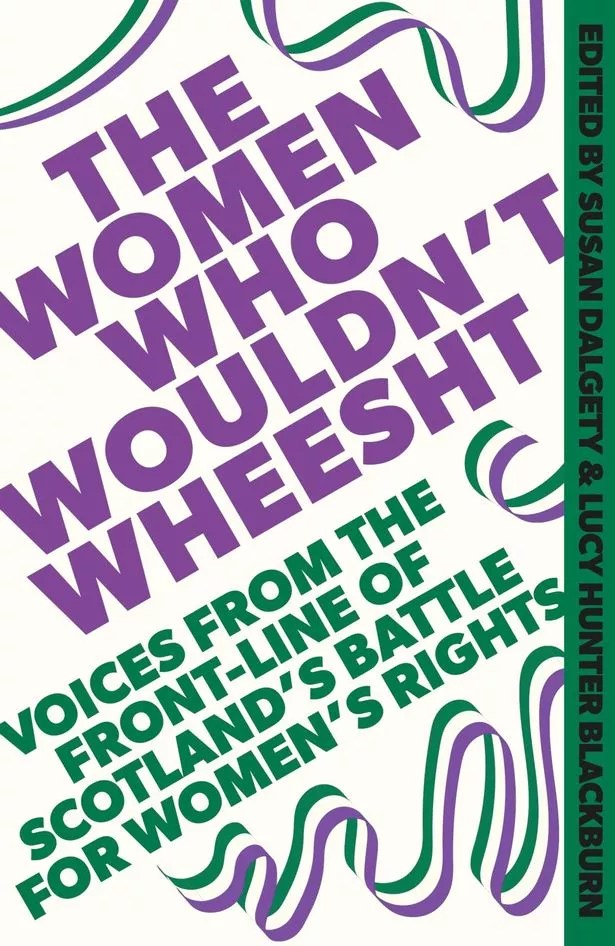
This ‘slating’ is later spelled out by the explanation: ‘… the line-up has annoyed some writers who highlighted that there is no feminists scheduled to speak’. [1] Apart from being ungrammatical (which must delight these ‘writers’), this sentence makes vast assumptions about who is a ‘feminist’, for by this they mean that group of women who dissolved feminism into the issues of toilet and prison provision, the possession of a penis or not, and anti-trans practice and ideology, more accurately called TERFs (trans-exclusionary radical feminists). David represents these ‘feminists’ by that very reactionary book: Women Who Wouldn’t Wheest
What the right-wing press see in this is a conspiracy led by the Scottish Government, whom they blame for tardiness in policy on toileting provision, unlike their heroes Keir Starmer in current British government and Kemi Badenoch in their hope for a later British governance. They represent that with a photograph of the wonderful queer author Douglas Stuart when he was hosted at the event, years ago, for his beautiful debut novel of growing up poor, queer and ultra-marginalised as the son of an alcoholic mother, Shuggie Bain.
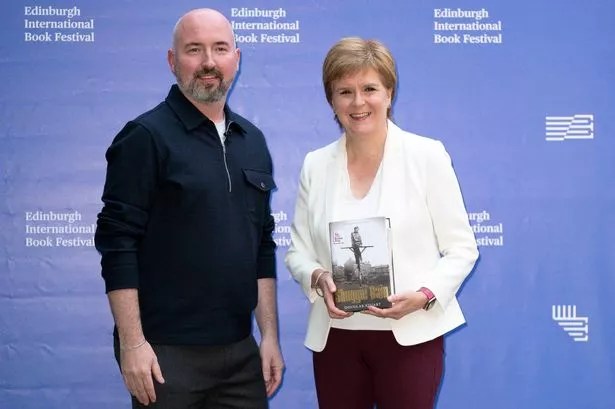
This hardly seems up-to date evidence of the collusion that is the object of their ire, after all Nicola Sturgeon was and remains one of the few politicians with any credibility as a reader of novels and lover of the arts, and isn’t a prominent current political leader. So roll on more evidence from a writer. They choose poet, Jenny Lindsay:
Jenny Lindsay, who has written about being “hounded” out of Scotland’s literary scene due to speaking up for women’s rights, was one of the most vocal critics of the line-up. She faced abuse and was ghosted by festivals and other writers after one tweet where she wrote to culture magazine the Skinny: “‘Hello! One of your commentators here advocates violence against lesbian activists at Pride. I find it extraordinary that such views are given an airing in The Skinny…’”
She wrote on X: “I can’t believe I missed that the theme is ‘Repair,’ and they’ve booked hounders over those hounded, are continuing to ostracise successful feminist writers trying to ‘repair’ after houndings, AND they’re featuring many activist writers who had their funding destroyed last year and called them all sorts of names. Hahaha. Jesus christ, this industry. Pheweee.
“Ok, I started counting and it’s at *least* twelve Scotland-based hounders whose books haven’t even sold well, and also wall to wall gender identity activists. And I can spy one feminist in there, but not talking about feminism. And Deborah Francis White. Stopping.” [1]
However, The Quintessential Review has also insisted that it roo shares the dismay of ‘many authors as well as’ those cited by the right-wingers, : it only names however the same populist authors cited by the Right wing: in its article on this, ‘Why we’re not covering the Edinburgh International Book Festival 2025’. It says:
We won’t be stopping by because what was a jewel in Edinburgh’s cultural crown, a marquee event staging some of the best and brightest writers both locally and from around the world, has been reduced to an cliqueish gathering intent on preaching to the choir.
How could it be otherwise after two rounds of capitulation to a small but loud minority who will brook no opposition to their perceived ideas of virtue?
Call me biased (I am in this respect) but this kind of ad feminem antagonistic is to feminists who don’t agree with them is high in unexamined assumptions and false categorisations). Morover, its ripe that defence of TERFs is aligned with defence of Baillie Gifford. Many feminists still call themselves ‘gender identity activists’: in a very real sense, Mary Wollstonecraft was the first such, to say nothing of the great lesbian feminist activists. And then roll on further the Tory politicians who revel in the sight of a privileged ‘victim’ shouting as loudly as Lindsay does in her cancelled ‘voice’:
Two Scottish Tory MSPs also condemned the Edinburgh line-up. Tess White said: “Very disappointing that Edinburgh International Book Festival has given a platform to people like Nicola Sturgeon, but not to authors like @msjlindsay who have suffered such significant personal and professional cost from speaking out against self-ID.”
The second of those MPs generalised the point thus: the problem with the Edinburgh Book Festival is ‘the social and cultural divide that has arisen, not between the wealthy and working people, but between the ‘lanyard’ class and the rest of us’. {1] And there you have it – the populist right bruits a claimed alliance of wealthy and ‘working people against the educated professional middle class ‘elites’: ‘the social and cultural divide that has arisen, not between the wealthy and working people, but between the ‘lanyard’ class and the rest of us.’ [1] How like the ‘hero’ of Natasha Brown’s great new novel Universality, now on the Booker Longlist – another poor selling non-feminist no doubt in the eyes of the Scottish Daily Express, Miriam (‘Lenny’) Leonard (see my blog on that novel here).
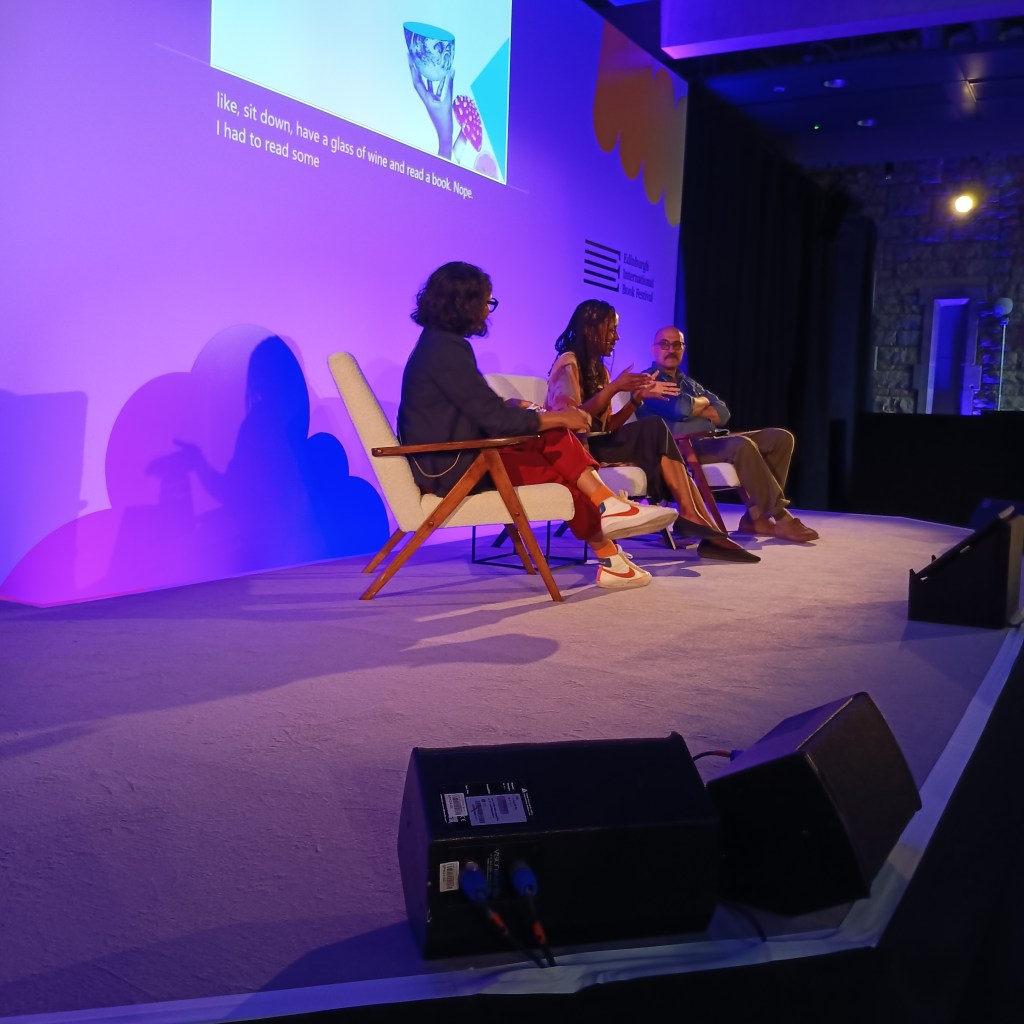
Natasha Brown, speaking with Hari Kunzru, was the last event I saw. Beautifully and sensitively chaired (by a feminist journalist) the chair also made reference to the fabulous attack on the ideological primness of Book festivals in Universality, but the attack was not of the nature of Ms. Lindsay, as her supporters call her, but on the unctuous class characteristics of Book Festival ideologies. This was the kind of event that will keep me ever going to Edinburgh. The discussion was good – though each writer might have been given their own event in truth – the similarities eked out between their books are the least interesting about either brilliant writer.
What might stop me going again is the experience of poor chairing in two of the other three events I saw, in which the chair assiduously included themselves and their (often irrelevant) ideas and feelings into the event.When two writers like Tash Aw (see my blog on the novel he addressed) and Allan Hollinghurst (also blogged upon) get together, there is enough swells and falls in such an encounter to mimic a sea – and writerly empathy enough to work from similarities and differences in their writing – to dispense with otiose interviewers and their agendas:
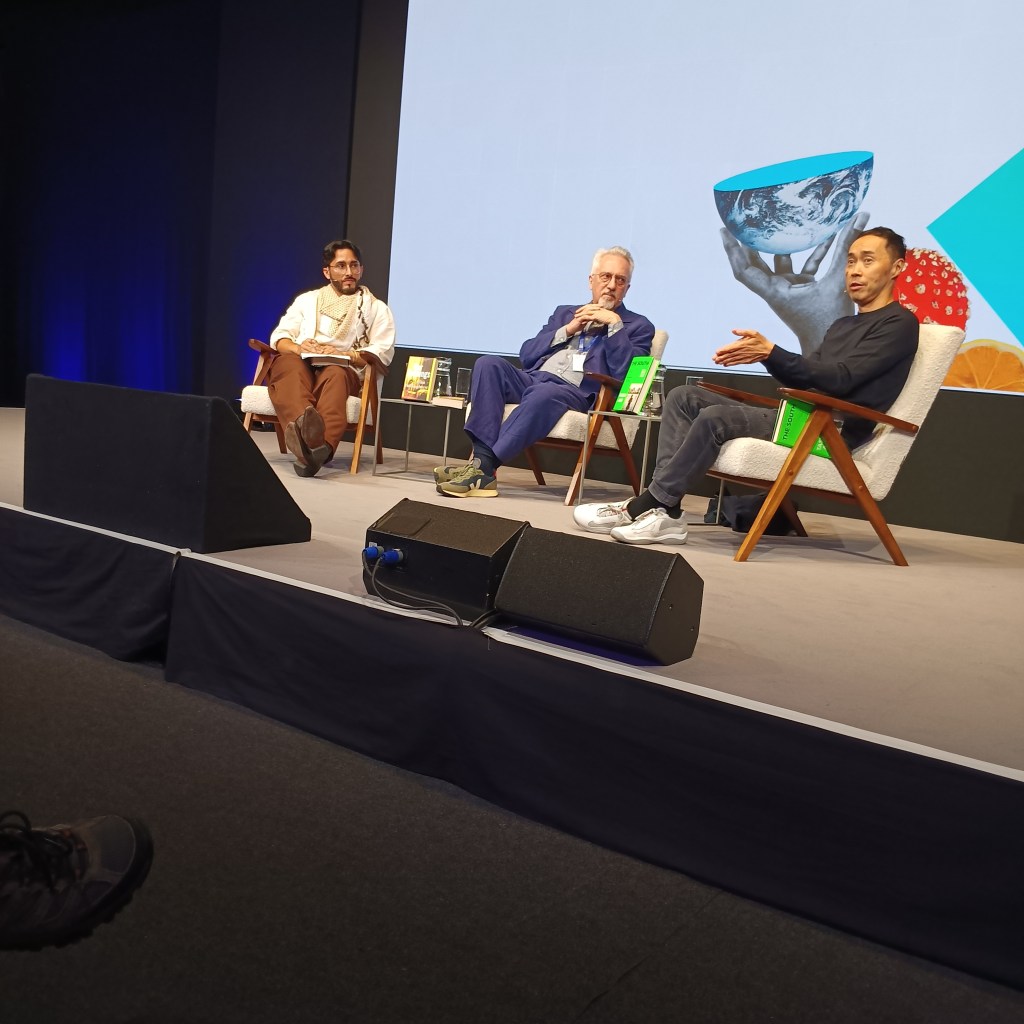
That was, despite that factor, a discussion to savour. This was not the case at all in the example of the event with Abdulrazak Gurnah: Nobel Literary Prize authors perhaps ought to claim single-author event status. See my blog on the novel supposedly to be considered at the event – but generally ignored by the Chair – Theft.
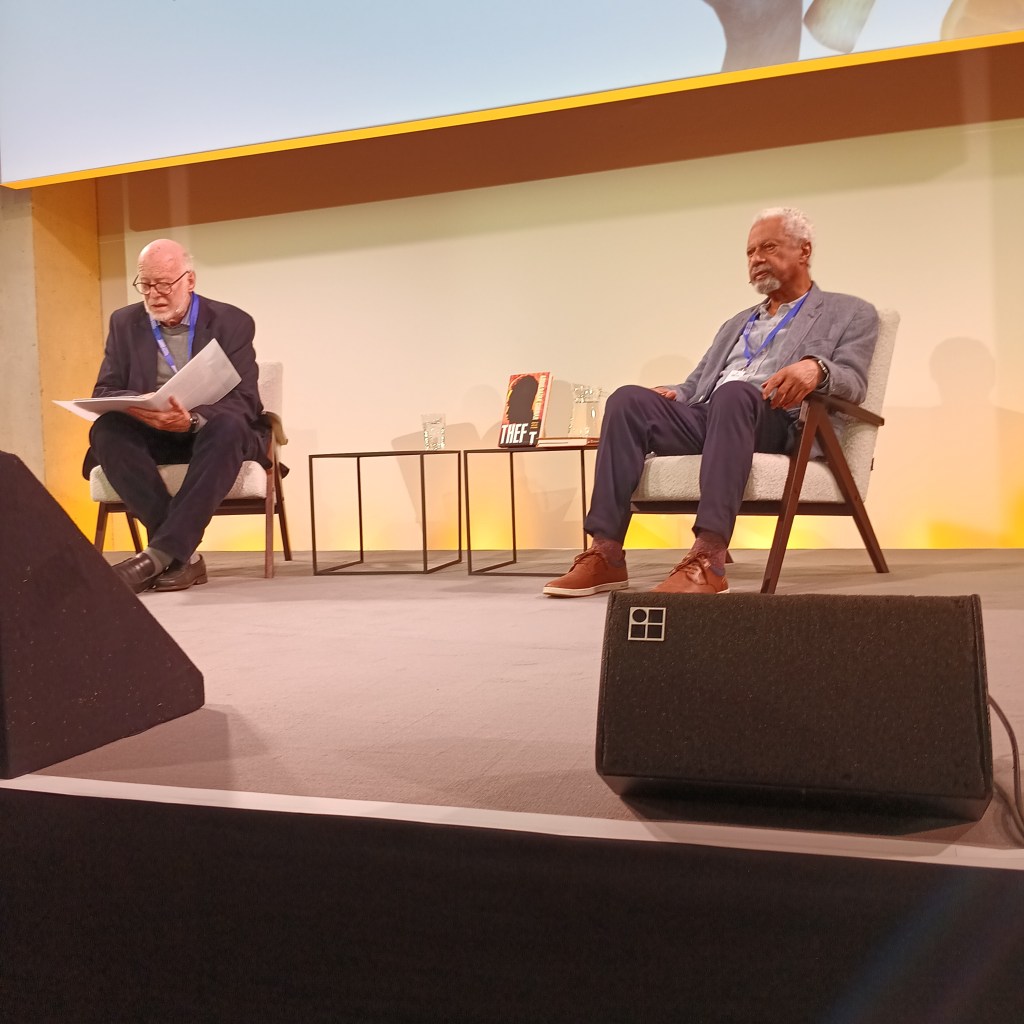
The Chairperson was neither sensitive nor relevant: claiming to be a lifelong friend Of Gurnah, he made his own experience central to what aren’t the most interesting themes of Gurnah’s book – even if they were themes at all. Gurnah struggled to retrieve the relevant from the event, but even when he touched on the highly pertinent question of the construction of memory in migrants, the chair took over the event with reminiscences about his Russian emigration family. And the symbolic taking of tea in Russian communities.
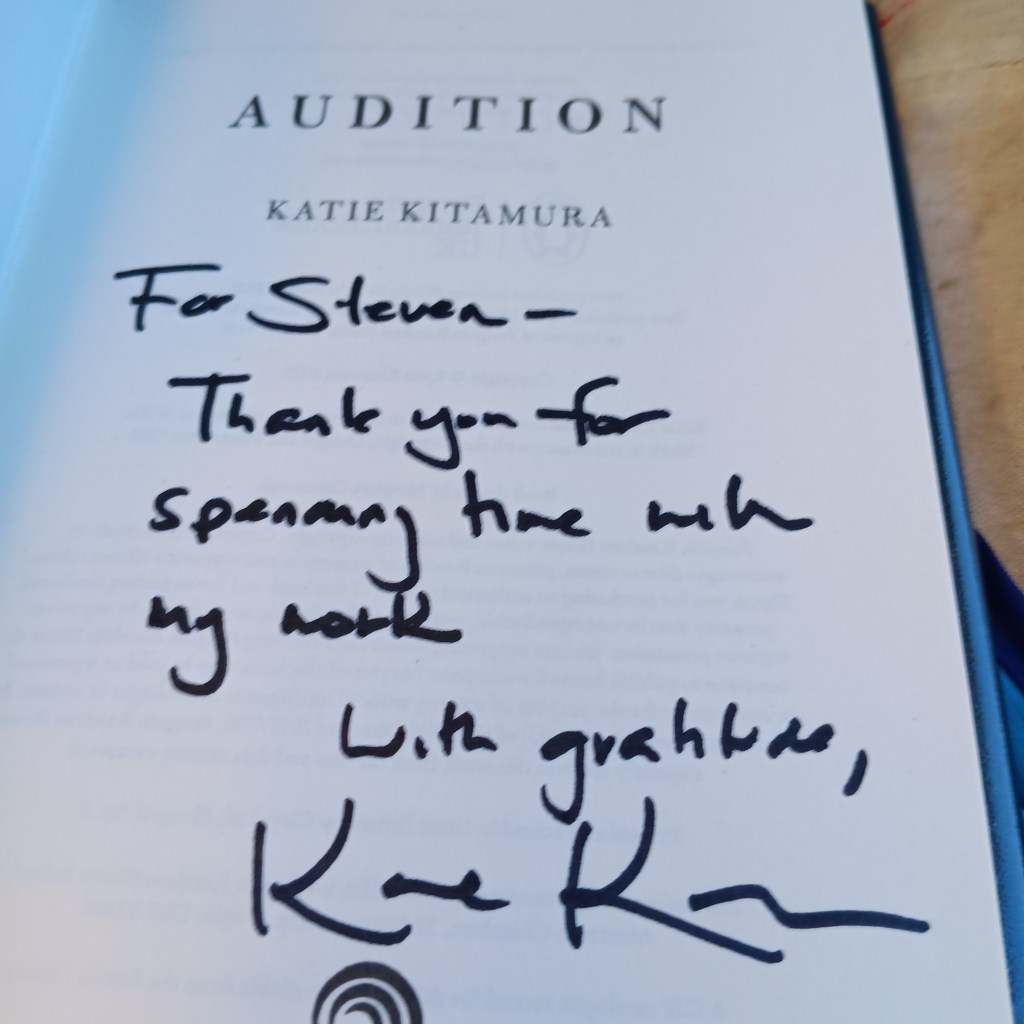
However, and even. Better event redeemed the whole, a session with Katie Kitamura, who could only ‘see herself’ (so to speak) as unseen and unseeable in the eyes of those looking for feminists. It would seem that that the only qualification for being a feminist in the eyes of the right is holding views opposed to trans people without a hint of nuance and being born without a penis. Nothing about Kitamura bends to the kind of sloganising of the TERFs. The book is magnificent (see my blog on it here). However the discussion was even better – it opened up the riches of this novel and some more.

And, in the end, you attend a book festival not for binary attitudinising about spaces in loos and prisons but for that complex networking between feelings, ideas and the readiness to act to change things that literature provides.
Oh, and, of course, I go to get my unsigned book copies signed. Lol.
___________________________________________
[1] David Walker, Politics reporter in Scottish Daily Express (12:41, 11 JUN 2025)
 Steve_Bamlett_blog
One thought on “On the Edinburgh book festival: why I still go and on whether I should keep going. ”