What part of your routine do you always try to skip if you can?
… to sleep, / To Sleep: perchance to dream: ay, there’s the rub!
Hamlet Act 3, Scene 1, lines 72 – 73). [1]
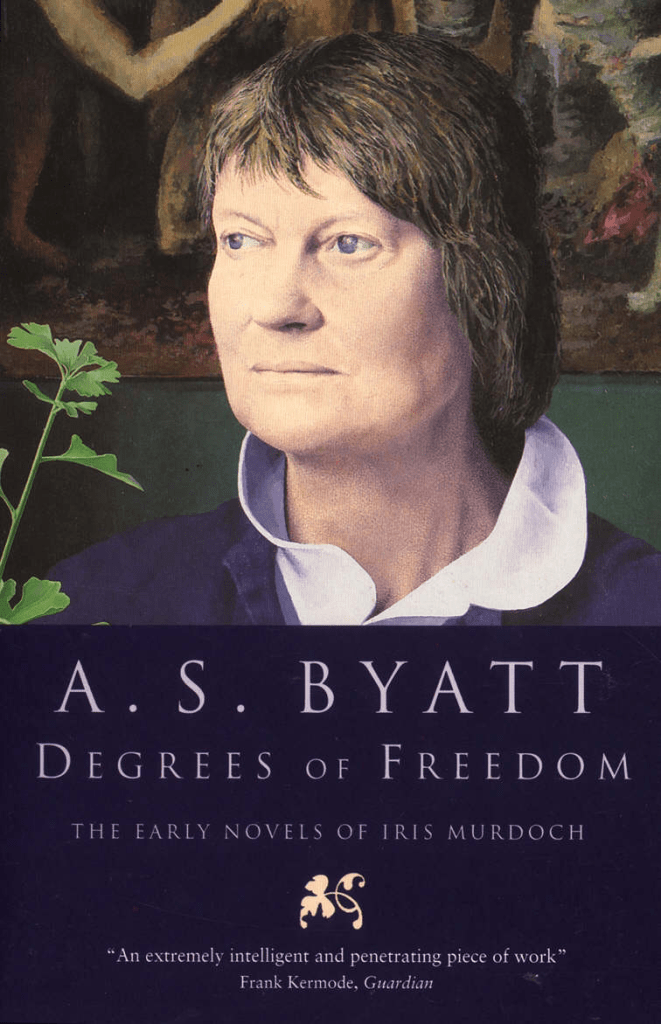
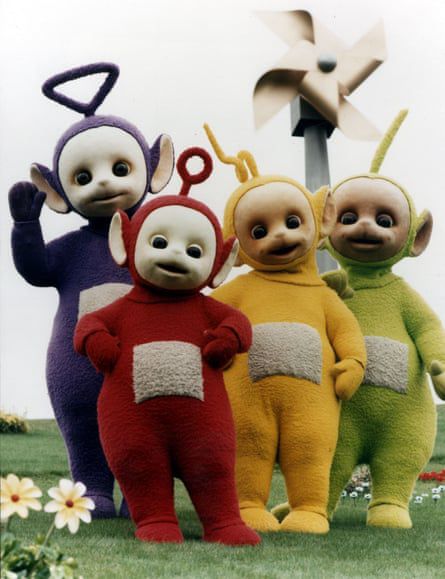
Iris Murdoch had long before written her wonderful novel based on the model of Hamlet, The Black Prince, when A.S. Byatt, her friend and best interpreter spoke about me to her on a visit, as one of her students. Byatt reported to me that Murdoch sort of sang: ‘Bamlett – Hamlet, Bamlett- Hamlet ….’ over and over again. Iris Murdoch was in the grip of dementia by then and beginning to be claimed by the fascination with musically rhythmic homophones that meant one of the finest moral philosophers of her age would soon to be entirely engrossed daily in the jingles of the Teletubbies. Nevertheless the anecdote puts me somewhat in the Black Prince role if only homophonically.
A!wo!
Samuel Taylor Coleridge, the Romantic poet used to say that he had a “little smack of Hamlet about him” referring to the Prince’s divided character, ‘sicklied o’er with the pale cast of thought”. Nothing satisfied him without, as they say these days, ‘overthinking’ it. But even ‘being’ Hamlet is tough for Hamlet. He picks out that thing in lived life that is an inevitable part of the routine of life – sleeping – that he has clearly found difficult. Indeed, Prince Hamlet Junior realises that choosing not ‘to be’ might be like the very part of his routine that he hates and that he would ‘skip if he’ could. But why does the Black Prince hate sleeping?
He says he hates it because he if he sleeps, there is a ‘chance’ he might dream. Sometimes, I have felt that too recently. Particularly recently with my dear husband in hospital, very ill. I don’t remember dreams, or perhaps don’t dream, every night, only ‘perchance’ some nights, but when I do they tend to be punishing ones about being uncovered as inadequate, failing or as less than ‘being’ ought to be, or about some enormous loss on the scale of the Apocalypse in St’John’s dream of the final binary division of good and evil in his Revelations. But though I get the Trumps of Hell no one clothes themselves in the Sun; neither Venus-Mary nor Apollo-Christ. I awake when half sunk in whatever personally crafted and tailored retribution my unconscious mind invented for me this night. he thought of sleeping again becomes unpleasant for some days – though it is not in my choice to skip sleep altogether.
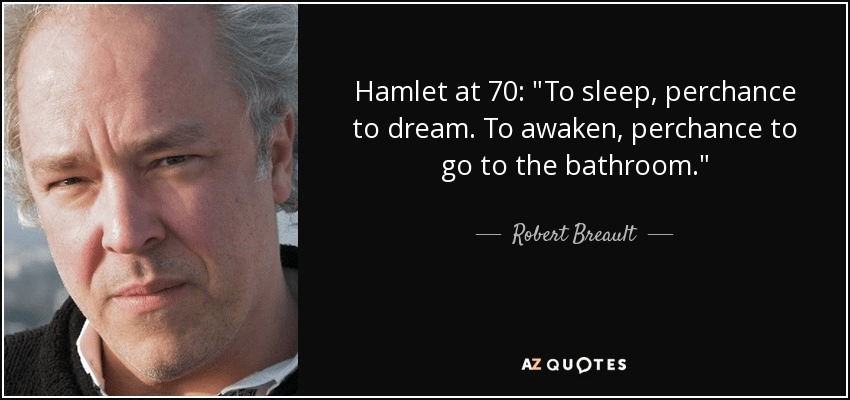
Routine is over-rated: dependency on it more so. It is a means we use to convince ourselves that our lives are a thing formed of the stuff of coherence, stability and order. When we dream of skipping some part of our ‘routine’, this probably registers our dissatisfaction not with that one item but with the whole of an over-regimented routine that no longer yields meaning to the coherence, stability and order we once found in scheduled routines. The aim then is not to wish to avoid or ‘render void’ (in Ali Smith’s novel mentioned later) the offending item within a whole regime of routine but to reconfigure the whole itself – not only editing some things out but reinventing with new additions and reprioritisation of all of the old items too, if any at all remain which some MUST do, like sleep, or as Robert Breault added, imagining Hamlet reached 70 like me last month to ‘awaken, perchance to go to the bathroom’.
I think there is intense danger in thinking about skipping things in the patterns that shape your life – call them routines if you will, although for me this suggests only the mechanical in our lives. For to skip something without re-configuring the patterned thing in which this skip occurs is to chance maintaining the real cause of one’s sense of failing into non-being or in an attraction with it whilst finding a scapegoat for our problems in some activity free of any negative role in our sense of ill-being.
Let’s hear Hamlet Junior out:
To be, or not to be: that is the question:
Whether 'tis nobler in the mind to suffer
The slings and arrows of outrageous fortune,
Or to take arms against a sea of troubles,
And by opposing end them? To die: to sleep;
No more; and by a sleep to say we end
The heart-ache and the thousand natural shocks
That flesh is heir to, 'tis a consummation
Devoutly to be wish'd. To die, to sleep;
To sleep: perchance to dream: ay, there's the rub;
For in that sleep of death what dreams may come
When we have shuffled off this mortal coil,
Must give us pause: there's the respect
That makes calamity of so long life;
For who would bear the whips and scorns of time,
The oppressor's wrong, the proud man's contumely,
The pangs of despised love, the law's delay,
The insolence of office and the spurns
That patient merit of the unworthy takes,
When he himself might his quietus make
With a bare bodkin? who would fardels bear,
To grunt and sweat under a weary life,
But that the dread of something after death,
The undiscover'd country from whose bourn
No traveller returns, puzzles the will
And makes us rather bear those ills we have
Than fly to others that we know not of?
Thus conscience does make cowards of us all;
And thus the native hue of resolution
Is sicklied o'er with the pale cast of thought,
And enterprises of great pith and moment
With this regard their currents turn awry,
And lose the name of action.
Why should I act at all, if all action is no better than doing nothing, all sleep as full of danger as the waking world is? And the waking world is ‘crap’ to Hamlet. We never get recognised for the good guy we are and instead we feel:
..... the whips and scorns of time,
The oppressor's wrong, the proud man's contumely,
The pangs of despised love, the law's delay,
The insolence of office and the spurns
That patient merit of the unworthy takes
The wrong ‘uns get the ‘glittering prizes’ – the vain, proud and empty, the shallow people unworthy of the love the worthies give them are the wrong ‘uns’ Institutions don’t do their job properly (he mentions the law, I harp on about the current health service) – too keen to see how they look doing the job in a vanity mirror. They are all unworthy yet their spurning of my ‘patient merit’ is more powerful than my capacity to do my job as Black Prince is. There is something awfully self-regarding here – as if it attacks the wrong thing, the people who feel they must collude with rotten systems not the systems themselves. I will have more to say regarding this if I ever get my blog on Ali Smith’s new novel Gliff together, where someone is always justifying the execution of evil : ‘Doing my job, he was saying. What I’m paid to. Don’t mess with me’.
But poets oft find dreams the source of creative action too: that which predicts the beautiful and possible in the world. This piece By Vincent Newey from The Cowper and Newton Journal ends a perfect description of Keats referring to Milton’s Adam in Paradise Lost by trying to convince us that Keats might actually be referring to a very inappropriate verse from William ‘Cowper’s mock elegy ‘On the Death of Mrs. Throckmorton’s Bullfinch’ (1789):
Just then, by adverse fate impress’d,
A dream disturb’d poor Bully’s rest;
In sleep he seem’d to view
A rat, fast-clinging to the cage,
And, screaming at the sad presage,
Awoke and found it true. (ll. 43-48)
Now I think Vincent is being a bit silly here. Clearly Cowper is echoing the ‘sublime’ Milton as he saw him, but for mock-epic effect. It does not mean that Keats thought Cowper a poet of the theory of the imagination although it uses the relation of dreams to truth. Nevertheless, as I say, Newey is very hot about Keats and Milton:
‘The Imagination may be compared to Adam’s dream – he awoke and found it truth.’ (John Keats To Benjamin Bailey, 22 Nov. 1817)
Keats’s reference to Adam’s dream recalls that section of Book VIII of Milton’s Paradise Lost in which Adam tells the angel Raphael what he remembers of his creation and entry into conscious life. A footnote in the standard edition of Keats’s letters directs us to lines 452-90 where we find a particular parallel in Adam’s report of his first encounter with Eve in all her prelapsarian beauty: ‘I waked / To find her … / Such as I saw her in my dream’ (478-83). Adam’s earlier discovery of Paradise itself – ‘I waked, and found / Before mine eyes all real, as the dream / Had lively shadowed’ (309-11) – provides perhaps an even closer recollection, not only because of the similar grammatical structure (where meaning is at once suspended and driven forwards by the conjunction ‘and’) but also because Keats proceeds in his letter to talk of experiencing through imagination ‘a Shadow of reality to come’.
See https://cowperandnewtonmuseum.org.uk/journal/recalling-adams-dream-a-note-on-keats-and-cowper/
We , together with Hamlet, need to stop skipping our sleep out of our routine, lest we encounter the ‘perchance to dream’ contingency and instead live with how the Imagination can reconfigure not only our personal but the public world of ideas, feelings and facts – by changing all three. The truly ‘woke’ see it as ti can be – just changing it, and ourselves with it, is so difficult.
All my love
Steven
xxxxxxxxxx
_____________________________________________________________________________
[1] See https://www.folger.edu/explore/shakespeares-works/hamlet/read/3/1/
 Steve_Bamlett_blog