What’s the worst travel experience you’ve ever had?
View all responses
The phrase ‘nasty, brutish, and short’ comes from Thomas Hobbes Leviathan, in which he sets out the need to maintain central governments as the head and brain of political decision making, however inadequate and self-interested such governments may be, for they keep populations from the horror of internal strife between self-interested groups. He tries to.imagine that Hell such an ungoverned and ungovernable place in nature might be:
In such condition there is no place for industry, because the fruit thereof is uncertain, and consequently no culture of the earth, no navigation nor the use of commodities that may be imported by sea, no commodious building, no instruments of moving and removing such things as require much force, no knowledge of the face of the earth, no account of time, no arts, no letters, no society, and which is worst of all, continual fear and danger of violent death, and the life of man, solitary, poor, nasty, brutish, and short.
I missed out the ‘solitary’, for somehow we miss its meaning to Hobbes in reading about it in our time; inclined as we are to romanticise it and see solitude as ‘time out’, not the reason for our demise in time without the support of humane culture which actually gives the experience of time meaning.
In York, time is a paradox almost as bizarre as that of Ancient Hades – where the standards of dead time still stand but the signs of tje times around yjem.but out of their sphere keep asserting their irrelevance whilst endlessly coming to visit them and od offering them blood, as Classical heroes do to invoke a particularly desired dead shade to visit them.
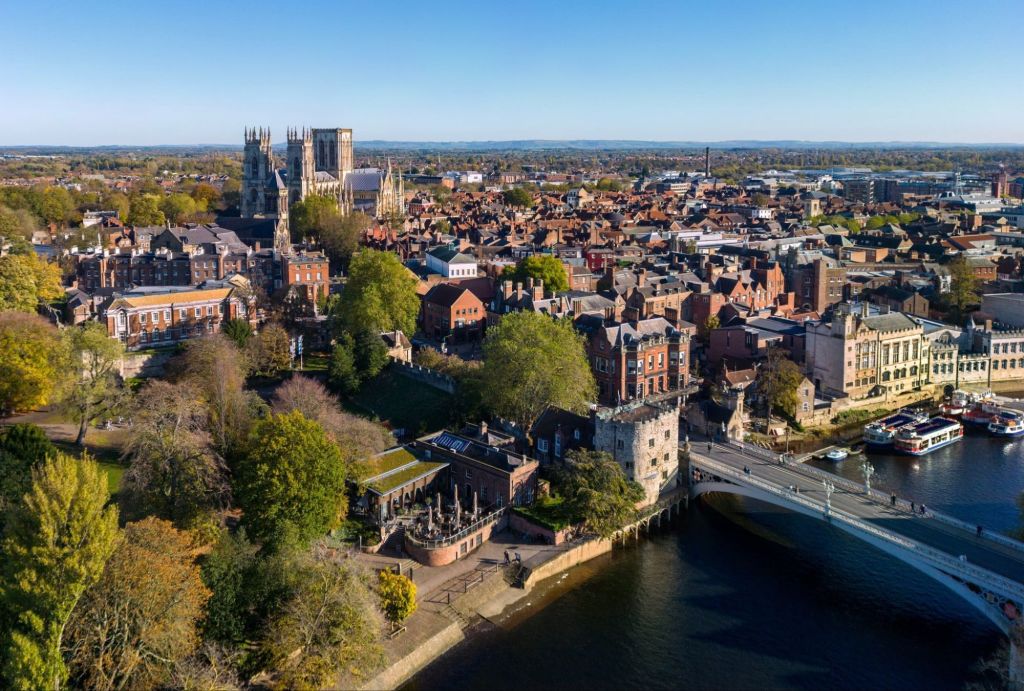
We went to York as a treat for my seventy-second birthday, another sign of time passing, though that birthday was actually on Saturday. The aim was to catch a matinee of ‘The Penelopiad’ at York Theatre Royal (see my preparatory blog at that link) on Wednesday. In the play we saw Hades but later to touched on all the portals to Gothic Hell that this Gothic City offered.
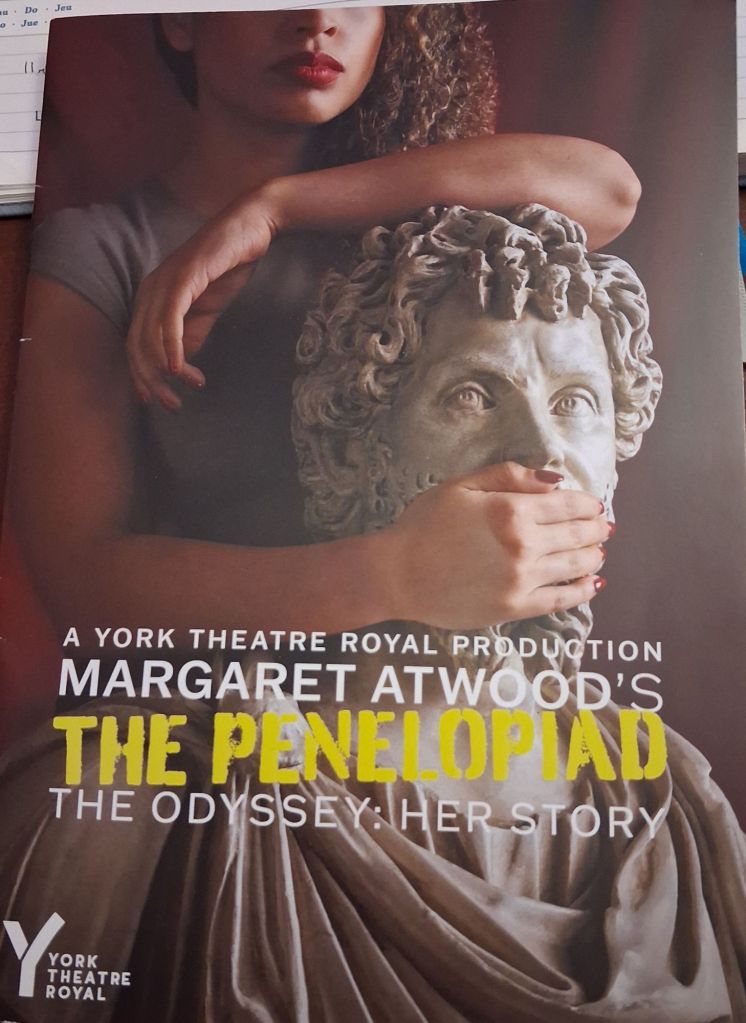
Let me say first the play did not let us down, even though it opens in Hades, the Greek underworld where the dead reside as shades of themselves, unembodied except in appearance and with little vestige of the distinctions between them they allowed to matter when they were in the world. However, the programme seemed to change the title of the play in inaspicious waye with the addition The Odyssey: Her Story, rather playing on that trope of his-story and her-story and putting the authority on the story of one woman not a band of truly forgotten ones – the ones who tell Penelope in the very first scene that she ‘fauiled’ them nit Odyssesus, even though he ordered their hanging.
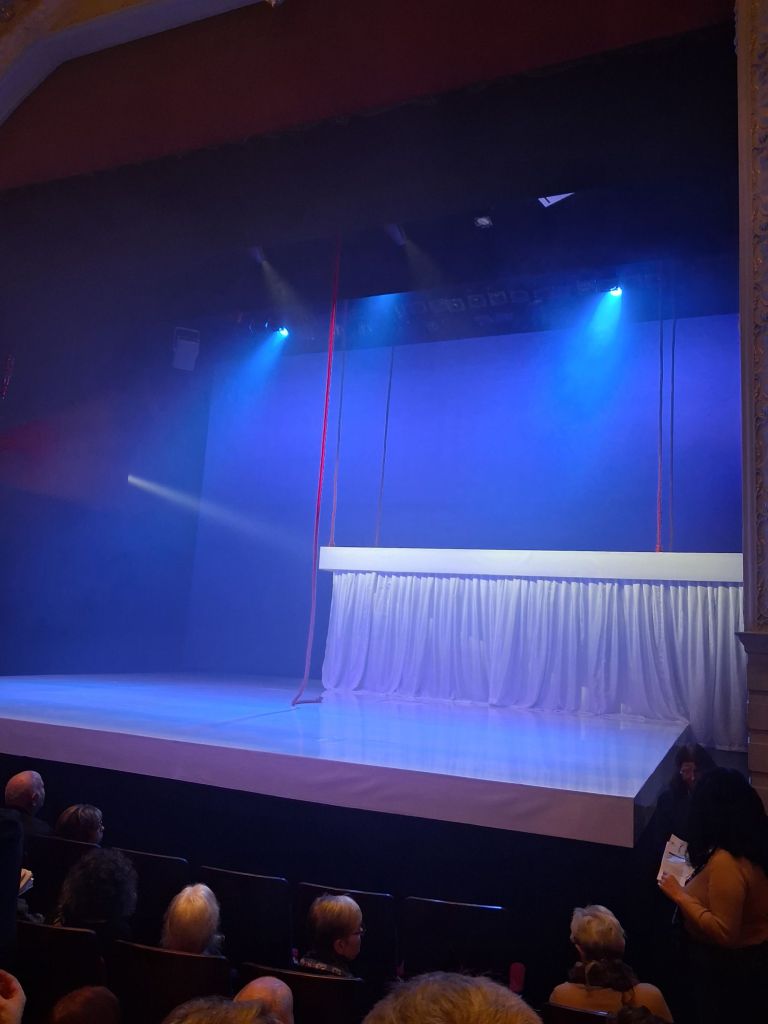
The visible set for Hades before Penelope’s entrance (sans tangible body, in her verbal assessment of herself at least) looks like a Hades drained of humanity might, a world drained of colour but for manoeuvrable levels for ghosts to make an appearance, whose underside can create a veiled temporary interior behind which shady silhouettes move, and ropes in blood-red colour that are eventually ubiquitous and which seemingly do the maneuvering of the platforms or provide properties to swing on and climb or morph into oracular divine serpents from the deluded world of ambiguous prophecies.
Sometimes the ropes are threads to weave or unweave and sometimes ropes which can be used to hang lower class friendless women, the more so in their gullibility to aristocratic and powerful women on earth who proclaim sisterhood of suffering at the hands of men. Hanged by the neck rather than despatched by sword as aristocratic men are, the servant women continue to twitch their feet off the ground in Hades, just as they did on the end of the red ropes on which they were hanged. They call such twitching dancing and oh, how it entertains.
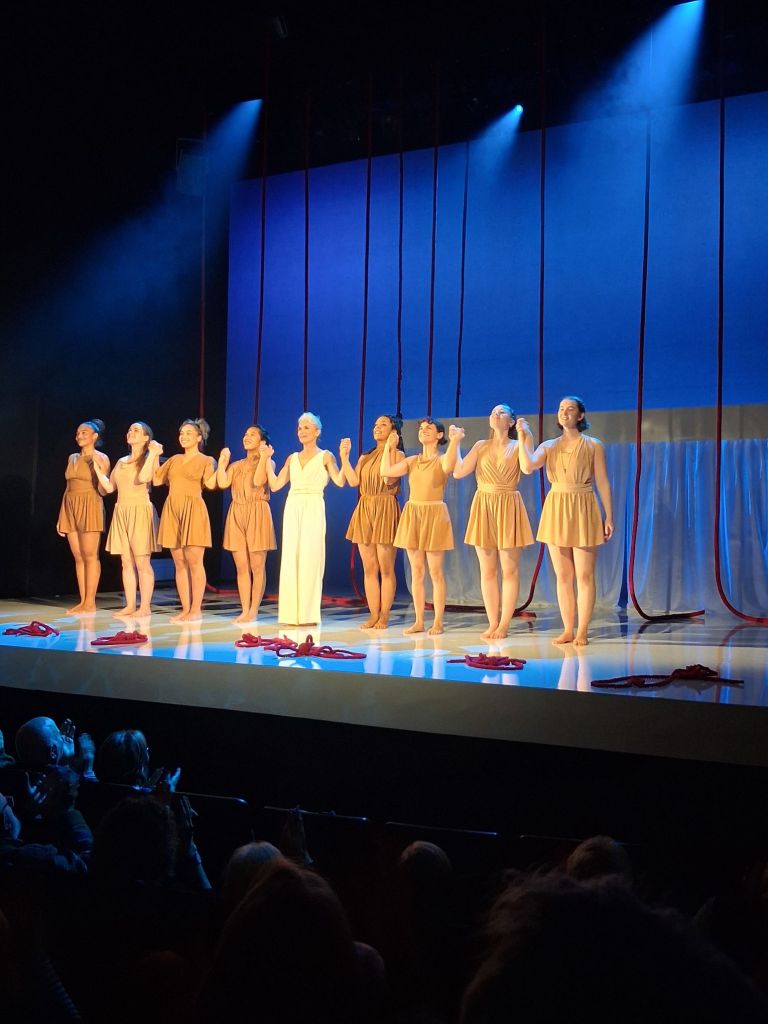
The play was rich in the enactments of the hanged Maids, who also played every other role male and female. And the star Penelope, who, for me, perfectly played how rich and powerful women collude in the oppression of women without power and yet do it in ways that leave sympathy and empathy with them.too, for in truth they suffer and walk a tightrope too. Penelope’s strength lies in using other powerless women as the means to her own survival, allowing them to carry all the risk of discovery of the means by which they survive by playing the roles men want of them.
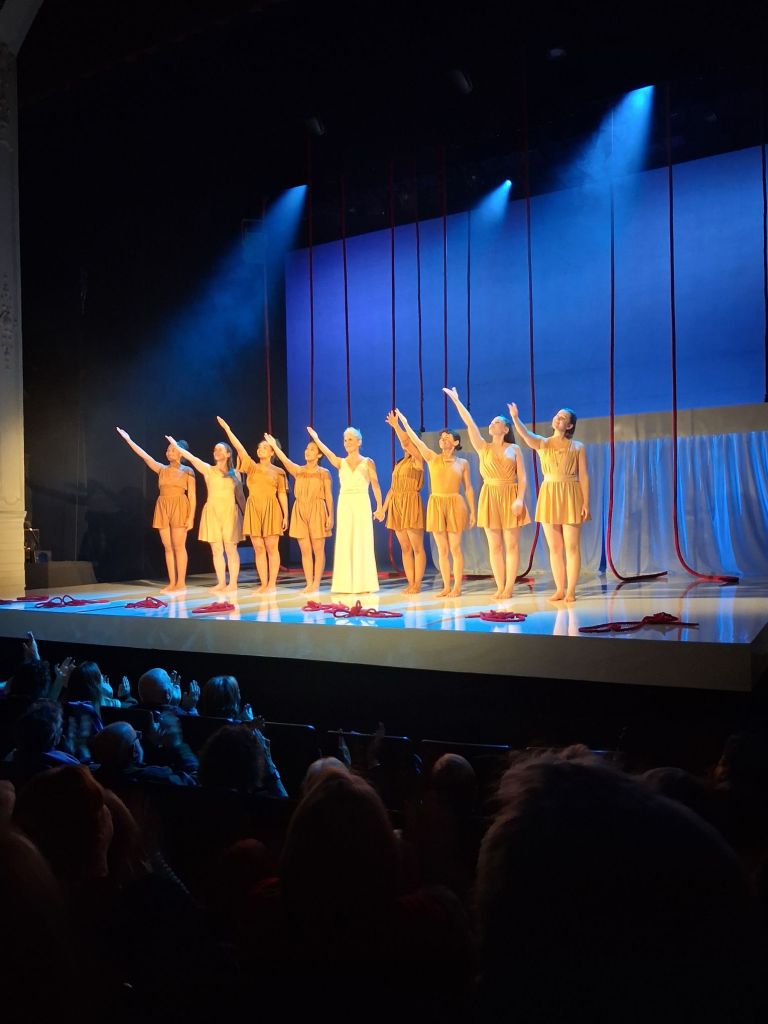
The play ended and we had loved it. We returned back to our lodgings in Bishophill Senior and I walked Baz, as usual having gained to climb down near the river to push him back up a bank he had jumped down that was too high to jump back, as Geoff had a shower and changed. We went to a restaurant we like on Fossgate, Kalpavadi. As always the food, mainly inspired by Kerala, was tremendously good and the staff sang ‘happy birthday‘ while I blew out a candle stuck in a piztachio kulfi. Theis part of the evening was good(in a cheesy way) too.


We left to return to our pied à terre. The town was busy – we later learned it was Student Night when gangs of young people dressed rather strangely made their way between bars. Then Geoff had some kind of collapse. Kneeling by him in a pool of his bllodd on the pavement it was only students that helped us, called the ambulance and moved us on into the most chaotic experience of emergency care I have ever come across.That was Hell, but we returned. Nevertheless , it earns from us the label; of nasty, brutish and short’ for our York visit, though thankfully Geoff is home if in pain.Hades was fun, York’s Gothic fromnt a kind of HELL, a taste of inner mortality for us both.
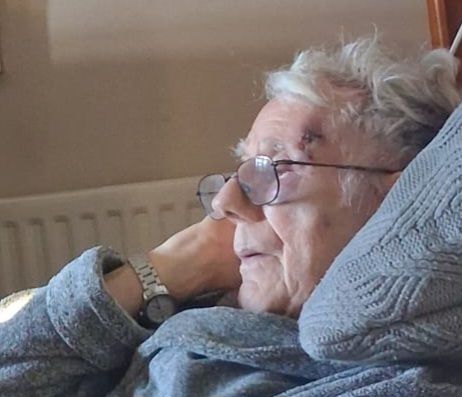
My wounded man at home.
With love
Steven

