What’s a book you think deserves a sequel?
‘…by these words be admonished: of making many books there is no end’ …. Is the wisdom of Ecclesiastes 12:12 that the more worthy the book the less do we need the writing of many books that are sequels of it!

To be ‘worthy’ of a sequels is not an evaluation of worth I recognise. A book that needs a sequel to prove its value has failed, after all, to do its job as a story, which is to end as well as begin, keeping us interested and engaged during its middle. To ask but ‘what happens next’ at the end is to be left with troublesome curiosity rather than the fulfilment of an appropriate ending, even though some endings are appropriate because they are open-ended, as it were.
Of course many books are not intended to fulfil but to create a ‘brand’, an element that we feel must be repeated over and over again with variations in order to stop the search for something better. J. K. Rowling discovered this mode of procedure in children’s books, where repetition is a key to the needs prevailing in successful child development, where continuity and the base of fundamental security in grand narratives of the future must not yet be questioned overtly, at least not yet. Rowling then applied the method to her Struke novels, which continually repeat the same story around her latest version of her night terrors.
Middlemarch, however, has no sequel, even though much remains to infer in the futures its ending projects. But the ending does not encourage us to look for a sequel or even a model for its greatest characters. Read it here:
Certainly those determining acts of her life were not ideally beautiful. They were the mixed result of young and noble impulse struggling amidst the conditions of an imperfect social state, in which great feelings will often take the aspect of error, and great faith the aspect of illusion. For there is no creature whose inward being is so strong that it is not greatly determined by what lies outside it. A new Theresa will hardly have the opportunity of reforming a conventual life, any more than a new Antigone will spend her heroic piety in daring all for the sake of a brother’s burial: the medium in which their ardent deeds took shape is forever gone. But we insignificant people with our daily words and acts are preparing the lives of many Dorotheas, some of which may present a far sadder sacrifice than that of the Dorothea whose story we know.
Her finely touched spirit had still its fine issues, though they were not widely visible. Her full nature, like that river of which Cyrus broke the strength, spent itself in channels which had no great name on the earth. But the effect of her being on those around her was incalculably diffusive: for the growing good of the world is partly dependent on unhistoric acts; and that things are not so ill with you and me as they might have been, is half owing to the number who lived faithfully a hidden life, and rest in unvisited tombs.
THE END
Consider the models that the novel uses here, not for the first time, to characterise, or more accurately type, Dorothea Ladislaw: Antigone and Saint Theresa of Avila, not to mention the mighty Gyndes river, which after drowning Cyrus the Great’s war steed, Cyrus according to Herodotus, vowed to make it so weak that “women could cross it without wetting their knees.” To achieve this, as Eliot says, he instructed his army to dig 360 small channels that effectively split and subdued the powerful river.
Thus does modern life deal with tbose with even once achievable, not to mention unachievavle, ambitions like those that keep a child or chuld-like mind asking for one more Harry Potter story which is sales branded to meet that need. All examples of great might, (male, female or riverine), are seen as impossible models for the age in which Dorothea, Lydgate and Ladislaw are represented as belonging. The reason we want endless serial stories of heroes and saints is surely because we resist their death, even when it has already happened. as in the case of Sherlock Holmes or Alexander the Great, by making them by whatever magical thinking that can be applied impervious to death as mere ordinary persons know it, resting in ‘unvisited tombs’.
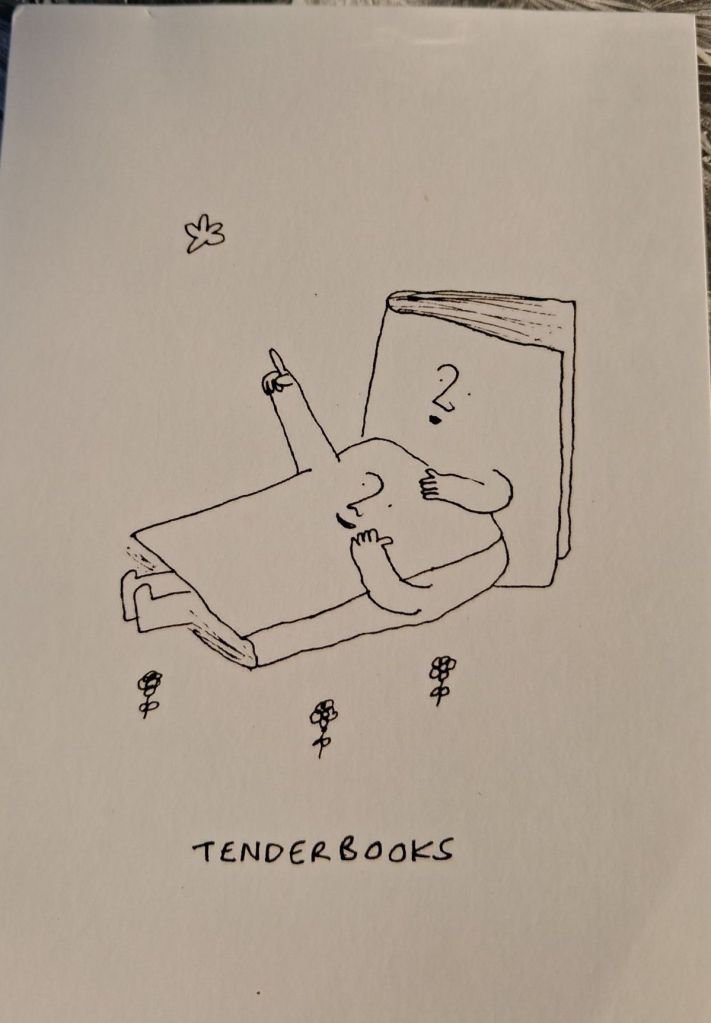
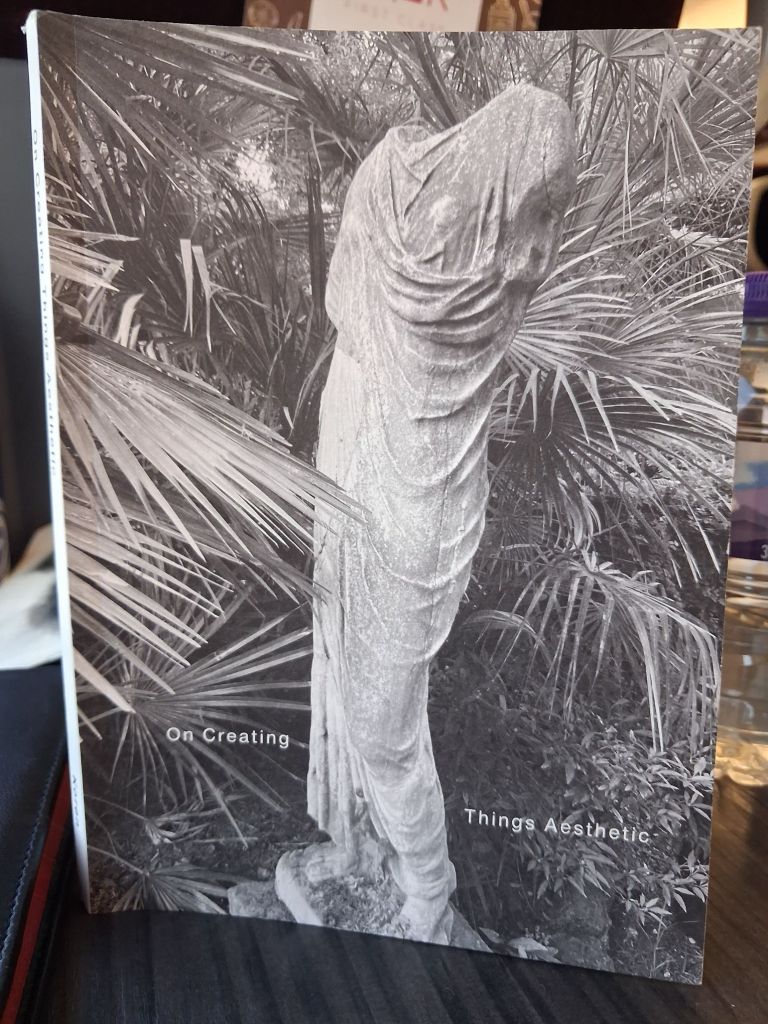
Whilst I have been visiting London, I have had questions like that on my mind. Today I bought a little book by Leonard Koren (https://en.wikipedia.org/wiki/Leonard_Koren) from that most delightful bookshop on Cecil Court in these lean times for culture, Tenderbooks.
The book is called On Creating Things Aesthetic. For some the bar set in order to define the aesthetic may see low, namely:
= things with pronounced sensorial, emotive and /or poetically resonant qualities.
Nevertheless, Koren’s key term in his short book is I think not ‘things aesthetic ‘ but ‘create’ and it is his definition of that term I will use to argue my case against sequels being a sign of the ‘worth of a book’ that in its own right might be worthy.
He says:
To create = to bring new things into existence. Also to bring things that already exist, but have been ignored or forgotten, back into awareness.
Now Koren adds a note to qualify what he means by the newness of the thing created or revived after a period of absence from human awareness, saying:
Note: Unlike gods who can create something Ness out of nothingness, human creators can only combine, reconfigure, strip down, extend or otherwise alter and/or respond to things that already exist. Human creators, however, often do this in remarkably clever ways.
Now, this note might be taken to destroy my argument since sequels may imitate something you are loathe to let die but in doing so don’t they merely ‘combine, reconfigure, strip down, extend or otherwise alter and/or respond to things that already exist’. But my response to such a view, is that sequels copy without recombinations on the whole (of course, there are exceptions) but they may not even be true sequels at all, such as Shakespeare’s Henry the Fourth, Part Two, or the trilogies written for the Attic Greek Theatre, such as the only true one still in existence, The Oresteia. Those serial art pieces recreate the material that precedes them and reconfigure it, in the moment, since seen in the same performance event often, even if in the Shakespearean exam, not in one session.
The whole point of 2 Henry IV is that in it Prince Hal is recreated as Henry V, just as he said he would in the first scene of 1 Henry IV, but without a crying but his word to show for it.
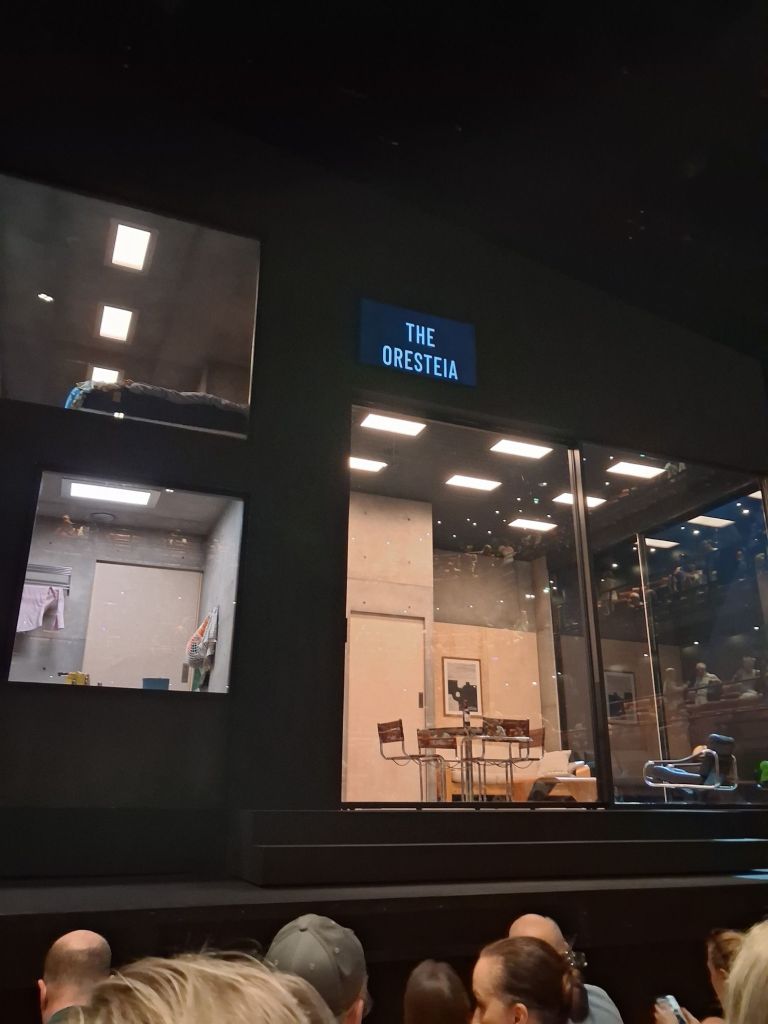
Whilst I was in London I saw Simon Stone’s The Oresteia, a complete revision of the three plays seen, as they would be in Athens in one showing, bur entirely refocused on ideas of transgression that are not those of Greek thought, feelings and values exactly but of a global capitalist world. But this revision is not a sequel: it is a true form, I think’, of the thing creators do when they ‘combine, reconfigure, strip down, extend or otherwise alter and/or respond to things that already exist’. The Royal House of Atreus becomes linked by a family military. manufacturing firm (Middletech), the sacrifice of Iphigenia a betrayal of a teenager, Issabel, aiming to imagine and bring into being a world more consistently ethical than those to which her father works. This was the play as a new thing- a thing of ‘terrible beauty, in which modern houses are reseen entirely, as things that contain (as in the sense of being full of and of holding back) horrors, which, of course T. S. Eliot tried to do , pretty badly, in The Family Reunion
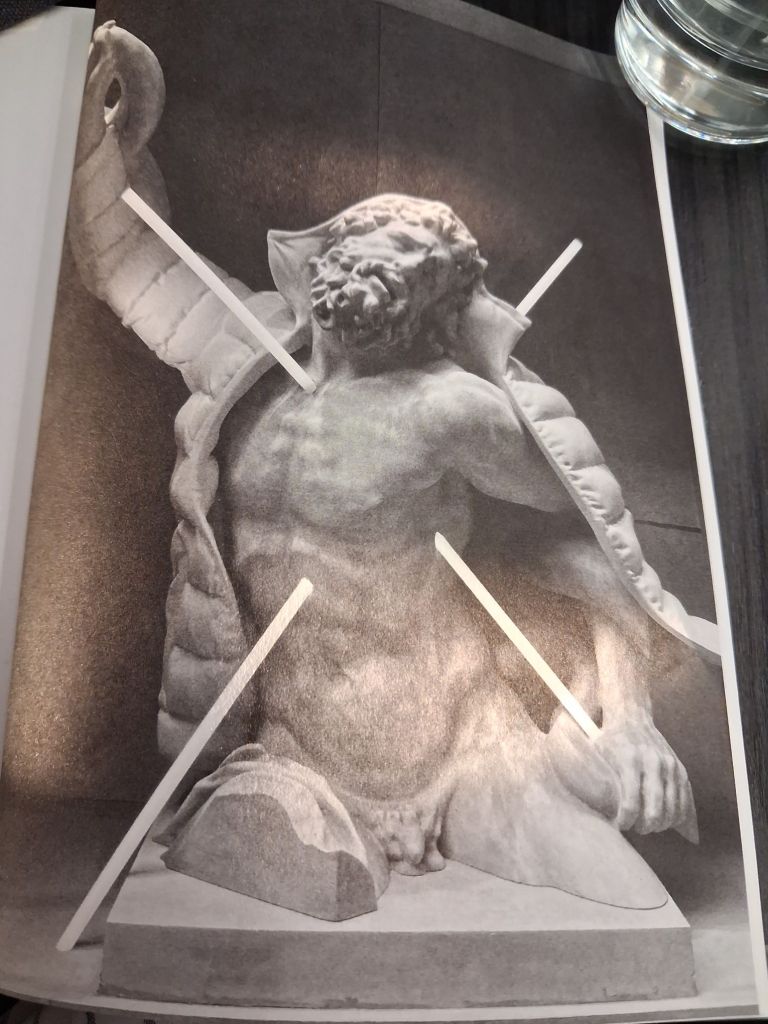
But more of that in another blog. The force of newness does not need to come from nothingness and combination can renew a thing in great freshness, more so, at least than in Frankenstein’s monster. However, some wil.say a recombination’s aesthetic qualities might be questioned as in this example from Koren’s book of a mash up used in an advertising display in a fashionable Italian shop, but refocused by the photographer such that it is new precisely because on the cusp of realising again notions of pleasure and pain, private and public emotion and ritual and the everyday. To me this is art. No sequel to either the story of Laocoon nor Saint Sebastian but dependent on each, as to the idea of fashion and the ancient. It is certainly not just another in the series of either’s stories. The colouring here is a revision thanks to the motion behind a LNER train window, but I rather like it
Bye for now
With love, Steven xxxxxxx

