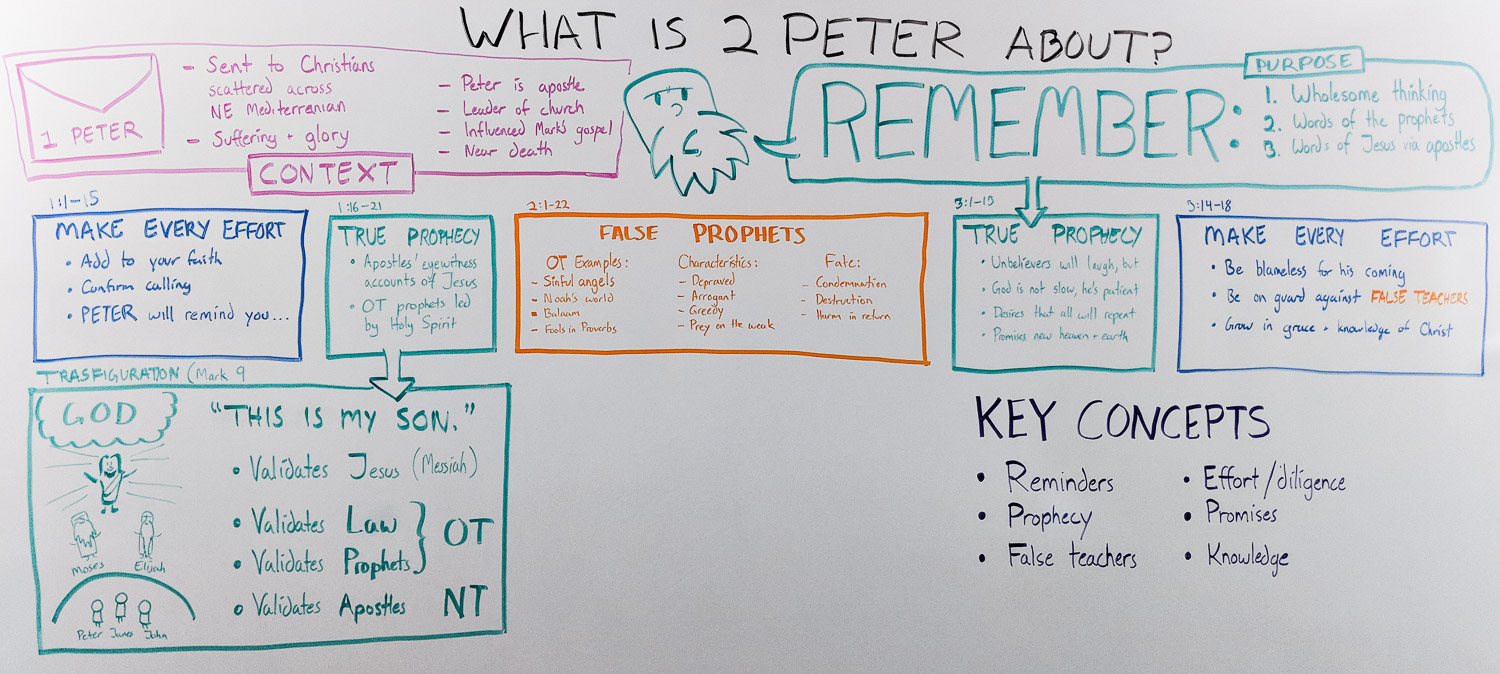
Let’s clear up the right to name this well known verse of the Bible a proverb, first, though it appears more correct to call it an aphorism. Traditionally we make contradistinction between the forms of ‘saying’ known as aphorism and proverb respectively by thinking of proverbs as saying something wise or true (it is not necessaruly the same thing to say something wise as say something true) about the actual practice of an action or behaviour, whilst the aphorism yearns to a more general, not specific, application – the word ‘philosophical’ oft comes up in such distinctions, but seems over the top to describe something pertaining to be a foundational truth in very few words and utilising very imprecise metaphors, often themselves over-situated in specific cultural regimes,
Wikipedia calls the Biblical verse, from Proverbs, an aphorism but then in its continuing text refers to it as a ‘proverb’. It is also quite cavalier at first at declaring the meaning of this sentence-length piece of ‘wisdom’ ( I need to keep the inverted commas here): ‘It means that fools are stubbornly inflexible and this is illustrated with the repulsive simile of the dog that eats its vomit again, even though this may be poisonous’. Nowhere do they explain how the potential ‘poisonous nature’ of the vomit get stated or implied in the original Hebrew or English translations, though much is made of how dogs were considered ‘unclean’ animals by the Jews represented in this part of the Torah, or why, and clarifying that ‘fool’ was a word that meant only someone who acted unwisely or sinfully rather than being without intelligence.
There is however a useful comment on how the Septuagint (the Greek translation of the old Testament – although strangely only the English translation of the Greek is given below) expanded the ideas in its textual translation:
The Greek translation in the Septuagint developed the idea, imbuing it with a sense of shame and guilt, “As when a dog goes to his own vomit and becomes abominable, so is a fool who returns in his wickedness to his own sin.” This was due to the contemporary idea of the fool as ungodly.
I like the idea of translation having ‘developed the idea’ by the use of contextual words added to the translation and meant to clarify the meaning as the text in the present times in which it was written thinks it ought to be used. How far that represented the original meaning of the text may be assumed, but clearly adding the reasoing that eating his vimit is what ensure the dog ‘becomes abominable’ refers to the passion for pointing out the ‘unclean’ behaviours of animals which must never be practiced by humans and which should be treated as if they naturally do, or should in normative behaviour and feeling, except in abnormal ‘fools’, bring about feelings of physical disgust and repulsion. I would like to believe that the comment shows that translation then is crucial to the life of this proverb. Let’s select then from the full list of translations of the verse containing the proverb given in The Bible Gateway (online)
King James Version (KJV)
As a dog returneth to his vomit, so a fool returneth to his folly.
American Standard Version (ASV)
As a dog that returneth to his vomit, So is a fool that repeateth his folly.
Easy To Read Version (ERV)
Like a dog that returns to its vomit, a fool does the same foolish things again and again.
Easy English Bible (EASY)
A sick dog goes back to eat what it could not keep in its stomach. A fool goes back and makes the same mistakes again.
Evangelical Heritage Version (EHV)
As a dog returns to his vomit, so a fool repeats his stupidity.
International Children's Bible (IBC)
A dog eats what it throws up. And a foolish person repeats his foolishness.
International Standard Version (ISV)
A dog that returns to its vomit is like a fool who reverts to his folly.
Lexham English Bible (LEB)
Like a dog returning to his vomit is a fool reverting to his folly.
I include the Lexham version because it claims to be ‘literal’ in its interlinear translation method. Like the ISV, it does not enforce a similarity in the behaviour of dog and fool by using, as KJV does, the same verb to indicate the action which both dog and fool do (returneth). While the dog ‘returns’, the fool ‘reverts’. This use of the more abstract term ‘revert’ helps us to see that the the fool’s reversion is only like the dog’s action, and our imagination of it, in an abstract sense. Moreover the dog exists only as a mentalised simile (there is a very different effect in ISV where the dog’s action is ‘like’ the fool’s (as if the proverb were directed at the dog’s behaviour primarily), not the the ‘dog’s returning’ being likened to the fool’s reversion’ as a lesson for the fool primarily. The differences are ones of nuance, but matter, especially the decision to change the designation of the fool’s behaviour so that it does not match the term used for that of the dog, and therfore being less likely to carry across the same degreee of revulsion at the fool.
And after all, what the fool does seems much different to the dog in more than obvious ways, unless we read the ‘proverb’ in specialised ways. We are told the dog ‘returns’ to ‘his’ vomit, with the implication that he will eat it. The action is not about repeating behaviour, except in repeating the act of eating the food contained in its vomit. Whereas a dog returns to his vomit to eat its own vomit, no-one returns to a behaviour that some consider foolish except to do it again, since behaviours only exist outside of memory when completed in action. The verbs then, on the face of it are not the same verb semantically. Spelled out in terms of fuller meaning, if we need some kind of similarity between them we will see it resides only in the verbal equivalence of the verb, not its meaning, thus: “As a dog returneth to his vomit (in order to eat it), so a fool returneth (to commit or do again) to his folly (the foolish action that defines him a fool).” Hence, presumably the reason why similitude is not sought in the verb used in some translations:
American Standard Version (ASV)
As a dog that returneth to his vomit, So is a fool that repeateth his folly.
Easy To Read Version (ERV)
Like a dog that returns to its vomit, a fool does the same foolish things again and again.
Easy English Bible (EASY)
A sick dog goes back to eat what it could not keep in its stomach. A fool goes back and makes the same mistakes again.
Evangelical Heritage Version (EHV)
As a dog returns to his vomit, so a fool repeats his stupidity.
International Children's Bible (IBC)
A dog eats what it throws up. And a foolish person repeats his foolishness.
In those examples the second verb ‘repeats’ is not in any way the same as a ‘return’ for it applies only to an action or behaviour, whatever the use of the same archaic sixteenth-century English tense form of the verb in ASV. Of course returns is an action verb too, it is just not the implied full form that creates the abominable character of doggy behaviour. Note how therefore IBC, for the sake of very literal childlike imaginations spells out the implication of the idea of a dog returning to his vomit in the verb phrase ‘eats what it throws up’.
The same again applies to ‘fool’ and ‘foolish’. The EHV keeps the understanding that Wikipedia calls unintended by calling ‘foolish actions’ by the name of ‘stupidity’, without a hint of the archaic reference to ‘stupor’ in it to rob it of some of its arrogance of superior knowledge and intellect. However, there are issues here that reveal something grotesque behind the ‘proverb’. If you believe that a dog is an abomination by nature, then what tbis sentence can be used to mean is that the foolish person is a fool by nature and can be expe tex to behave as a fool and has no capacity to act otherwise. Hence like they should the dog, the ‘wise’ must shun the ‘fool’ too, because he has no hope of changing, or of redemption from foolish actions.
Clearly this is no kind of message appropriate to versions of Christianity that stress the ongoing opportunity of change for the good, but this equally true of versions of Judaism, for in both religions and their supporting cultures, there are differences of version alo g these lines.
I hope I have established why I believe this proverb very dangerous in its repetition as if it justified certain inlexibilities in thinking, which it can be easily used to do as well as, in Wikipedia’s terms do the opposite: that it ‘means’ that fools are defined as those ‘stubbornly inflexible’ rather than naturally and essentially inflexible. Even modern veterinary science believes that dogs eating their own vomit is an instinct not a learned behaviour, and therefore natural to the dog and not to be punished. Inflexible religious dogmas oft believe that punishment and deprivation should be reinforced even on those sinful by nature, perhaps especially those for our repulsion on seeing them is the repulsion that seeing ‘evil’ or ‘sin’ should cause in tne righteous. It’s a paradigm of thinking that has throughout history equated attraction to women and sex with them to repulsion as in Milton’s portrayal of Sin in the allegoric form of a woman (accompanied by her son, Death):
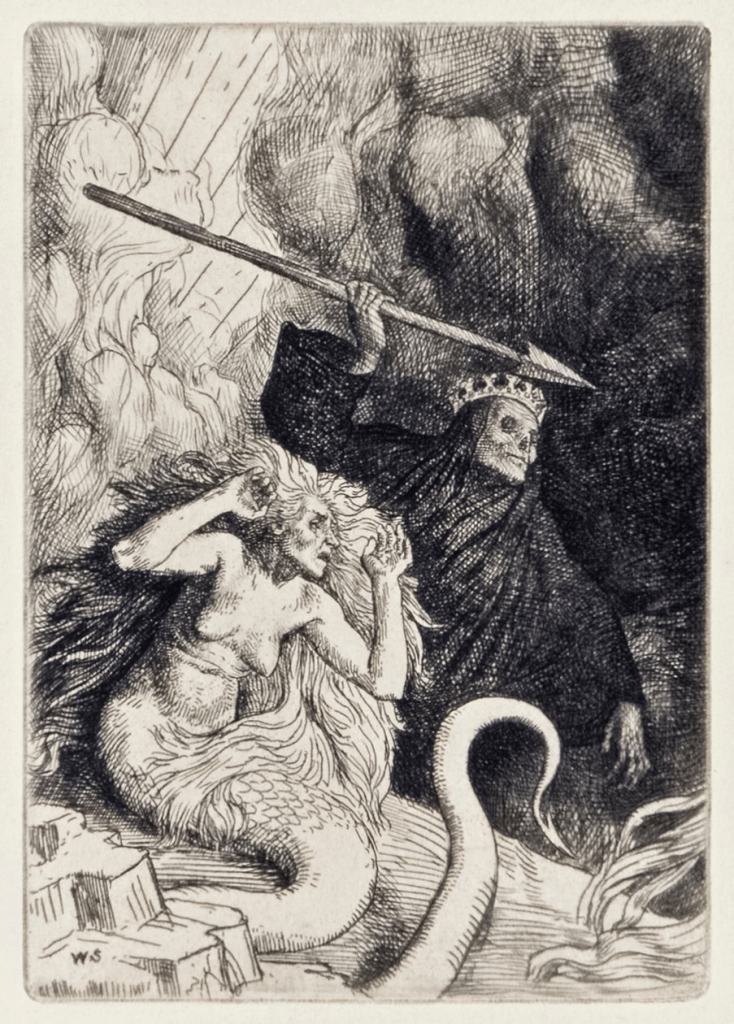
The one seemed a woman to the waist, and fair
But ended foul in many a scaly fold
Voluminous and vast, a serpent armed
With mortal sting…
In particular women as Sin are most horrible in tje portal to their womb, in the vagina that is not mentioned, lest we forget that in nature it should only service reproduction not pleasure. It is guarded by the Hounds of Hell:
A cry of Hell-hounds never ceasing barked
With wide Cerberean mouths full loud, and rung
A hideous peal: yet, when they list, would creep,
If aught disturbed their noise, into her womb,
And kennel there, yet there still barked and howled,
Within unseen.
Unclean Dogs returneth even here, if not to their vomit, to an entrance into which you enter by creeping, as if instinct with fear of your own nature and its living space.
Now, the New Testament has its own usage of the same proverb, though it uses it with a meaning that limits its use for those who think the evil, abominable and dogs are predestined to their lot. In The Second Epistle of Peter, although many think it possibly uncanonical (that is, a forgery of a holy text) and almost certainly written after the death of Saint Peter, and not by a ghostly hand, it is used to remind us that as we choose redemption in Christ. We can backside and find it a return to paganism or false prophecy that only sounds Christian but definitively is not. Here is 2 Peter, Chapter 2 in the KJV:
20 For if after they have escaped the pollutions of the world through the knowledge of the Lord and Saviour Jesus Christ, they are again entangled therein, and overcome, the latter end is worse with them than the beginning.
21 For it had been better for them not to have known the way of righteousness, than, after they have known it, to turn from the holy commandment delivered unto them.
22 But it is happened unto them according to the true proverb, The dog is turned to his own vomit again; and the sow that was washed to her wallowing in the mire.
2 Peter (2: 20 -22) King James Version
As dogs are said to love vomit and pigs to love the shit they defecate (two animals unclean in Jewish thought and Peter is usually conceived as writing to Christianised Jews dispersed from Palestine by the Romans), Jews saved in Christ can return to paganism or its equivalent in the Old Dispensation of the monotheistic God, whose son Christ claimed to be or was (depending on how you see the matter as a Jew with faith in the coming of a Messiah).
The whole message of that chapter is rather cunningly conveyed in the infographic below. It is a dogmatic plea to remember the true way to redemption and not to slew from.it to an even older memory of sin or of a redeption path incomplete because in denial of the primacy of the new Covenant, or Testament. Over the Old.
Infogram from what-is-2-peter-about.jpg (1500×674)
The arguments about the canonicity of the Second Epistle are rehearsed well in Wikipedia (this link) but I cannot resist Bart Ehrman’s gutsy strong take on the matter, as follows:
2 Peter is among the least well attested works of the New Testament from Christian antiquity, although it is found already in the manuscript called P72, ca. 300 CE, along with 1 Peter and Jude, the two canonical letters with which it is most closely associated. Still, during the first four centuries the book had an unsettled status among those interested in establishing the contours of the New Testament. The church father Origen doubted its authenticity, in words quoted by Eusebius: “Peter … left us one acknowledged epistle, possibly two – though this is doubtful.” (H.E. 6.25.8). And the fourth century church father Eusebius himself also considered 1 Peter genuine, but rejected 2 Peter, even though, as he notes, some readers have found it valuable: “Of Peter, one epistle, known as his first, is accepted, and this the early fathers quoted freely, as undoubtedly genuine… But the second Petrine epistle we have been taught to regard as uncanonical” (H.E. 3.3.1).
Somewhat later Jerome expressed the opinion of his day: “[Peter] He wrote two epistles which are called Catholic, the second of which, on account of its difference from the first in style, is considered by many not to be his.” Most emphatic was Didymus the Blind, who indicated that “We must therefore not be ignorant of the fact that the epistle at hand is forged, which, even though published, is nevertheless not in the canon.”
Most critical scholars today agree with these ancient assessments of 2 Peter and often use the same faulty logic in support, that the book differs so significantly from 1 Peter that it could not have been written by the same author. (This was the view of my own teacher, Bruce Metzger; I believe 2 Peter was the only NT book that he thought was pseudonymous.) The flaw in the logic is that Peter probably did not write the first epistle either, so that variations from it say nothing, per se, about whether he wrote the second.
(Bart Ehrman [2025] at https://ehrmanblog.org/2-peter-who-wrote-it-when-and-why/)
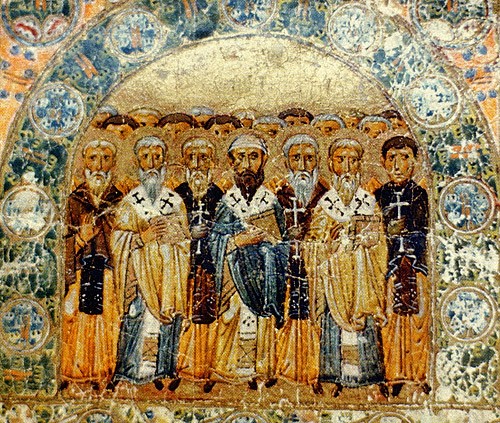
The Ancient Church Fathers worried about the authenticity of 2-Peter clearly, although they saw some virtue in works where ‘some readers have found it valuable’, for clearly they felt even non-canonical texts cam contain truths. But was one of those truths the reference back to Proverbs and parti gladly to that sick dog feasting on what it has discarded and ought now to leave alone if it wishes to escape its earthly nature, or instinct. The whole point of 2-Peter is that converted Jews are like dogs who have learned to refuse to turn to their vomit and their instinct to eat it or like pigs who have refused to return to their pigshit and wallow in it.
These Jews will become more unholy for they know now what holiness is, or can be. This applies whether they are turning to old Graeco-Roman pagan customs in their localities on the Mediterranean or to unChristianized forms of Jewish worship, such as acting as if baptised Jews were an elect amongst Christians as some Jews, but not Good Samaritan Jews, acted, as Jesus preached. Hence the point of the proverb here is that a dog can change in Christ’s grace as easily as a human animal, for both can.learn to move beyond old ways of enactment of their beliefs and remember to.be forever renewed in Christ’s body and blood. There would be point otherwise to the use of it in this Christian epistle, of whatever time and space. That you can change for good or ill is its whole burden of message.
My own take on the proverb is that it is in usage full of obscurity and that some of its interpretation can be ‘completely wrong’, even if never ‘completely right’ (for nothing ever can be this). Yet it can err (since I don’t think it intends this) on bearing witness to some truths. One is that you should not expect animals ever not to be animals, even when they are human animals. It also could teach us that what disgusts or repulses us need not contain moral truths and is a learned behaviour, whose unlearning has merit, for it is based on unexamined assumptions that, upon examination, may show the path to always distrusting disgust impulses rather than embracing them in our moral life. After all, disgust at what we call deformity, and ought to call the ‘alternatively formed’, whether caused by either genetics or environmental accident, is itself a thing that ought to appall us morally.
Proverbs like the one examined here are problematic only when accepted without examination as a guide to action, thought or feeling. I am sure you could do the same with aphorism by Socrates, such as:
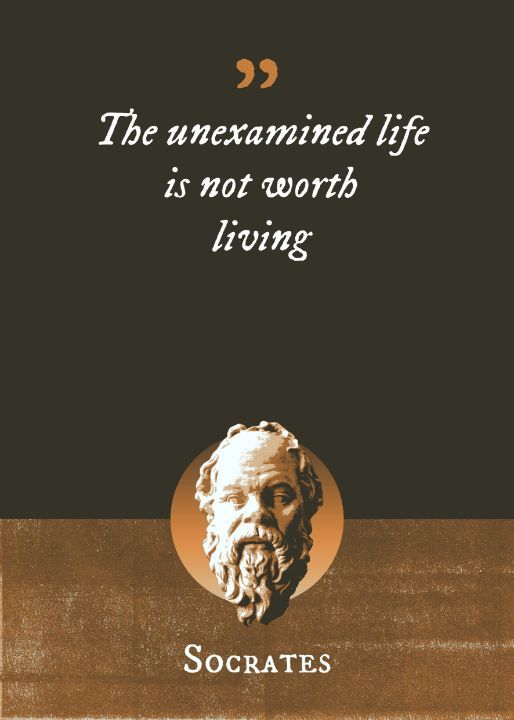
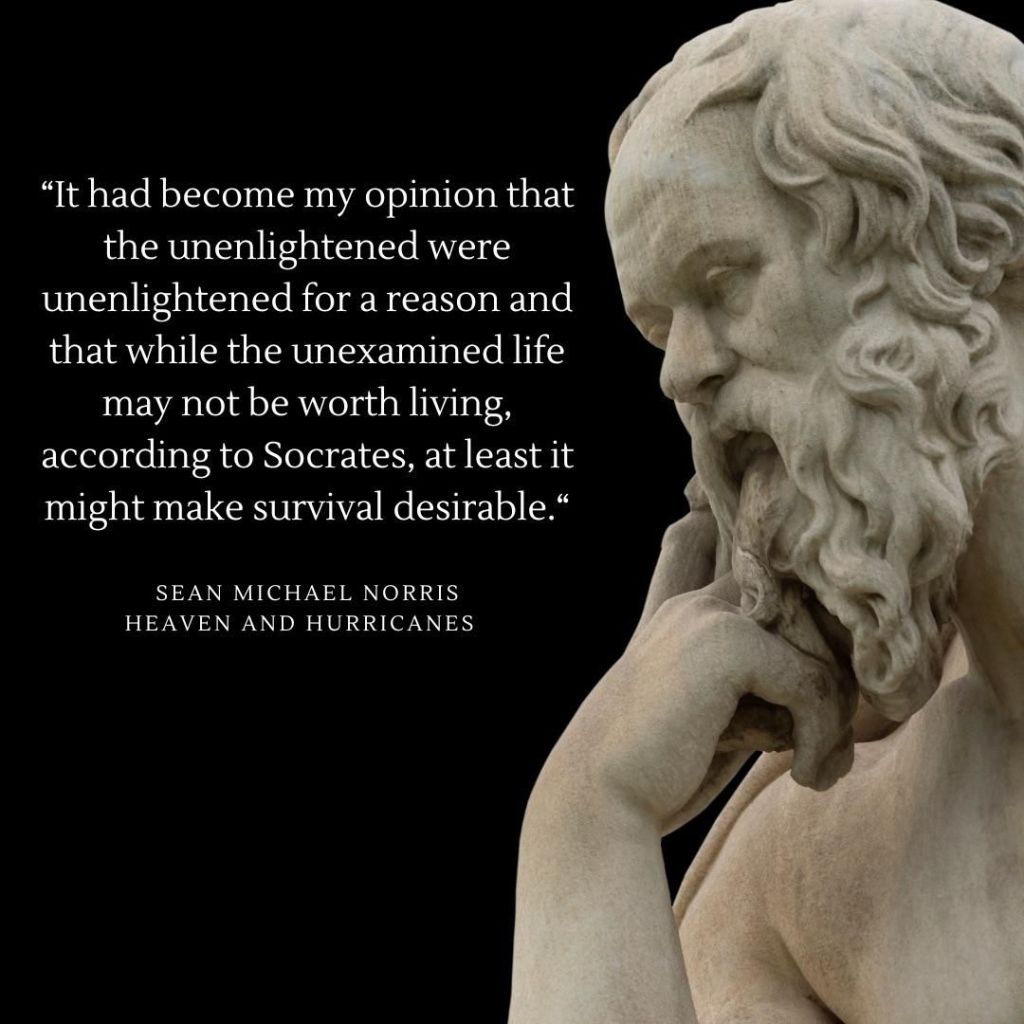
I defy you to do some examination in response, although Sean Michael Norris does it quite succinctly below already.
With all my love 💓
Steven xxxxxxx