


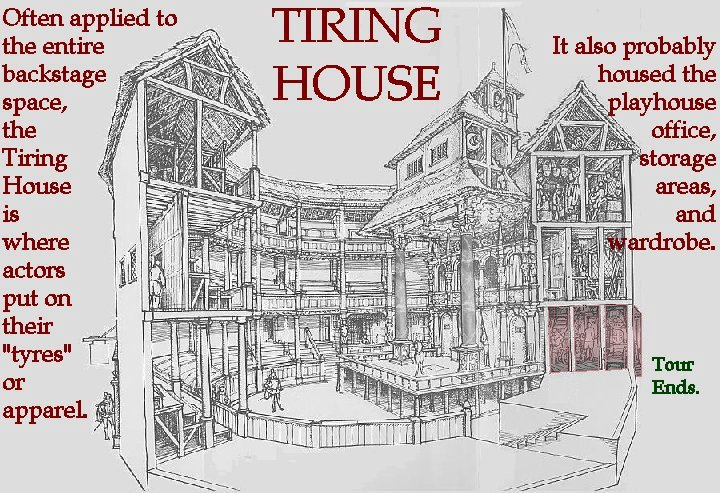
In the Elizabethan theatre a secluded space off stage and curtained, or otherwise partitioned off, and called a ‘tiring house’ acted as as a place in which actors went when they left the stage on which they performed their role or roles: it served two purposes. It was a place in which actors changed their attire in order to play another character or the same character enacting another version of themselves appropriate to a different scene in their life. But it is also inevitably the place in which the actor retires from public view: a place where they need no longer be the person the script of a play tells them to be.
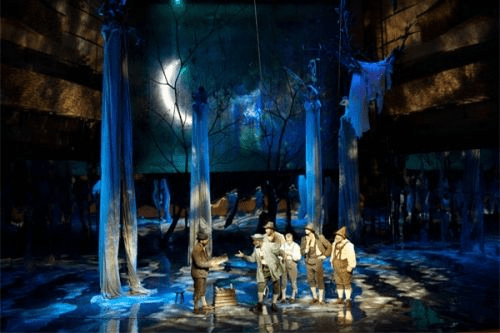
And here’s a marvels convenient place for our rehearsal. This green plot shall be our stage, this hawthorn brake our tiring-house, ... (A Midsummer Night's Dream, Act 3, Scene 1, Peter Quince - lines 3ff.)

In this shade of green we will soon retire
Bold, brilliant in attire we'll be then
Treading the stage, never to feel the ire
Of  them who'd displace us. I raise my pen
To mar our green plot: rain make it a fen!
Or you, young sun, strike it with your hot fire,
Before I will give up to other men
The place in which we stand: never RETIRE!
Retire if you want, but make sure you don’t retire retiringly. Instead retire yourself in glad-rags (or naked as the day you were born). But be who you want to be – not what you were paid to be or forced to be by a script (written or unwritten) that others see as authoritative. Be your own author! Just accept that there are other stages than the one we used to think the only one on which we’ll act. For that is a sad fault – and like inevitably for the hothead in my verse, is a recipe for failure so profound, it beggars description.
With love
Steven xxxxxxx
 Steve_Bamlett_blog