


My current reading
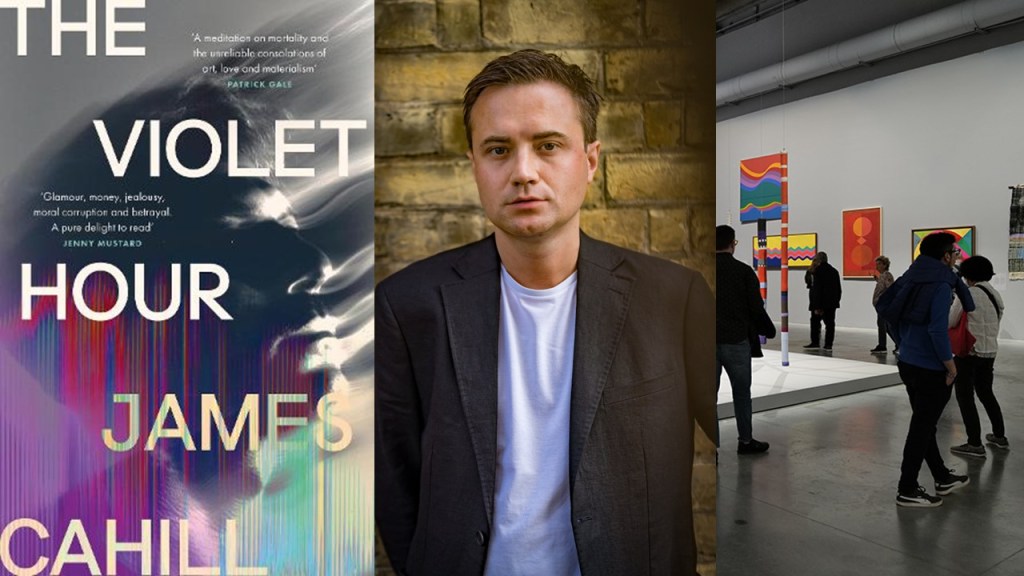
Being retired and in one’s seventh decade of age leaves the issue of time open and yet I seem forever to find certain nagging questions pressing on my mind as if they mattered top anyone – even myself. Here is a case in point. i have resolved to do a blog a day, but as time passed beyond mid-afternoon, I still had none, and had filled time by sorting through my library cataloguing the ‘keepers’ and building my pile for distribution to online buyers and charity shops. That task keeps my mind going because I keep coming across books I have only half-read. When i can I read my current novel (James Cahill’s – pronounced ‘Car-hill’ I recently discovered – The Violet Hour).’ I love Cahill’s writing and had blogged on his first novel, Tiepolo Blue (see the blog at this link). I have only just started his new novel (about page 88 thus far) but seem blocked by consistent patterns of question that I cannot understand why I even care about. I suppose it matters because I think of Cahill as a force in queer self-reflection and because everything seems momentarily to be suggesting that.
For instance, I came across the idea in the last book I read, Queer Cambridge by Simon Goldhill, the scholar of Ancient Greek and lately queer historian of the nineteenth century, that the word ‘blue’ might have struck the master of Eton and Fellow of King’s College, as a ‘coded word for sexual inclinations’that very much relate to men who desired me. Goldhill uses his evidence (compelling enough) to explain the significance of having in his rooms at Kings a picture of ‘a kneeling naked man, painted in blue, illuminated by the rays of the sun’. {1} Suddenly both the painterly and queer themes of Cahill’s first novel came under a new ‘blue’ light – but perehaps one it didn’t need – that could only the more impress of me of Cahill’s sageness as queer guru.
But now Cahill’s words, innocent or intended to mean just simply what they say and no more, have touched again on my disordered life. I was finding it difficult to to read the novel – though I have deeply admired its prose and its management of the interaction of characters and events – and this is because I could not get past pondering about its rinted dedication: ‘For Maggi Hambling‘. As friends tell me, the artist Hambling is a ‘force of nature’ but I could not rest at that. That is a laughable enough trait in itself. But this is particularly so though for yesterday I came across, in my cataloguing venture above mentioned a book Cahill prepared with Maggi Hambling on her art-pieces War Requiem (a reflection on Benjamin Britten in part) and Aftermath. I do not believe in the agency that might lie behind coincidence but I still felt compulsion to read the book now, possibly for the first time – I can’t remember – before returning to the novel. Hence, before I could continue reading my novel, I ensconced myself in my bath and read through that book about (and in collaboration with, the extraordinary queer visual artist, Maggi Hambling.
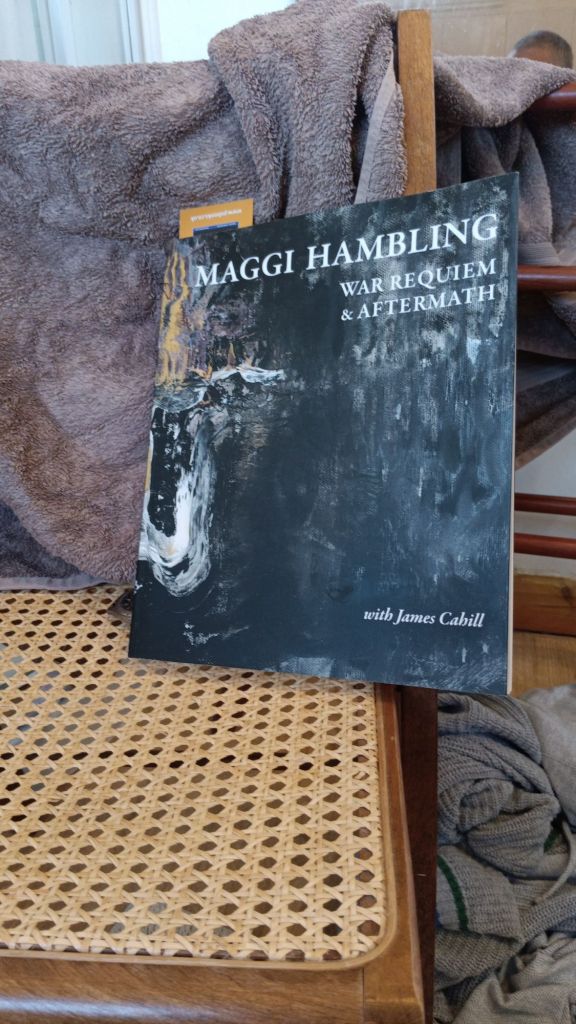
In the bath with a book
i read right through and then tried collecting possible starting points for a motive for a dedication in that 2015 text on Hambling’s metamorphic art of that time. So there it was- a subject for a list blog – of points that might or might not have led Cahill to associate the events of a novel I have yet to read with this artist. Here is what I found.
Of course like Tiepolo Blue, the blog elides queer desire (that much I gather already up to page 88) with the events, dramatis personae, and processes of the art world and the curation and distribution of art. So why might Cahill’s learning from Hambling have given him topics. I suspect none of the list that follows will be enough to comprehend the novel as a whole – he is too subtle an artist.Here are some themes listed as I come across them again, typing in the study and now thoroughly dry from my bath.
| Some themes in | Maggi Hambling with James Chaill (2015) War Requiem & Aftermath Unicorn Press Ltd. |
| page 5 – 7 | The process of Hambling’s art at this period involves a kind of play with the extent to which form may emerge from what appears both formless and unmotivated by obviously conscious meaning: Inchoate figures were painted she could not understand but ‘knew they meant something’ (5). These became the germ of a series of ‘victims’ at the core of a painted war requiem to interpret Britten’s musical form |
| pages 32 – 37 | The figures in her art are so far from obviously being figurative that their boundaries blend with background and each other in the manner of abstract art, and colourist effects where the margins between colours are blurred: ‘pink swishes puckering up against a dark blur’ (32). The effect of swathes of coloured brushwork matter in the novel. The reason for this is to ensure that violence as an effect of the formation of lives in real or metaphoric battlefields are made to be sensed and felt because we have become too ‘desensitized’ to images of death in war. When we see persons reduced to the unknowable and un-boundaried, we become part of the event reconstructing its meaning from ‘a pulverized, bleary and burnt-out world that stands, perhaps, as much for a psychological space as a literal one’. This might be like the experience of Aeneas in Virgil’s epic poem: ‘with deep sorrow, and many lamentations, he fed his soul on empty pictures’ (cited 36). We feel the moment where war becomes an unwanted reality as if touched on our life. |
| page 41 | There may be a liminal zone between art and reality, where art is not just an object or commodity |
| page 48 | The artist can be of a ‘Steppenwolf’ type – ‘who (through success or popularity) represents a public figure and yet fundamentally remains an outsider’ (48). |
| page 66 – | Art can dilate time, where a singular event in time and space can become symbolic of the ‘strangely eventless, yet speaks of events we cannot immediately divine’ (66). Colour and form become abstractions of ‘a scene of charged expectation and frozen time – of nothing happening’, This occurs in Manet’s Execution of Maximilian and Rubens’ Samson and Delilah. |

| page 71 – 3 | A ‘victim’ is not necessarily the force defeated in an interaction of two forces because both forces are in fact locked in a role they do not desire nor know how to play by the rules those roles require for their performance. They are locked in an externally determined destiny they cannot understand. In the text this is illustrated from Milton’s Samson Agonistes where Delilah is victim of the power-plat between the two as much as is Samson: Let weakness then of weakness come to parl So near related, or the same of kind. Thine forgive mine. This quotation is only one of those moments where James Cahill begins to outline the momentum that gives an ambiguous life to the art of Maggi Hambling. The theme occurs in the Middle Eastern wars of her time for Hambling, in Gulf Women Prepare for War . |
| page 79, 84f. | The dead converse with each other and us if we accept the entanglement of their form with our puzzlement at what they are. We are all both passing and permanent to each other. |
| page 97ff. | The form of any artwork (and consequently meaning) undergoes constant metamorphosis because it addresses temporal-spatial contexts that cannot be known by the artist at the time of creation. Hence form and meaning get continually renegotiated, as in the ‘myriad imaginative possibilities in natural forms – a “heap of broken images”‘ (106). Nevertheless, certain themes of the desire to dominate and be free of domination, to be whole and divided, stay constant. |
| page 134 | All art has an afterlife in the imagination with different rules of growth applying through change. Her later images – sculpted burned wood ‘- ‘question us: how much do you care, rather than what do you know, recognize, remember. Above all, what do you feel?” (bryan Robertsioon cited 142) |
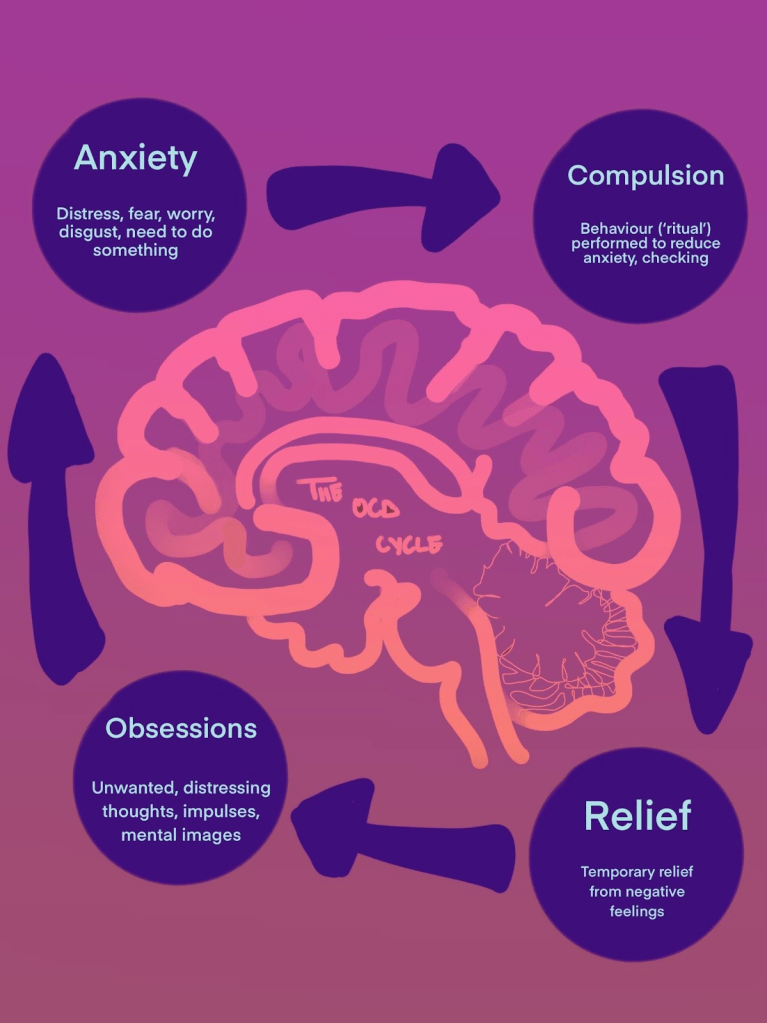
I am no clearer about why I was blocked, but at least I can go on to read. But thus is my life. Better to laugh than take it so seriously. With luck however, this blog won’t be wasted for me except as a laugh at my own processes. I might still keep thinking as I read, but if it does not help; what matters? The important thing is to care about a book you are about to read in full and get rid of the brain worms hurtling around in there as you go
All for now
With love
Steven
_____________________________________________
[1] Simon Goldhill (2025: 55 – 57) Queer Cambridge: An Alternative History Cambridge University Press
 Steve_Bamlett_blog
2 thoughts on “When I do strange things, fortunately I laugh at myself. A case in point …”