If there were no time there would still be some
Sometimes, wherein we would find time contained
In some special relationship with us:
Cocooned in comfort where there's no splendour.
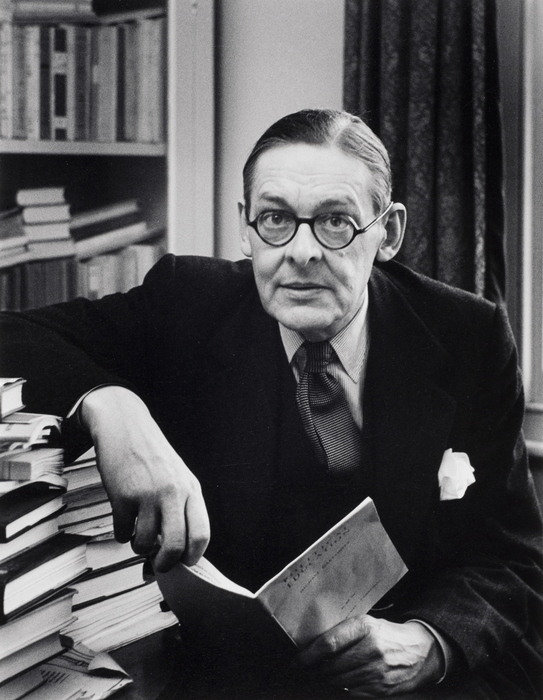
It does not surprise me that when I think of time I type some plangent iambic pentameters like those I typed above with echoes of the moment in my reading I keep repeating – the first lines of Burnt Norton, the first of T.S. Eliot’s monumental Four Quartets. They are lines that seem to sum up life from the moment, of honest puzzlement in which I first read them and pondered on the word ‘contained’ for it not only puts time in a box, it holds its supposed energies in side it, stopping off any indecent over-spill that the concept desires to shoot in unseemly fashion over life.
Time present and time past
Are both perhaps present in time future
And time future contained in time past.
If all time is eternally present
All time is unredeemable.
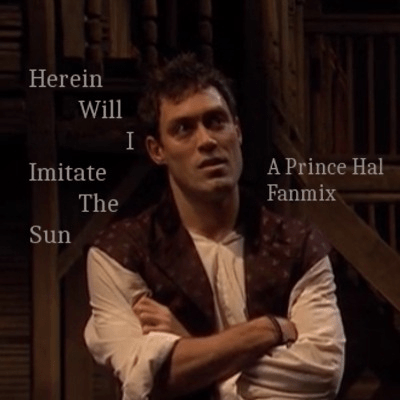
The usual response to these lines is to leap at the concept of ‘redemption’ in Christian religion – the idea of a holiness able to buy back time and reinvent it in a New Jerusalem, but the echo I always heard was the vulgar Machiavellian Prince Hal from Henry IV Part 1 , who makes a case for being a wastrel of time in the company of Falastaffd, Poins and the boozy lushness of a brothel-come-inn in Eastcheap. As he reasons it, there will always be ‘time’ to change and become what I wanted to be without too much overt worry about using all my time USEFULLY in preparation for that outcome:
I know you all, and will awhile uphold
The unyoked humour of your idleness.
Yet herein will I imitate the sun,
Who doth permit the base contagious clouds
To smother up his beauty from the world,
That when he please again to be himself,
Being wanted, he may be more wondered at
By breaking through the foul and ugly mists
Of vapours that did seem to strangle him.
If all the year were playing holidays,
To sport would be as tedious as to work;
But when they seldom come, they wished-for come,
And nothing pleaseth but rare accidents.
So, when this loose behaviour I throw off
And pay the debt I never promisèd,
By how much better than my word I am,
By so much shall I falsify men’s hopes;
And like bright metal on a sullen ground,
My reformation, glitt’ring o’er my fault,
Shall show more goodly and attract more eyes
Than that which hath no foil to set it off.
I’ll so offend to make offence a skill,
Redeeming time when men think least I will.
(I.ii.173–195)
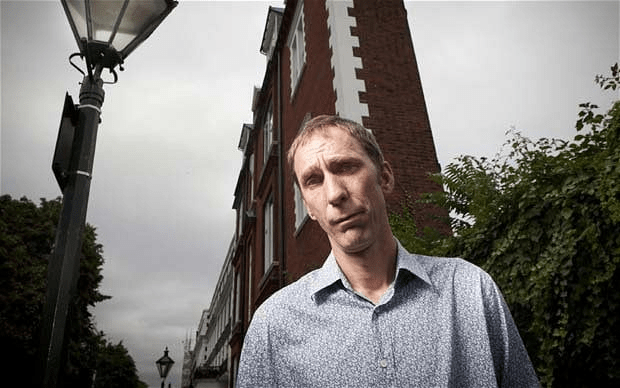
Time is an illusion that a master knows how to play at its best, it is ‘redeemed’ by paying ‘the debt I never promisèd’ by falsifying ‘men’ hopes’, playing a game with the psychology of time, so that when they get it, the once and future king will seem to be what they always wanted all of the time – whether as a past absence or future promise. When Will Self contemplated Eliot’s lines for the BBC, he put them in the context of other wise and:
Timely thoughts
“The only reason for time is so that everything doesn’t happen at once” – Albert Einstein
“But thought’s the slave of life, and life time’s fool; And time, that takes survey of all the world, Must have a stop” – William Shakespeare
“Clocks slay time… time is dead as long as it is being clicked off by little wheels; only when the clock stops does time come to life” – William Faulkner
“Time is an illusion. Lunchtime doubly so” – Douglas Adams
And, for reasons of his own, for as a novelist, his theme is the constant revision of the modernist novel, he made Eliot’s lines into the defining response that modernism of the twentieth century contributed to world thought about time, although he then in his next paragraph shows us that quotidian time is no more or less what Modernism in its high-faluting way, said it was, now in the world of the internet and and the ease it gives to instantly available past times and future needs, without the need of redemption and with due debt to Einstein’s proposition about the relativity of time:
Modernism as an aesthetic response leading to a cultural period is all about the unredeemable nature of time. Eliot and Pound underpinned their dissections of the present with the mythic archetypes of the past, Joyce set his vast panorama of human life within the context of a single day, Cezanne broke down the image into its constituent geometrical parts, while Stravinsky beat time until it syncopated. By doing all these things the modernists demonstrated they fully appreciated the consequences of Einstein’s discoveries.
However, we don’t need to strain our necks peering up at high art in order to appreciate how Einsteinian our contemporary existence has become. Rendered collectively neurotic by the scientific proof of our own insignificance – for, if relativity is speaking, this is quite clearly the case – some of us, like Eliot, retreat back into a religious perspective, and rely on a deus ex machina to keep the time. But for the most part we concentrate our energies on enlarging the sphere of the present itself. Of course, all cultures have attempted to do this. The inscriptions carved on ancient stones are commands aimed at future generations, ordering them to stop the clock.
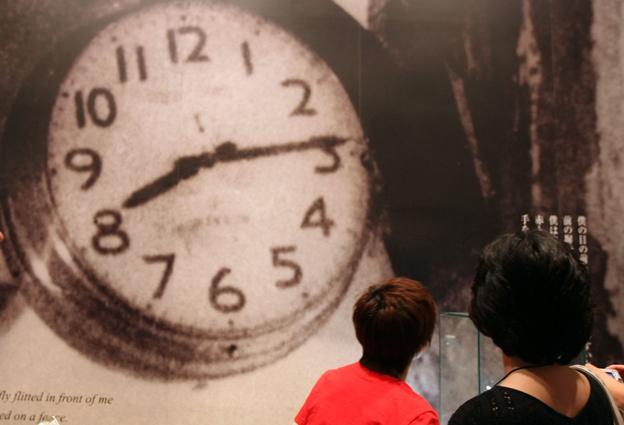
Stop the clocks: Picture in Hiroshima shows a timepiece, broken the moment the A-bomb dropped in 1945
But since the early 1900s our civilisation has developed more and more powerful ways of silencing the relentless ticking it knows to be a purely subjective phenomenon. What is the worldwide web, with its instantaneous access to a myriad images and sounds of our past, and its corresponding myriad imaginings of our future, if not a vast and prosthetic present? So when, exactly nine minutes and 40 seconds ago, I queried whether any of us really stopped to consider the full import of Eliot’s lines, I wasn’t being rhetorical. It matters not that this broadcast will be available on the BBC’s iPlayer for weeks to come, because my reading of it and your listening to it now resides firmly in the past. It must do, because for us – just as much as the poet staring down at the mossy tombs of his ancestors – it’s always, always… now. Isn’t it?
Transcript of Will Self ‘A Point of View: To the end of time’ [Published 6 March 2015 and availalable at: https://www.bbc.co.uk/news/magazine-31762129) by the BBC. A Point of View is broadcast on Fridays on Radio 4 at 20:50 GMT and repeated Sundays 08:50 GMT or listen on BBC iPlayer
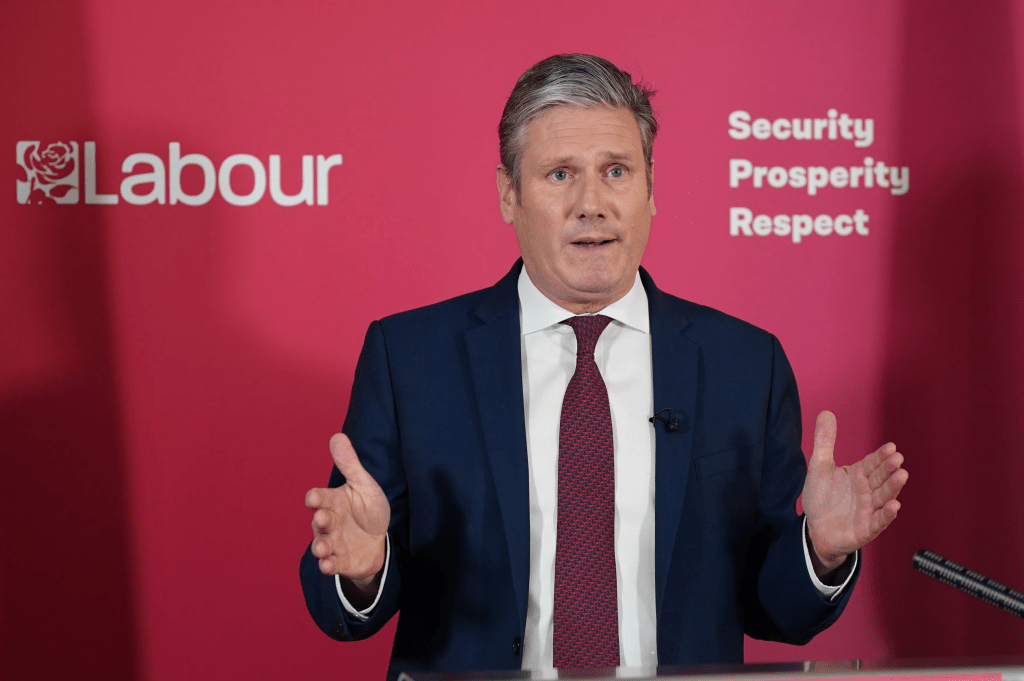
But think again about Prince Hal. The aim of political power is to be the answer to a problem you think has been posed perpetually and always will be for which the political elite thinks it has always been the answer. Listen even to a paltry politician like Keir Starmer, who likes to insist on being Sir Keir Starmer. The question is how to achieve ‘constantly growing living standards for working people ‘ and the answer is, constant in its vagueness, is a perpetual growth machine in time and through time. It is the notion that time never stops and calls in its debts, makes an end not by glorifying the present order (that dream even fades from Starmer’s childlike eyes now) but by being its apocalyptic moment of destruction. This is what happens when we fail to address the true insecurities, and poverty, including of respect, and substitutes false versions of themselves: policies that cannot help but end the lives of those who stand in the way of ‘working people’ who want as little as possible to change but only to grow (hence their capacity to allow leaders to ‘falsify men’s hopes’). .
So let me read again, my own poor quatrain:
If there were no time there would still be some
Sometimes, wherein we would find time contained
In some special relationship with us:
Cocooned in comfort where there's no splendour.
Far from thinking of either the past or future we make an illusory gift to ourselves of past and present contained in a perpetual present (a place where bad things never happen – to us at least (for we are not Gazans)) and we feel safel in our cocoon of that time defined only by the false hopes that we think of as present reality – security, prosperity and respect (at least for those secure and prosperous) we ride the realities of climate change, the increasing extinction of species and the mechanisms of war that live in heaped up inequalities. Time is in a ‘special relationship with us’ we hope. Who needs splendour and truth!


 Steve_Bamlett_blog