


The idea that the surest thing on earth is that night follows day in indubitable sequence is so often invoked that it is the stock-in-trade of politicians, especially those involved of the hubris of building and defending nation states within expanding imperial boundaries and in the belief that might is right: note the words of George Washington, too often thought of as simply a ‘good man’ (of the 1066 and All That variety) in history, but in fact the seed of capitalist liberal imperialism:
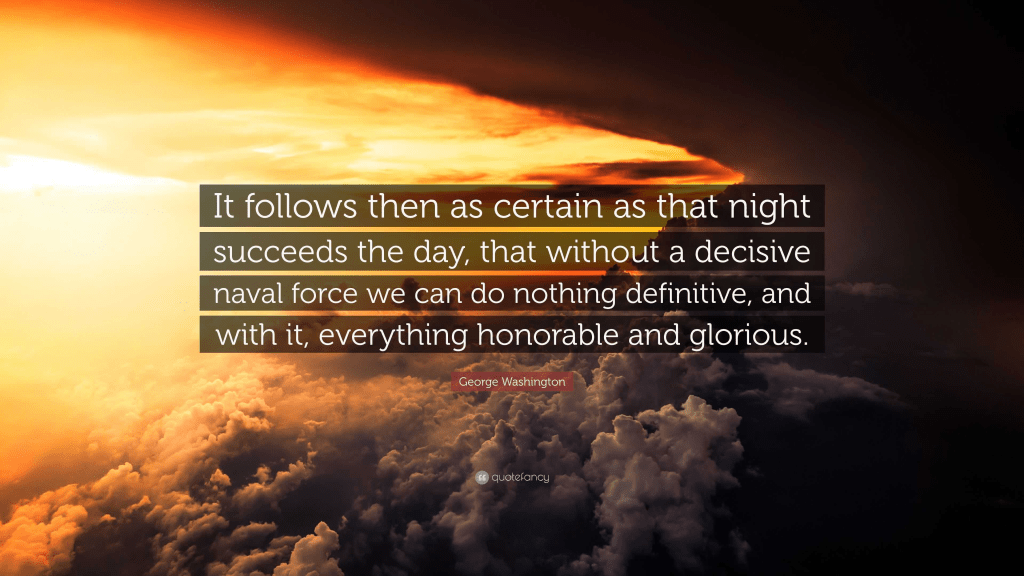
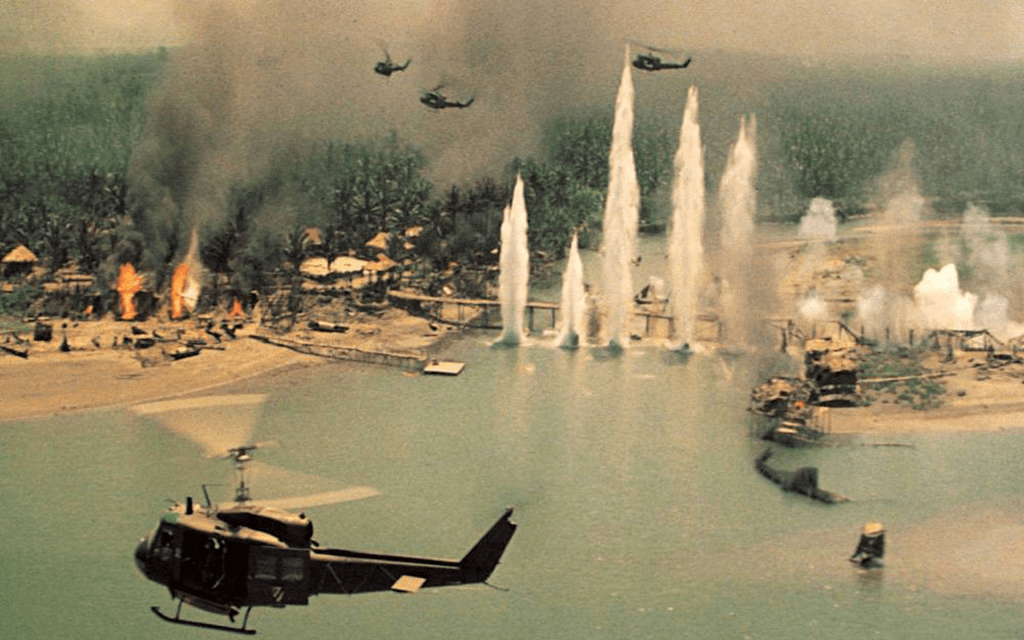
There is something sinister in the unintended equation of the honourable and glorious destiny of the United States with something definitively ‘of the night’ that makes me shudder and recalls the dropping of napalm and other equally deadly bombs on Vietnamese villages and the awful opening of Francis Ford Coppola’s Apocalypse Now.
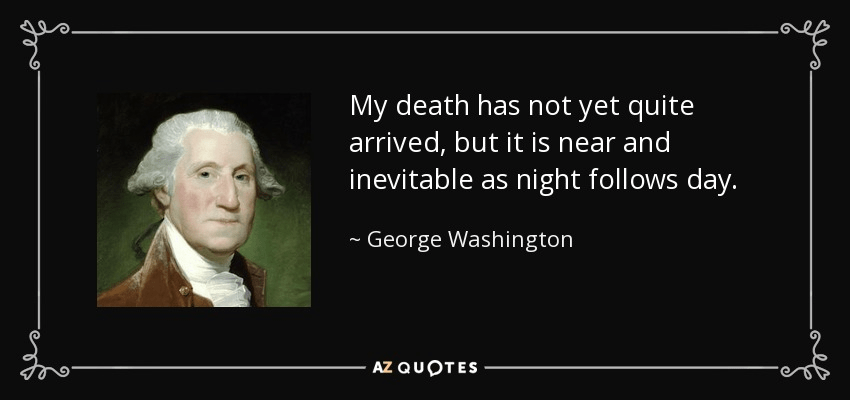
It is thought that Washington in another case used the same model of inevitable consequence indeed to describe his own death.
Therein lies the certainty: that life and death follow are a sequence divided by a temporal boundary that is so basic a truth of separate elements forever distinct from each other. The old fool of a courier, Lord Polonius, evokes this separation and sequences as the foundation of the truth that persons possess a ‘true self’.
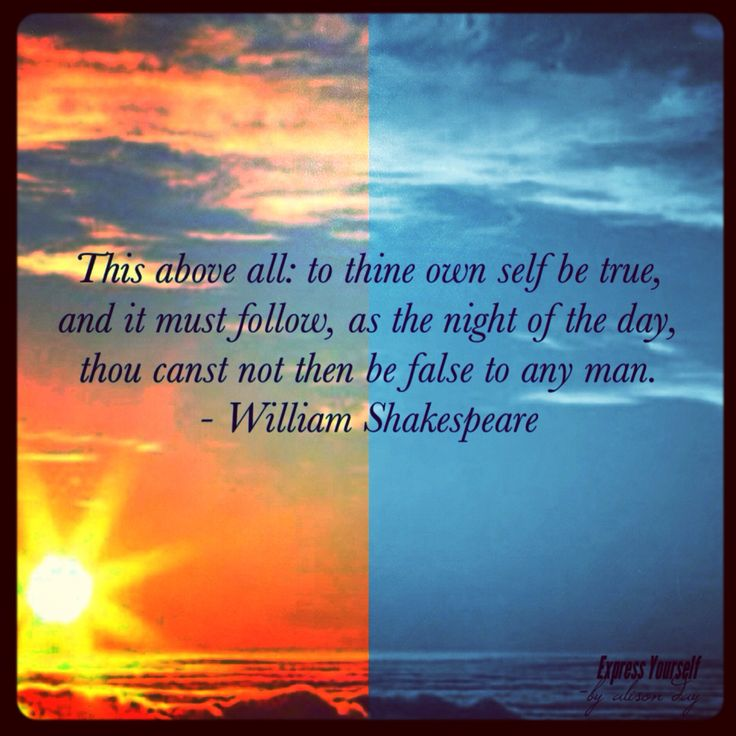
This above all: to thine own self be true,
And it must follow, as the night the day,
Thou canst not then be false to any man.

(Hamlet Act 3, Scene 1, lines 84ff. Available: https://www.folger.edu/explore/shakespeares-works/hamlet/read/1/3/).
But remember that Shakespeare ensures with persistent use of comic skill that we know Polonius is a foolish unthinking man – pleasant but with no strength of mind or grasp of the real, satisfied with living life in the light of idioms that he never questions but that ought to everyone else seem substitutes for thought rather than thought itself. He is easily persuaded to believe almost anything.
Wiser minds in Shakedpeare are also more divided minds where truth coexists, often in the same time-space, with what is false or an admixture of fiction and fact, founded not in certainty but situations where logic, or the pretence of its dominance as a mental tool, and imagination becomes in part our guide. In so much of life, night and day are in conflict together as truth and fiction and none of us escape moments in our life wherein for all of us where ‘chaos is come again’ and we can no longer rely on the usual regulating boundaries between supposed inevitable binary states such as death and life, fact and fiction, truth and lies, and night and day.
Prophetic books, supernaturals mysticism, the use of dreams of the day or night across many domains, fantasy, fairy-tale, and the Gothic horror genre all mix supposedly distinct states, especially those of life and death in a space whose boundaries are difficult to fully know or characterise in description. There would be no need of vampire myths, for instance, if we did not feel that the present can be fed from and drained of its life substance – usually conceived of as the blood – by shifting states of imagined absent time and spaces, since it is a necessary and sufficient condition for access to past, future and unknown spaces.
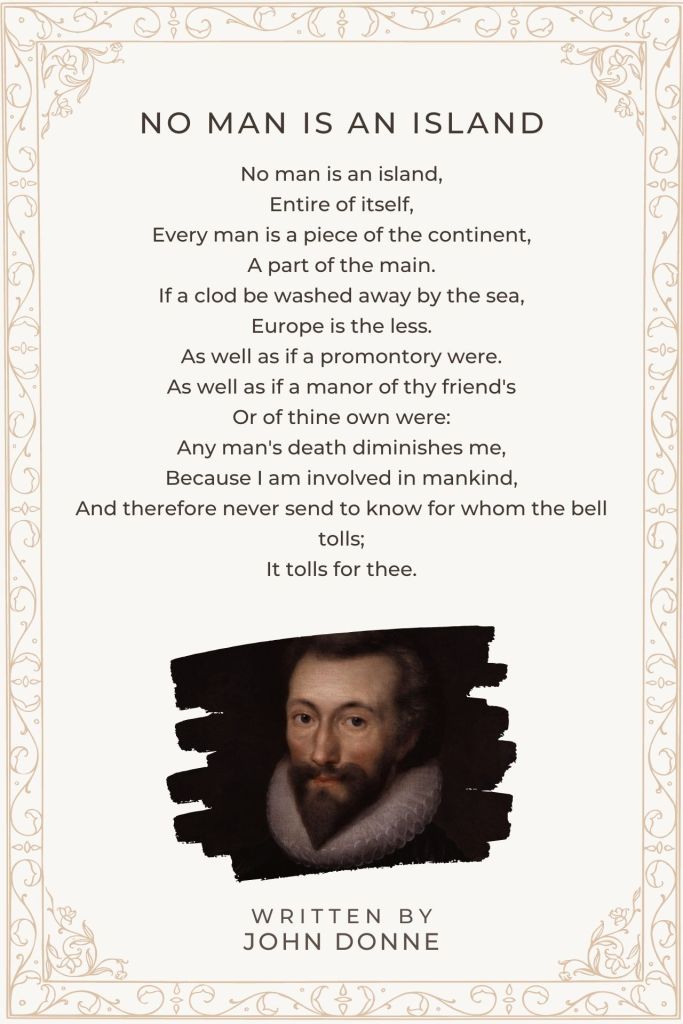
Those spaces lie behind the substitutes for a ‘safe space’ we construct around us and call reality. One such safe space is that imagined domain of the ‘thine own self’, as if we owned and controlled something that was in our ownership, a personal possession that models our best behaviour, and this is the ideological notion Polonius invokes. But nothing is in truth ‘mine own’, though I try to pretend that is so. Tje isolated self us trly not ‘mine own’ for instance, it is haunted by the otherness of my desires and dependence on collaborative achievements with others. Some of those others I like, dome I don’t even like. However, John Donne does invoke the means of digging beneath binaries of self and other, the fact of death and my own life, the need to imaginatively recreate the shared life that us the truth of being not just an ideology.
I sometimes rely on thinking of these words.
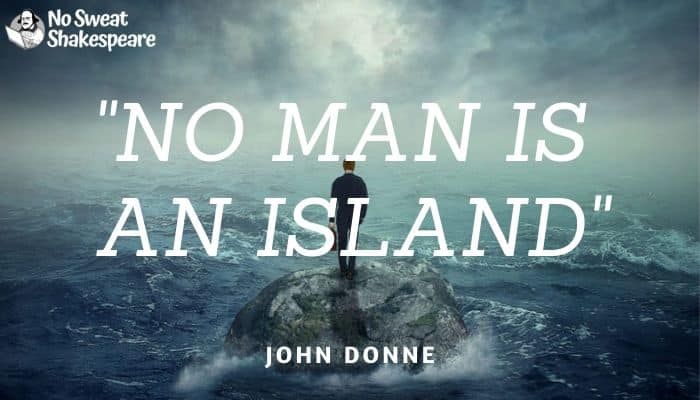
And to be an island can only be imagined, without living about dependence as an image of horror.
A safe space can not be ‘mine iwn’, it must Gome to terms with that which makes me me, which is paradoxically otherness. It is not the surest thing we know that night follows day. We cannot decide or enforce a self that it is a morning or a night person. We are both and at the same time and in whatever space. The thing is whether we contest that multiplicity of being, for day and night have their subdivisions-are not binaries in truth. Or do we embrace its contradictions.
With love
Steven xxxxxxxxxx
 Steve_Bamlett_blog