


In the Epilogue to his book 38 Londres Street: On Impunity, Pinochet in England and a Nazi in Patagonia (2026, First paperback edition [first publ. in hardback, 2025], London, Weidenfeld & Nicholson) Phillipe Sands recounts attending a literary festival to promise an earlier book in Valparaiso and being addressed by a reader who had personal knowledge of one of the subjects of his book in preparation (38 Londres Street of course) whom he visited later and said to him that she ‘imagined’ his ‘three faces: writer, lawyer, and someone personally touched by the horrors that afflicted your own family’.[1] There must be a reason that Sands passes on this perception of him, although as a more useful characterisation of the narrator of this book I think you need another face: that of a sensitive critical reader of the narrative accounts of others (documentary or fictionalised). I read this book in preparation for an event in Edinburgh this coming Saturday as he and Philippe Sands remember the Dirty Warriors that led the countries of Argentina and Chile and ‘disappeared’ their opponents. I want to know more about why all this matters so urgently again, now! Part 2 of 2.
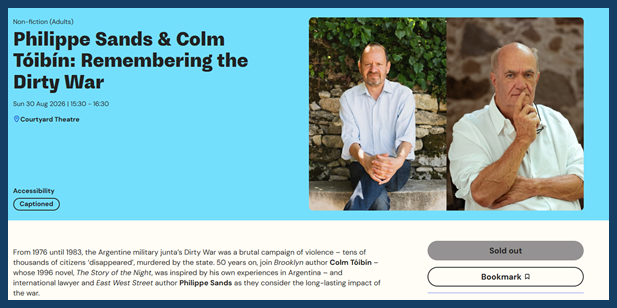
Sands book ends with Sands talking to a lady he meets at a literary conference who thinks Pinochet and Rauff ‘were joined’ as characters by having two sides to them: ‘One gentle . the other hard’. There is no pretence that this explains how and why in relationship to monstrous crimes, the ‘both got away with it’ because, as the book ends while affirming their crimes and a life of impunity’finally qualified by the ambiguous ‘Sort of’. This is not an annoying book that sorts everything out at its end! However, this blog is also in preparation for an event in Edinburgh (today – I finish this on my way on the train) as Colm Tóibín and Philippe Sands remember the Dirty Warriors that led the countries of Argentina and Chile and ‘disappeared’ their opponents is Part 2 of 2 Parts. In Part I I tried to prepare myself by re-reading some works by Tóibín and writing up my reflections. In both, I want to know more about why all this matters so urgently again, now! You can read Part 1 at this link.
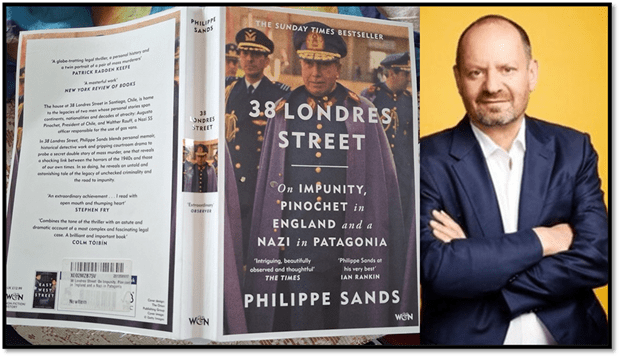
In Part 1, I worried if ‘the smallness of the print and the tightness of the printed lines on the page of my paperback may defeat the ambition to finish it’ given my tired old eyes but I did not need to worry because Phillipe Sands’ 38 Londres Street held me more than any documentary account of lived history has ever done before. In a sense this was because Sands is a meticulous artist and writes with all of the faces, or writing hands if you prefer that metaphor, at play that I mention above – the lawyer actually involved in some small part of the legal processes that form the story of Pinochet’s arrest in London and the debate in legal and political circles around it, the man involved through various levels of his own family’s life in the experience and witness of both Nazi oppression and South American history (through his wife), and, a writer fully conversant in some of the problems faced by all writers, in the discrimination of fact and fiction and their complementary roles in most but the most unreadable of written accounts, including issues of characterisation, plot and complex mixed points of view, as well as the use of appropriate writing ‘style’ or rhetorical methodologies.
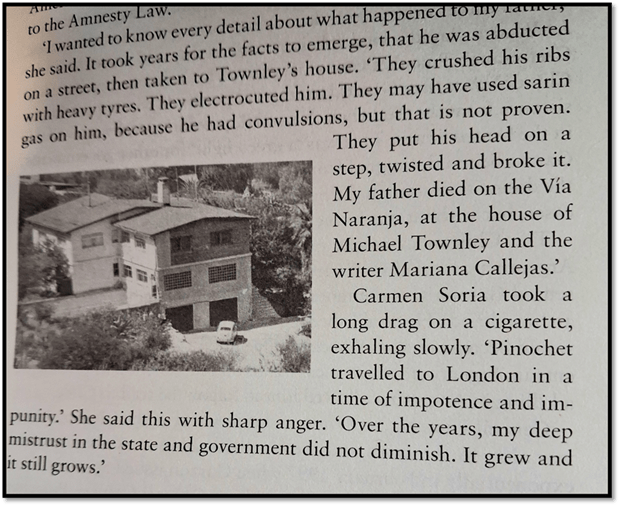
But to all of those roles is linked another – that of a reader of different kinds of accounts that witness events or their transformation into versions sometimes near to possible mythologies and ideologies – whether formal witness statements in courts, or oral interview material, including stories told in both the latter of others, and over and above that the read accounts of writers of material that either claims no enduring value as writing and are not for that purpose, or claims only to be written fiction, or, at the most, written ‘faction‘. The book is beholden to accounts , for instance, by Roberto Bolano, and other writers (notably Bruce Chatwin’s In Patagonia, a model of ‘faction writing’ that doesn’t quite declare itself as such), and, has things to say about the mix of fiction in accounts of ‘real’ things around figures like Jorge Luis Borgés (who lost chance of a Nobel Prize by praising the warmth of Pinochet) and writers with a guilty connection to things they fictionalised, whom I doubt I will ever now read, such as Mariana Callejas (fictionalised by Bolano in By Night in Chile as Maria Canales) a secret agent of Pinochet’s élite Dirección de Inteligencia Nacional (DINA – based on the CIA). In this role she and Townley were involved in the murder of the disappeared socialists and liberals hated by Pinochet with her lover Michael Townley (named James Thompson by Bolano). Callejas won literary prizes but was read very differently having met the relatives of their victims, murdered brutally using the methods they learned from Nazi émigrés, including torture on improvised racks in their basement, gassing (possibly) and breaking the neck of one victim on a step, in front of their home. The extract below shows a little of how the accounts work, together with accompanying photography.[2]
What fires me about the pairing of Colm Tóibín with this writer is precisely that each, in my interpretation, deal with the vital problems behind the notion of unreliable narration, multiple plots including the ethics of their intentions as ‘plots’ as wee as the issue of what makes story believable or incredible in such a way that its truth is either a surprise or a statement of horror. It is not always that we deal with the binary distinction of truth and lies in the assessment of story, but that fiction and fact are often in league with each other before truth can be revealed and then only through a glass darkly.[3] Literature obscures what it makes clear and reading it critically is our only guarantee of truth behind fiction, even when the story professes to be factual truth.
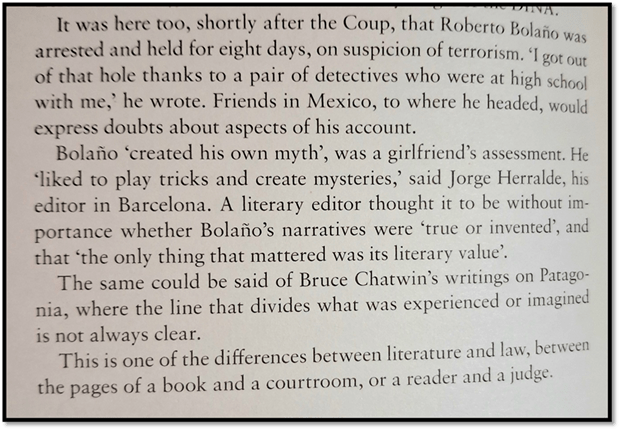
In a late chapter Sands tries to explain ‘one of the differences between literature and law, between the pages of a book and a courtroom, or a reader and a judge’. Yet whilst the paragraphs which this statement follows does illustrate one truth, that for the writer ‘literary value’ trumps the establishment of the fact or likely fact, it shows that there may be some great similarities between the courtroom and literature; many of which are illustrated through the books lists of the fictions that some judges, solicitors and decision-making politicians are capable of holding as true or false whatever the evidence to the contrary or that evidences that nuances judgement.
Here are the paragraphs, which speak of the city of Concepción to which Sands travels at this point in his investigation to meet a research academic, expert in the Pinochet coup against the Allende government and its dictatorial aftermath of disappearances: [4]
The interest in the way fiction interpenetrates fact, even in accounts not primarily literary in their witness to events, means that even the monsters in this story are in part fictions demanded by how far our credibility can be stretched in the description of the ethical world of good and evil. Sands is amused by Pinochet’s statement: ‘I am an angel’, but it is a story like many others in this book, which many believed other than Pinochet himself, even if in non-spiritual terms, and usually through a right-wing lens on history, people like Margaret Thatcher on Pinochet, and that women at the literary Festival, Proserpina Fierro (a name that sounds so fictional and touched by contrasting myths, who wanted to persuade Sands that a true writer will see at least two faces in Walter Rauff.
Yes, he was geared to succeed as the Nazi who designed the killing vans used in exterminations of Jews and others using tbe van’s own exhaust fumes and, as we see by now in the book, as a DINA agent in Chile, the refrigerated vans, ostensibly for frozen fish, that only carried such cargo one way in a two way journey, at other times carrying the disappeared to execution or their corpses, and perhaps ferrying them to the machines that converted huge dead things into fishmeal to feed chickens. ‘Corpses one way, fish, shellfish and fishmeal the other’.[5] But there was this other face seen by Proserpina: ‘a kind, good man, the one I usually saw’ . This is why she invokes the hope that the ‘three faces (‘writer, lawyer, and someone personally touched by the horrors that afflicted your own family‘) of Sands will interpret him with nuance. I see four faces as I say in my title because Sands knows how to read all accounts, even hers so that his writing is not motivated alone by literary ambitions, but by critical reading too. After all only one ‘judge’ that Sands interviews who has a stake in this affair really acts free of bias from extra-legal fictions, Judge Carroza, who says:
In the early years of the DINA, the judiciary in Chile failed completely failed completely. That failure continued in the 1990s, even with the arrival of democracy. The judges looked the other way. [my emphasis – SDB] [6]
Meanwhile, literature filters judgement through literary (stylistic and smantic) te h ique like irony, genre (‘magic realism ‘ in the following two cases and interior narration of memory, here in tne form of sensation. Note this fra.ing of a wonderful moment in In Patagonia, which, like Sands, I read long ago. Here Bolano’s derived and fictionalisdx character Raef and the supposedly real Rauff of Chatwin appear: [7]
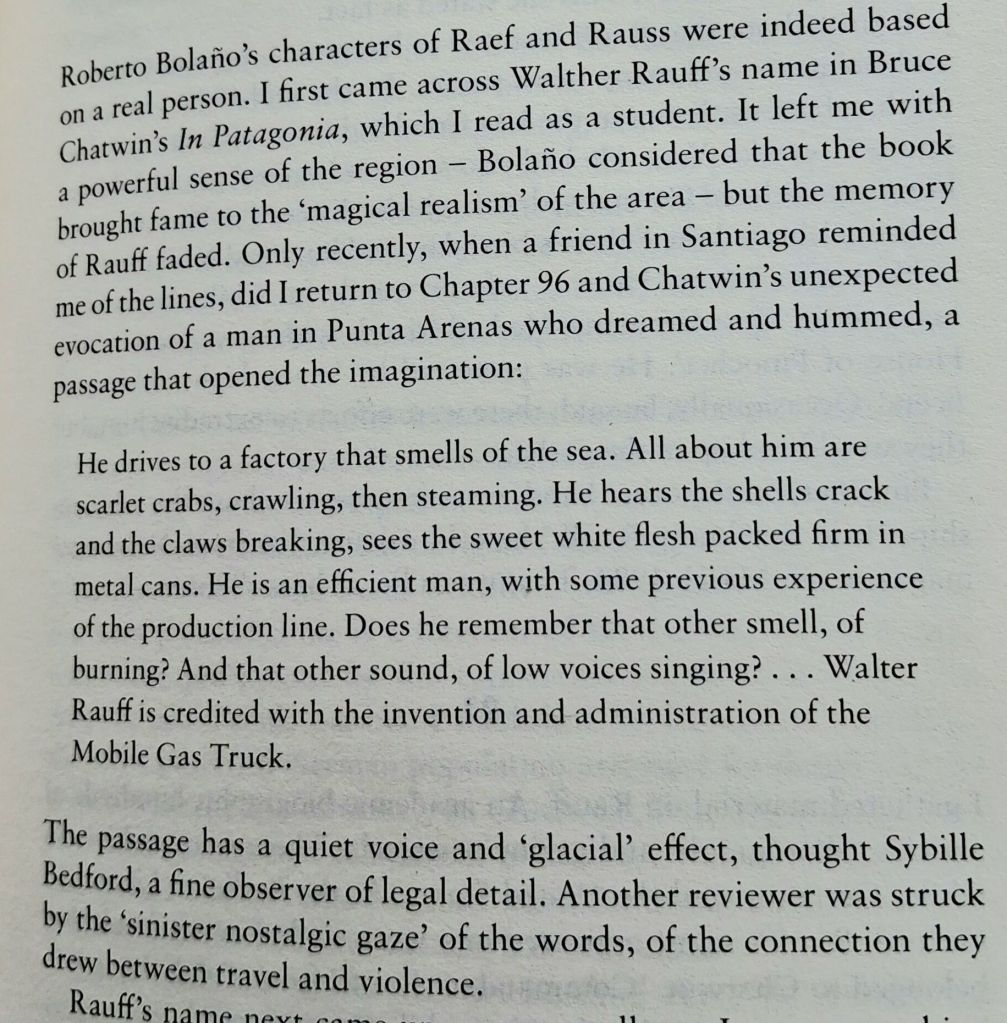
The fate of the crabs steamed and canned by Rauff is not explicitly tied to the fate of the disappeared in Nazi Germany nor Chile but the association has to be in the reader’s mind,such that the reality of human hardnessof tbe rudest sort is felt and judged through feeling and thought, using both as evidence.
The turning of a legal gaze, one actually involved marginally in the story of the attempts to bring Augusto Pinochet to justice as Sands was, to the making of a book, of which we kow that the making of many such ‘has no end’ from Ecclesiastes 12:12. [8] There is no ‘end’ of the means and purposes of judgement, in all do.ains after all unless we refer all to a punitive patriarchal God after all, at which option all humanity should shudder.
The effects of all this is, I believe, very much reflected in this book and I will state them without necessarily justifying them. First there is Proserpina Fierra’s point that all things in human life are joined. Many times a formula phrase ‘Everything is connected’ is used in the book, as in the case whete Sands looks at the connection between two specific victim families of the disappeared: the sases are ‘intertwined’ he says and the families know each other’. [9]
What also connects Sand’s themes of impunity from justice? First, there is something at which I hinted in my first blog and that is so brilliantly covered in The Story of the Night. We are all.potentially collusive in the persistence of impunity, as is Richard Garay in that last named novel, especially when we fail to acknowledge our entitlement in unequal societies. All of us use our unbelievable in the grotesqueries of evil by refusing to find them credible or, in the long term, significant. Sometimes, that collusive dismissal itself f
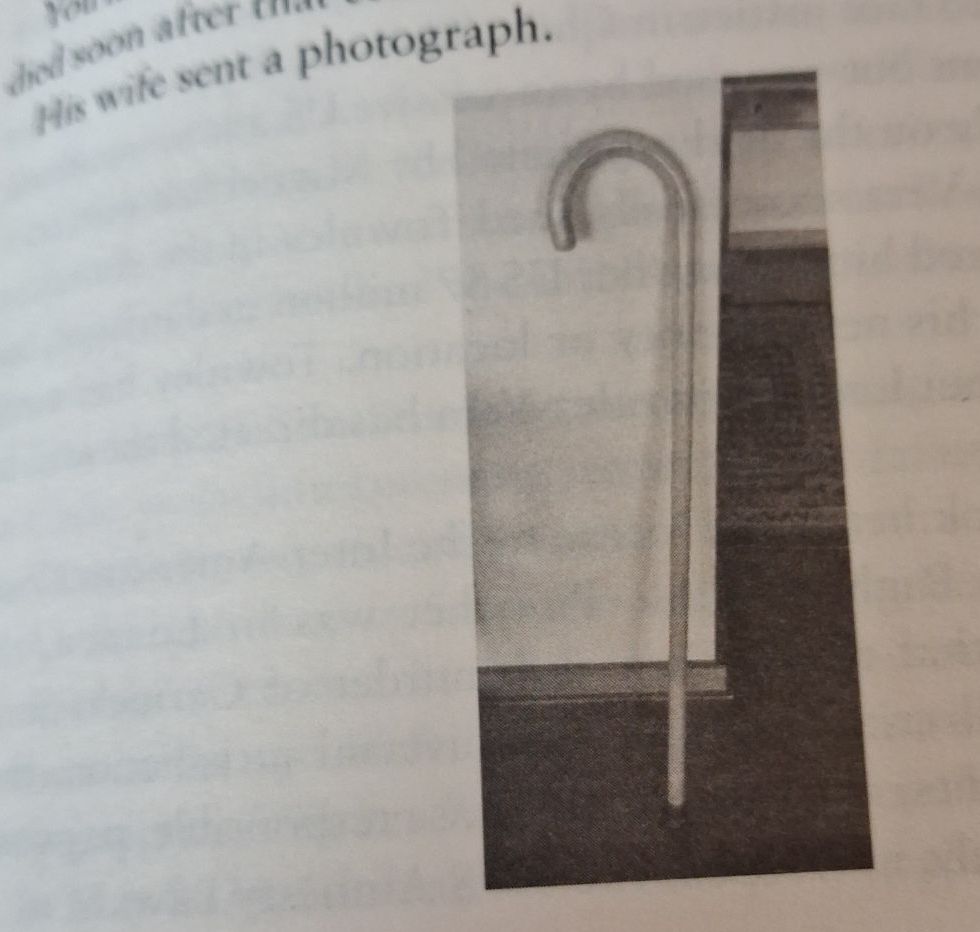
The means of collusion are those that sustain the myth that is unbelievable that those we know with perso al warmth could be guilty of great inhumanity. The best example in this book is Schweitzer, the Jewish lead in Pinochet’s legal defence, who at the end of it all says he would defend Pinochet again should he have to and if he had lived, despite now knowing of the link of the dictator to the application of Nazi methods in the elimination of its constructed enemies:’Knowing what I know now’.He did gbis by being rewarded only by Pino het leaving him his walking stick, which he used to fake frailty and depression when detained in relative luxury in England. In fa t, he only ever got a photograph of the stick sent on by Pinochet’s widow. [10]
What connects Rauff and Pinochet too is a lead yoo complex to folloew but also apparent on the li k of South American divtatorship practices to the adoption of privatisation and the consequent,though far from literal, commodification of life involved. Rauff actually owned a crab canning factory, though later he only managed it for right wing entrepreneurs who wete also his friends and closely linked to the Pinochet project. This fact is closely linked to tje means by which tje disappeared so finally. One firm Pinochet never privatised was the fish processing firm tjat operated from the place where detainees were tortured and where we lose all record of their lives. Perhaps turned into saleable fishmeal for chickens.
With the vision of privatisation went an ideology of efficient management of processes,industrial.or political, removed from human values, which lay behind the creation of DINA, as much as private enterprise. We tend to think of management ideologies as value-free in Post- Blatcherite Britain, a view Andy Burnham atull holds too,but I think there is a link to the hardness of vision that sees life as necessarily sometimes sacrificed to larger goals. Sands’ book ends with a poem that links the processes of efficient management of crab- canning to ‘red stains on the peat’. Tbeze are tne waste products of efficient production,caused by the ‘flexible and transparent cartilage’of the king-crabs killed. The poet is not value-free.
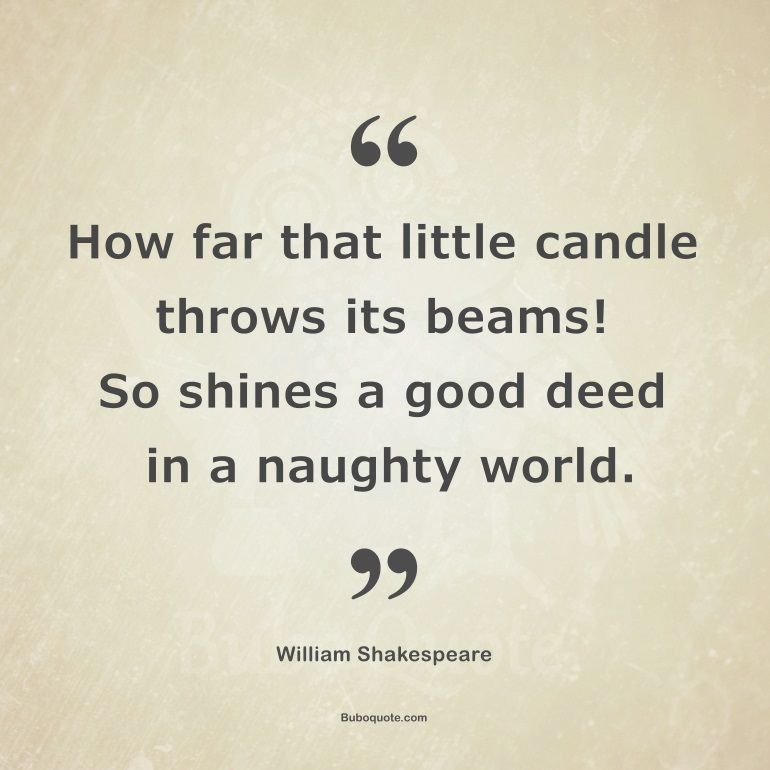
But the true con ecting cartlage of tbis book is not in the evil of some and the cillusion.of many others but in the vision that continues to seek good, even in the law, which may dibiously be the case in Shakespeare’s The Merchant of Venice, though I have long gone past seeing Portia as the incarnation of Christian virtue:
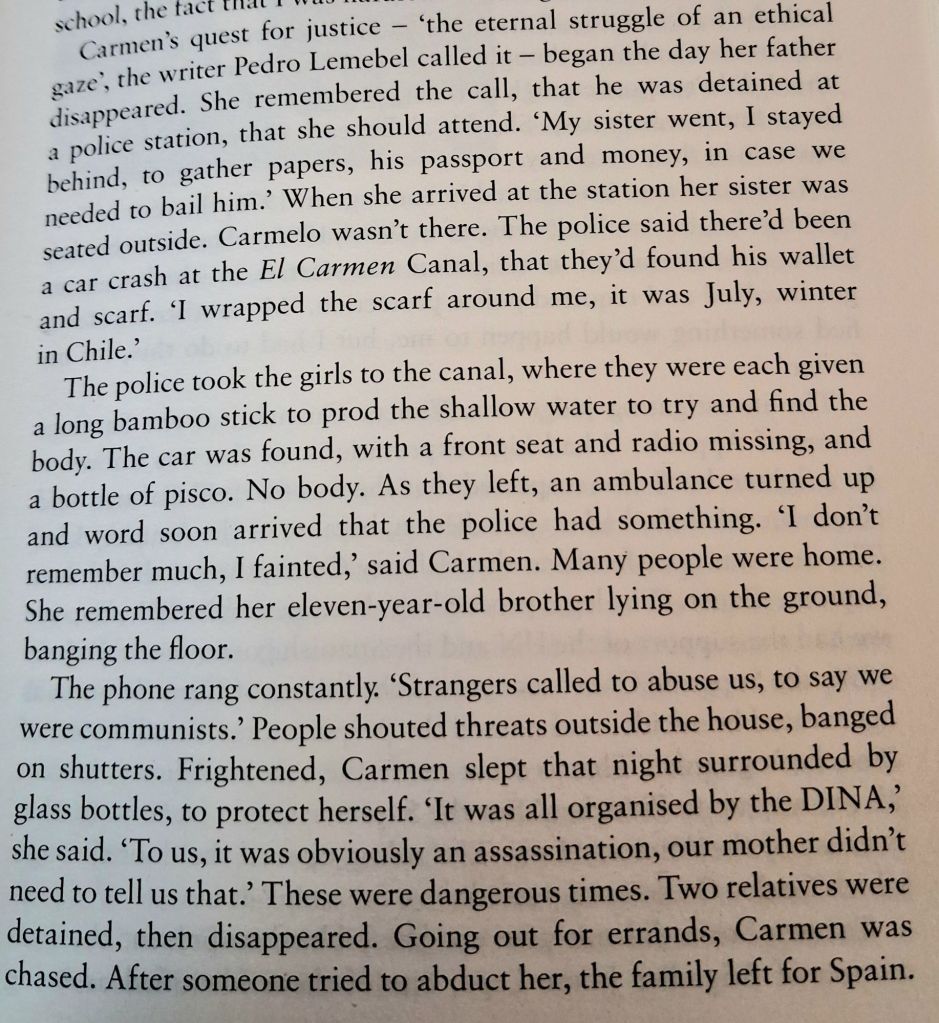
In fact Sands uses a far finer quotation to show the persistence of virtue irrespective of religious ideology in his description of Carmen Soria, the daughter of the man tortured and killed by Townley on behalf of Pinochet at his own house and that of his artist- wife, Marianas, before mentioned. The phrase will stick with me though I did not know its source before: ‘The eternal struggle of the ethical gaze’. [11]
I will desist from writing more because my train to Edinburgh from Durham has just left Dunbar, and I see this event after Douglas Stuart at 12,at 3.30 p.m at the International Book Festival.

Bye for now, with love
Steven xxxxxxx
[1] Phillippe Sands ((2026: 377, First paperback edition [first publ. in hardback, 2025]) 38 Londres Street: On Impunity, Pinochet in England and a Nazi in Patagonia, London, Weidenfeld & Nicholson
[2] My photograph of detail of ibid: 29
[3] King James Version of the Bible, 1 Corinthians 13: 12 For now we see through a glass, darkly; but then face to face: now I know in part; but then shall I know even as also I am known.
[4] My photograph of ibid: 274
[5] Ibid: 384
[6] ibid: 361
[7] My photograph of ibid: 59
[8] Ecclesiastes 12:12: And further, by these, my son, be admonished: of making many books there is no end; and much study is a weariness of the flesh.
[9] Phillippe Sands, op. cit: 374
[10] ibid: 369, as for photograph too.
[11] ibid:


One thought on “The most annoying trope in fictional or non-fictional art is that which pretends that, at the end of the book, everything is resolved. This is a blog on ’38 Londres Street: On Impunity, Pinochet in England and a Nazi in Patagonia’ by Philippe Sands which ends in the same ambiguity with which it started, like life itself. Part 2 of a 2 part blog series.”