


In cascades, folds: verse that gives in to motives that fall away from you and ground themselves.
The fold in Leibniz’s philosophy – considered as an image of thought – has received considerable attention during recent decades, mainly because of the work of Gilles Deleuze. For Leibniz the fold often stands for continuous transformation and change, but it is also often mentioned together with references to folded fabrics.
Friedman, M. (2020). Baroquian Folds: Leibniz on Folded Fabrics and the Disruption of Geometry. In: Sriraman, B. (eds) ‘Handbook of the Mathematics of the Arts and Sciences’. Springer, Cham. https://doi.org/10.1007/978-3-319-70658-0_93-1
What's new? What's not so new? To learn to love
To be is harder now when time's awry,
Off course, of course, when hate the chambers fill
Of power,  thought, and feeling. Much to do
Contends with capacity to do it.

We could once learn the way across fortune's
Ill swaying list: now vertigo cycles
Through governance of not knowing those steps
To take that moves us endwards: not backwards,
Or downwards, falling ever endlessly.

To move or be moved. What's the matter, man?
'I feel not move those things needed to amend
The current time, when motives become dark
Enough to block the flow of blood to its
End!' Why seek the ever certain end of
That flowing river, whose end's uncertain
Except in that it  flow 'ever' onwards.

To learn that thing that's new, unlearn what holds
us back, and moves us on, in cascades, folds.
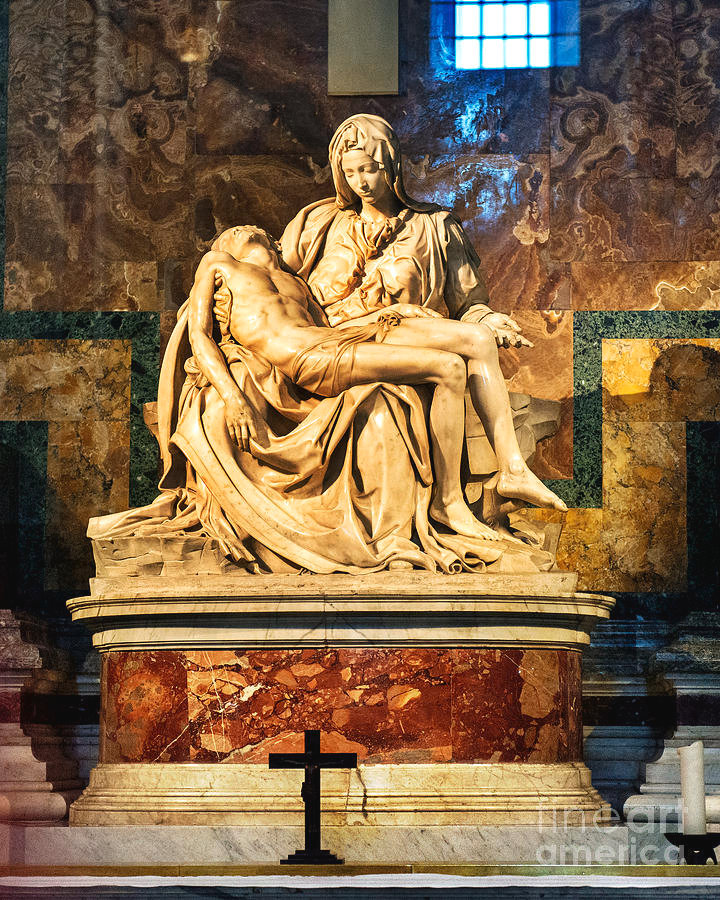
To learn that thing that’s new, unlearn what holds
Why does the ‘Pieta’ of Michelangelo carry our eye down and fold us gently to the ground where motion and emotion end?
us back, and moves us on, in cascades, folds.
 Steve_Bamlett_blog
Love 😍
LikeLiked by 1 person