


‘Should I be fit’ …. to, or for, what?
I suppose by ‘fitness’ what is meant by this question is some kind of body state in which the muscles of the body are appropriately developed in each of their possible functions and optimal to their role in coordination with other muscle groups, and supported by appropriately developed systems for maintaining their use in the nervous system, and other systems of the internal organs. Yet that’s a strange word and really only current, according to etymology.com for the adjective from ‘fitness’ as a noun is derived in 1869, but not used widely in this sense (as an abstract of being) and abstracted in particular from some specific suitability, for military action, or a status in work or the social order until the 1930s:
fitness (n.): 1570s, “state or quality of being suitable,” from fit (adj.) + -ness. Meaning “state of being physically fit” is from 1935.
Of course, transitions in word usage so that they are treated as recognised meanings of a term occur over a period of time and another entry in etymology.com for the adjective ‘fit’ suggests that the trained body (for unnamed or unspecified action) derives from 1869. Beware though such precisely dated claims, they are based on searches amongst material that can be overinterpreted by the researcher.
fit (adj.) :”suited to the circumstances, proper,” mid-15c., of unknown origin, perhaps from Middle English noun fit “an adversary of equal power” (mid-13c.), which is perhaps connected to fit (n.1). In athletics, “in condition, properly trained for action,” from 1869. Related: Fitter; fittest. Survival of the fittest (1867) coined by H. Spencer.
Nevertheless, it seems true that the word had more to do before the advent of fitness training as a social phenomenon with a fitness, that meant, being ‘matched to function and environment’, a thing which therefore varied with a specific environment and a role within it that is relatively settled and not seeking, or predetermined to, development beyond i it is about being fit for life-challenges and the demands these made that are normative for the organism provided it and the environment remain unchanged. Herbert Spencer’s phrase (often mistakenly attributed to Charles Darwin), ‘the survival of the fittest‘ is often used to illustrate this debate. Many apply it as a justification for going to the gym to train the body, assuming those persons will live longest (which can only be a partial truth at nest), whilst Spencer, almost certainly meant it to apply to the notion that organisms survive best the more they adapt to, or fit, their environment. But Spencer’s as a eugenicist thinker opened up the ambiguity too of thinking of fitness of a goal that was its own end. The Nazi Party in Germany as an movement driven by crude, and false, eugenics participated in the Olympic Games in 1936 in Berlin to justify a kind of fitness of the body of what should have been clear a project of racial domination, or domination by an Aryan type over Semitic and Black races, it clearly bruited, In Leni Riefenstahl’s film, The Triumph of the Will, a fitness of body that justified itself abstractly (as Nietzsche’s concept of the will in Nazi interpretation indeed) but did so is self-justifying beauty of appearance in static and dynamic forms especially when equated with fertility myths, through the appropriately angled camera lens:
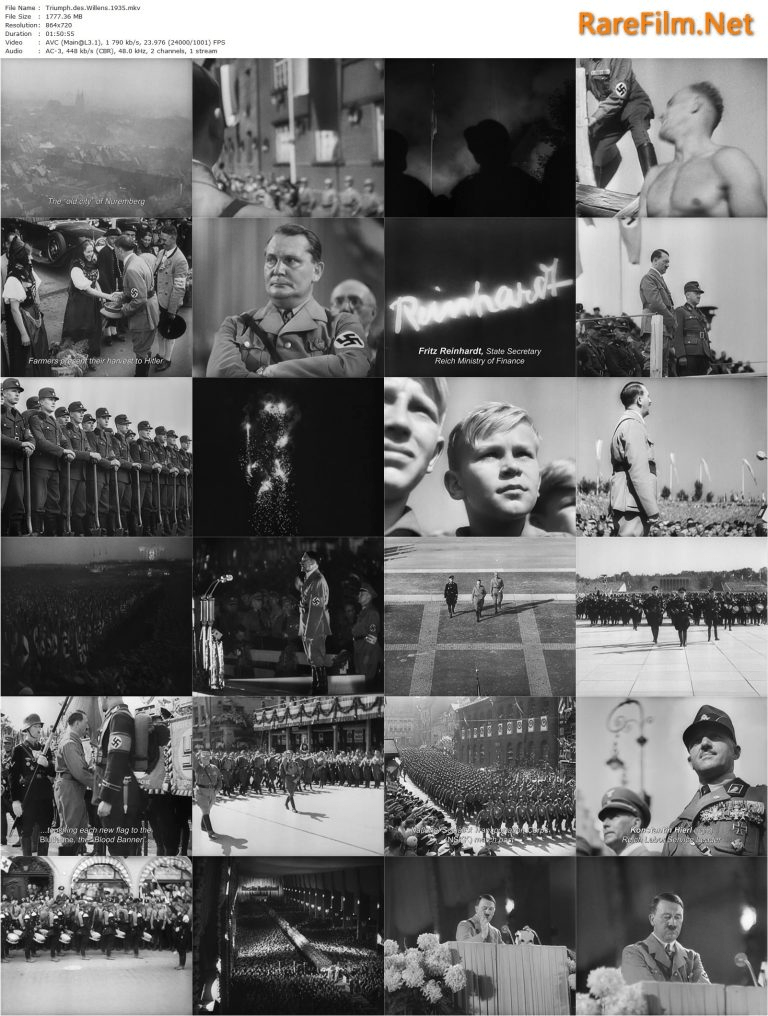
Fitness was proven then by bodily superiority, of which victory was only one element, unlike I think the function of games in Attic thinking, although that too included a view of the how attractive ‘fit’ men (bearing down here on a modern usage), as we see in the older men who hang around gymnasiums to view the beautiful naked young men in training in the gymnasium in Aristophanes’s comedies, it didn’t elaborate from this to superiority of power globally (Sparta may be another matter).
When I read this question, I immediately thought of a favourite poem in which Stanza 7 ends with ‘Should I be fit.’ It isn’t a question in the poem, though it has that quality. It is a reflection on the speaker’s comparative readiness for a task, which is to meet whatever horror might emerge from the Dark Tower, to which end this narrative quest poem laboriously and stickily moves. Laborious and sticky are descriptions of the poem’s quality: which forever find difficulty not only in the task but in justifying that task and the energy it requires and the mistakes along the way it makes possible. The poem is Childe Roland To The Dark Tower Came. Stanza 7 is below:
Thus, I had so long suffered in this quest,
   Heard failure prophesied so oft, been writ
   So many times among "The Band"—to wit,
The knights who to the Dark Tower's search addressed
Their steps—that just to fail as they, seemed best,
   And all the doubt was now—should I be fit.
Here, it is quite clear that two things matter. First, how fitting is the social comparison of Roland to ‘The Band’ of his peers in this quest. Secondly, however, it refers to Roland’s fitness to his task. But the two get mixed up. since all of ‘the Band’ heretofore have failed to end their quest as they wished, is Roland really asking whether he is ‘fit’ to fail as they did. For failure is best, as Andrea del Sarto in another poem by Browning claims, when fitness to success is so suspect of other motives.
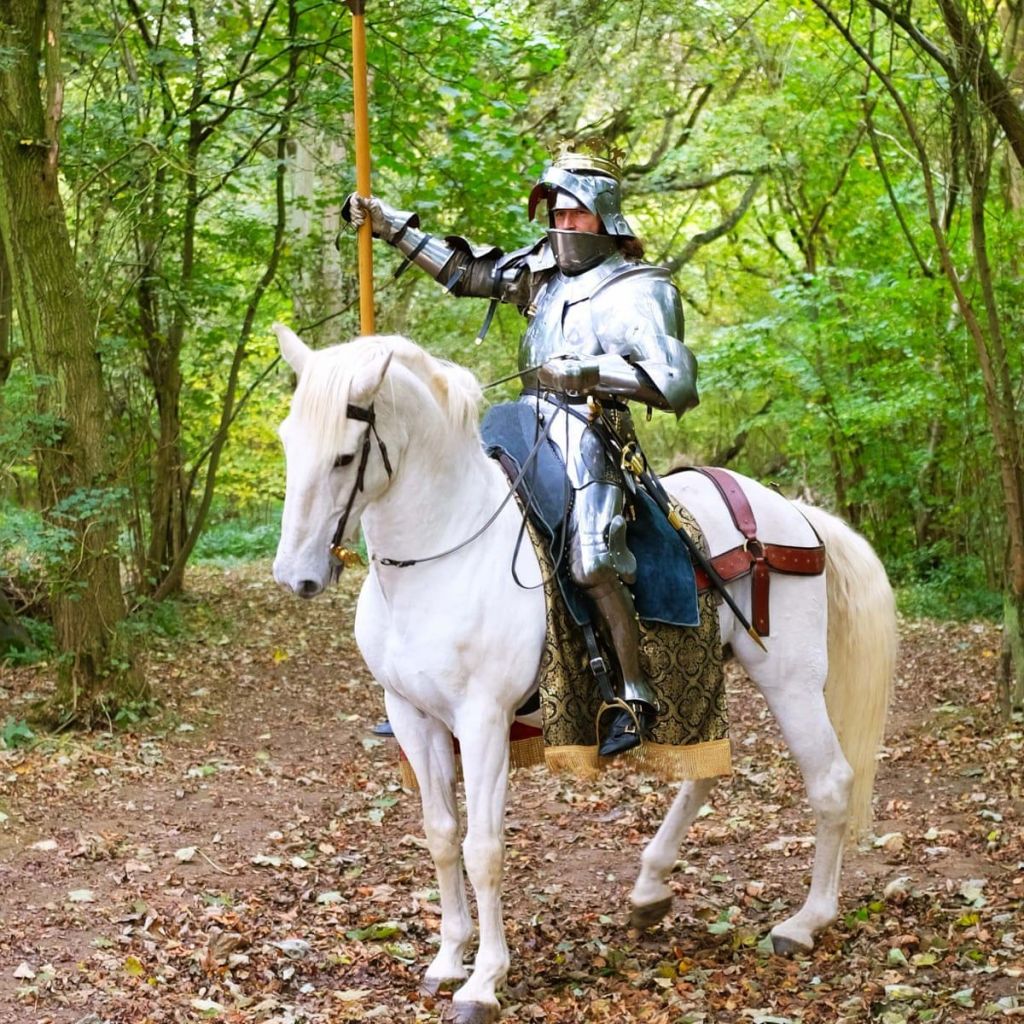
I sometimes think of this when I contemplate the role of the gym in today’s culture of humanity, although numerically it still seems most poignant in the ideology of being a ‘man’. Do women wear fitness outside of sex/gender roles today and with less stress. I wonder? Roland’s quest is definitively a male one. He doubts every use of his trappings of maleness – even those phallic symbols he carries aimed possibly at the very opposite of creative fertility, spearing rather than creating babies out of the fluid world:
20.
So, petty yet so spiteful! all along
    Low scrubby alders kneeled down over it;
    Drenched willows flung them headlong in a fit
Of mute despair, a suicidal throng:
The river which had done them all the wrong,
    Whate'er that was, rolled by, deterred no whit.

21.
Which, while I forded,—good saints, how I feared
   To set my foot upon a dead man's cheek,
   Each step, or feel the spear I thrust to seek
For hollows, tangled in his hair or beard!
—It may have been a water-rat I speared,
   But, ugh! it sounded like a baby's shriek.
And notice the other meaning of the word ‘fit’ (here as a noun – ‘a fit’), here in etymology.com again;
fit( n.2); “paroxysm, sudden attack” (as of anger), 1540s, probably via Middle English fit (n.) “painful, exciting experience” (early 14c.), from Old English fitt “conflict, struggle,” which is of uncertain origin, with no clear cognates outside English. Perhaps it is ultimately cognate with fit (adj.) on the notion of “to meet.” The meaning “sudden impulse toward activity or effort” is from 1580s.
Phrase by fits and starts is attested by 1610s (see start (n.)); by fits is from 1580s and Middle English had stertmele “irregularly, by fits and starts” (early 15c.).
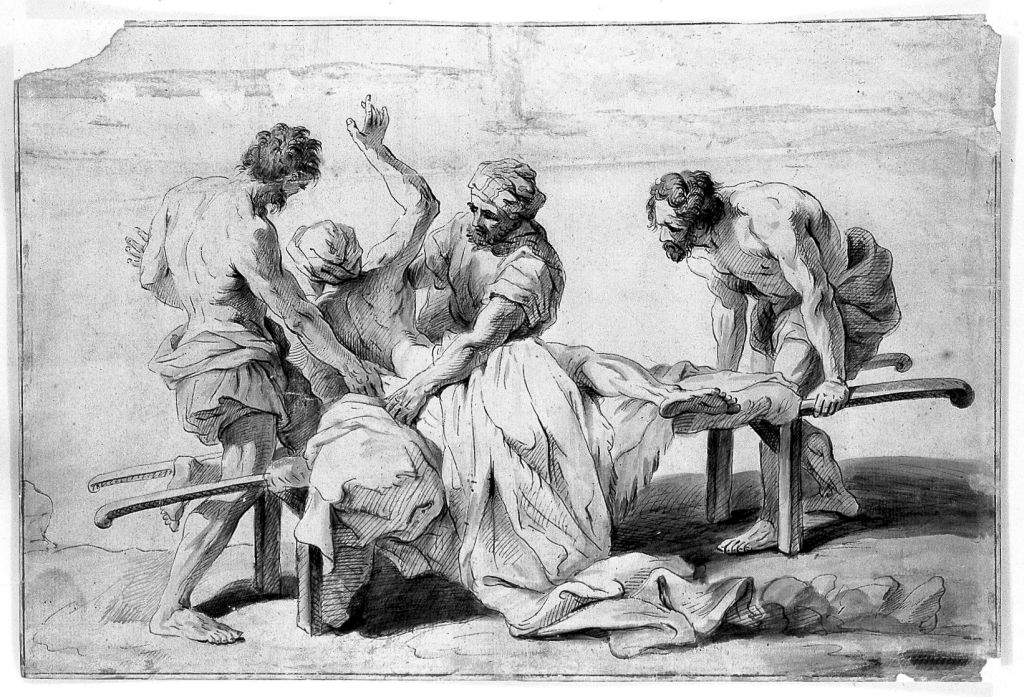
Browning uses the fit here as the prelude a tiny to suicide, sustaing that metaphor throughout to.indicate mental distress, though with bodily symptoms but aimed at some substitute for the agent of wrongs done to home. But the wrongdoers,conceived as the ‘river,’ Roland crosses, rolled on,’deterred no whit’. The noun. Fit comes it is suggested from a different root in Old English, but etymology.com concede that it may share meanings cognate with the adjective., related to the notion of in er conflict between two forces matched in strength.
The conflict that causes a ‘fit’ in that poem is between things that feel themselves as they are seen as ‘low, scrubby’, indicators of class or status, or physical appearance indicative of both, and a thing that is fit and determined to progress, a river, or perhaps even time for which rivers are often a metonmy, a thing whose name is substituted for that for which it stands or represents. A ‘fit’ is perhaps then that conflict that comes between the sense of one’s own inadequacy or ‘lack of fitness’ to aspire to certain progress to some end, whatever that end be.
Every endeavour requires its participants be fitted to its challenges but these days we often make tbis thing called physical fitness its own end, perhaps that itself is a symptom of the fact that we ask, ‘should I be fit’ too much, take on responsibility for a lack of fitness to tasks set to meet other interests than our communal health and well-being, but for the purposes of a force that is insatiable, whatever lives in tje Dark Tower, perhaps the few who claim that our interests are but a reflection of our own, whilst setting demands in which individuals fail as mere recognition of their expendability.
Do I want to be fit for being fodder to the power and interests of the few? Should then I be fit? It is the purpose of communalism that our fitness complements our diversity not our go.ogeneity. do I want to fit in? No. Do I want to contribute? Yes. The standards of my fitness to that are my own to define.
With love
Steven xxxx
 Steve_Bamlett_blog