


You mostly remember the road trip you didn’t take only because the ‘other one’ is an illusion, ‘knowing how way leads on to way!’
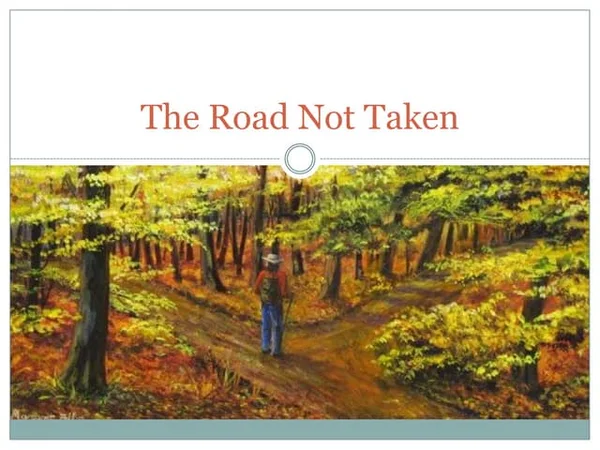
First, let’s read the poem by Robert Frost once again! It is a well-trod road trip – by us and so many more.
Two roads diverged in a yellow wood,
And sorry I could not travel both
And be one traveler, long I stood
And looked down one as far as I could
To where it bent in the undergrowth;

Then took the other, as just as fair,
And having perhaps the better claim,
Because it was grassy and wanted wear;
Though as for that the passing there
Had worn them really about the same,

And both that morning equally lay
In leaves no step had trodden black.
Oh, I kept the first for another day!
Yet knowing how way leads on to way,
I doubted if I should ever come back.

I shall be telling this with a sigh
Somewhere ages and ages hence:
Two roads diverged in a wood, and I—
I took the one less traveled by,
And that has made all the difference.
We all know that poem. We quote it even with we don’t, preferring to think that it’s most romantic and ideological of clichés applies especially and directly to us, our little ego bigging itself up in a world that is largely indifferent to any imago of the self that isn’t the product of celebrity and, at root, the stage machinery of appearance. We all fancy that the world was once simpler; that it once (and only once) offered two roads trips that equate with the way we represent our life. And that simple screen – memory of having been given one simple binary choice aligns us with the ‘ich’ / ‘I’ / ego of that of the lyric voice-bearer in the Frost poem:
Two roads diverged in a wood, and I—
I took the one less traveled by,
And that has made all the difference.
Call me a fool, these lines imply (or so I have always thought before now), but I took the risky path – the one few choose – and this has differentiated the me that was that choice’s product – ‘has made all the difference’. Note how ‘one’ choice’ expands into the ‘all’ of difference, the delineation of personality. No-one call;s me a fool now, the lines echo back, for I have achieved what few do. But wait …! The canonical reading of the poem rests simply there:
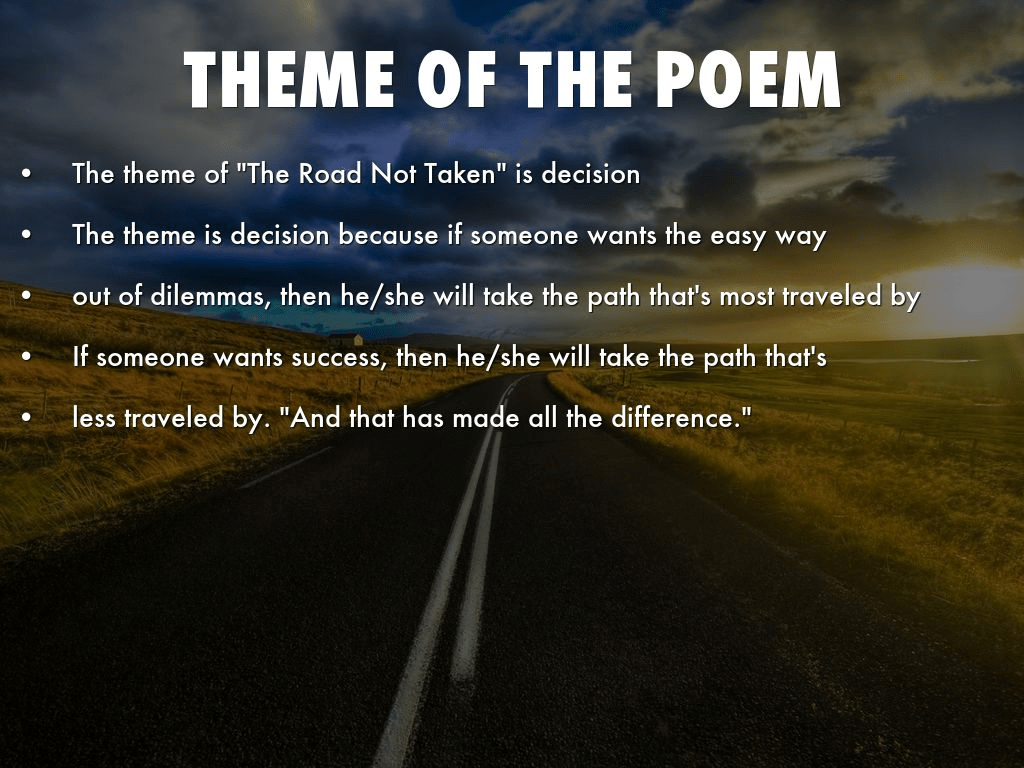
In fact I find that canonical reading unsupportable in close reading. Is that what the poem says – Does it say that ‘one’ path is trod by many, the other (the chosen path) by few. In fact it does not say that at all, though the idea it does promote is somewhat obscured in the poem’s expression. What I think it it says is that: ‘after all as I weigh up my choices, (ridiculously) reduced from many real to two fancied options, imagined as two roads – in a world where that kind of reduction of choice-making is entirely fanciful and mythical – I know I would rather ‘travel both / And be one traveler‘. That is, I want to have diverse experiences of my future journey simultaneously – to be in both choices, not located in ‘the difference’ to me choosing one involves. And note that only one person before me could have trod the path ‘more traveled’, a pretty thin and limited example of how more exceeds ‘less’. If that wasn’t so, how could the traveller choosing the path that ‘wanted wear’ marked on its grassy surface notice that the paths though ‘different’ also ‘looked the same’ once his choice of ‘passing’ down the one less travelled was in motion. These are the obscurest lines of the poem:
Though as for that the passing there
Had worn them really about the same,

And both that morning equally lay
In leaves no step had trodden black.
What could that mean but that even if we choose one path over another, because one ‘other’ person has chosen the first we looked at, then once we ‘pass’ by on the other road both will have the ‘same’ grassy wear and tear. In fact the difference between the paths will be obliterated by our choice. However, in fact the lines are obscure because they can only work if we admit to the fiction of the choice the poem describes to us, the fiction of how we make ourselves different from what we might have been on that other road trip we did not take, for each is not shaped mainly by its direction but by the experience of ‘passing there’ which wears it to be the same as the path one other took. That line that ‘ both that morning equally lay‘ lays bare the fact that they only looked different before I chose one over the other, and vagueness of time specification in ‘that morning’ suggests that may have been the case actually before the choice was made – but that the similarity went unnoticed just because we needed to see our choice-making as ‘making all the difference’.
And, of course the simplistic notion that that there are only two paths (much promoted in Christian allegory) is the problem here. It is a trope and only that the idea of the one other alternative way. In fact it is the same trop as in the opening of Dante’s The Inferno:
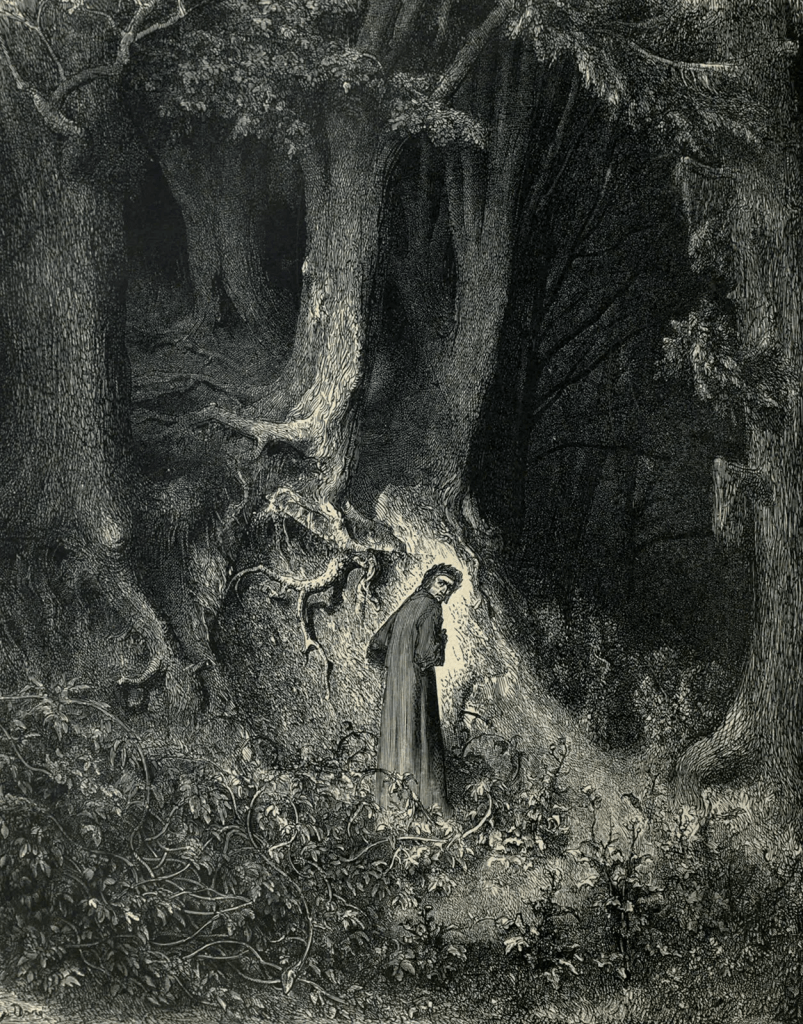
Midway upon the journey of our life
  I found myself within a forest dark,
  For the straightforward pathway had been lost.

...

I cannot well repeat how there I entered,
  So full was I of slumber at the moment
  In which I had abandoned the true way.
Dante’s lyric persona just stumbled on the wrong or untrue path, whilst Frost’s determines he had made that choice and made it specifically, and for a reason, though the reason seems to be fallacious at the same time he made it. Indeed Frost’s persona only felt he could make the choice because in your youth, you always think – if this goes wrong I will return and go on the other path.
The poem itself shows how fallacious a choice that is of a way of living, when you want to sample more than one way:
Oh, I kept the first for another day!
Yet knowing how way leads on to way,
I doubted if I should ever come back.
It is not only that return to a primal choice of the road trip of life has been exposed as the myth it is, but that we know that choice is itself a kind of myth. You can’t ‘come back’ to it because it never existed in the way you imagined. Deep down we know that, and how, ‘way leads on to way’. And this is NOT because you know there will be a straight path hence forward but that we may be more ‘lead’ to go the way the go than choose. And the roads we take will not be two, nor the persons choosing them just one who wishes he was two (and had the best of both futures) but be among the many whose destiny is obscure – whose path is entirely accidental often, even if apparently chosen for a reason. The roads to any future are not binary but multiple and vary in their ability to have any defined goal. I have, sort of, considered that in another blog (linked here), which used a figure I found on the internet of the manner of how roads work, which I’ll give again here:
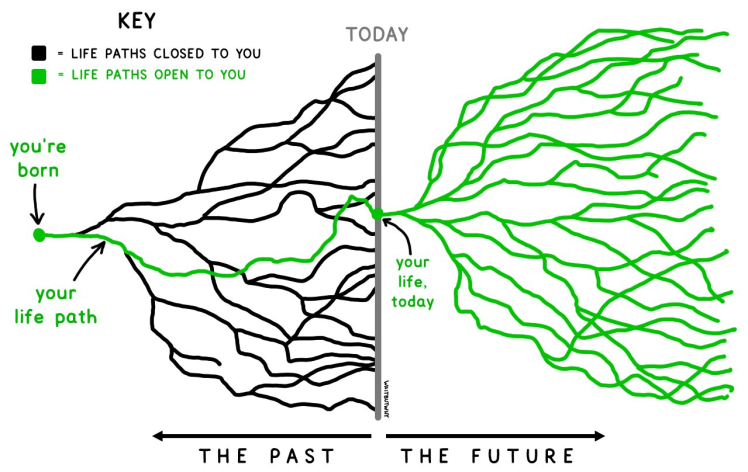
They are never just binary those life determinations and never JUST a matter of choice, although some make choices that had true and sole agency (or were empowered to be so by privilege – another agency in truth) and they can be a matter of being ‘led’ not chosen. And some end in ways that can’t be foreseen. In fact the idea of the choice of two roads is usually a fantasy in a story told by an older person (true of Dante too) in some way justifying their life’s ‘difference’, if in fact, it is a difference:
I shall be telling this with a sigh
Somewhere ages and ages hence:
Two roads diverged in a wood, and I—
I took the one less traveled by,
And that has made all the difference.
What that final few lines says to me is that we imagine our past life paths in ways that can be told in simplified fable and which justify our joy and sadness, such as we imagine it will be ‘ages and ages hence’. Nothing ever was as we remember it in time, for we reconstruct time sequence in imagination as evidence of the meanings we want to get out of our experience. In brief there never were two roads only and never are they the reason we are different in the now we foresee.
And sometimes I wonder if the wood with its yellow ‘leaves’ was a book of blank leaves (page leaves) that print treads ‘black’. Try that out:
And both that morning equally lay
In leaves no step had trodden black.
Oh, I kept the first for another day!
Yet knowing how way leads on to way,
I doubted if I should ever come back.
Is the poem about how the poem I write has become the poem it is. Your choice. Now ‘think back on your most memorable road trip’. You will find it hard to not fictionalize it.
Bye for now.
Love
Steven xxxxxxxxxxxx
 Steve_Bamlett_blog
One thought on “You mostly remember the road trip you didn’t take only because the ‘other one’ is an illusion, ‘knowing how way leads on to way!’”