


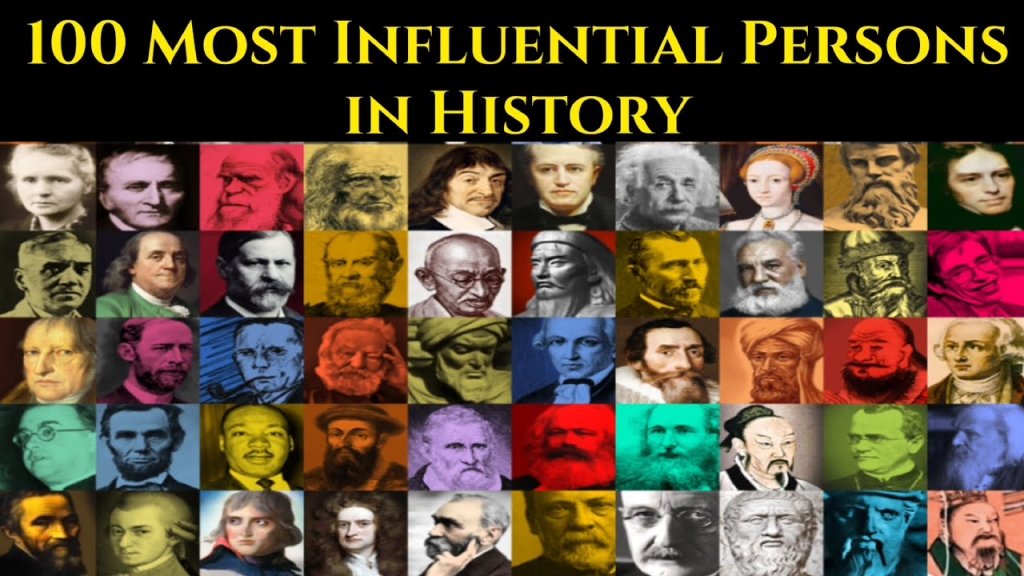
My answer to this prompt question is vague, isn’t it? It deliberately employs an archaic usage of the word ‘who’ that has no clear referent but nevertheless does not explicitly ask a question? It is differentiated from tje conventional usage in the following Ai supplied dictionary definition:
Who – a pronoun, that has an archaic usage in which no intention of seeking the more precise identity of a person (see below).
- what or which person or people:“who is that woman?””I wonder who that letter was from”
- used to introduce a clause giving further information about a person or people previously mentioned:“Joan Fontaine plays the mouse who married the playboy”
- archaic: the person that; whoever:“who holds the sea, perforce doth hold the land”
The archaic usage isn’t quite complete for even in the example given, ‘who’ probably refers to a nation state or prw-national power base, rendering it into something like: ‘whichever political power base controls the sea necessarily controls the land‘. It is, after all, very much like the presumed basis of English imperialism since the building of maritime and mercantilist power, and as a proverb is often associated with Alfred the Great’s establishment of hegemony over England through appropriate naval policy.
So how does that translate my archiving blog title. It is perhaps readable as: ‘Whatever persons, groups or things that are the largest influences on (or most influence) my life,those persons, groups or things will be the foundation of the identity that defines me and the root of that identity’s future in life‘.But we need also to understand what influence can be or mean (as a noun at least). It’s etymology reads thus, on etymonline.com.
influence (n.): late 14c., an astrological term, “streaming ethereal power from the stars when in certain positions, acting upon character or destiny of men,” from Old French influence “emanation from the stars that acts upon one’s character and destiny” (13c.), also “a flow of water, a flowing in,” from Medieval Latin influentia “a flowing in” (also used in the astrological sense), from Latin influentem (nominative influens), present participle of influere “to flow into, stream in, pour in,” from in- “into, in, on, upon” (from PIE root *en “in”) + fluere “to flow” (see fluent).
The range of senses in Middle English was non-personal, in reference to any outflowing of energy that produces effect, of fluid or vaporous substance as well as immaterial or unobservable forces. Meaning “exertion of unseen influence by persons” is from 1580s (a sense already in Medieval Latin, for instance Aquinas); meaning “capacity for producing effects by insensible or invisible means” is from 1650s. Under the influence (of alcohol, etc.) “drunk” first attested 1866.
That is a powerful origin for a noun, that uses the term that parents the term ‘flow’, as in ‘flow of water’ from a force thought to stem from the supposed power of the astral realm to act ‘upon one’s character and destiny’. Its important to notice that what FLOWS is not essentially a description of a visible physical phenomenon but of the force that creates the phenomenon and makes it visible and/or audible to us or felt by us on our senses that register pressure exerted. I want to capture those arcane meanings in my answer – to insist that the effect that shape me, as an identity (an id-entity, a thing that is the ‘it’ I call myself) is not just a reflection in me or upon me of an image, representation or appearance but a FORCE, flowing onto me, and perhaps into me, and informs me – my behaviour, emotion, thoughts and senses – and my interpretations thereof. These forces can act for good or ill and not always declare their origin.
Perhaps the best studies of such forces and the reactions of acceptance or rejection, alliance or resistance are always in drama for drama shows identities and destinies emergent from forces, often contradictory ones flowing from persons, groups or things. Ibsen and Chekhov are probably the richest examples after Shakespeare – and the Ancients before he. The Ancients often ‘personified the Forces’, like the Furies who are transformed into the more contained Eumenides in Aeschylus’s The Oresteia, although sometimes those forces themselves emanate from the magical thinking of persons or iconic types – like complex mothers (in this series of plays, Clytemnestra). Indeed, most forces of INFLUENCE in drama tend to be parental – in the iconic form of Gods in Greek drama sometimes but also in the ‘human’ dramatis personae. In Shakespeare, the parents can be Kings and Queens but their force is baneful, on both their biological or social children (by the latter I mean the children of a nation). But best of all are those parental forces must be taught their limitations (the limitations of influence) in order to allow agency in their children. I think this is the case in Arthur Miller’s plays, for instance.
Let me leave this set of thoughts here however, as something I may return to. All influences generally become targets of resistance, for they have their own agenda. And this is too much to apply to an instance from my own life yet.
With love
Steven xxxxxxx
 Steve_Bamlett_blog