


I suppose the key word here – the one that should set warning bells ringing is ‘unproductive’, for as a word it has long differentiated from what seem to be a synonym, non-productive. Yet since the words are often confused the term ‘counter-productive’ has been invented to show that their scale of the unproduction from non-production to depleted or less than optimal productive activity.
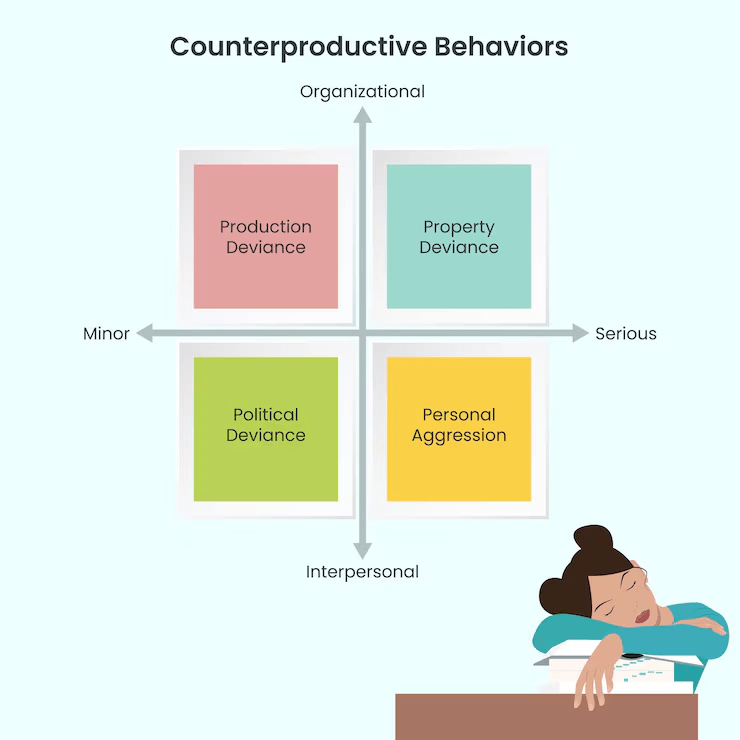
For to be unproductive is not to produce nothing but to produce things considered to have no value as a commodity, or exchange-value, or less value than the same effort might have ‘produced from it’. It is commonly a meaning derived from Adam Smith’s comparison of ‘productive’ and ‘non-productive’ labour. Here the passage cited in Wikipedia:
There is one sort of labour which adds to the value of the subject upon which it is bestowed; there is another which has no such effect. The former, as it produces a value, may be called productive; the latter, unproductive labour. Thus the labour of a manufacturer adds, generally, to the value of the materials which he works upon, that of his own maintenance, and of his master’s profit. The labour of a menial servant, on the contrary, adds to the value of nothing. Though the manufacturer has his wages advanced to him by his master, he, in reality, costs him no expense, the value of those wages being generally restored, together with a profit, in the improved value of the subject upon which his labour is bestowed. But the maintenance of a menial servant never is restored. A man grows rich by employing a multitude of manufacturers; he grows poor by maintaining a multitude of menial servants. The labour of the latter, however, has its value, and deserves its reward as well
— Adam Smith, The Wealth of Nations, Book 2, Chapter 3 (Andrew Skinner edition 1974, p. 429-430)
The whole thrust of this argument depends on the rise of capitalism and the primary means of adducing the value of a thing, or activity – an ambiguity in valuation seized upon by Marx to elaborate the ‘surplus value’ theory of labour – of added value being based on the increasing over-exploitation of those who do the work to yield increased return on invested capital. That exploitation is only measurable though in terms of economic exchange activity – that based in the exploitation of exchange values – and this is why Adam Smith considers the role of servants as unproductive, even if it is not non-productive. Lots of activity could be said to be like that of service that is not itself a commodity – as in service industries, where service is bought and sold, and has value added by exploitation – take the worlds of art and craft, activity that has an end in itself rather than in the production of surplus – profit to be brief.
Hence to be ‘unproductive’ is not an antonym of ‘lazy’, or not working but of ‘not working productively’ by force of ‘unnecessary’ human time and motion being given to that not valuable in economic terms but in some other criteria of value – aesthetic, ethical or even of unmeasured satisfaction and well-being, those feelings that we can call ‘free’ of monetary value. Or we should say free of monetary value yet – for we will increasingly see the commodification of pleasures like joy in nature, in sky, air – as we have already done in relation to ‘water’.
Laziness is the the name Gradgrind gives to things that can’t be assessed economically – like Sissy Jupe’s reflections gazing into the flames of a household fire in Hard Times. Time becomes a hard instead of a soft commodity when it is subject to forced exploitation into saleable product. Resting is, unless calibrated as a means of increased productivity after and owing to that rest (in which case it is conceivably saleable) like the bourgeois holiday dream in Lake Garda or the supposed special beds of a Premier Inn.

Being lazy is an activity or a reduction in the intensity of an unpleasurable but profitable activity that serves interests other than one’s own, or that of a community not defined by economic activity, such as a work team. or forced labour camp. It is the means of invention according to the artist Malevich writing in 1921, even in socialist societies who devalue it (despite, as he thought, being its offspring, he is thinking of the USSR) as much as capitalist countries do:
People are scared of laziness and persecute those who accept it, and it always happens because no one realizes laziness is the truth; it has bees branded as the mother of all vices, but it is in fact the mother of life. Socialism brings liberation in the unconscious, it scorns laziness without realizing it was laziness that gave birth to it; in his folly, the son scorns his mother as a mother of all vices and would not remove the brand; in this brief note I want to remove the brand of shame from laziness and to pronounce it not the mother of all vices, but the mother of perfection.
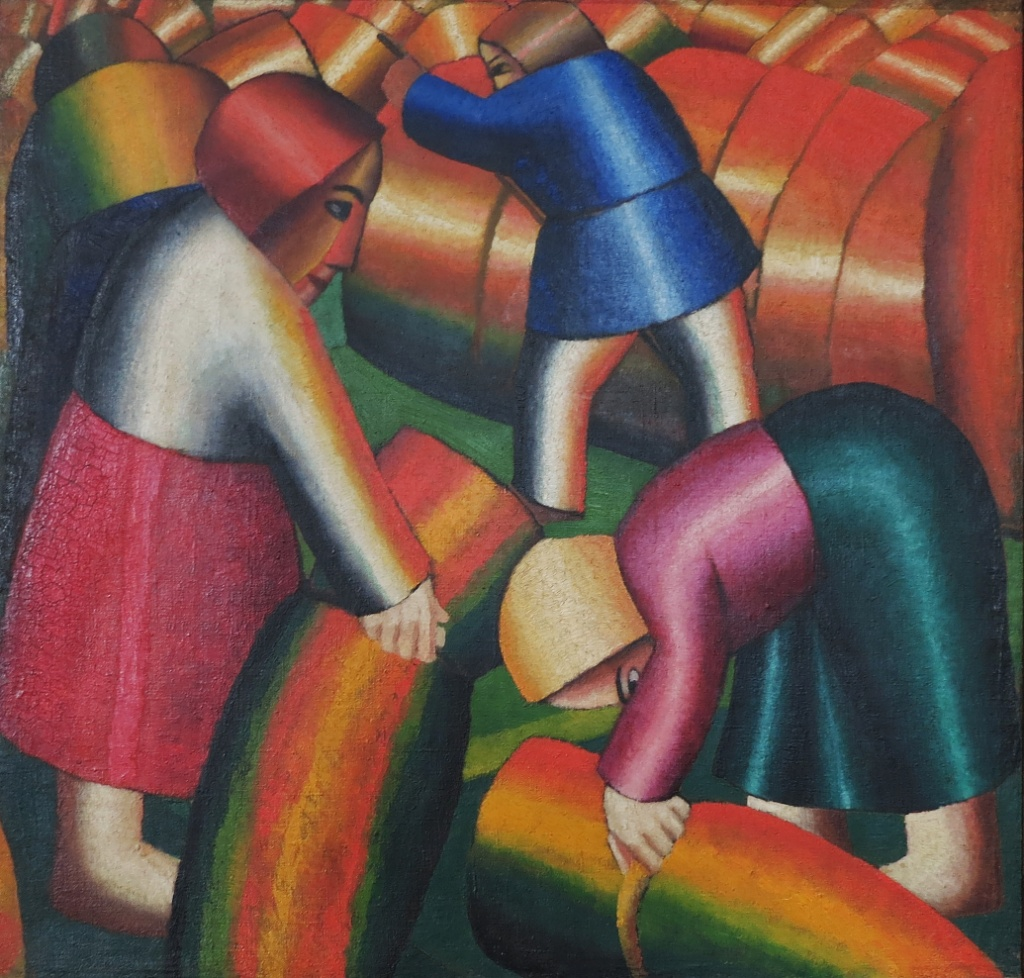
Malevich’s ‘Taking in the Rye’, looks like the dissection of a rainbow
The aim of labour is to reach the opportunity for all ‘to be a bum’ in the surplus hours that went into productivity – which is in fact ‘waste’, Malevich concludes. I’m sure Malevich has an idea in there somewhere. Lol.
All my love
Steven xxxxxxxxxxxxxx

