


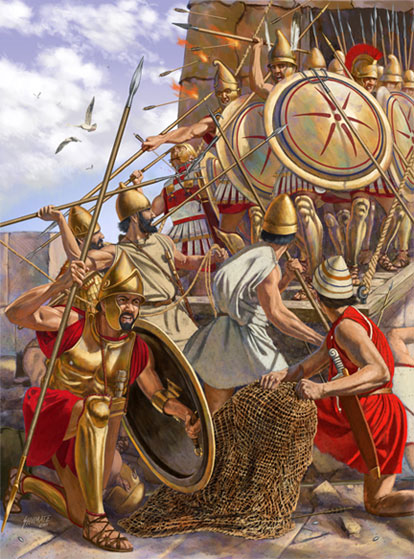
Heritage is the subject of the moment and has an will continue to be a bone of contention. In truth we inherit nothing that from the moment of our possession of it does not metamorphose, either in its interpretation cognitively and emotionally or even its physical appearance and being, were it not so there would be no room for the ancient dramas and artworks that show how tricksy inheritance can be. The Attic Greeks made familial inheritance the cornerstone of their culture, in part to show that the transition from monarchy and oligarchy in their social systems had enormous consequences to the notion of what is enduring in our lives, and the source of its woes. Most of their tragic dramas – those extant at least – circle around the stories of patriarchal familial inheritance and conflict: being stories of great family transitions, usually that fall into conflict where harmony is expected because inheritance is expected. Think of the great family dynasties, all chosen by Athenian dramatists from ancient (even in the 5th century BCE) families of other city states than Athens – almost as if to distance Athens from the problems that social organisation around culturally accredited biological (and biological alone since the story of being born illegitimately – i.e outside familial recognition runs through it) transmission of cultural, social and political value.
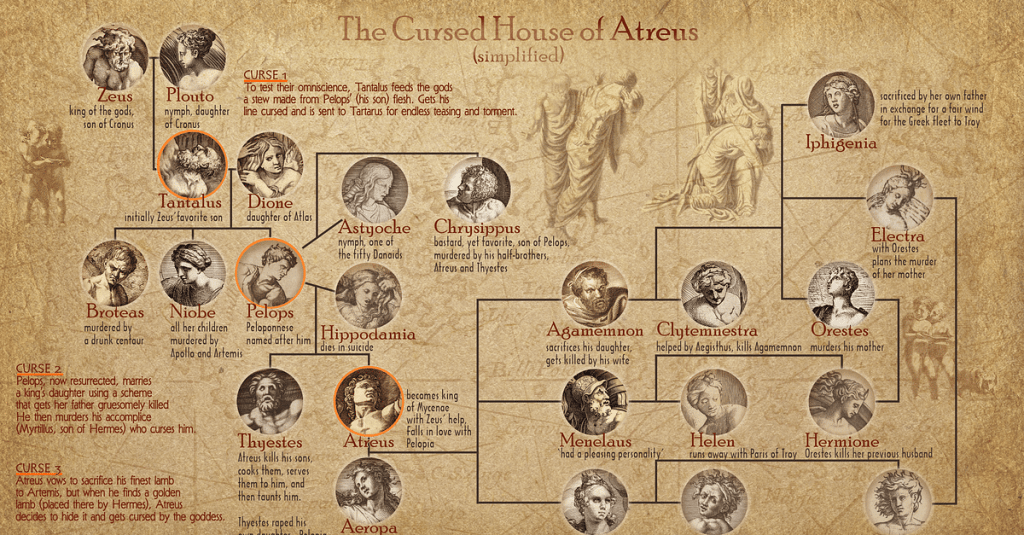
The House of Atreus provides the clearest example, supposedly rooted in the mythical-historical royal houses of Mycenae and Argos – and following how the transmissions of heritage are often the sources of conflict that links the supposed sins of fathers to the continuing generations but also, as it were showing how the familial structure itself has conflict implicit in it, down to the pursuit of Orestes, the son of Agamemnon and a murderer of his mother in revenge of her murder of his father, by the insanity of the Furies, tamed only by being institutionalised eventually by the Athenian State to which Orestes flees with them close behind him as a principle of communal peace, as Eumenides.
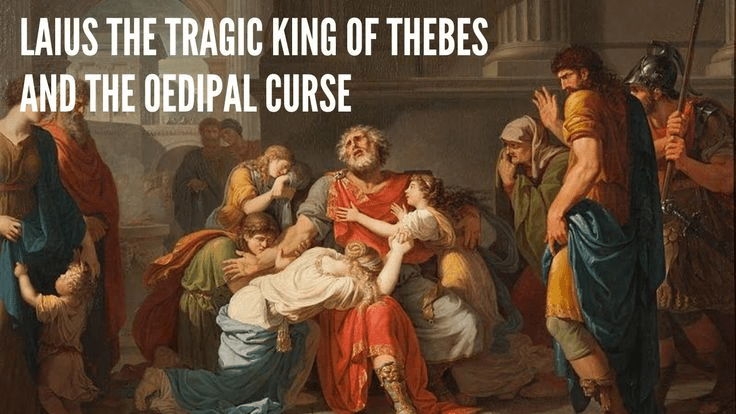
More telling still the House of Laius, supposedly cursed by Laius’ rape of the son of a royal house in which he was staying but whose familial tragedy centres on the son of his, who murders him, Oedipus, and goes on to mess up familial heritage by having children to, unbeknownst to him, his mother Jocasta, children who are also his sisters and brothers. Those children too cannot contain the gift of the inheritance of the state of Thebes, torn between loyalties to each other, the state and their desire to own the whole of their inheritance – it is a story that leads to war between Oedipus’ brothers-sons, the death of both and the crime of Oedipus’ daughter-sister, Antigone, in refusing to disfavour the brother chosen arbitrarily to represent the criminality against the state, and bury him with as much honour as his brother.
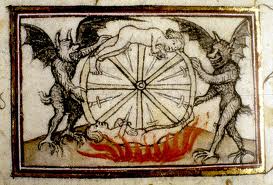
The tradition in drama passes to English Literature through schooling in the classics but nevertheless continues to show that transmission through biological-cultural inheritance remains complicated, not least in Shakespeare’s history plays, but classically in his Hamlet, King Lear and Cymbeline. Take King Lear in which two fathers (the King himself and the Duke of Gloucester, his main courtier) fail to understand that they are not in control of the heritage they pass on merely because they are biological fathers. Their failure to understand that heritage is not a process of change and metamorphosis leads to them having to learn that lesson a very hard way, like Ixion, ‘bound upon a wheel of fire’ that ‘mine own tears do scald like molten lead’.
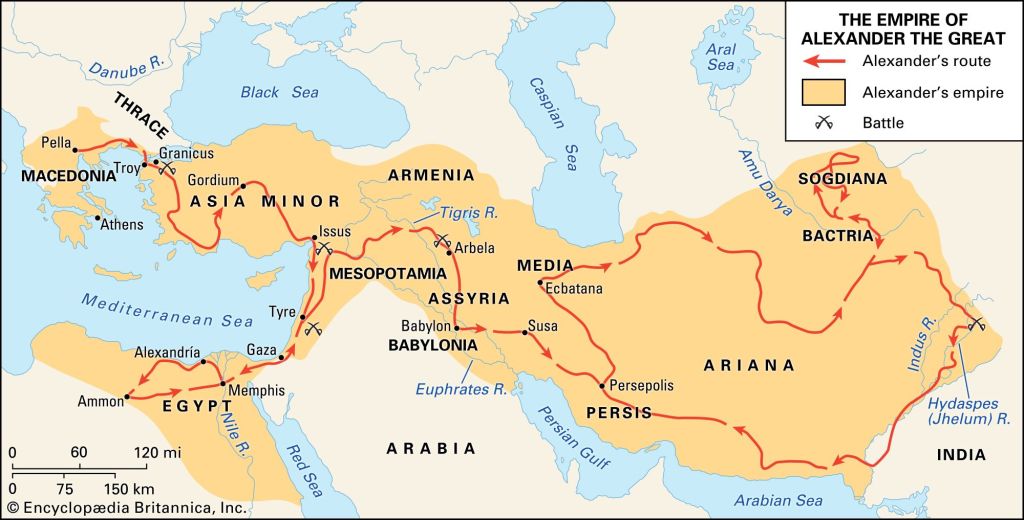
The problem for Lear and Gloucester has always been the problem of tyranny by familial descent as the Attic democratic reformers knew – the state of Athens made steps to stop the rule of Athens by localised familial blocks passing down their power and family centred traditions within themselves alone (as the great Houses had done for a long time and to the cause of what seemed to Solon eternal conflict. The great Athenian city-state lawmakers created demes that crossed the boundaries of the old internal geographical areas of the Attic State. The great democratic state did not survive the power of these aristocratic families, and the Athenian state fell eventually and through complex historical process through oligarchy to conquest by another city state – that of Alexander of Macedon – who continued self-interested takeovers unril he thought the world was his and him..
As the county I live in (is it Great Britain or England – they want us to be confused here) is redecorated by St.George flags, we are asked to see that as the resurgence of the principle of heritage – a heritage that belongs through biological transmission (hence the racist and norm-defending edge of this tendency – an edge transforming daily into a block of aggression). after all it is easy to think that birth alone gives you entitlement as a right rather than as an accident (but that this is ideological was the purpose of Greek and Shakespearean tragedy showing how accidental birth as a function of biological insemination can be – and why Renaissance drama is so full of ‘Bastards’ – often called just that).

But what the right-wing reactionary movements called the Union of the Nations and Reform fail to show us is that their is such a mismatch between the notion that birth makes each person feel that which they are and the violent thuggery and reliance on militias controlled by the few who will remain in charge. We inherit nothing but are told . We find ourselves defending it from the ‘accusation’ that what we have is ‘nothing’ – just a limp flag, that does not make us one with Henry V at Agincourt. Even marchers on the vile demonstration in London did not in truth ‘hold their manhoods cheap’ because all they can do is hold up a limp flag.
We few, we happy few, we band of brothers;
For he to-day that sheds his blood with me
Shall be my brother; be he ne’er so vile,
This day shall gentle his condition:
And gentlemen in England now a-bed
Shall think themselves accursed they were not here,
And hold their manhoods cheap whiles any speaks
That fought with us upon Saint Crispin’s day.
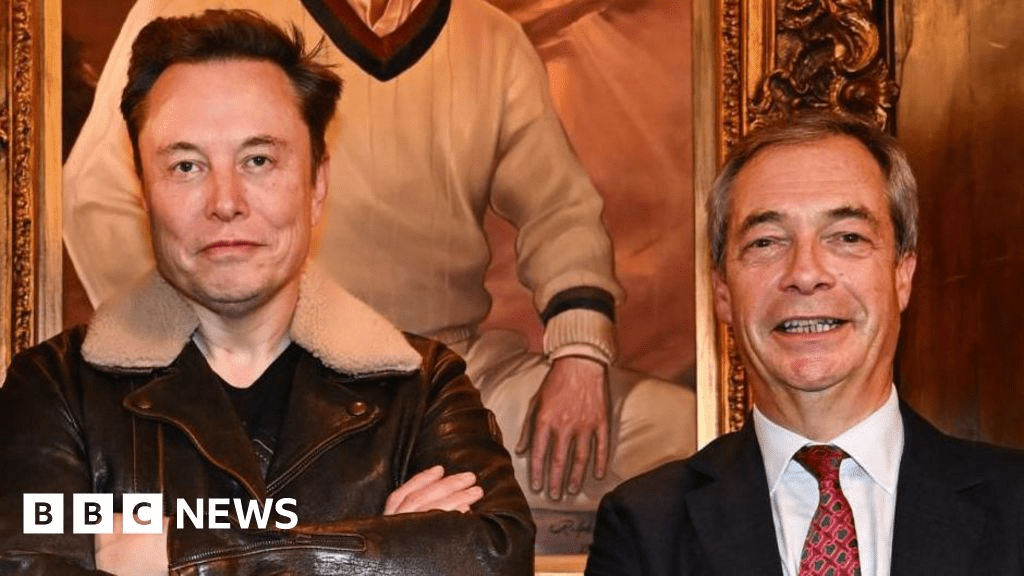
When we rely on our heritage it will not be long before lawlessness and illegitimate power takes over – Bastards in Shakespeare (like Edmund the son of Gloucester out of wedlock) is not really any more than a symbol of the same principle that drives Elon Musk, Stephen Yaxley-Lennon (Tommy Robinson) or Nigel Farage but to call the B…ds is an insult to the truth that birth follows accident as well as law and custom. What we inherit we can allow to change into good and pass something decent down to our successors – for who at the moment I have not much hope. Don’t have sleepless nights because of my last photograph.
With love and hope of better days
Steven xxxxxxxxxxx
 Steve_Bamlett_blog