



The idea of winning the lottery – or winning the pools as was the norm when when I was a child and before the advent of a state lottery in the UK – may have appealed once as an means of evoking impossible resolutions to real problems – real or relative poverty, economic insecurity and day -to-day experience of basic needs being unfulfilled. That is an idea the cartoon above plays with but it adds a proviso – some desires may not be capable of being fulfilled like the hope of longevity, freedom from proneness to illness that come at some time and more frequently as we age, however much we invest in our fitness. But sometimes the problems the idea of huge chance gained fortune comes from lives not locked in poverty at the level of needs but of locked in disordered idea where wishes have bloomed so fast into wants, desires and felt needs that they can only invoke fantasy. When the UK first had a lottery it was drawn from huge fancifully machines given fantasy names – the best known being Guinevere, as if the idea of a lost way of life, that rich not only in money but also power and sexual excess, could also be evoked.Guinevere is unnecessarily complicated for its purpose of random number selection but its bulk, materiality and absurdity, as it played with our desire amidst a Saturday night popular show was necessary. Guinevere now sits in the British Science Museum:
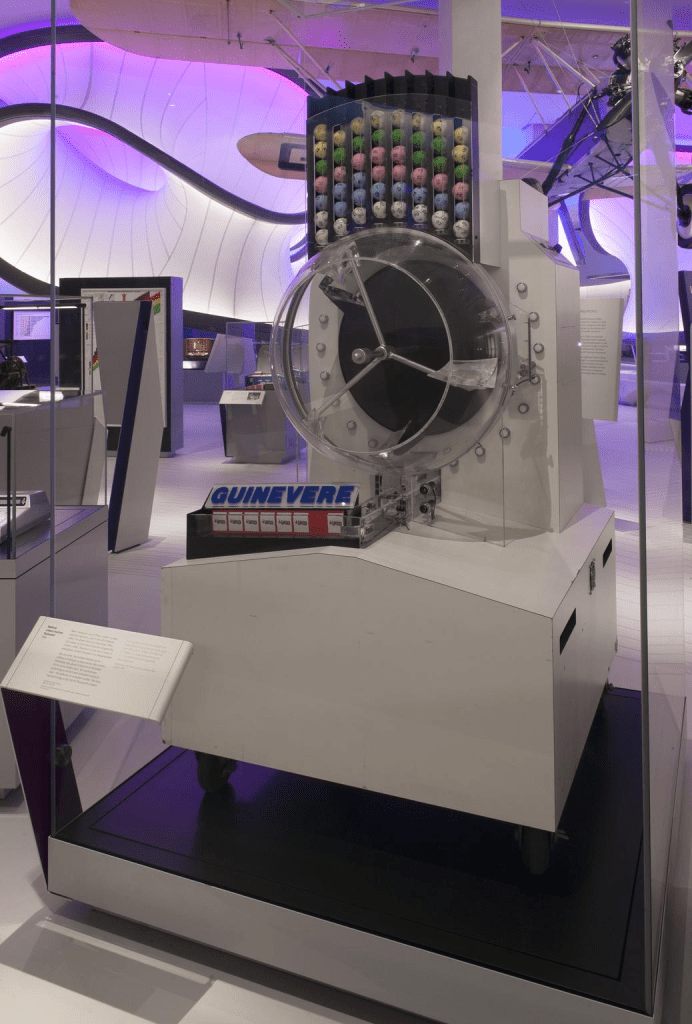
That winning a jackpot on the lottery was less statistically probable than being murdered, a fact often mentioned in the early days, was disguised by the fact that being a ‘winner’ was a fantasy a lot of people could believe in, whatever the evidence against it. The lotter managers convinced us that the fact that:
YOU’VE GOT TO BE IN IT IT WIN IT
meant that you had a realistic chance of winning a ‘fortune’, an effect later increased by the use of small wins that argued the case that people with big dreams but low incomes and aquired wealth could be winners at heart and in spirit – part of the elect and entitled:
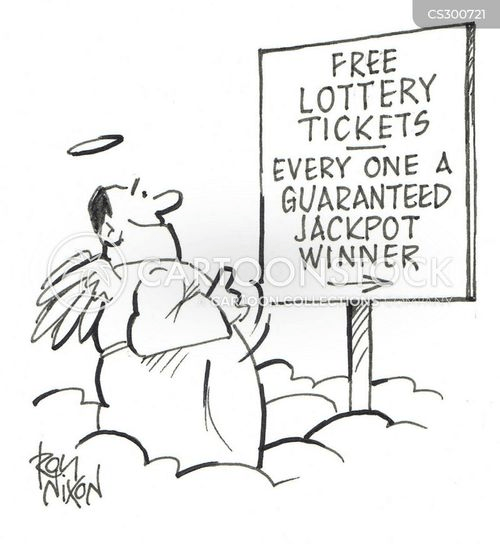
But winning was a path only to a heaven where you won more and lost nothing – a thing many found to be lost on them as inflated disordered dreams of fulfillment led some to bankruptcy and, having given up the means of earning an income, little hope of regaining it:

But those cases could easily be dismissed as occurring to real no-hopers. Our desires, we think, are reasonable, and the regulation of our wants, needs and desires as they fluctuate manageable. Dreams are just dreams. But strangely what we call the ‘richness’ of the best dream-wishful literature, Coleridge’s Kubla Khan, for instance, is sometimes precisely about the folly of not being able to measure the dimensions into which our desire runs. Through every plan for a pleasure dome, a river carries our hopes downwards to the immeasurable depths of where what we want is inexpressible, let alone measurable.
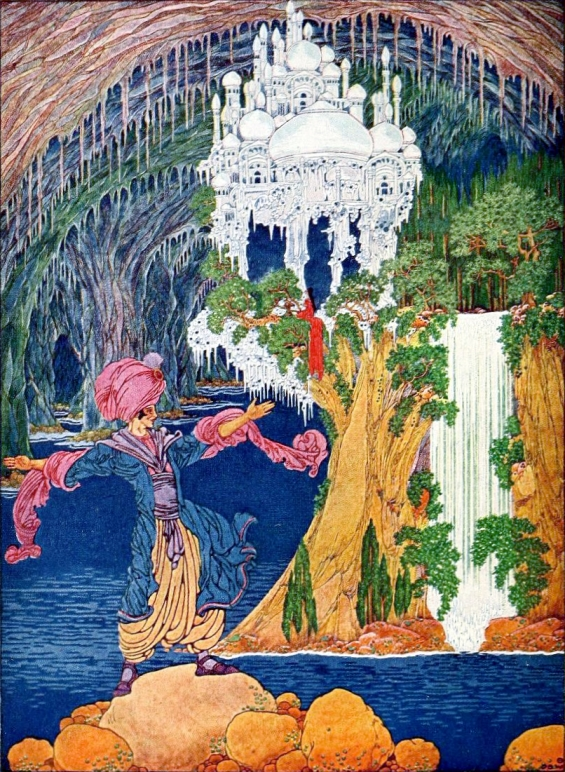
Let’s read Kubla Khan again:
In Xanadu did Kubla Khan
A stately pleasure-dome decree:
Where Alph, the sacred river, ran
Through caverns measureless to man
Down to a sunless sea.
So twice five miles of fertile ground
With walls and towers were girdled round;
And there were gardens bright with sinuous rills,
Where blossomed many an incense-bearing tree;
And here were forests ancient as the hills,
Enfolding sunny spots of greenery.

But oh! that deep romantic chasm which slanted
Down the green hill athwart a cedarn cover!
A savage place! as holy and enchanted
As e’er beneath a waning moon was haunted
By woman wailing for her demon-lover!
And from this chasm, with ceaseless turmoil seething,
As if this earth in fast thick pants were breathing,
A mighty fountain momently was forced:
Amid whose swift half-intermitted burst
Huge fragments vaulted like rebounding hail,
Or chaffy grain beneath the thresher’s flail:
And mid these dancing rocks at once and ever
It flung up momently the sacred river.
Five miles meandering with a mazy motion
Through wood and dale the sacred river ran,
Then reached the caverns measureless to man,
And sank in tumult to a lifeless ocean;
And ’mid this tumult Kubla heard from far
Ancestral voices prophesying war!
   The shadow of the dome of pleasure
   Floated midway on the waves;
   Where was heard the mingled measure
   From the fountain and the caves.
It was a miracle of rare device,
A sunny pleasure-dome with caves of ice!

   A damsel with a dulcimer
   In a vision once I saw:
   It was an Abyssinian maid
   And on her dulcimer she played,
   Singing of Mount Abora.
   Could I revive within me
   Her symphony and song,
   To such a deep delight ’twould win me,
That with music loud and long,
I would build that dome in air,
That sunny dome! those caves of ice!
And all who heard should see them there,
And all should cry, Beware! Beware!
His flashing eyes, his floating hair!
Weave a circle round him thrice,
And close your eyes with holy dread
For he on honey-dew hath fed,
And drunk the milk of Paradise.
Because all of our dream projects remain such does not mean that the facts that we forget – that rivers run on without permission where they will and that all dreams of fulfillment reveal flaws where want is limitless in its capacity to be satisfied like that sung in a ‘romantic chasm’, a flaw in our landscape we idealise but inhabited by ‘woman wailing for her demon-lover!’. I have always pulled up short at this merciless needy woman that Coleridge imagines as inner unsatisfied desire once a man with real power to do things, like the now dead Emperor Kubla Khan has failed him.This poem so rich in transsexual shifts perhaps shows that wishes are forever locked in by limits we feel we can’t challenge but ought to. Why does the singer of this song feel he cannot revive within him his deepest desire equated with a ‘damsel with a dulcimer’ and a wild mad belief in one’s own inner potency that makes one’s creativity a strange amalgam of sexual orgasm and giving birth. It is a poem that tells us that dreaming of DOING after a win, that Kubla Khan himself represents, is a hopeless version of our desire to be, perform and, in doing so, to create when we feel most impotent.
With love
Steven xxxxxxxxxxxxxxxx
 Steve_Bamlett_blog