Favorite movie of all time?
The last film I saw is the only one to fill my time, whilst it is filling my brain with thought, emotion and challenges my values – for those are the characteristics that matter to me in a movie. It was Cynthia Erivo in ‘Prima Facie’.
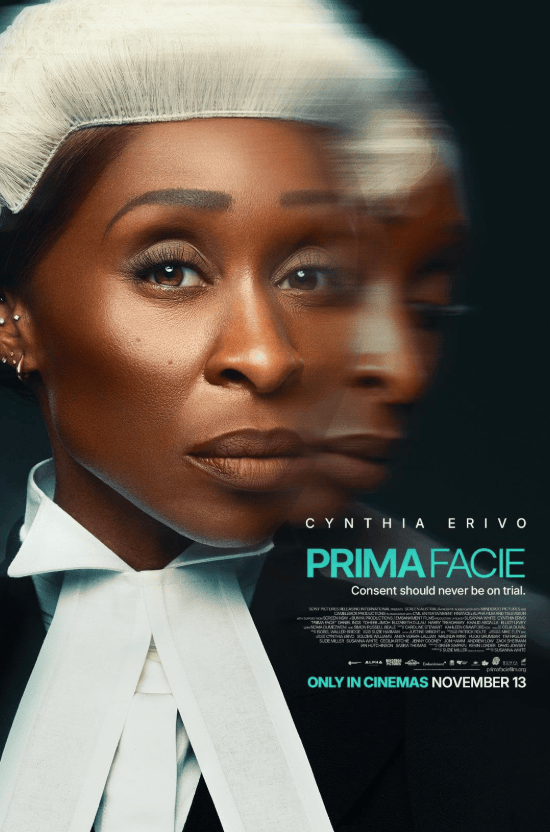
If this form of question means ‘my’ favourite ‘movie’ of ‘all time’, pehaps it should say so. However, even if it did, it does not make my response any easier, largely because ‘all time’ is too ambitious (an in all likelihood too impossible) an arena to choose from. I suspect ‘all time’ is not in my ken now, nor that I know enough candidates to choose from even in the short duration of time that seems available to me. Even allowing for the fact that I can choose ‘movies’ made before I was born, ‘all time’ must have a future aspect and there I am forever (from my own point of view at least) stymied. Film impacts me at the moment I see it not because I have an ‘”inclination, partiality, support”, or other specilised liking for it (the origin idea of th ‘favorit’, but because it challenges my values, while offering learning in the form of ideas and the mining of emotional experience in a way that enables me to empathise with it, in a way otherwise not available to me.
Today Geoff and I have just been to see the film Prima Facie, derived from the play by Suzie Miller and first performed in a tour de force of monologue by Jodie Comer at The National Theatre (see my blogs on Miller at the links following – on Prime Facie [a bit of bland verse, sorry] and on her second play Inter Alia. They are both plays based on legal terms and both concern an intelligent legally trained and expert woman coming to terms with the fact that though terms that are ment to represent ways in which the law ensures objectivity but which in fact do anything but. Nothing could take away from Comer’s solo performance of the text but the film is something other, as Peter Bradshaw brilliantly says in The Guardian.
In the theatre, itis a bravura solo spectacle, a stream of consciousness torrent that that puts you right inside the trauma and the terror. The movie opens things out to a more convemtionally presented drama and we lose something of the of that ohat overwhelming moment by moment access to the lead character’s inner thoughts. But the resulting story is robustly constructed and tremendously acted.
The last sentence sells the film short though I don’t think that was intended. The story is robust and the situation of the central character, Tessa as stark if not starker. And wonder of wonders it does not replace a black actor for a white one with deepening the issues around her otherness, as perceived by herself and the society around here – Arivo makes class, race tell without making her or her family, all brilliantly enacted too, look as if all they were only victims of white power.
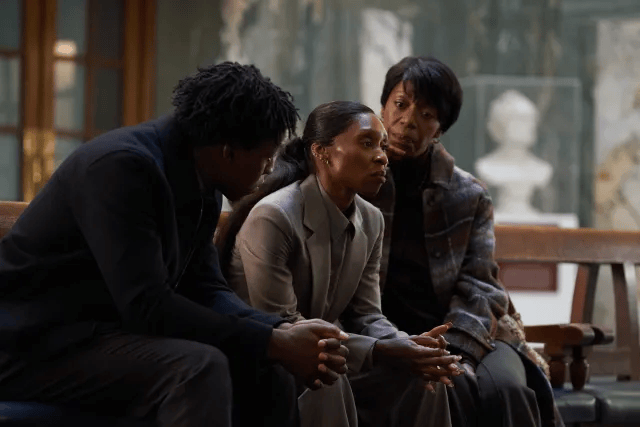
A black family in white hall of justice
Yet that white wig Erivo wears, even when she is not wearing – it’s the first thing we see in her home, on its stand, as it is left behind as she exits the door in blurred focus to enter the courtroom for the first time bared of the white class and male entitlement it has heretofore given her.

When she is dressed in it, only her facial jewellery signifies any sort of otherness to the system. And as a different kind of story and narrative to the play, it raises issues other than race and class too differently to the Jodie Comer vehicle on stage. Hateful as Julian / Jules is, the film can’t help but allow us to see how his rapist persona acts in a blindspot to the man’s own self-perception. The result is complex. We see how easily the jury came to a not guilty judgement and not just because of the authority of entitlement, and the bias of the law against trust in female subjectivity – To all extents and purposes we can’t help but see how Jules sees things differently.

Indeed the film has to use new ways of evoking Tessa’s subjectivity – such as in the scenes of cut and jaggedly cracked class which accompany Erivo’s subtle body language of pain in the actual rape. Yes. He lies and uses ll his class privilege and status but he also is clearly blind to nything but the reflection from the skin of others of his own narcissism.
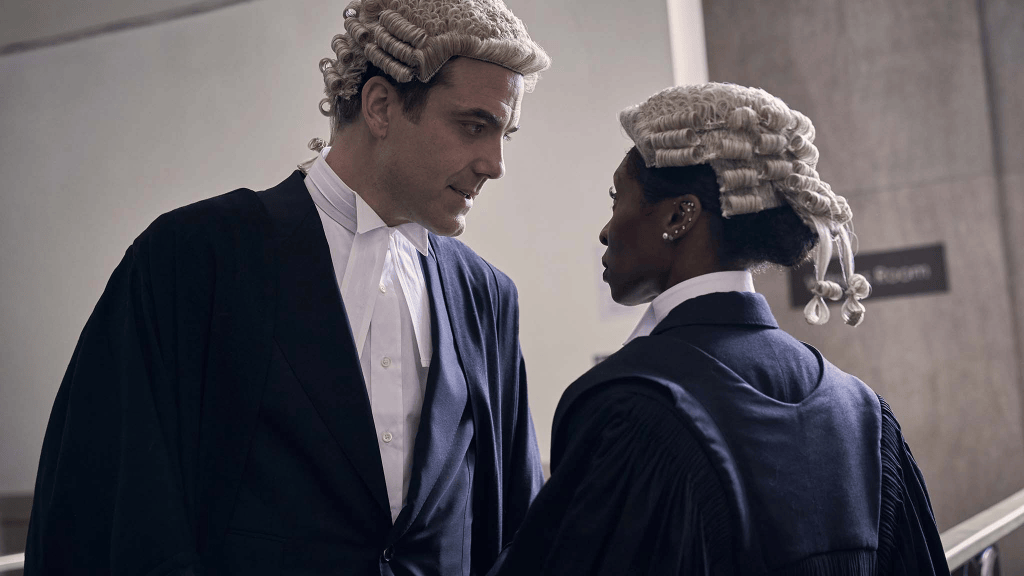
Do see the film. It is gut churningly moving, even though its effects are built unlike the play on the slow simmering of the story before its conflicual material boils over and overwhelms Tessa’s life – but Erivo plays it so that we know she will not be down forever – not at all.
With love
Steven xxxxxxxxxxxx

