


Why we look at a ‘two-dimensional’ picture but watch a picture that contains movement. The possible role of attentional features of vision.

It seems entirely innocent to us to talk about ‘watching’ a film, TV or a ‘movie’ but we don’t often distinguish ‘watxhibg’ from a rather passive act of looking at or gazing at two-dimensional screen containing images that appear to move in three dimensions, relative to the angle of the camera, either because the camera that ‘sees’ them moves around, away from or nearer to them, or because they themselves are .mobile and the camera eye static, or, of course, in variations of those two things. Yet we never think of watching a static picture in ordinary talk about it, except where we suspect it might move, as a museum guard might watch a painting for fear of theft of the movable object or damage to it from a moving object or person.
Why? The etymology of the word ‘watch’ gives some clues:
watch (v.): Middle English wacchen, from Old English wæccan “keep watch, be awake,” from Proto-Germanic *wakjan, from PIE root *weg– “to be strong, be lively.” Essentially the same word as Old English wacian “be or remain awake” (see wake (v.)); perhaps a Northumbrian form of it.
I have long thought that it is a mistake not to watch even static two-dimensional pictures (often a strict misnomer fror the surface of many great paintings is far from flat and in oils and gouache often has variation in its surface tbickness), for though they are created from resources that lack motion once in their finished state as a ‘picture’, they can seem to suggest motion from clues in the content and details of the method, though often in tension with the static gaze captured, at least in the figures of a painting:
Take the two complex ‘static’ pictures below by Totian and Manet respectively:
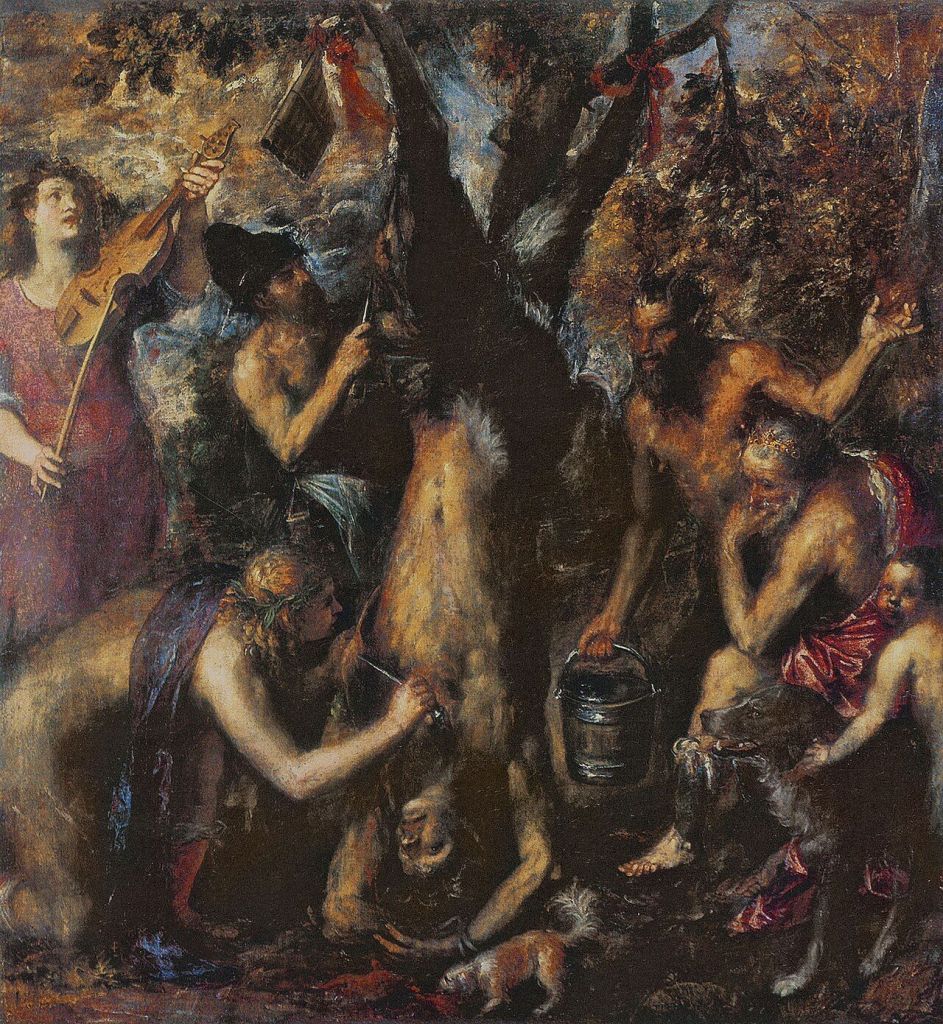
Everyone would agree that Titian paints a very busy scene in his monumental The Flaying of Marsyas, and that it looks all the more busy because one character, a child holding back a huge wolfhound as eager to lap up the blood fallen from Marsyas’s cut skin and hide as the much smaller dog under the inverted faun and lapping away, whom looks out or gazes, directly at someone in front of the scene, perhaps a viewer of the picture might feel, themselves.
Such exchanged gazes are compelling, especially when the hold the gaze directed at the picture in the eyes of one apparently returned from its surface. In this great paintings, one major effect however is to compel us to see how other figures in the picture do not merely gaze, they watch for their opportunity or compulsion to act, including the literally ‘bloodthirsty’ dogs and the elderly faun bringing a bucket to catch his colleague faun’s blood, Apollo watching the motion of his knife in cutting flesh downward from Marsyas’s torso. The comparison of types of gaze is very complex but one differential in their variations is the degree of motion they relate to that must be ‘watched’ and will occasion motion of that watched and of the watcher, to ensure their watching is purposive and efficient to the degree required.
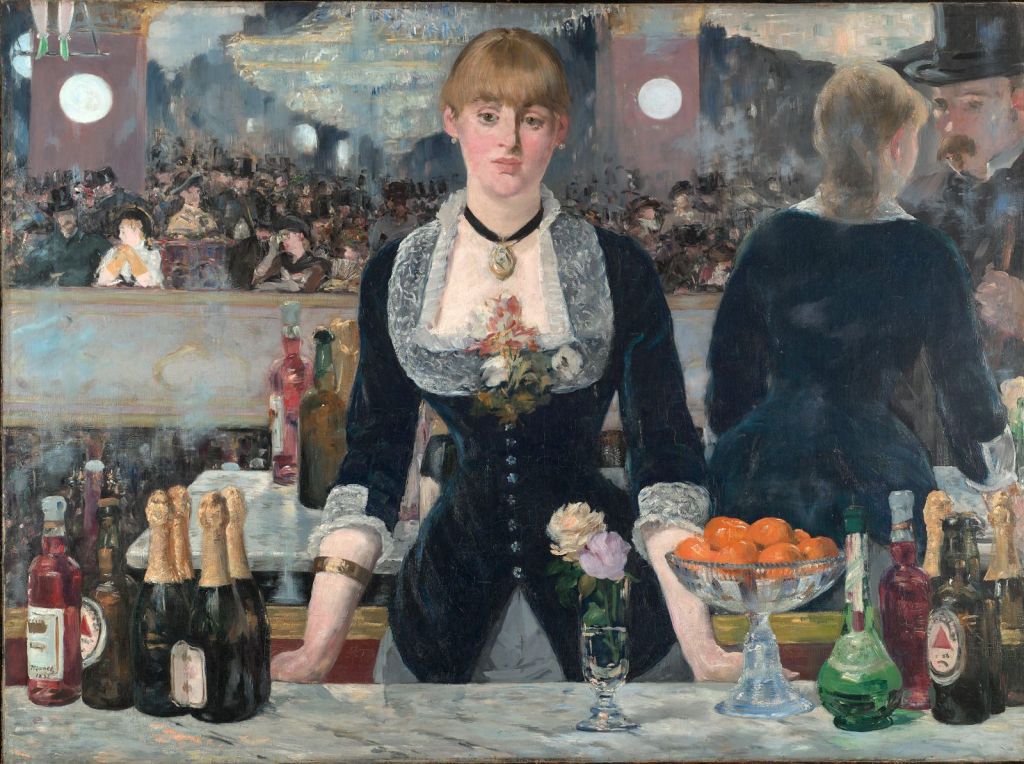
Manet’s Bar at The Folies Bergere fascinates in part because of the difference of the interpretation of tje gaze of its main subject when we co.pare that gaze, as if directed to us returning gaze it’s gaze, as it were, and her (visually impossible in realistic terms) reflection of her looking at a male customer at close quarters. In that comparison lies a difference of comparative illusions of relative mobility of viewer and viewed and of different intent in the looking, from a held gaze that is sustainable because aesthetic and not interactive, and active watching in which the motives of the two lookers-at-each-other can be thought complex. Hence the many interpretations that see a sexualised interaction between customer and barmaid.
But generally of course, watching (as supported by its etymology) implies a wariness about what is to come and circumstances and the watcher of them interact together. Is tbis why we ‘watch ‘ a movie, precisely because, though two-dimensional as as a picture, it also moves. For fun here is a reflection on the term ‘movie’ (this link for full post) by Tuğrul Cenk Demirkıran from the website Critic Film
The Meaning of “Movie”
At its core, a “movie” is a motion picture, a sequence of images that create the illusion of motion when shown on a screen. It is a powerful medium that combines visuals, sound, and storytelling to evoke emotions, entertain, and communicate ideas. The term is an abbreviated form of “moving picture,” capturing the essence of the medium’s dynamic nature.
The journey of the term “movie” began in the early 20th century when the motion picture industry was in its infancy. As the technology to capture and project moving images evolved, the need for a concise term to describe this new form of entertainment arose. “Movie” emerged as a convenient and catchy shorthand, reflecting the novel experience of witnessing images in motion on a screen.
To truly grasp the roots of the term, let’s venture into its etymology. The word “movie” is an Americanism, and its origin can be traced back to the late 19th century. The precursor to “movie” was the term “moving picture,” coined at a time when the idea of capturing and projecting motion was revolutionary.
Demirkıran has a very useful way of putting things. First, that the term ‘movie’ in its first uses was a way of capturing a novel concept – that the imagery the form introduced was dynamic in away not before experienced in a two-dimensional medium that could be recorded and replayed to exactly the same effect each time. To watch was already registering a surprise in viewers : “‘the novel experience of witnessing images in motion on a screen”. I suspect the first witnesses of ‘moving pictures’ might be spellbound in their watching the way an event was captured in what felt like real time, where no event was expected, even if all we saw was a representation of a thing (a horse perhaps) moving without actually being the thing itself but merely its image. wariness was rewarded by novel experience. Later as ‘movies’ were no longer just ‘moving pictures’ but integrated with other functions like story-telling, interactions with different representations of sound recording – such as the voice of seen actors or a storytelling voice-over then pictures ‘moved’ in a different way, in that they evoked emotion – motion from within the person expressed outwardly.
In all these functions, ‘watching’ rather than looking at, is required – an alertness and awake awareness to things in the process of change is essential to the moving picture or movie now. In that sense, a good film or TV series intends to keep us ‘watching’ not because it maintains a revenue-providing audience but because an aesthetic emerges in film around the handling of expectations and surprise – balances between moments where a film allows you just to gaze passively, only to shatter your illusions of the durability of the scene and change it massively by making you look out for, watch for clues to the oncoming disturbance of the status quo. This is why I love, and have seen many times the Jean de Florette and companion Manon Des Sources serial story.

It is a story where everyone watches and waits for events – for different motives, and yet in which ‘still’ or ‘stiller’ moments occur, even where a camera does not move and the scene seen only moves within repetitive cycles (as we look at the landscapes of vegetation and skies of Southern France).
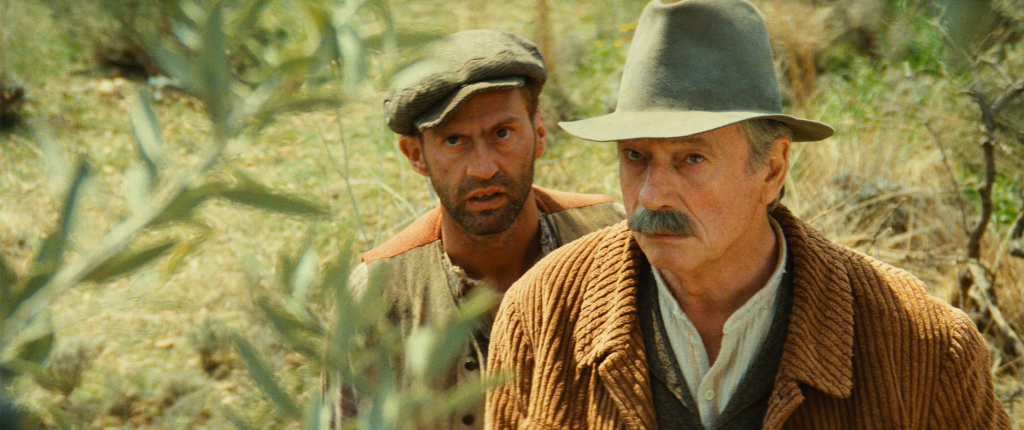
But it is a movie in which the use of stillness is often a strategic form of action of one or more characters in relation to another or others, but equally it is a means of discovering unseen plotting or threats, notably for Manon when grown, subject to sexual threat but also subject to memories she does not understand until she gets evidence to see them differently.
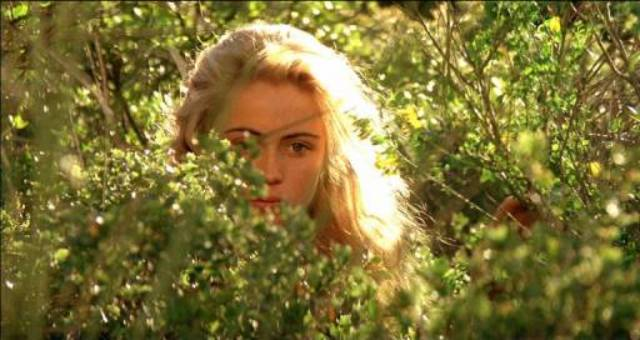
The relation of cameras to actorly gaze is masterful – a ‘moving picture’ in many ways. Watching is a highly attentional form of looking. In my view we need it in still pictures too, as in the examples I gave above, and I think gazing is more nuanced that looking that does not contain ‘watching’ and its link to awareness, but maybe because most binaries are false is not a reason for not evoking them SOMETIMES (AND WITH AN AWARENESS OF THEIR LIMITATIONS!).
All my love
Steven xxxxxxxxxxxxxxx
 Steve_Bamlett_blog