


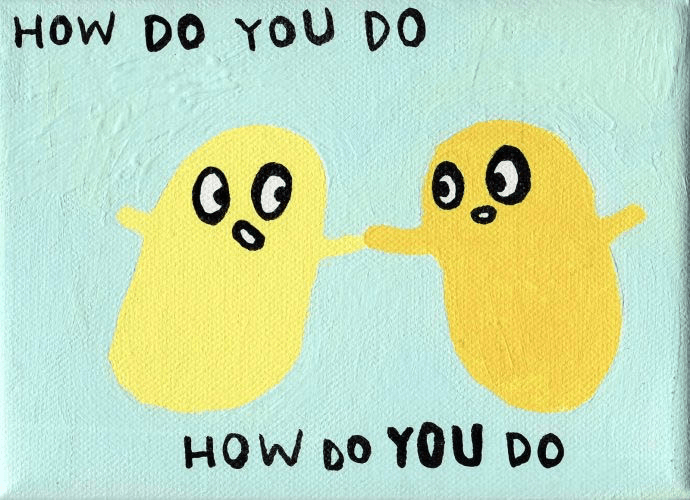
There is a world of difference in many usages of the verb, ‘to do’, that all live depend on cultural assumptions. It is rapidly becoming archaic to use the term ‘How do you do?’, roughly meaning meaning ‘how are you?’, but possibly extrapolated to ‘in the doing that constitutes your life, how do you assess your satisfaction, or lack thereof‘. People answer ”Not very well at the moment’ or ‘ I’m well thank you’, a form that could cover lots of obstacles to ‘doing’ things as you would like to do them. These obstacles could be financial difficulties, success in gaining or maintaining employment (at an optimum or any level), ill-health or other constraint on your performance (of a task or life in general). Surely taking that as a model anything we do could be done differently, but not always because of one’s own agency in bringing that difference about – for the effects of sickness are not all in our control, though some ideologies pretend that. Some express the latter thus vaguely, with the onus on making success or otherwise a matter under your own control entirely: ‘If you want it’ (or ‘work hard’, or face up to your changes’) ‘enough you will do it’. Doing it at the end of that sentence means successful completion of a task not just the act of doing that is in process.
We very often put evaluation into the heart of doing: When someone has sat an examination (of their learning, work performance) we ask ‘How did you do?’. We mean without expressing any request for evaluation of success overtly: ‘How well or badly did you fare’, or ‘What the result what you wanted or not’. If I say ‘I did badly’, we imply that there was something amiss in the manner of our doing what the examination tested. If our health is being examined by a doctor, we don’t however think of the outcome as necessarily related to our effort in ‘staying healthy’ (although some do – maybe many), but as a point of the scale of possible outcomes based on expectations that led us to the examination in the first place. In that case we look at the ‘doing’ as the achievement of a better interpretation of the unknown internal causes of the symptoms which took us to the examination. We can’t control the quality of our ‘doing’ much in the latter example, though we sometimes talk as if we could.

Of course that might mean that what you ‘do’ and how you ‘do it differently’ is entirely a matter of context since the verb takes on so many assumptions from its context, or even the time status of its context – ‘How do you do?’ implies a continuous present but is answered from the present moment, ‘How did you do?’, refers to a specific past event, although the duration from the present may differ, nevertheless an answer will assume the past tense of the verb as does the question. But it is a matter of other contexts too/ For most the question ‘How do you do?’ does not require anything but a stock or conventional answer, there are lots of forces forbidding any response other than ‘Very well, thank you. And you, are you doing?’. Such tics in behaviour allow us to pass each other by and woe betide the person who launches into what is known as either a ‘sob story’ or ‘demand for attention’ (both imply an inappropriate interpretation of ‘the time and the place’ of the exchange).
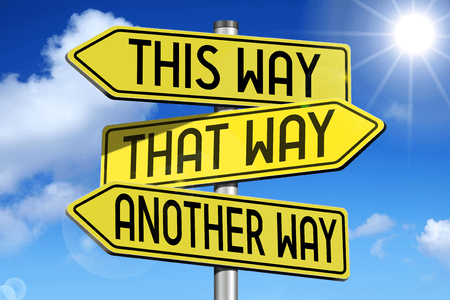
There are twists in the question ‘What could you do differently’? Make no bones about it. You will be judged if you say ‘Nothing’ in response, as if you were some kind of narcissist (or defective in self-insight in other ways.) You will be judged if you say ‘Everything’ as a person with some kind of character disorder that involved a pathological deficit of self-esteem or self-efficacy. In fact how I ‘do’ a task or life in general depends on so many factors that are not in my control that the ‘doing’ is sometimes prescribed by those circumstances alone. And with apologies to ‘One Direction’ (the boy band) there is not one way or another without realising there is no binary in that question. If the manner of doing is unprescribed (and sometimes when they are as all social workers know) the ways are multiple:, and the route isn’t always differentiated by duration or immediacy of success but by the learning and empowerment the route offers.
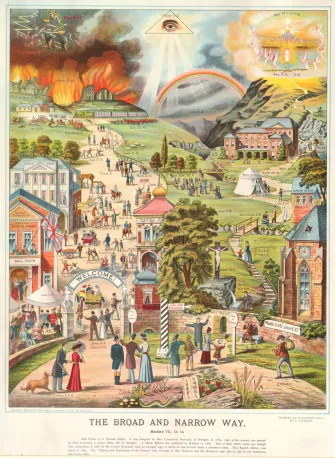
We are not Christian in The Pilgrim’s Progress, always checking we keep to the ‘narrow path’ of doing. Bunyan is so ‘binary’. LOL.
Bye for now
With love
Steven xxxxxxxxxxxx
 Steve_Bamlett_blog