A Tale of Two Theatres [mainly]: from October 22nd, 2025, day 2 onwards of the birthday treats.

The ‘[mainly]’ is there to show I’m focusing – as much anyway as a sloppy writer like me ever focuses – on the the two theatre events of the day. Here, by the way is the day schedule in the table I have used in this series. it shows that the first event was The Hayward Gallery’s exhibition Gilbert & George: 21st Century Pictures.
| Tuesday 21st October (Blog for day here) | Wednesday 22nd October (This is the blog for the day) |
| 10.30 a.m. Lee Miller’s Surrealist Photography at Tate Britain, Millbank (blog here): Followed by river boat to | 10.30 a.m. Gilbert and George retrospective at the Hayward Gallery, Southbank. Blog to come later. |
| 2.00 p.m. Theatre Picasso at Tate Modern (blog here) | 2.30 p.m. The Bacchae A new play by Nima Taleghani after Euripides, The National Theatre. (Blog here) 7.30 p.m. Punch Play by James Graham, Apollo Theatre (Blog here) |
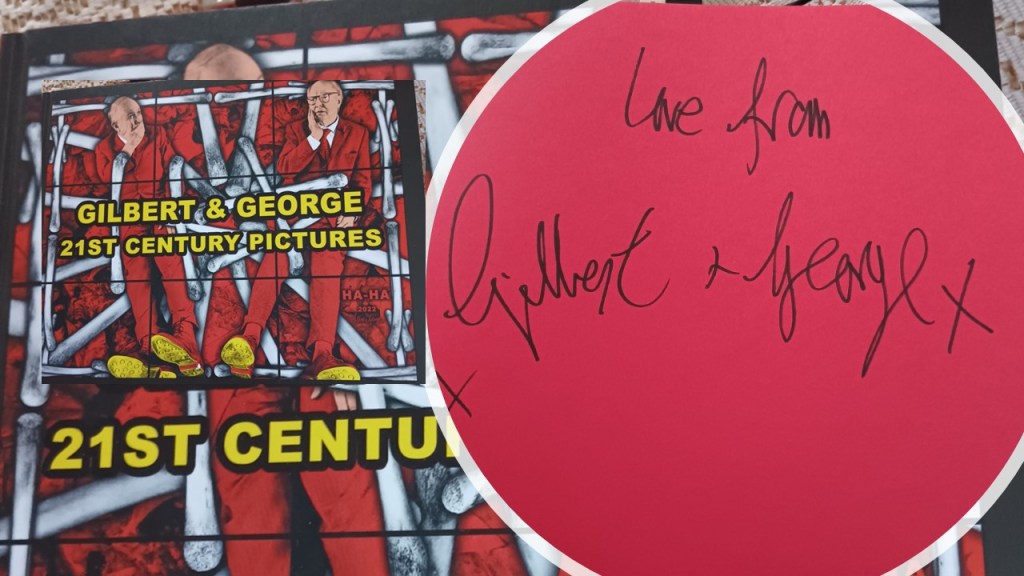
We met up with Claire there at about 9.15, our entry tickets being for 9.30. However, since I still have the catalogue essays on that show to finish reading. my account of this morning event will form a blog on its own, so rich was the event in the opening up of art to the perspectives that that artist (I think of Gilbert and George as one artist) always brings – ever fresh even as they move into their Corpsing Pictures, wherein their bodies predict their death. So expect that blog, if you are at all interested, later. But if you need a great exhibition to go to, go to it NOW!.
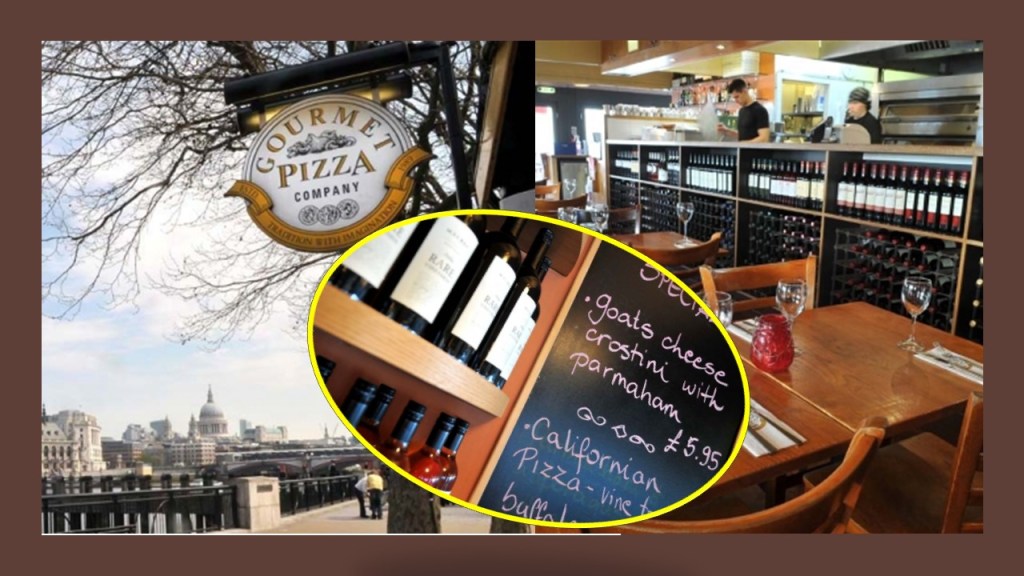
After the exhibition we took Claire to our favourite pizza shed – it’s on the South Bank at Gabriel’s Wharf, or the entrance to that yard, just upriver from the National Theatre. We sat inside – there was a chill in the air that morning and had fun ordering to our made-especially-peculiar tastes dishes (only Geoff was relatively undemanding in the presence of TWO food divas).
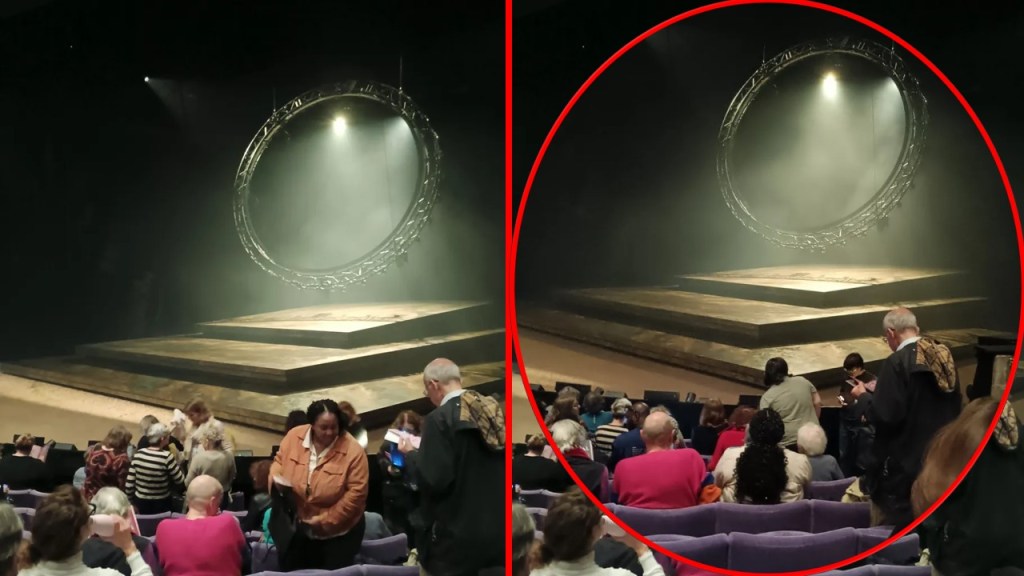
After lunch, it was a mere step to the National Theatre to see the version of The Bacchae at the Olivier. My blog on the play before seeing it can be read at this link. It is a wonderful experience in itself to walk into the Olivier auditorium and see the stage setting chosen. The circular lighting gantry was in position to show that it would be almost a symbol of the play itself; both in the use of its flexibility of motion and to direct lighting effects equally flexibly. Its shape becomes a thing in itself, a kind of symbol of the heavenly cosmos into which Dionysus ascends by a s seeming ray of light at the end.
The stepped stage layers could move independently, creating new landscape and interior architecture suggestions (in Pentheus’s palace aided by a descending column or pillar stage left). Thus mountain settings and cliffs could play against constricting walls to interiors and feel quite ‘real’ in the theatrical terms of the play, a play about the God of Theatre. The lighting gantry lay flat casting descending light beams central stage to create the caged prison in which the hybrid animal-human soldier, Bull, was kept. Light cast from that gantry cast colours onto huge glitter balls casting a rainbow of colours onto the audience at the point of Dionysus ‘s election, specifically, as God of Theatre, a theatre where illusion and reality play into the theme of politics and sexual politics.
I felt that the Bull section of the play seemed still not quite to be lucid even though I noticed that on stage it suggested much more the nuanced deconstruction of the notion of toxic masculinity it intended. I had noticed this less on reading the play. Here, Kabul visibly liberates himself from the use of his power to service, whilst trapped within it as Bull, a phallic organisation of dictatorial power led by the insecure male self-imaging of Pentheus, still hankering after being a boy dressed in his mother’s clothes.
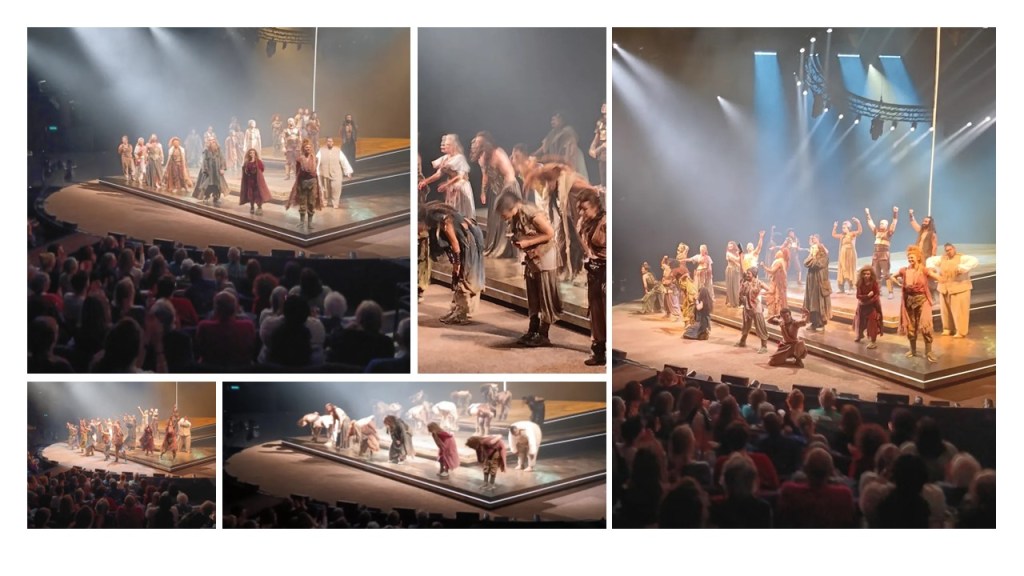
The simple setting came into its own in the wondrous scene when Pentheus stands before his mother’s wardrobe in the form of a portal of light and illusion, containing the spangled glory of male desire for a ‘feminised’ being. Even in the curtain calls, a true ensemble affair, lighting effects come into their own.
Ending about 4 p.m., we toddled along the South Bank and then vis Lambeth Palace Park again with Claire, who had now bought a ticket for Punch too. A shower later, we headed back to central London, arriving at the Apollo at 7.15. The play was soon to begin. My blog on this play, too (before seeing it), can be read at this link.
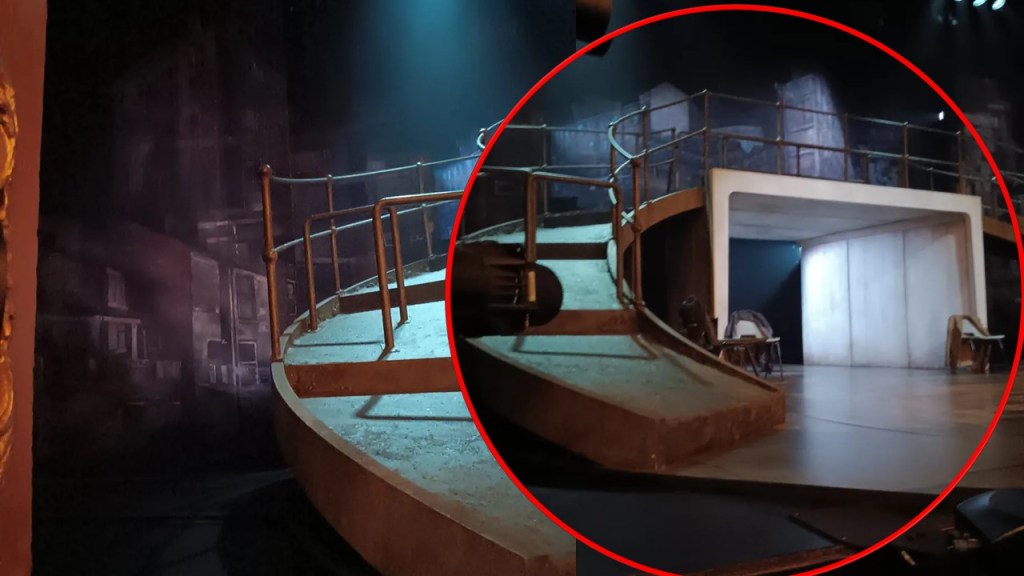
The Apollo is a typical West End Theatre with a proscenium stage. Yet the set, adapted from the preceding Notingham Playhouse and Young Vic production, gave the feel of a more panoramic view of a whole city, from the River Trent, though the refashioned Meadows estate in Brutalist looking front sets aping concrete council estate landscape furniture with a kind of exactness:
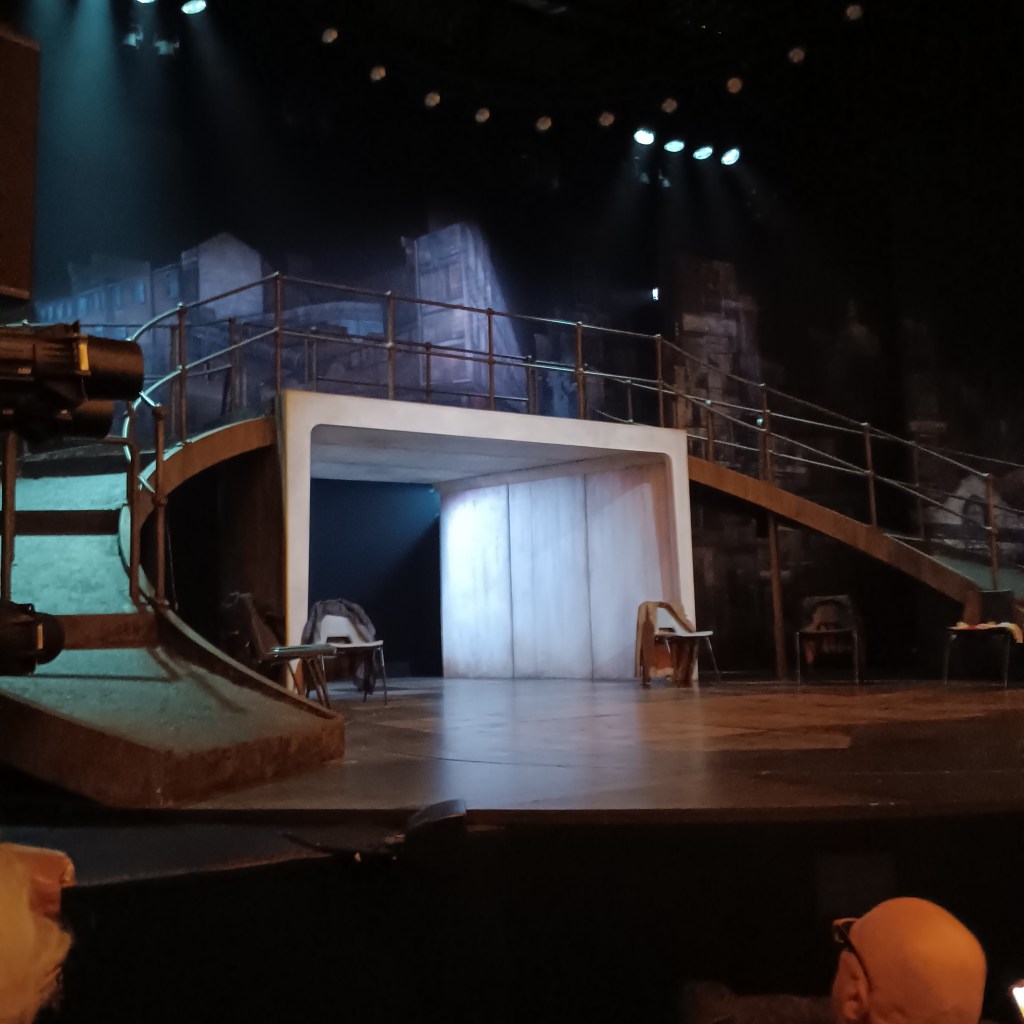
On the backdrops, features of the cityscape were painted, that with clever lighting allowed the city, or bits of it, to come into play and interact with the ensemble of characters, their class groupings and the scenarios of streets, estate venues and interiors, such as those of night cubs or rave parties.
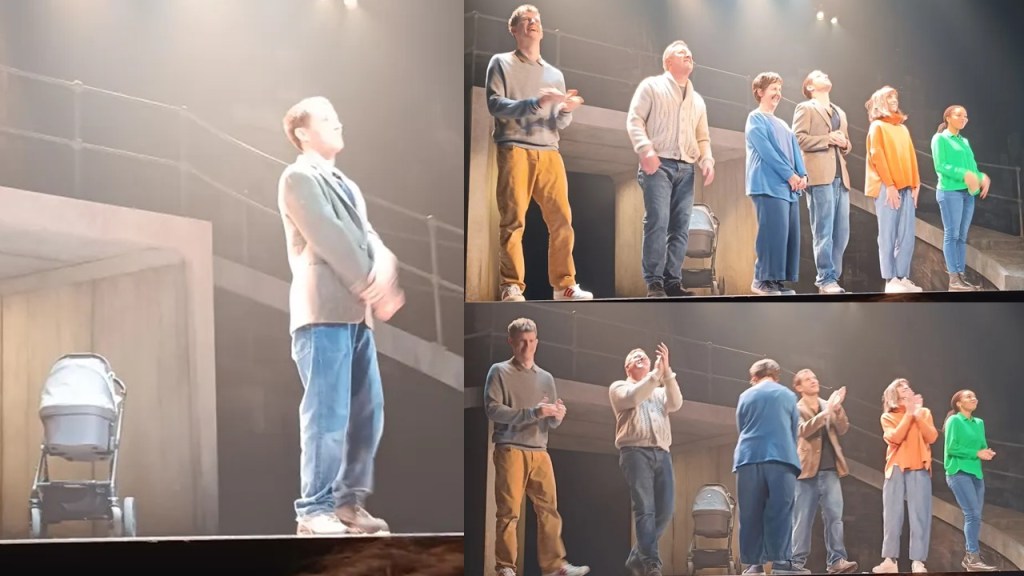
In the play itself the space at the front proscenium often morphed from the setting of the incidents and the place from which an older and wiser Jacob narrates them – the talking circle of a therapy group that Jacob attends. The ensemble each shape-shifts to fill these roles, transitioning into others when required. In the collage of scenes below, cobbled together from the theatre programme, the therapy circle can be both seen (the reproduction in the middle of the left column) and its effect felt, heightened by wide circular spotlighting of the circle in ‘action’.
I put ‘action’ in scare quotes in the last paragraph because it seems to me that James Graham wanted this play to test out whether ‘drama’ usually pivoted on ‘character in action’ (in fights or suchlike) could not also be more properly ‘action in character ‘ and thus be the proper vehicle for showing the outward forms of the process of restorative justice [https://restorativejustice.org.uk/what-restorative-justice]. That discussion of drama’s role as reflection within and constitution of character change that first used those terms was first mooted by Robert Browning [see the Encyclopaedia Brittanica account here: Robert Browning | Victorian Poet, Dramatist & Lyricist | Britannica https://share.google/2UpzTxpfEGHxONEmO].

Jacob, played by David Shields, quite brilliantly, by the way, is the only character who does not morph into other distinct characters. This all the more emphasises that his transitions of character and role – from actor to reflective storyteller, for instance – are internal to the person not external between persons. There is good reason that he got a standing ovation on his own at curtain call.
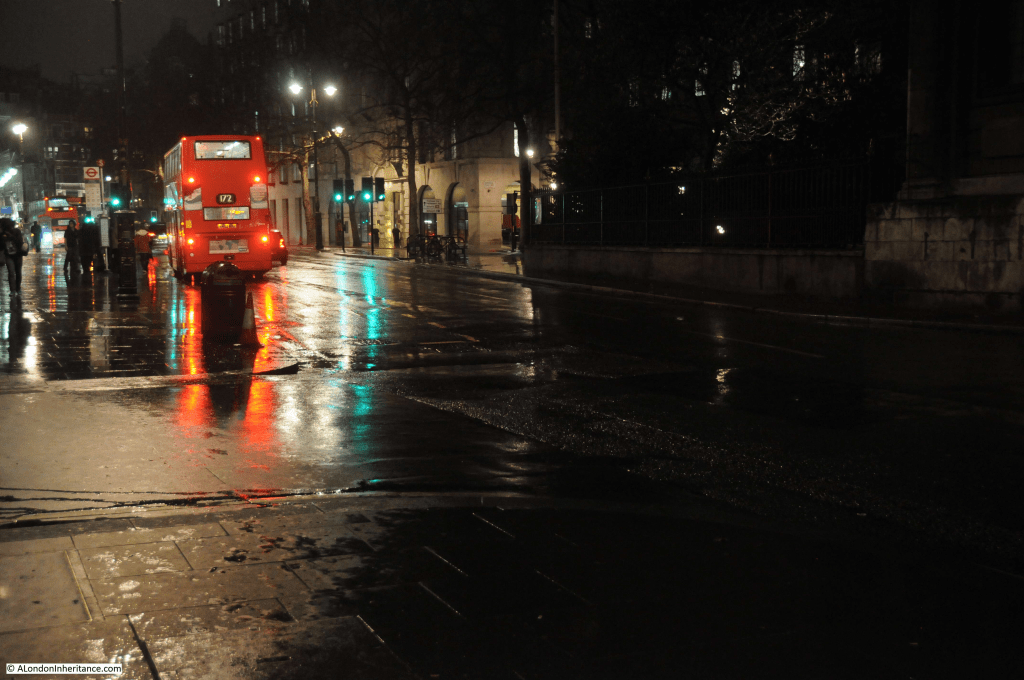
The play over, we tumbled out, with the rest of the flowing audience, onto Shaftebury Avenue, walked down to Leicester Square to get a snack (in a place full of police personnel from the Disney cinema premiere in the Square itself, and then walked with Claire to her parting from us at Charing Cross. By now, it was pouring with rain, and none of us had umbrellas. Geoff and I went down Whitehall for the 87 bus we saw lingering there. It turned out it was lingering because it was broken down. We had the wonderful experience of young people offering us Aged Persons [Geoff and me] their seat in the somewhat dryer bus shelter before the next 87 arrived.
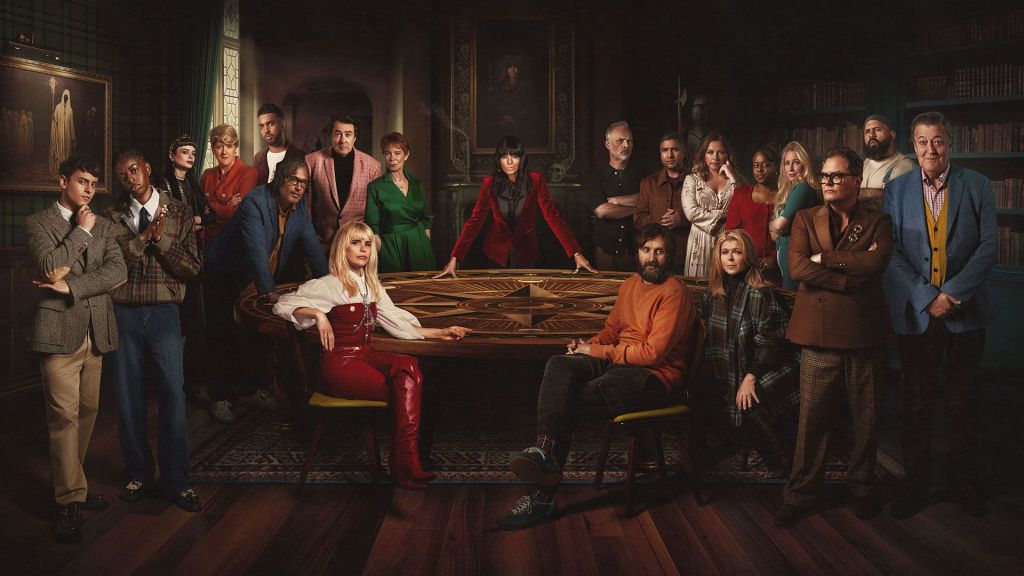
Back at the hotel late, we booked our early morning call for 5.15 to try and cross London to the M1 before early traffic. And that worked out. We arrived home the next day by 12.15 and for lunch. I picked Baz our dog up, who clearly showed his displeasure at having been left behind, not approaching us all night. That, plus residual tiredness, meat either of us went to see the streamed George Bernard Shaw Mrs Warren’s Profession we had booked for (the blog with the details is at this link) and watched Celebrity Traitors to properly zonk us.
The next day, the 24th was my birthday proper a d Geoff for me card and a beautiful print present from friends Rob, Linda & Eleanor. Here it is on the wall, collage with the cards (a fair number for a 71st birthday).

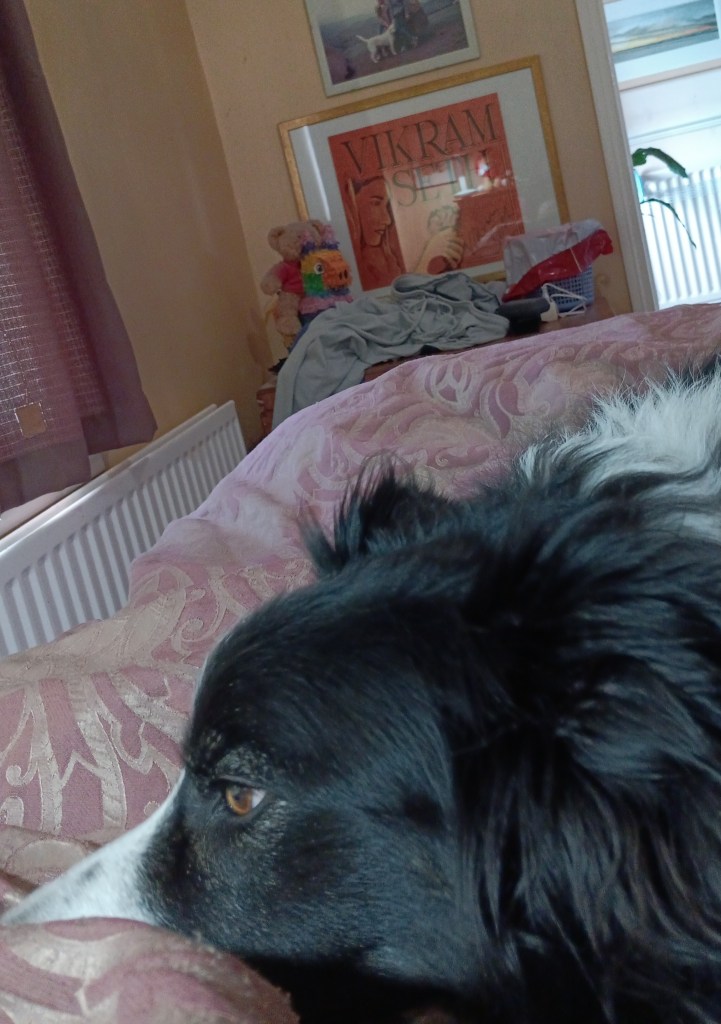
Baz made his birthday present the mental act of forgiving me for leaving him: he jumped on the bed and licked me once – the first time since we got him 5 weeks ago.
So that would end my birthday treats accounts , but I still have to read up on Gilbert & George and write up too my impressions of a very great current exhibition. Till then, or possibly with an intervening blog, bye for now.
With love
Steven xxxxxxx
 Steve_Bamlett_blog
One thought on “A Tale of Two Theatres [mainly]: from October 22nd, 2025, day 2 onwards of the birthday treats.”