


I don’t think I do know when to ‘unplug’. But I do get to points where I feel I have ‘unplugged’. It happened in Amsterdam. Our Amsterdam experience: an introduction

You could say our Amsterdam experience was defined in the wake of its progression: the place of one’s status quo existence becoming a mist that rides over the signs that your world is shifting. Hence, when exactly I unplugged from stressors of everyday life was uncertain. Certainly, the holiday had some stressors that were hard to cope with. We worry about leaving our dog, Daisy, in kennels – though more so this time since her gums had seemed to start to bleed before we went, and we knew we had to take her to the vet when we returned, confident she had a bad tooth that needed removing. We arrived in Amsterdam on Tuesday, and on Thursday lunchtime, the kennel rang us whilst we were still in in The Van Gogh Museum to say Daisy had more severe symptoms. We agreed to pay for an Emergency vet to see her but by Friday, on the day we left to get our overnight ferry, we learned that this vet thought that there was a crack in her back molar teeth and this was causing the profuse bleeding that occurred in the kennels. She had advised that the medication she left for her might actually solve the problem and that we should wait to see when we returned before seeing a vet.
That was a relief, but what was better was that I had somehow felt able not to plug in again to my worries about her. It was as if the visible signs of its shifting are seen in the sea as you look back; The signs of your progress written in a wake of dinminisahing significance as it faded into the past (and passed) distance.
After we saw that wake, we sat inside the lounge of the boat to watch the prow move onward to another misty horizon showing beneath it only the North Sea, but a ‘future-looking horizon as it were. This then was like the way we handled bad news about Daisy – on our return, we felt all might be well. The prospect was bright. Even when we returned to find that a vet visit was needed and Daisy was diagnosed with a terminal mouth cancer – not a tooth problem at all – the fact that we had been saved a few day’s gnawing and depressing gloom for her future was a sign we had unplugged and had needed that.
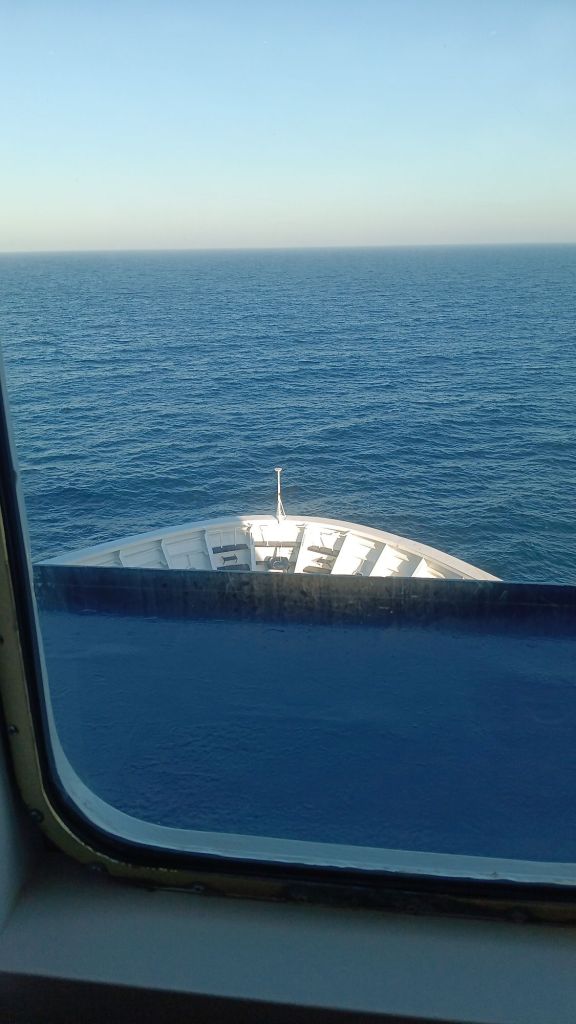
Amsterdam is a place of boats internally that allow those there to scan that unreal city, its history rising above the water of its Imperial and mercantile wealth, from the water, though where we started our canal boat trip was a place defined by its concrete service to modern tourism alone.
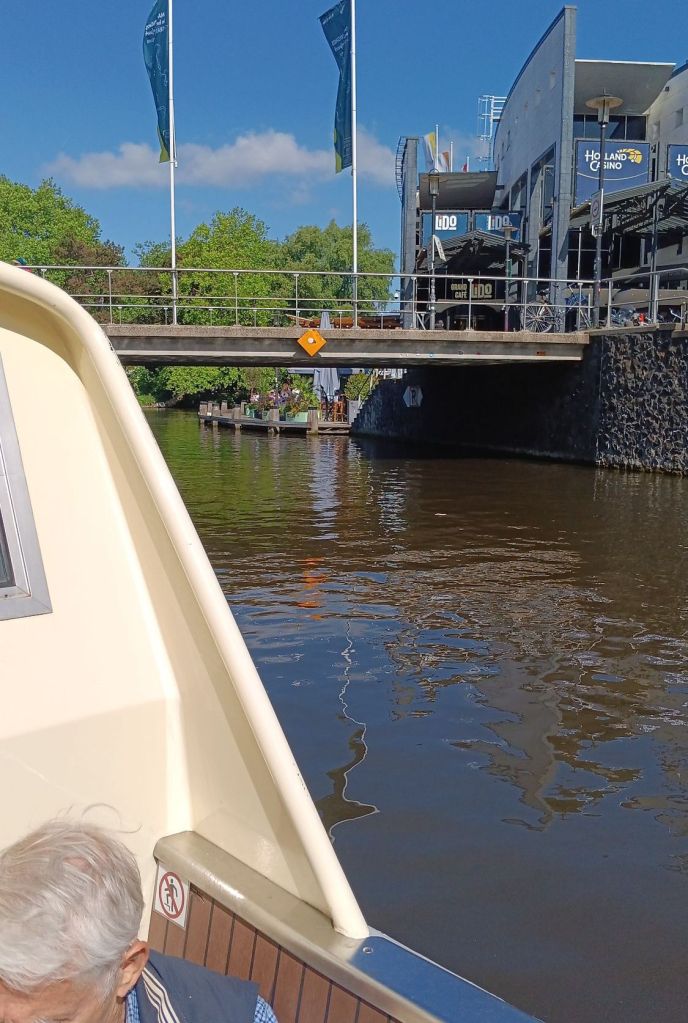
I had never been to Amsterdam , though my husband Geoff has. My purpose in going, I suppose, was to see the Rembrandt’s in the flesh at the Rijksmuseum, Van Gogh’s at the Museum in his name and a current exhibition of Anselm Keifer, a true favourite of mine. All that I will write about in separate blogs. But here I wanted to record that much that charmed me into unplugged state in this trip was entirely contingent to those experiences – the journey there and the experience of walking the streets of the city and the Vondelpark, a delightful discovery (a central city park near to the Museum Square and named after a poet thought to have the import of a national figure in Holland, despite neglect of him in his lifetime.
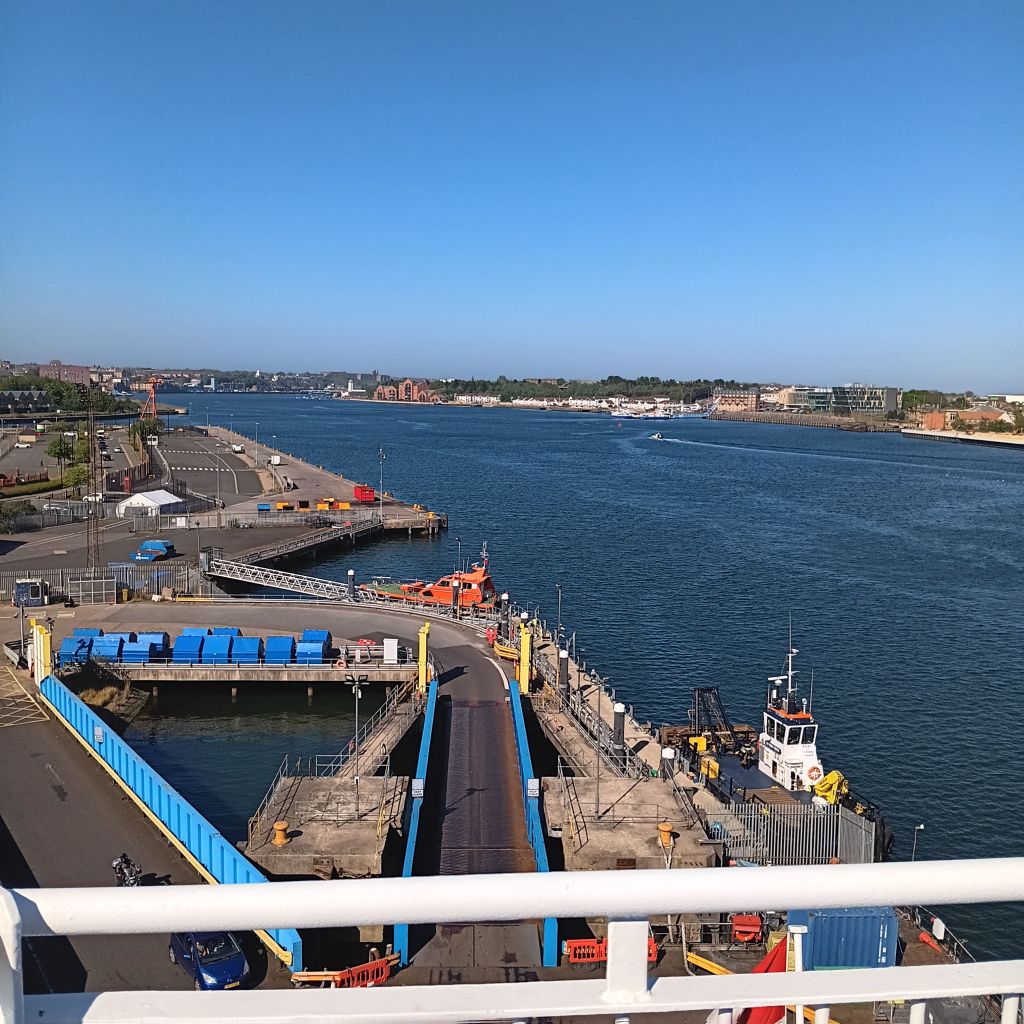
One of these contingencies I had expected to be merely a trial – the overnight ferry between Newcastle (actually North Shields). Although the journey back told me that I had not been wrong to dread some of the features of the experience of a long ferry journey overnight, the journey there felt like magic, draining the overheated excess of energetic sea in the sunny air and draining the rest into the sea. Coming back was a more confined affair. Housed in the enclosed mid-decks of DFDS’s Princess Seaways, our cabin on the way home was all too near the merchandising heart of ferries – duty-free shops and a restaurant and entertainment provision so mercenary in its tendency to charge for extras that you felt like an immobilized cash cow being milked for all.it contained and until dried out.
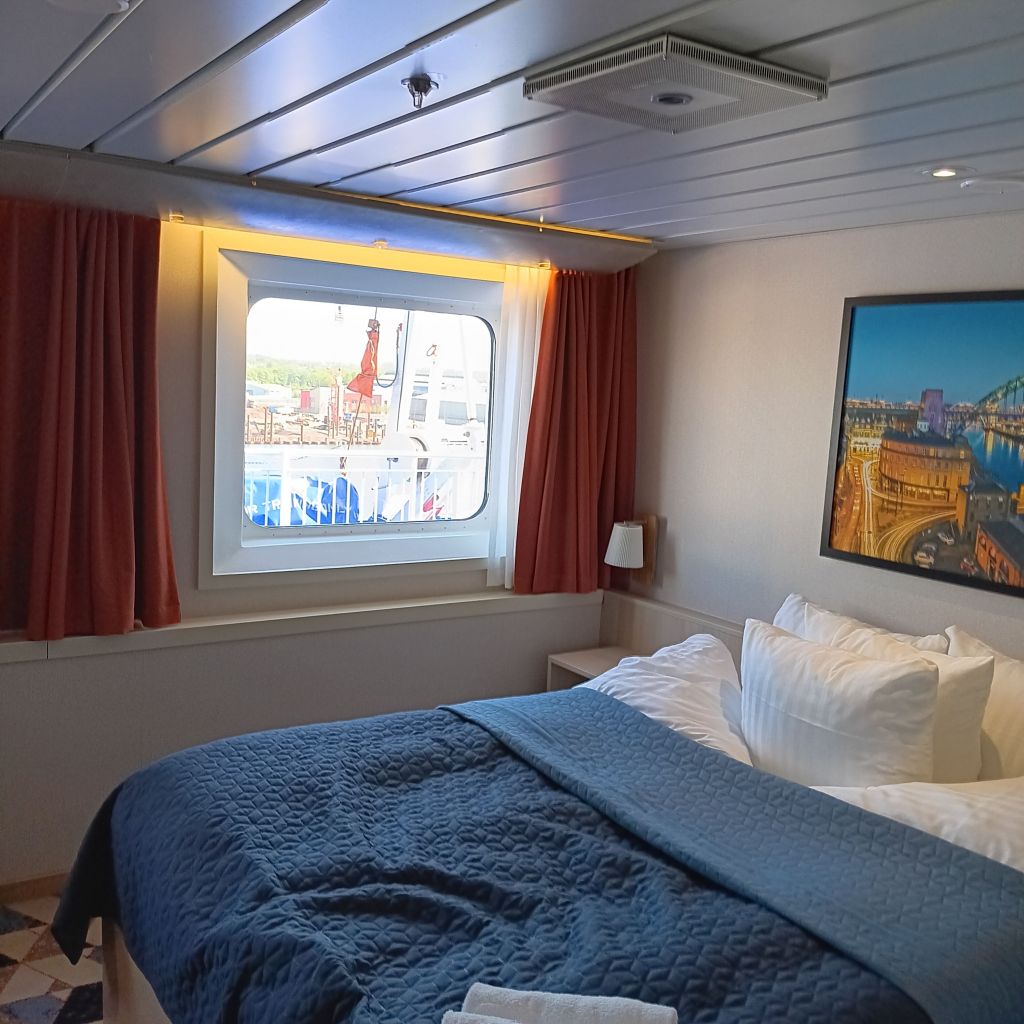
On the way to Amsterdam, it was very different. Because my husband is affected by claustrophobia, we spent more than we could afford on a cabin that had optimal access to the outside. On the deck level of the larger King Seaways vessel, there were windows on the deck level and some protection from the over-comercialised mid-decks. We lingered outside, catching the hot sun of North Shields, sustained until nightfall, a less busy lounge available over the ship’s prow.

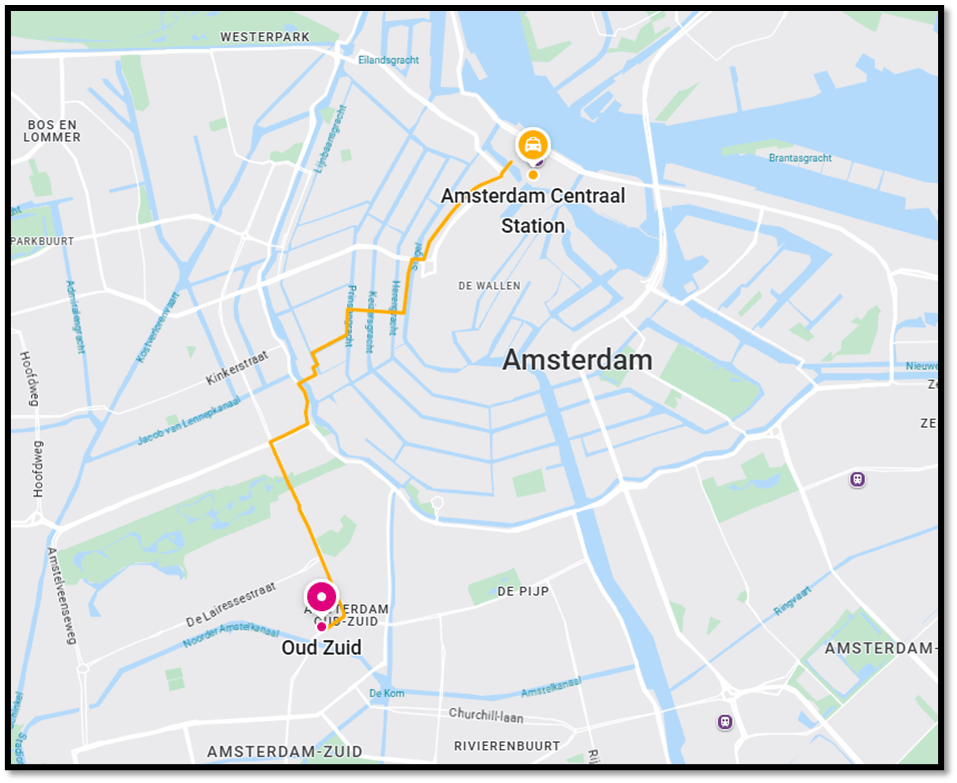
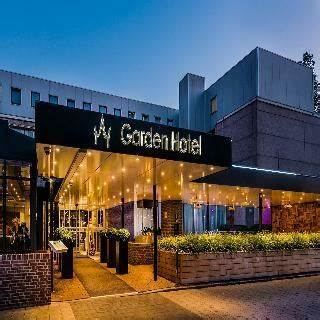
But the real joy was the city of Amsterdam and its streets, so remote from the eagle-eyed attention recommended on our bus journey from the port to tourist-orientated views of ‘red light districts’ and warnings about ‘coffee bars’ that were not really coffee bars but places to buy cannabis in a number of varieties. I took few photographs though of that lovely cityscape, partly because of the burden of luggage on the walk to the Oud Zeid area where our hotel was, and partly because afterwards photographs seemed to diminish the effect of just being in a beautiful city.
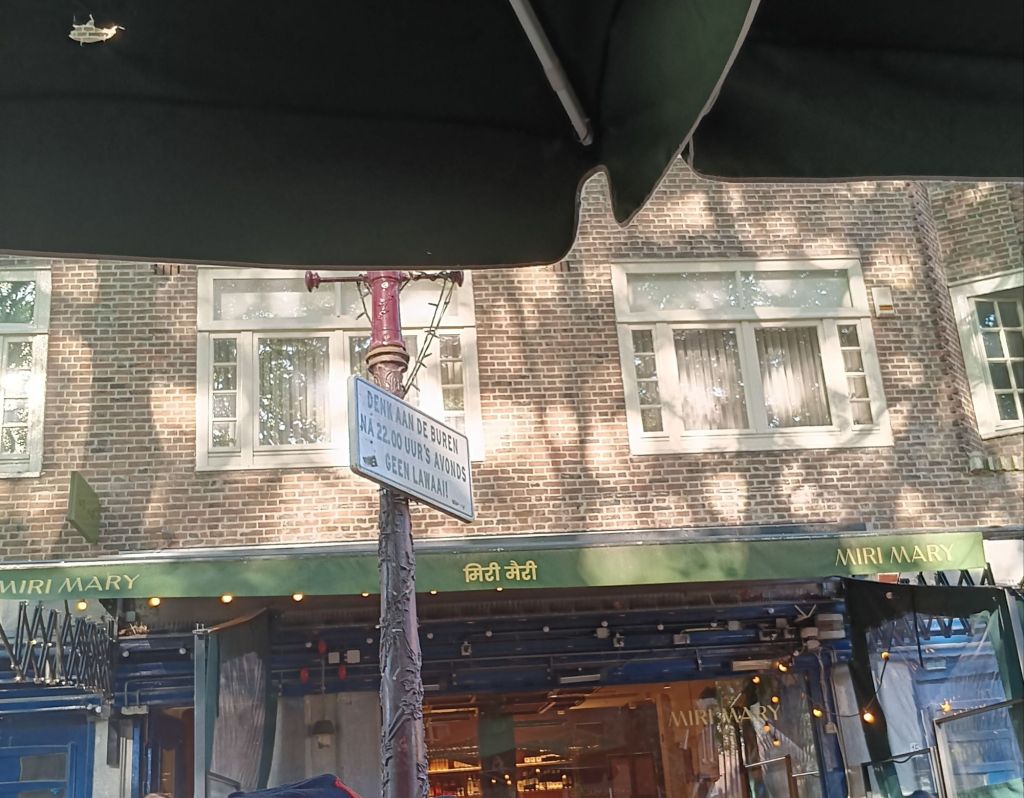
Tired on the night of arrival we rested from the walk, in which we’d discovered a fine second-hand English bookshop in the Centre of the City, until leaving for dinner in the area of De Pijp where we had areas of an fusion Asian-European restaurant, The Miri Mary, specializing in small plates (the ‘tapas’ tradition). By 8 p.m (CET) when we arrived the sun was still out. We sat outside, enjoyed talking to our hosts who teased me enormously about the whereabouts of their toilets.
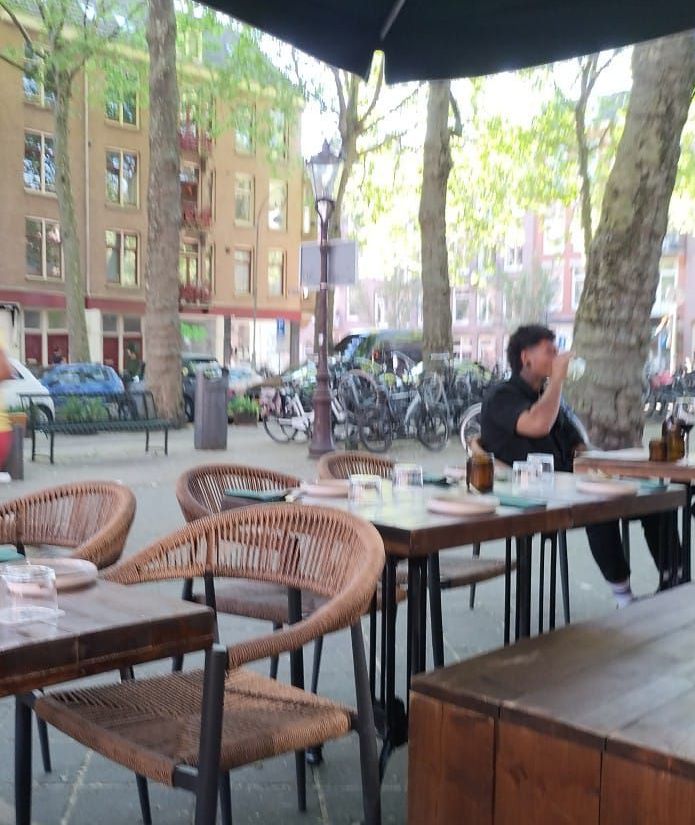
What surprised me I suppose was the relaxed feel of the far from picturesque square (‘plein’) in which we sat. Even dusk never descended on us as we dined and the whole outside experience felt safe and relaxed. It must have been near 9.30 when we strolled back.
We walked back crossing the Amstel river again from De Pijp to Oud Zeid, on our way dow a most beautiful dualed avenue with central green space between the carriageways called Apollolaan , which met the Dussell Hofplantsoen on which the Hotel was situated.
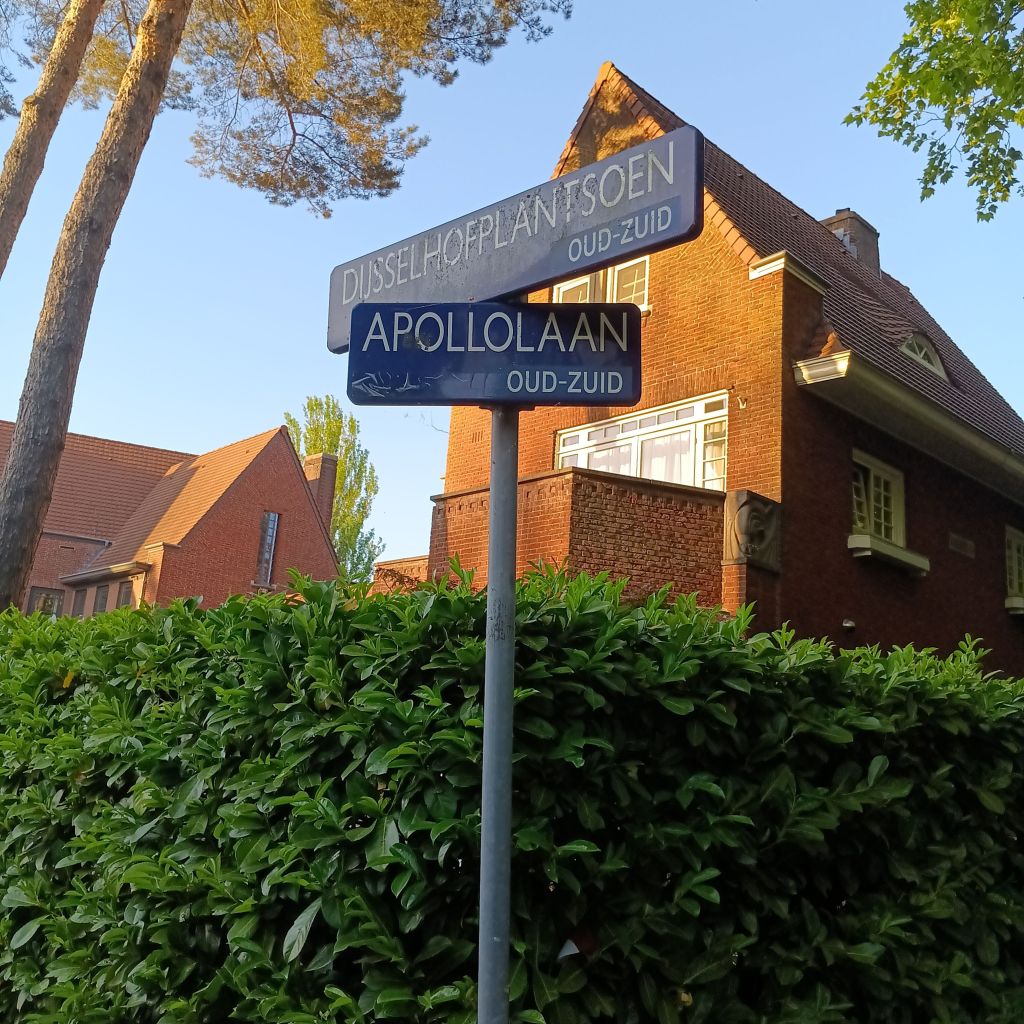
The street is named in honour of Apollo, god of art, music and light and the central garden is just full of sculpture of varied forms, styles and appeal.
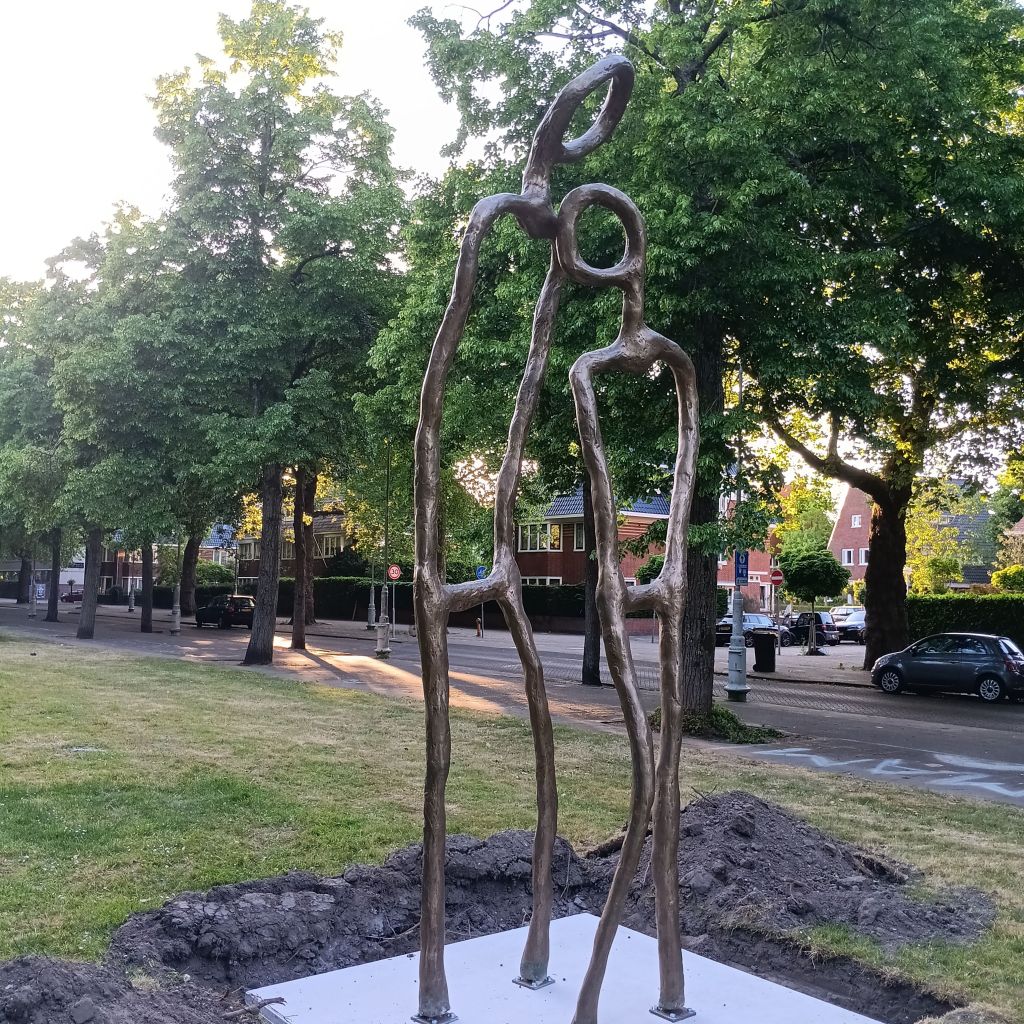
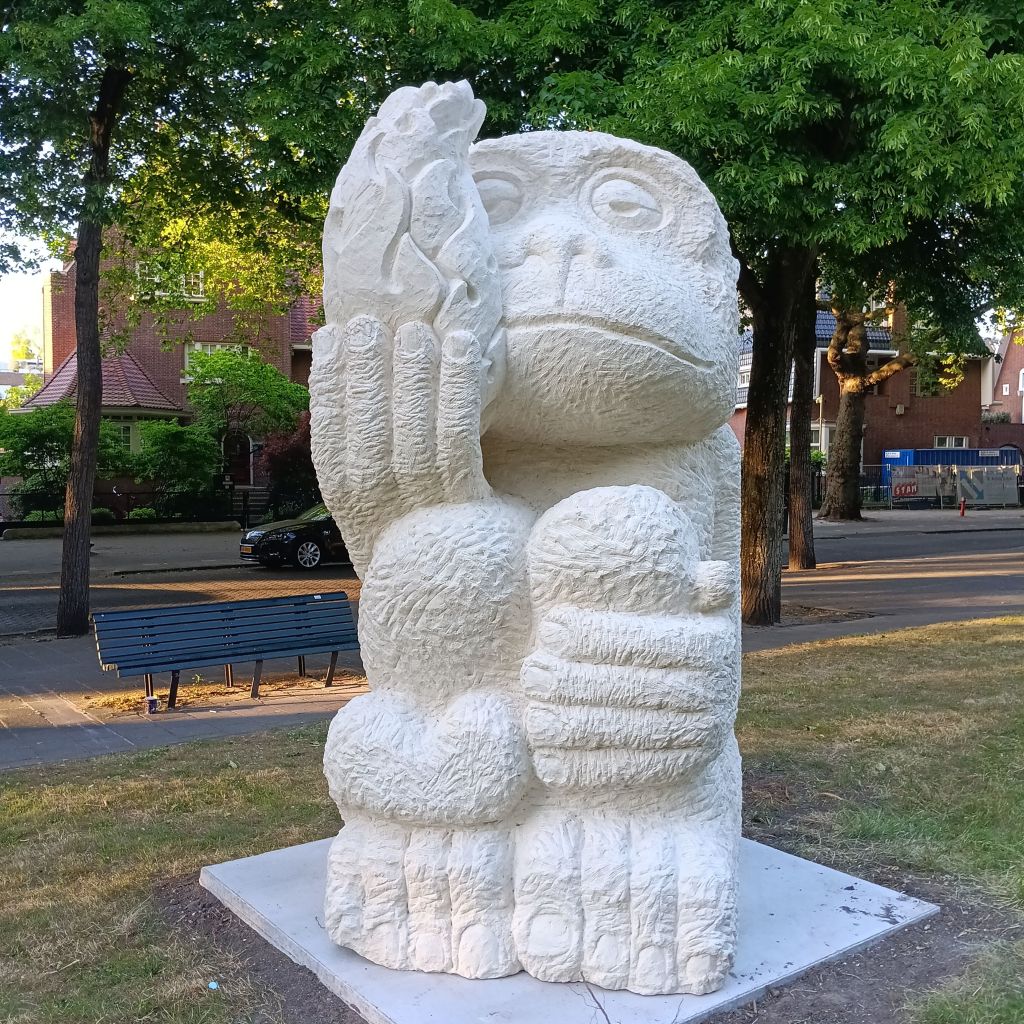
What grabbed my attention was the war memorial that had, on VE Day I presume, been adorned by flowers. Somehow this memorial encapsulate the beautiful lightness of Dutch culture about those oissues of sex/gender that still trouble our J.K. Rowling riddled land and culture.
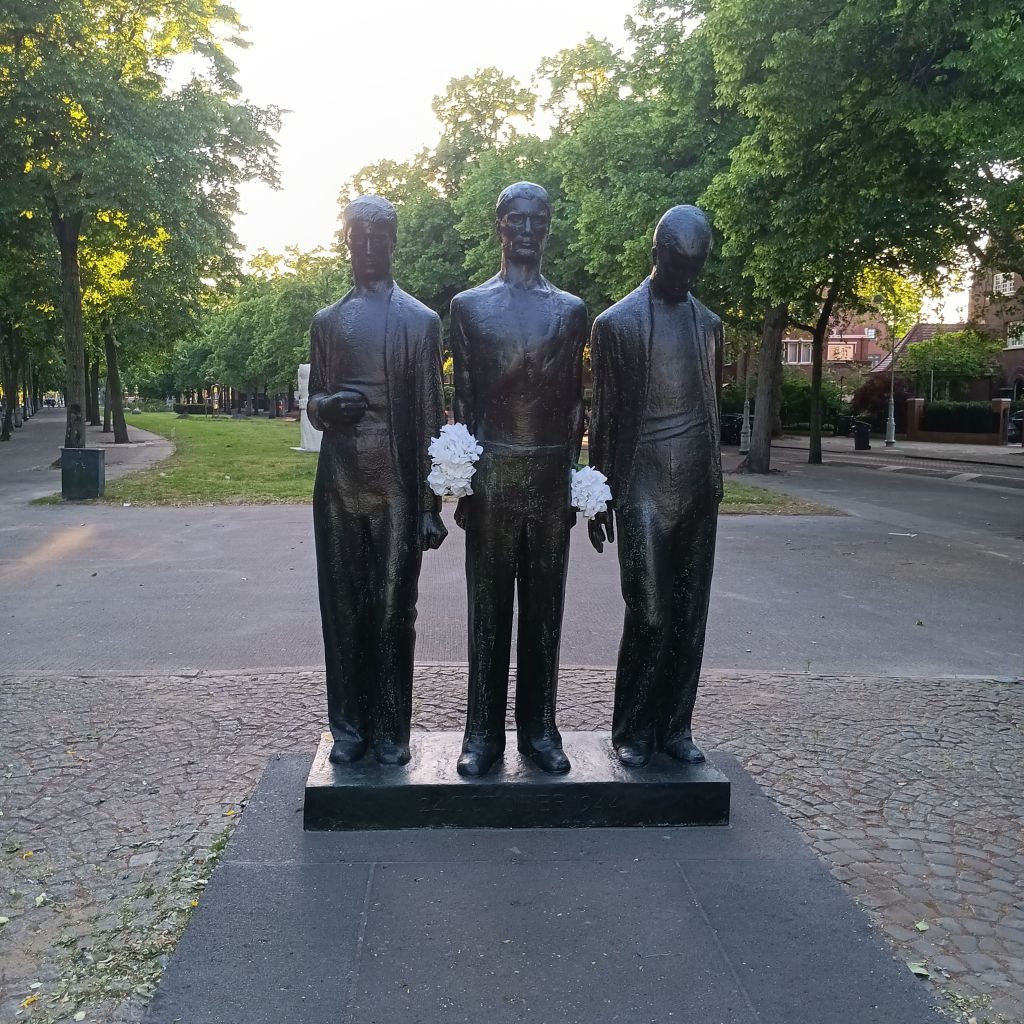
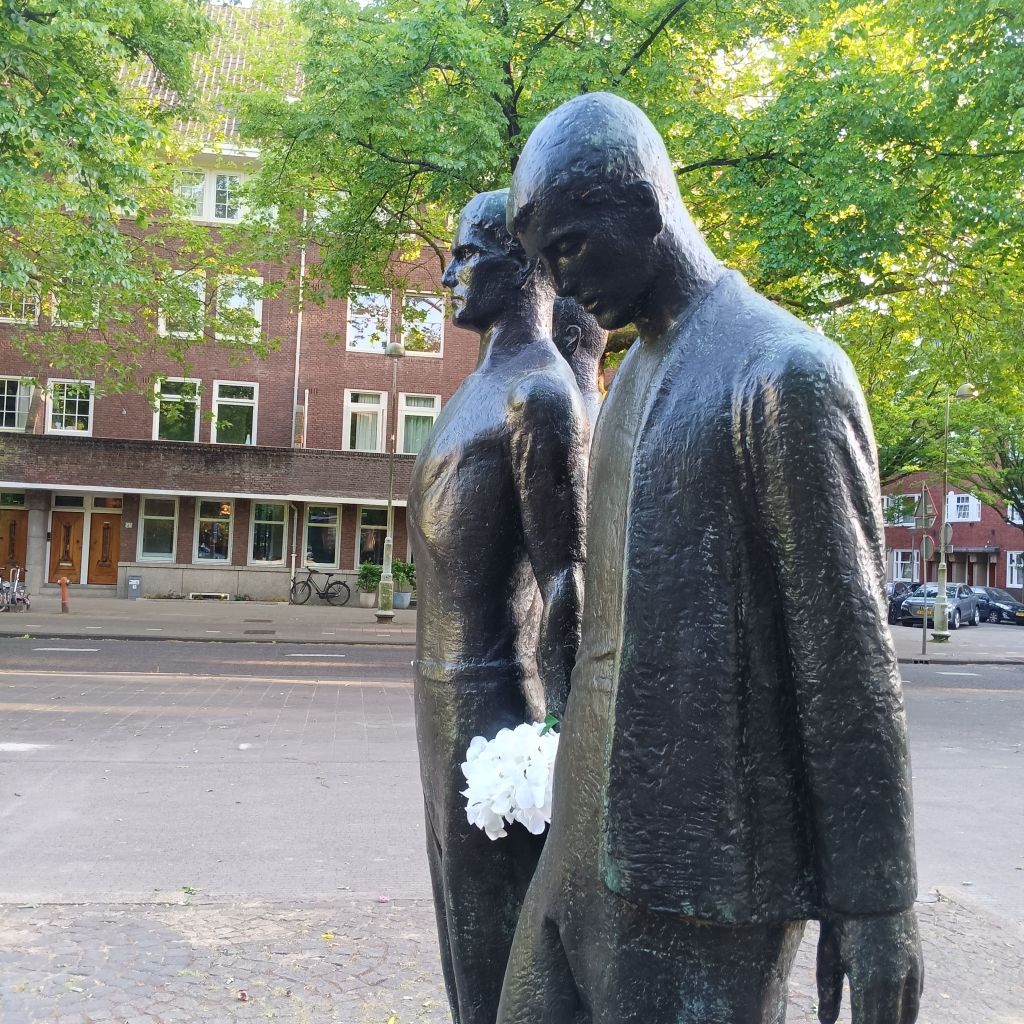
What haunted me then and haunts me now as I look at this rather faded evening photographs is that far from just being a strident WAR MEMORIAL (like the majority in London) characterised by macho representations of male toughness and rigour, this piece celebrates diversity of response to war and being called to fight it. Even the mirrored contrapposto pose of the outside males has a kind of softness to it that allows fear to be represented too, overcome by the unshowy determination of the central figure. these figure seem ideal resting places for flowers, acknowledging peace as the aim of all human endeavour not the pure insanity of war based on the most hoary of male values.
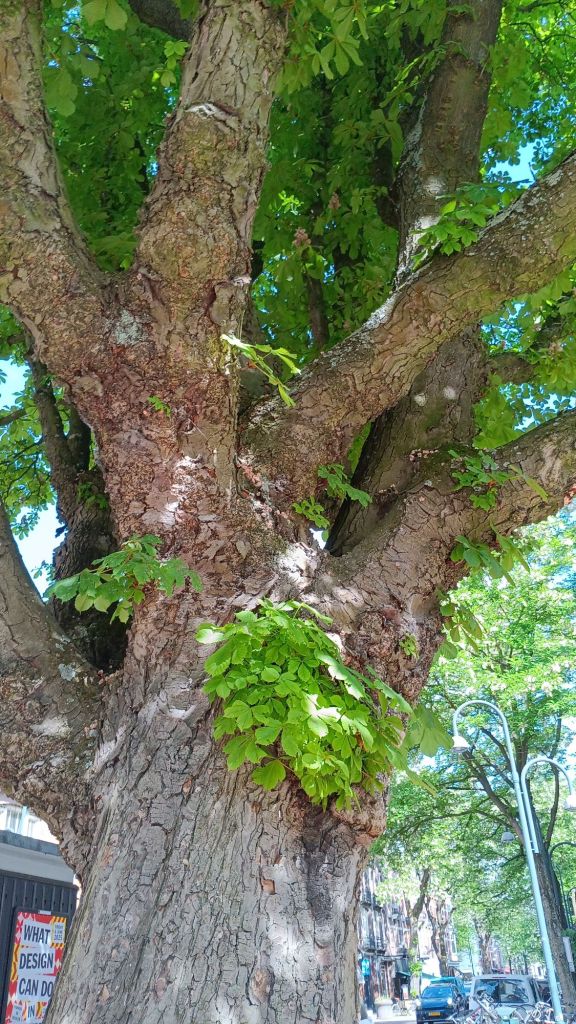
I the days that followed what photographs I did take were related to sitting in the shade of huge trees in the squares small or large in Oud Zeid, especially in the Cornelis Schuyt Straat which ran from the bridge over the Amstel near where we stayed and led to the perimeter of the Vondelpark. On its way it crossed many tiny squares bustling woth shops and cafes.
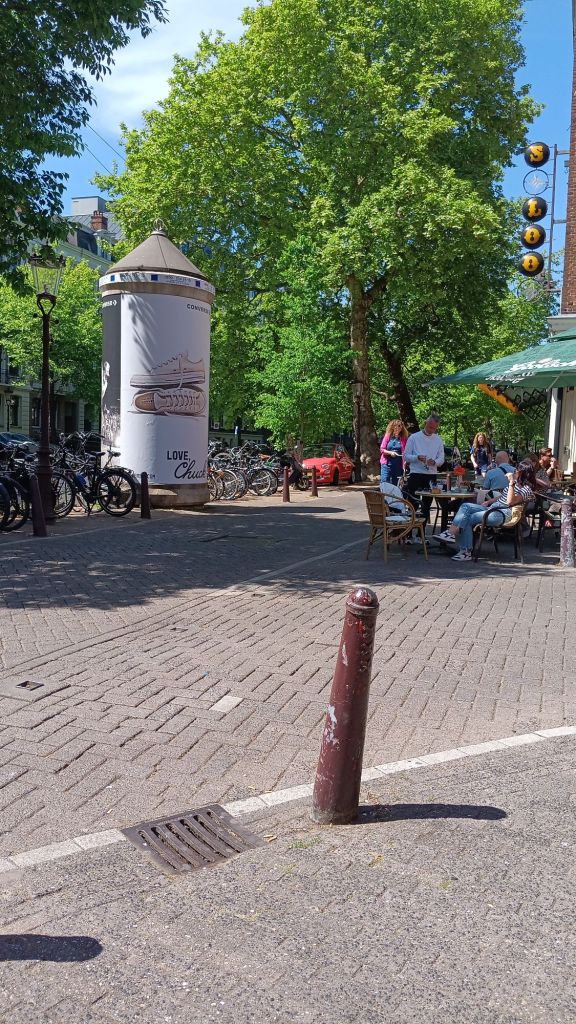
We breakfasted there under trees in small exceptionally clean squares in a place called Le Pain Quotidien: There is beauty too in how the Dutch embrace their European identity with markers of French and German, and in other places (nearer the centre) plentiful English.
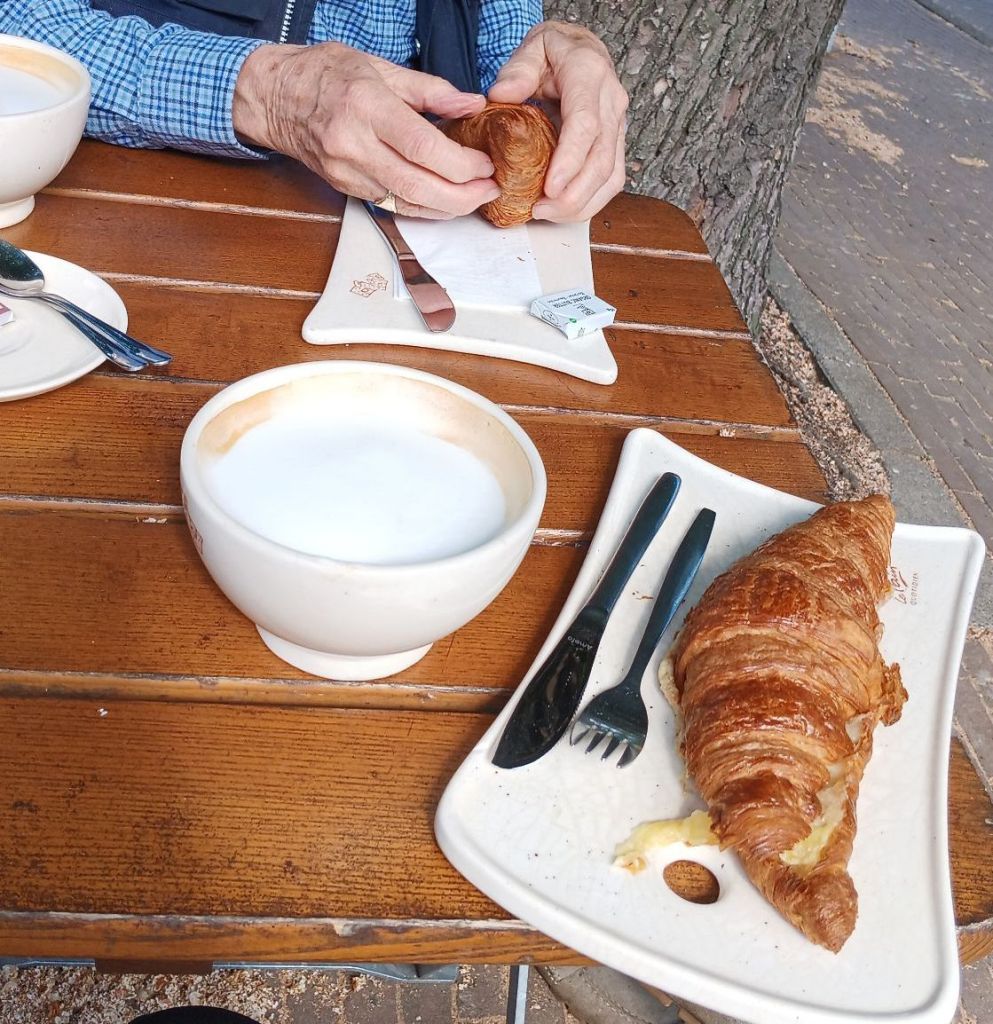
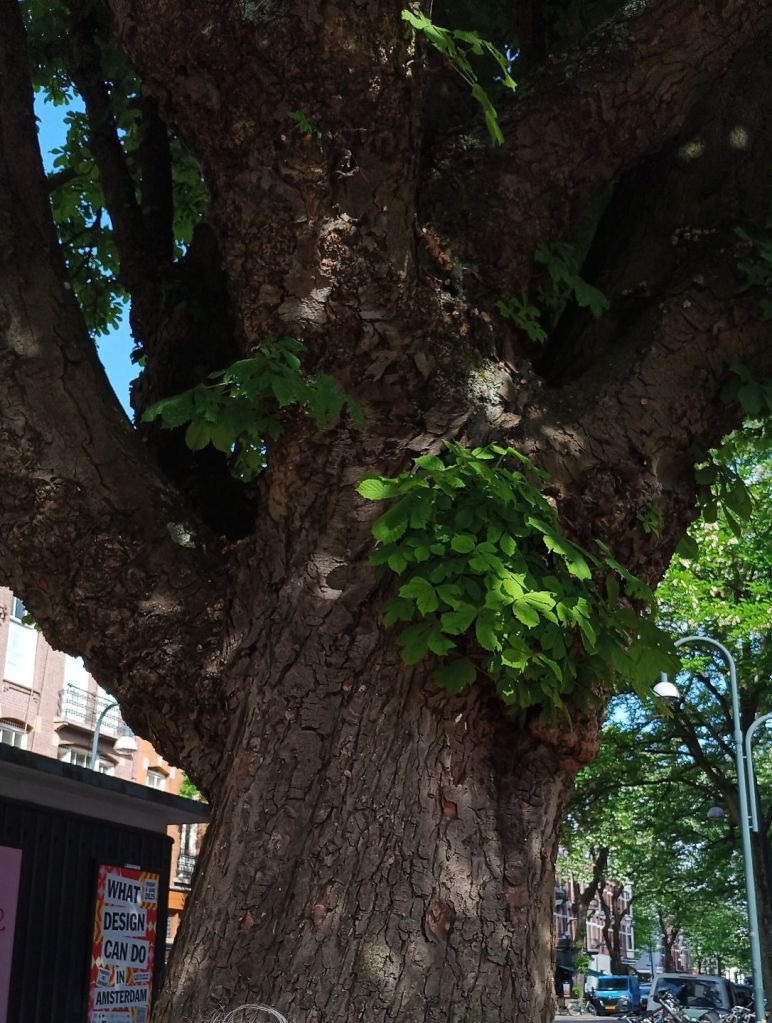
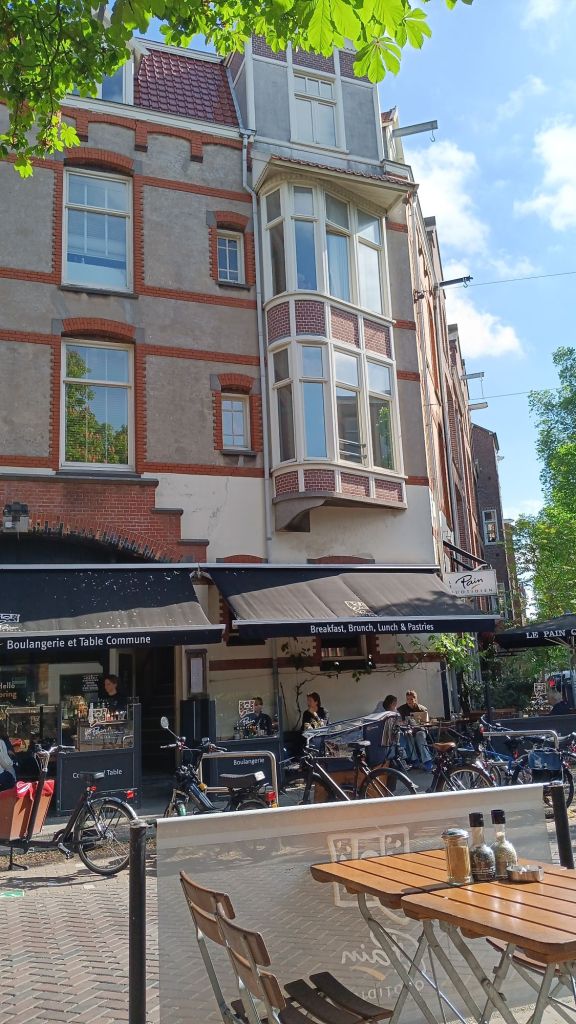
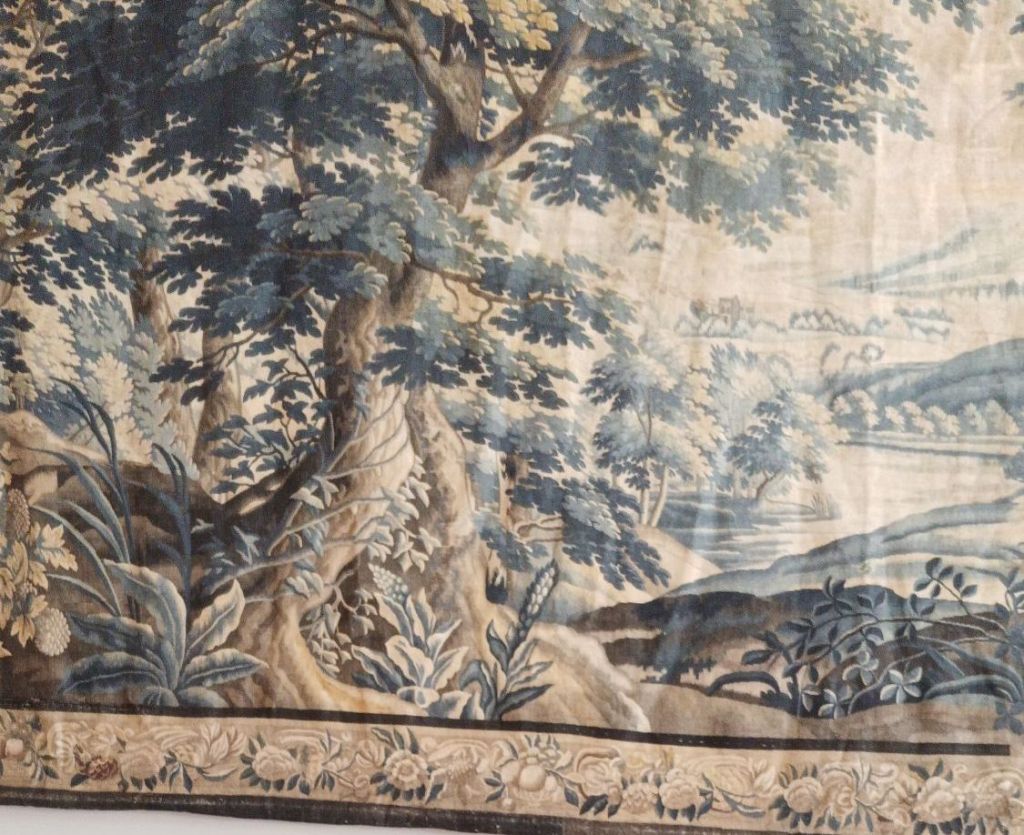
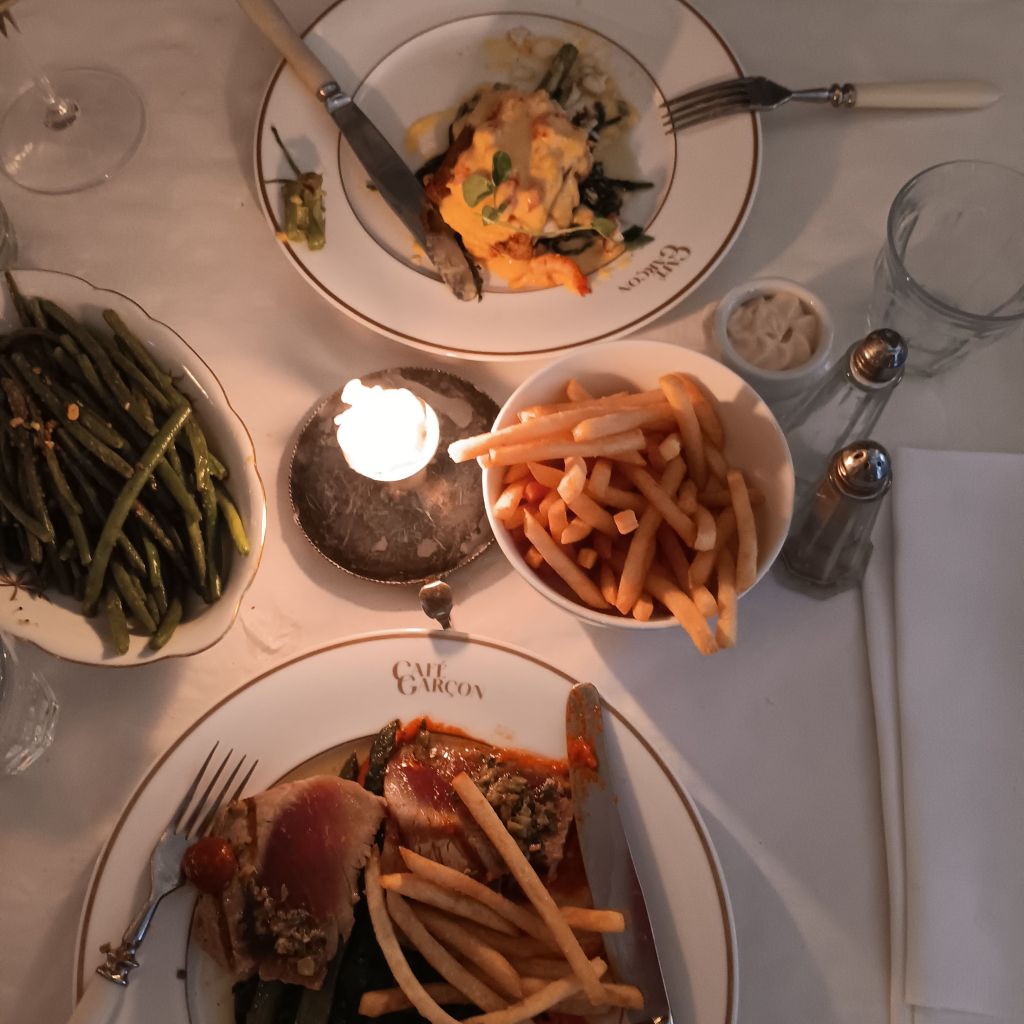
In that same street we dined one evening in a most stunning restaurant called unassumingly the Cafe Garcon (okay get the joke over – Steve always gets excited with the boys) that combined European cuisines and was adorned by tapestries. It not only unplugged me, it forgot to turn back on the electric current by which we usually live life. We dined on – baked Cod for Geoff and a Tuna steak for me:
The Vondelpark remained our favoured way of getting to the city, even if a detour of a kind from the Museumplein which was so often our destination. Vondel himself looked wonderful sat with a seagull on his head, his face spattered by its, and its colleagues, ordure.
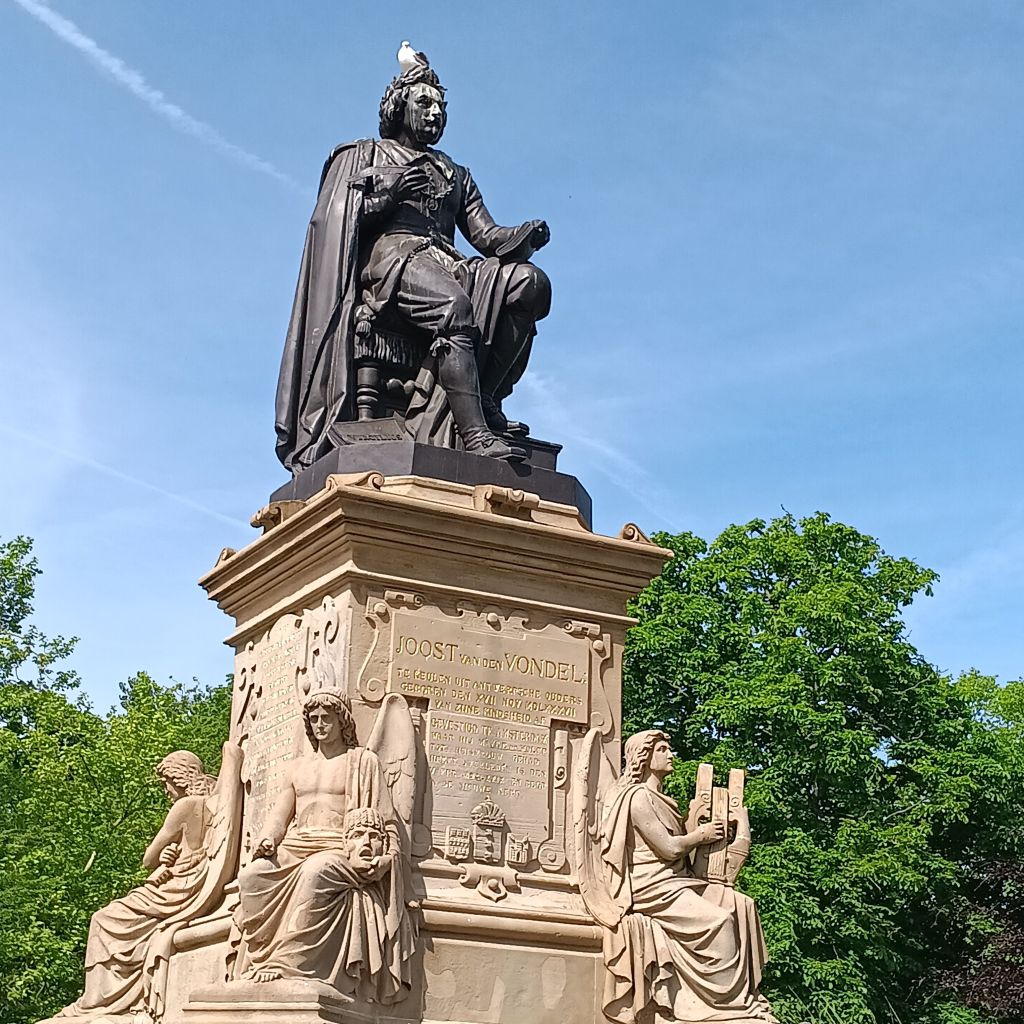
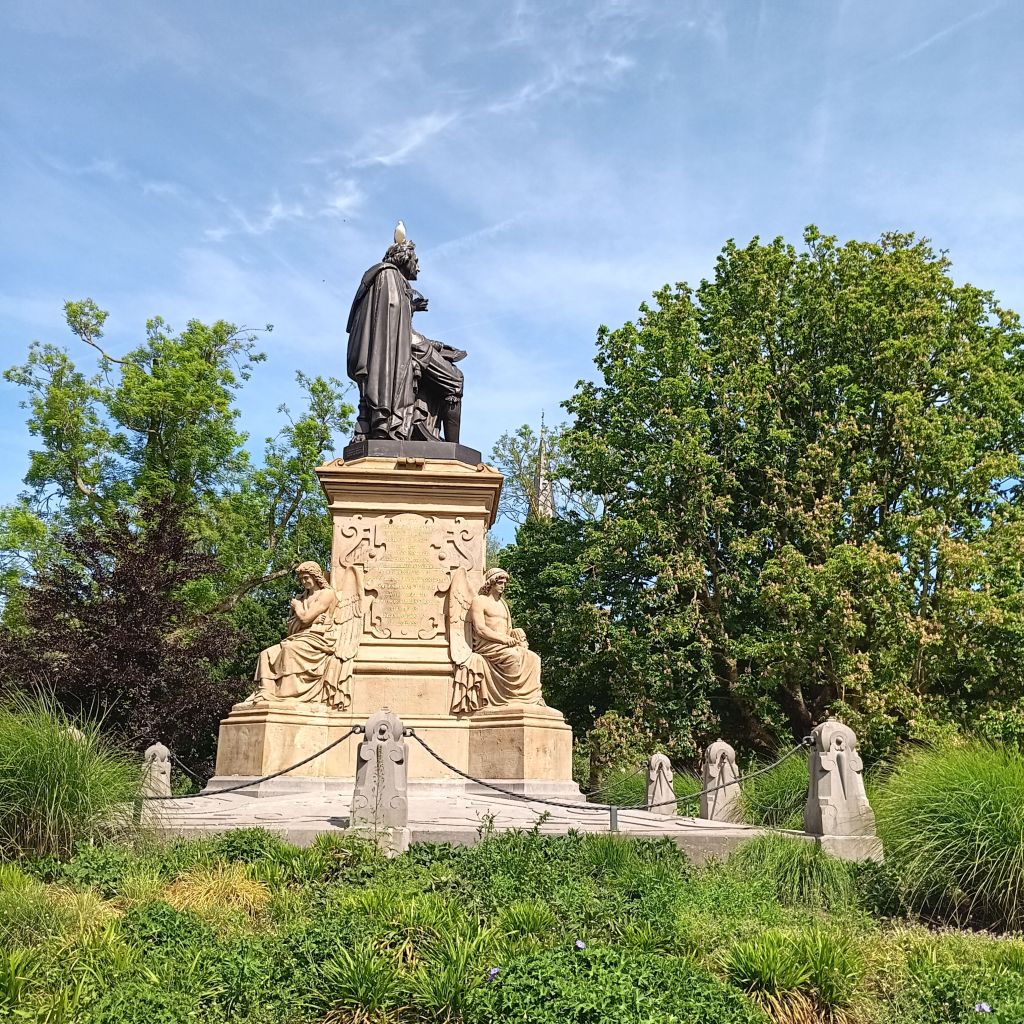
The park is a place in which all life seems to make transit – especially life travelling on bikes, but I couldn’t help feeling its greenery was characteristic of a city that felt fresh and clean throughout, which (so often) our own London is far from being:

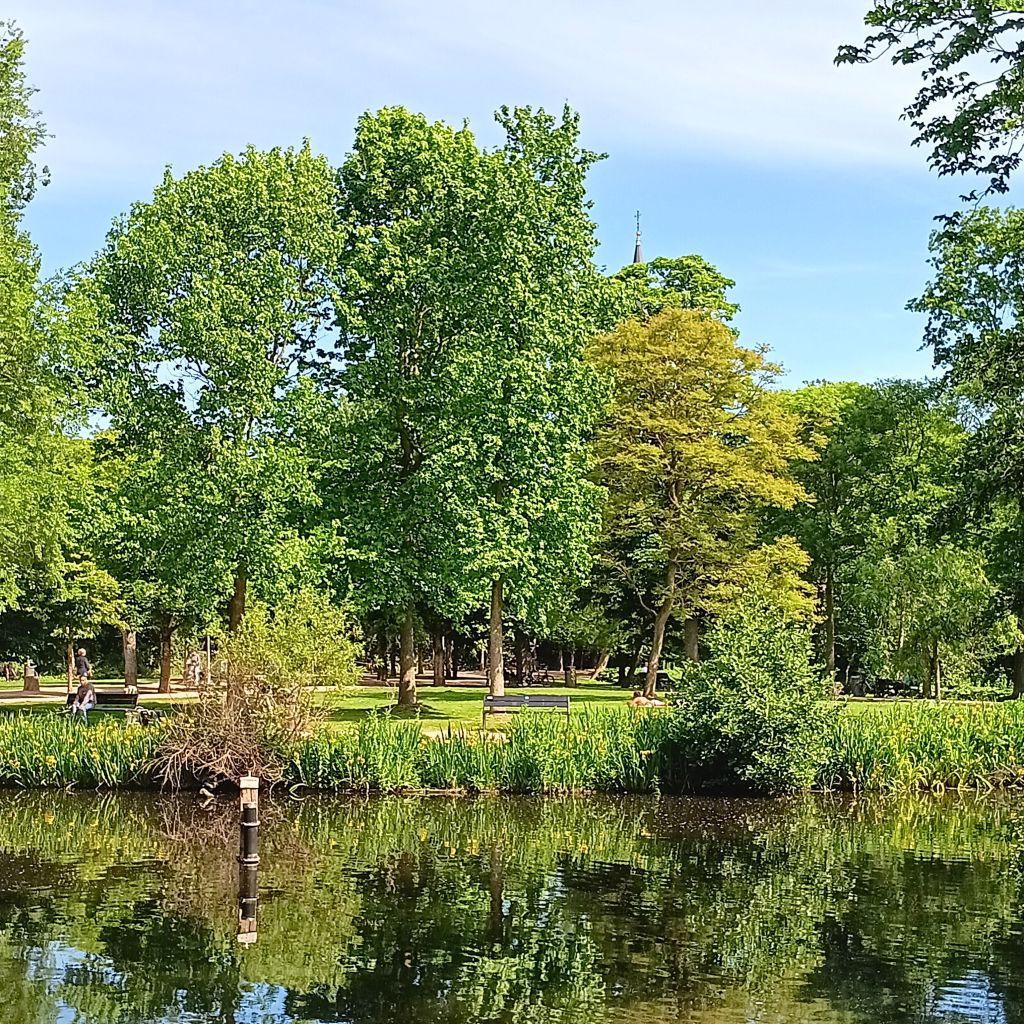
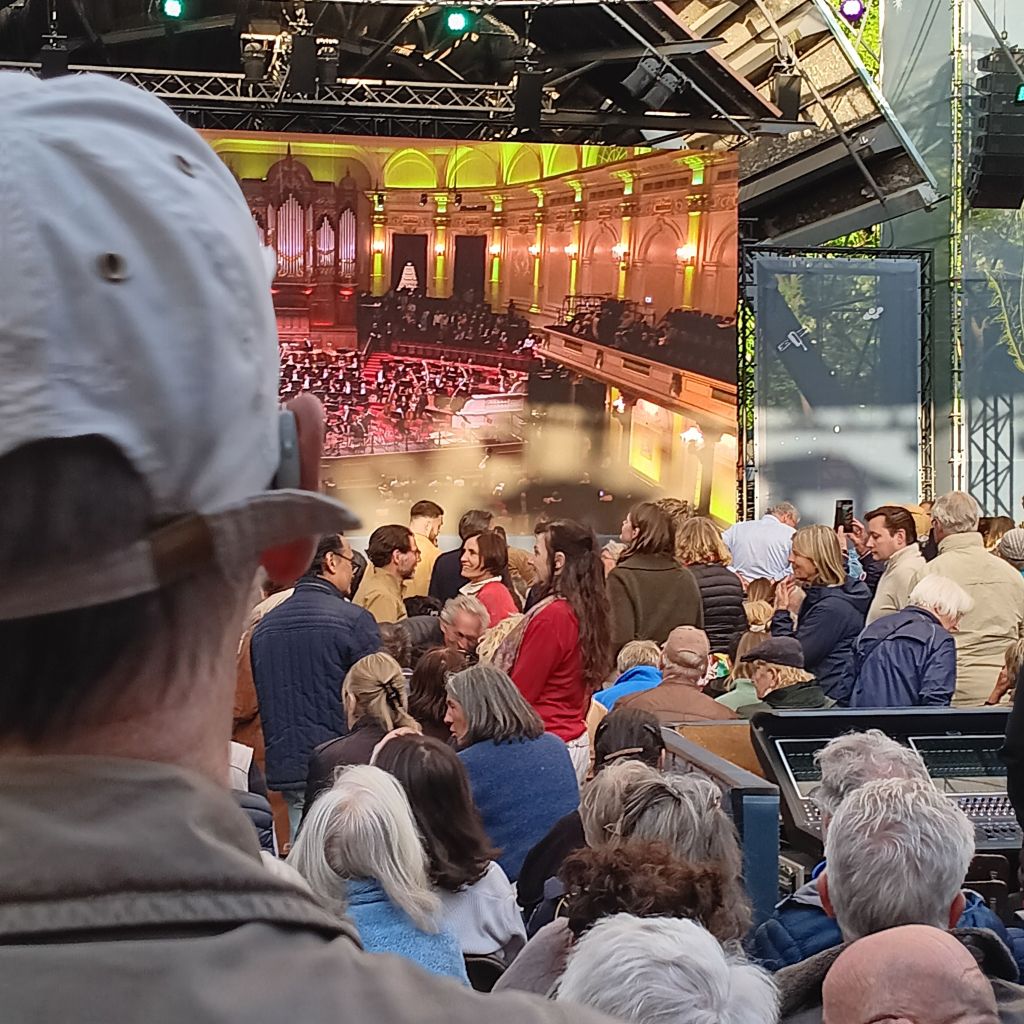
And in the center, on the evening of the Cafe Garcon, we also discovered a free event in the Vondel park, part of the Mahler festival then proceeding (the musicians were staying at the same hotel as us) where the concert playing in the Concertgebouw, up the road at the foot of the Museum Square, was playing for free in a wonderful amphitheatre in the park – totally free of charge.

Concertgebouw, Amsterdam. Below as steamed into the Vondelpark

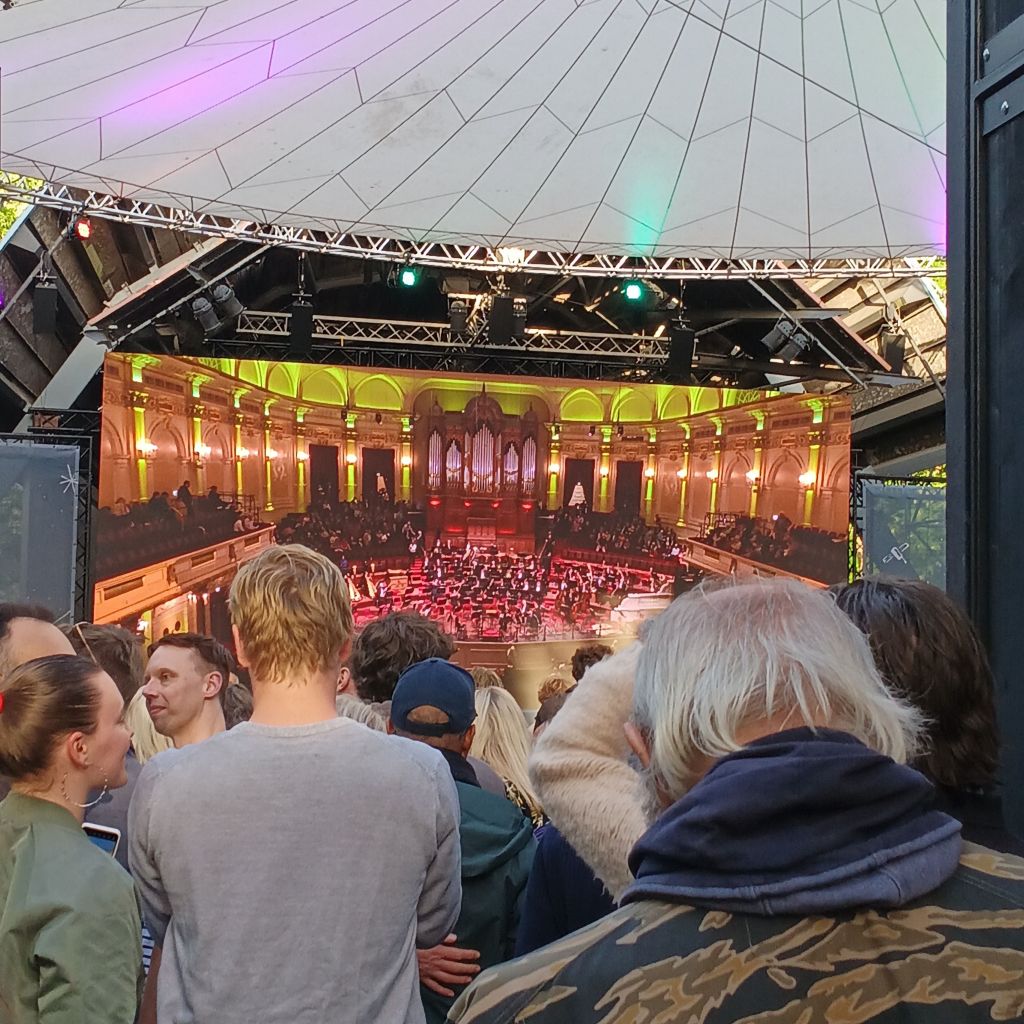
But most of the scenes I saw remain unrecorded. Perhaps this is because we were so unplugged.
Some of the rest that gave us is needed now, and my fear and gloom (highly charged with some unwanted electricity) is for our darling Daisy, whom now we will not have for long.
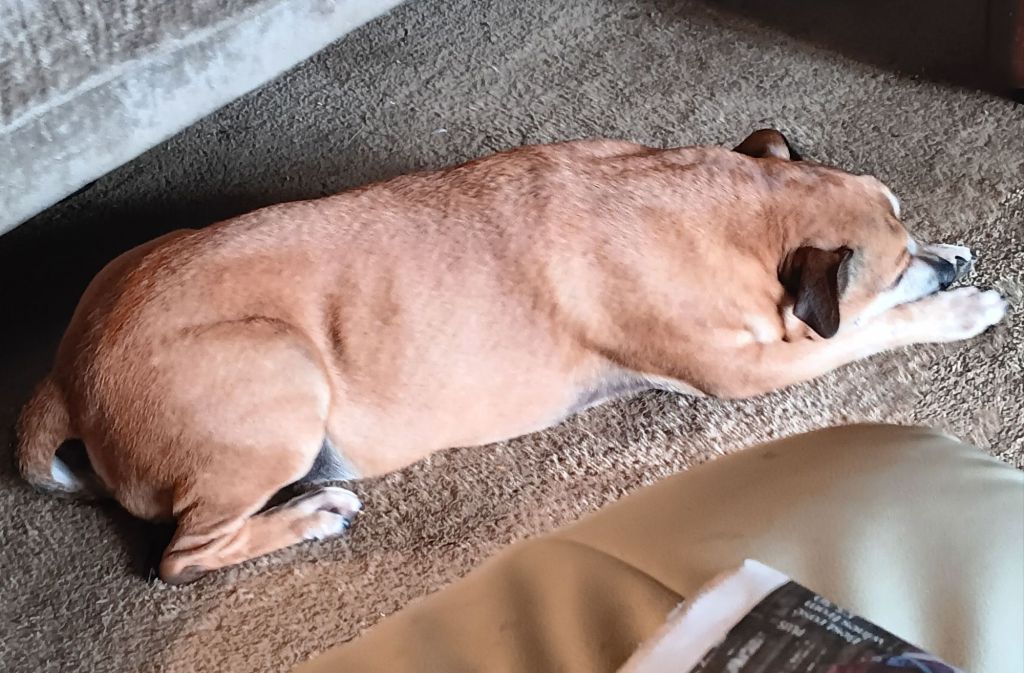
Daisy today
That’s all for now. Eventually I will write three more blogs:
- On the myth that visiting the Rijksmuseum is the only way of knowing the culture of Holland and the Dutch spirit.
- On Van Gogh with the help of Anselm Kiefer’s eye
- On the true necessity of Anselm Kiefer’s insistence on art about something.
See you sometime hopefully.
With love
Steven xxxxxxxx
 Steve_Bamlett_blog
So sorry to hear the bad news about Daisy, sending love xxx
LikeLike
Thank you so much. The steroids are working today and the bleeding stopped for now. I am aware that she will eventually be in great pain and will not delay the hard choice if it has to be made. Kes. You are so kind. With love Steven & Geoff
LikeLike