


This WordPress prompt ought to have been a gift to me – with a long history in LGBTQI+ politics, the word ‘camp’ has always had a history to reclaim. But to say ‘word’ in description of the term ‘camp’ here is not enough. I got stopped in my tracks from answering this question as I might have preferred , by camping it up into exaggerated playful pride of exuberance by the fact that ‘camp’ as applied to queer men has always been solely an adjective, even a derived adjective in that very term ‘camping it up’ since it is a verb derived from being an adjectival description of ‘it’ as you would wish to perform ‘it’, whatever that it is. In no way could I say I have been ‘camping’ with that satirical edge and still be pretending to answer the question.
As an adjective ‘camp’ is one of those words whose positive meanings had to be reclaimed – as is clear in the etymonline.com entry for it – although interestingly enough a putative derivation of the adjective is from a French verb used in the seventeenth century: ‘se camper‘. If that derivation had prevalence no one could be inhibited from using this question to say whether they have ever ‘put themselves in a bold provocative pose’ for some end or other.
camp (adj.): “tasteless,” 1909, homosexual slang, of uncertain origin, perhaps from mid-17c. French camper “to portray, pose” (as in se camper “put oneself in a bold, provocative pose”); popularized 1964 by Susan Sontag’s essay “Notes on Camp.” Campy is attested from 1959.
But of course our Prompt Question might still insist that its aim is to mean ‘Have you ever been on holiday in a tent or other temporary structure set up in a place of fun, beauty, restorative recuperation or diversion?’ Of course, that word too is of recent history: again consult etymonline.com – this time with regard to the term as a verb.
camp (v.) : “to encamp, establish or make a camp,” 1540s, from camp (n.). Related: Camped; camping. Later “to live temporarily in tents or rude places of shelter” (1610s), in modern times often for health or pleasure. Camping out is attested from 1834, American English.
Of course etymology is not everything – indeed not full enough for all of the associations that gather round the term in popular modern politics – in the discussion of the term ‘gypsy camp’ for instance – whence ‘camp’ as a noun takes on the negative associations in the mind of normative settler communities of the unpleasant aspects (too their settled minds, of nomadic lives. This is a them Bruce Chatwin made his own – ringing various changes on it in his incredible novels.
But camp has, whether you like it enough, an association with belligerent oddness – of cocking a snook at the normative. perhaps it comes from the military associations of the noun, wherein camps are set up in order to find a temporary base from which to attack an enemy who comes upon us – nowhere better imagined than in Shakespeare’s Henry V, where the Chorus says in preparing his scene for demonstrating the Battle of Agincourt:
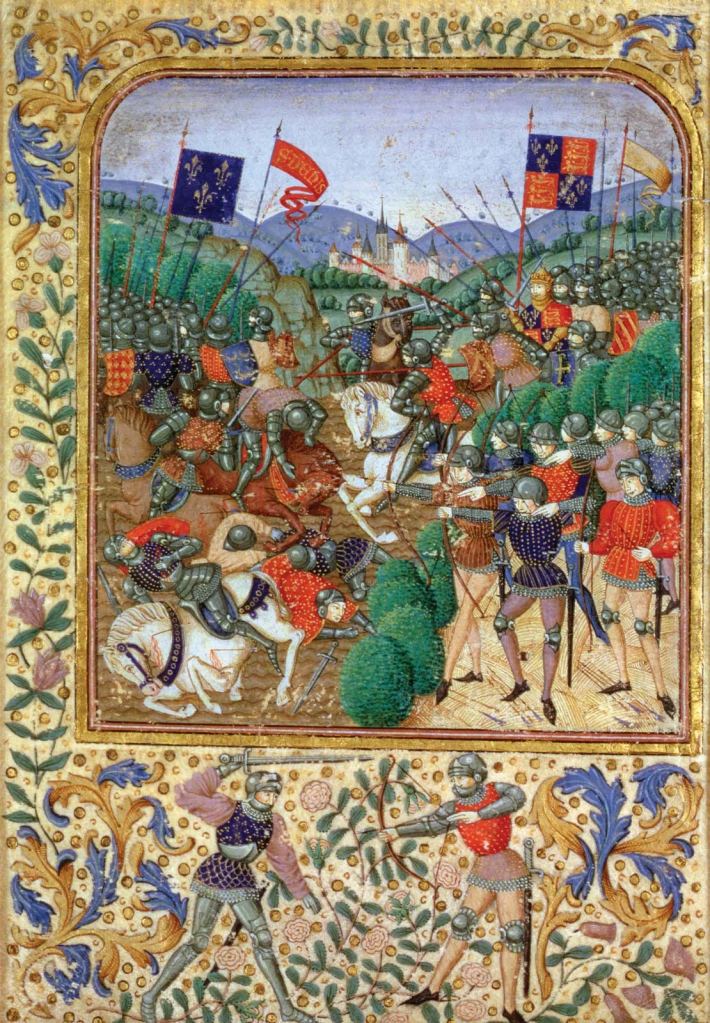
Now entertain conjecture of a time
 When creeping murmur and the poring dark
 Fills the wide vessel of the universe.
 From camp to camp, through the foul womb of  night,
 The hum of either army stilly sounds,
 That the fixed sentinels almost receive
 The secret whispers of each other’s watch.
 Fire answers fire, and through their paly flames
Each battle sees the other’s umbered face;
 Steed threatens steed in high and boastful neighs
 Piercing the night’s dull ear; and from the tents
 The armorers, accomplishing the knights,
 With busy hammers closing rivets up,
Give dreadful note of preparation.

William Shakespeare Henry V, Act 4, Chorus 1 - 15
The camp is the bold pretence of antagonism that has come too near not to be fearful. If ‘camp’ were a verb here and not a noun, it would mean ‘pout oneself in a bold provocative pose’ and describe the performance of masculine rituals that depend on keeping your distance from another man, lest he be your enemy.
Do you take my point. In the early days of queer liberation, to camp was a verb. it meant to stand your ground who was always too near around you, whose aim was to persuade you to hide rather than defy their bold pretenses of the norm as a performance of the only permissible form of the ‘natural’. But in truth ‘camping’ means that there are great similarities in your camps – everyone is defensive and in’ ‘feeling one’s own fear and doing it anyway’ one was often aware of the: ‘The secret whispers of each other’s watch’. We are all blockaded in by hate and the noise of our armour in making: ‘busy hammers closing rivets up’. To be ought not to be like an act of war.

Yes. I have been camping thus understood – but true communalism would be end of all camps for diversity would be the norm. And in such a world ‘refugee camps’ would not be the world’s answer to diversity not the concentration of hated populations with a hating norm not a recourse whose evil was not clear, as in present-day Israel.

With love
Steven xxxxxxxxxxxxxx
 Steve_Bamlett_blog
One thought on “Maybe the performance of difference need not involve ‘camping’!”