What are 5 everyday things that bring you happiness?

Today at Bishop Auckland festival market, I looked for five things that gave me happiness. They don’t endure. They can’t. Happiness can only be a fleeting accident of life, not a permanent keepsake.
I have tried to unpack my issues with the expectation of ‘happiness’ already in another blog [see that blog at this link], and there I insisted that we need to see the demand for happiness, especially as a public policy (as initiated by the Tony Blair government) as a kind of giving in to the inevitability of an everyday life that is governed by commodity capitalism. Happiness is itself a commodity in such circumstances where most of the joy of lies in the packaging and unwrapping of the commodity in false promises. Keats said in the opening of his poem Endymion:
A thing of beauty is a joy for ever:
Its loveliness increases; it will never
Pass into nothingness;
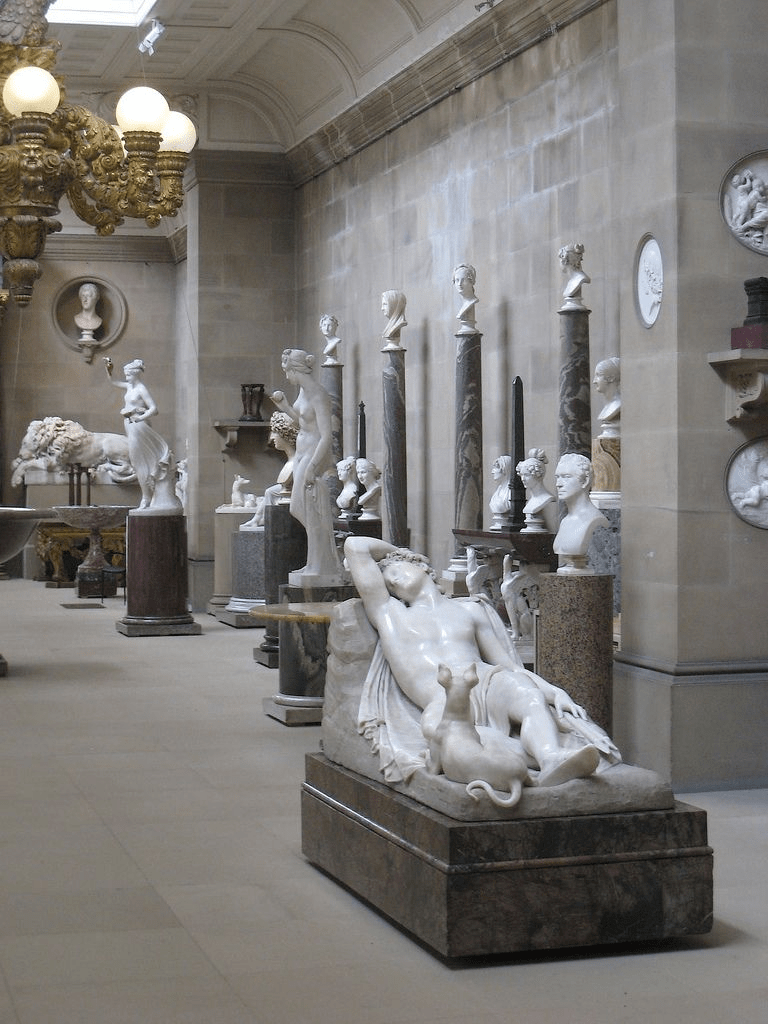
He was addressing this very question of putting our faith in the thinginess of commodities and our desire to acquire and keep them, as false promises suggest to us we should try. Yet look at the Canova’s statue of Endymion asleep in the context of the collectors’ paradise of Petworth House and he is exactly that: a ‘thingy’ commodity, ready to fade into ‘no-thing-ness’ as undesired examples of a past idealism do. Stone will not pass as quickly as flesh, or even material less sturdy than flesh, but it ‘fade’ sometime – if not materially, then perhaps in the interest it has for consumers of its appeal to a certain kind of classic but hardly classical beauty. If Petworth House remains, it still has faded – into a kind of nothingness relative to its earlier power to hold sway culturally, socially and politically together with its range of impressive ‘things’ inside it.
Keats’ opening to Endymion keeps its appeal because of the clever way that it defines identity not only by a stock idiom of timelessness but by showing that timelessness is also non-existence, the very nothingness’ eternally that it will therefore never become. Ne does this with the beautiful double rhyme between ‘for ever’ and ‘never’and thec enjambment that makes us take the ‘never’ as an existential statement rather than the lie of being eternally unfading. it never fades because it does not ever exist as such, as a thing. Happiness and joy are accidental qualities not permanent ones, and yet sellers try to insist, or ask us to rely ion cliches that assert it does despite the obvious fact it does not. The very fact that this prompt question asks for five ‘everyday things’ that bring you happiness suggests that happiness is a fleeting feeling of things that occur and then pass from memory, to be replaced by another – or not replaced at all (the more common event).
Capitalism doesn’t have to be large scale to promise that things bring you ‘joy forever’. Today I visited a fair selling foods and craft goods at Bishop Auclkland – full of ‘things’ to buy and keep that promise to be a joy forever – even if, in the case of the foodstuffs only in selective memory. At one market stall, the pro.ise of a ‘permanent bracelet ‘ for sale was an example of the kind of idiom that promises that a thing can be purchased and kept that is a thing forever.

But the number 1 passing accident of happiness today for me was coming across this lively fair with its crass entertainers and large tongue-in-cheek promises and finding things to make me smile at the sheer wonder of our human folly.
Were there another four moments offering tje accident of happiness. Yes. The walk to the town along the Wrar valley beneath it in tne sun:

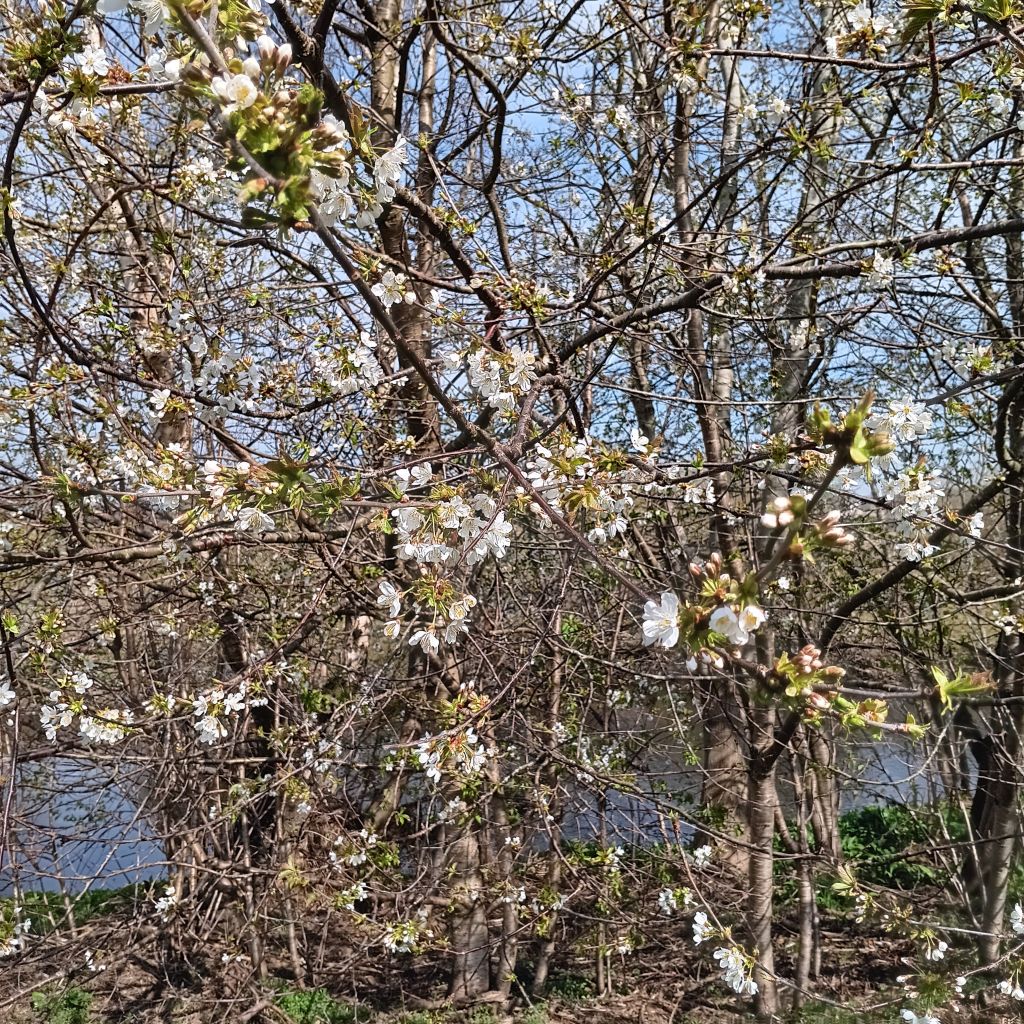
Third, the moment when I noticed the cherry blossoms on the Wear river’s bank:
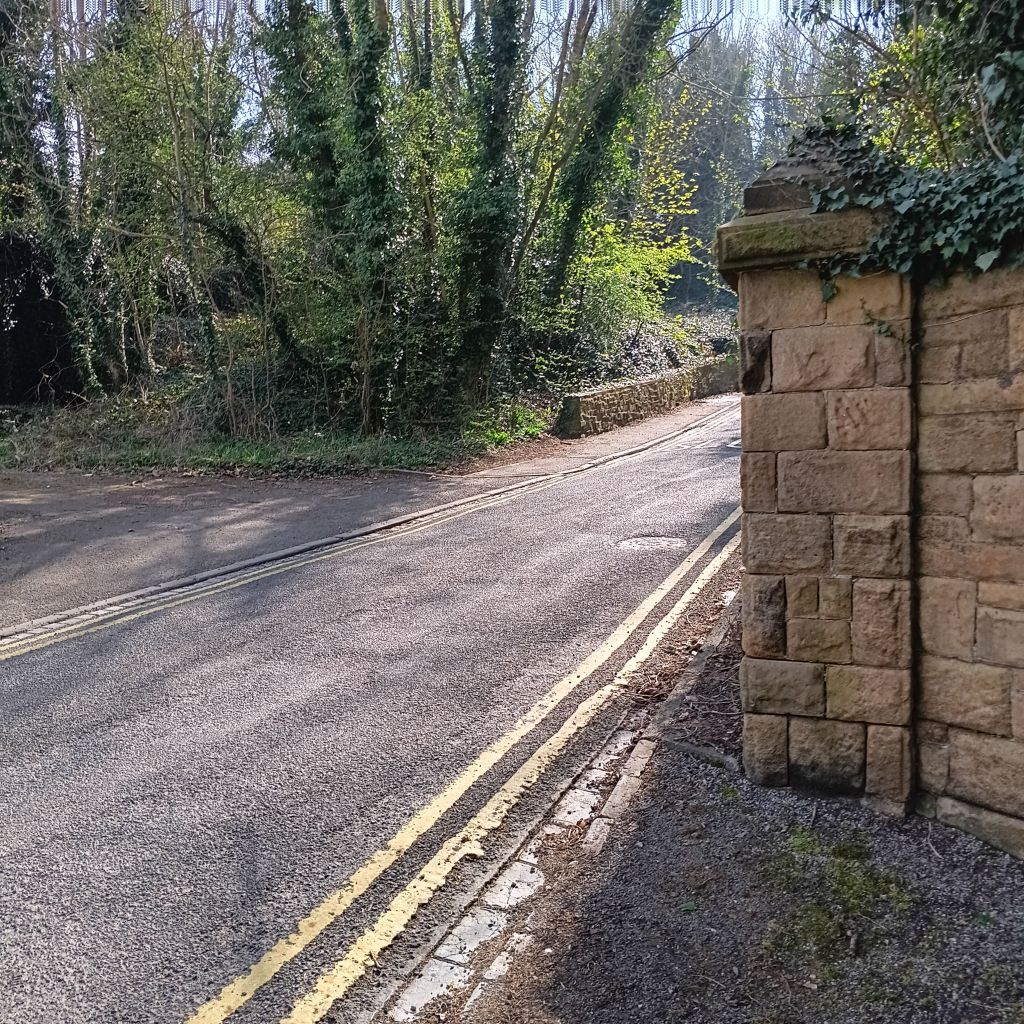
Then the shade in the walk up the lane to the town;

And finally, remembering that I am with my husband, Geoff, and our dog Daisy. During the accidents of our lives together, some happiness arises.

Bye for now.
With love
Steven xxxxxxx
 Steve_Bamlett_blog