


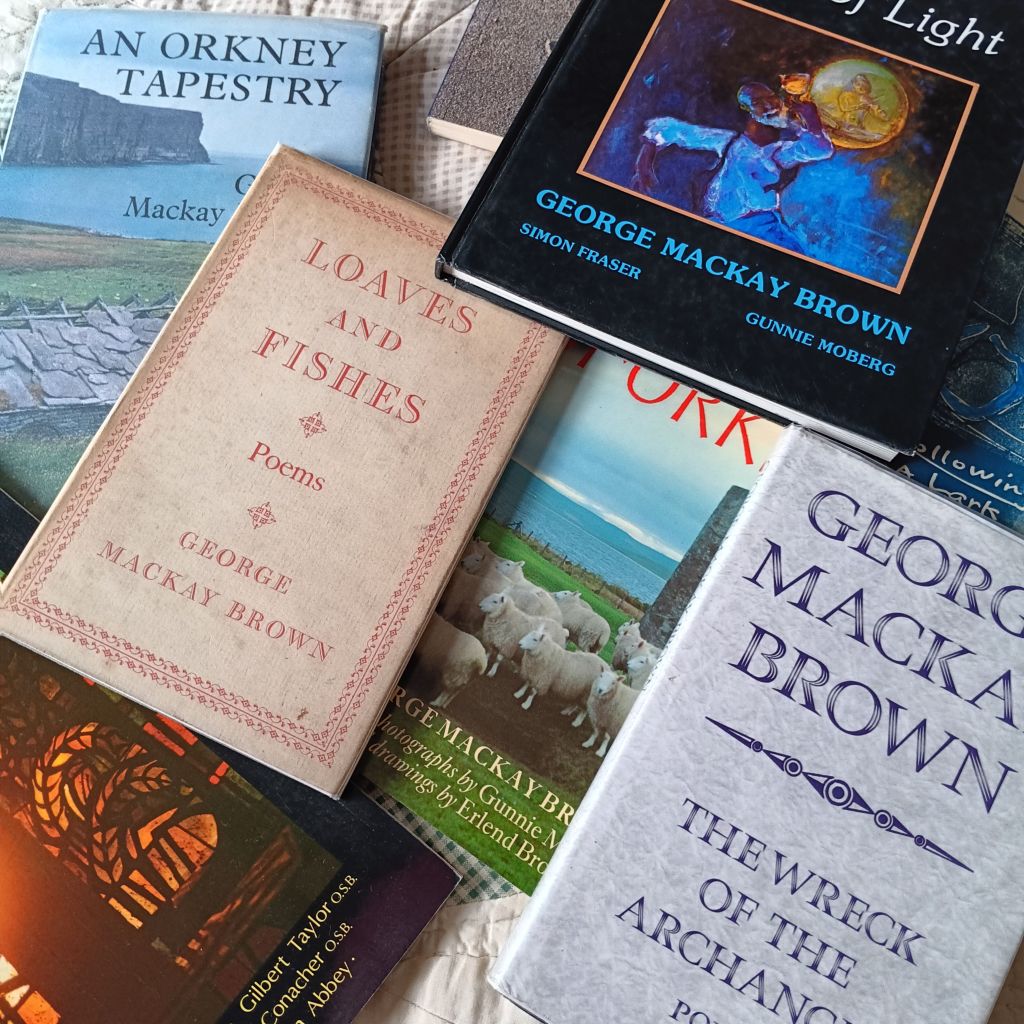
I am still sorting my books. I have reached George Mackay Brown (GMB), and I read as I go. He wrote a version of the Orpheus myth as it had been translated into Shetland Islands myth in medieval times with the poet Orpheus with his lyre now translated as in other medieval takes on the myth to Orfeo with a fiddle. He imagines Orfeo a fisherman somewhat disdainful of his lot and a poor girl who tends him, besotted with his Eurydice, Maurya, Maurya’s family disdain Orfeo’s poverty, as he had spurned his serving girl, and send their daughter away into service of a great Lord, where she dies. Intent on fetching her from the Underworld, Orfeo fails because his lust for ‘a surge of kisses (no song)’ for which he ‘prepares his mouth’. As he turns to claim them:
She wanes, frail flame
               Drowned in torrents of noon.
Yet what Orfeo sought the Dark King who rules the Underworld knows never exist. Like everyone else he might , had he seen her as she is, have seen her as the Dark King says:
You will see her bent and sour and ugly, going graveward
             In a slow broken dance.
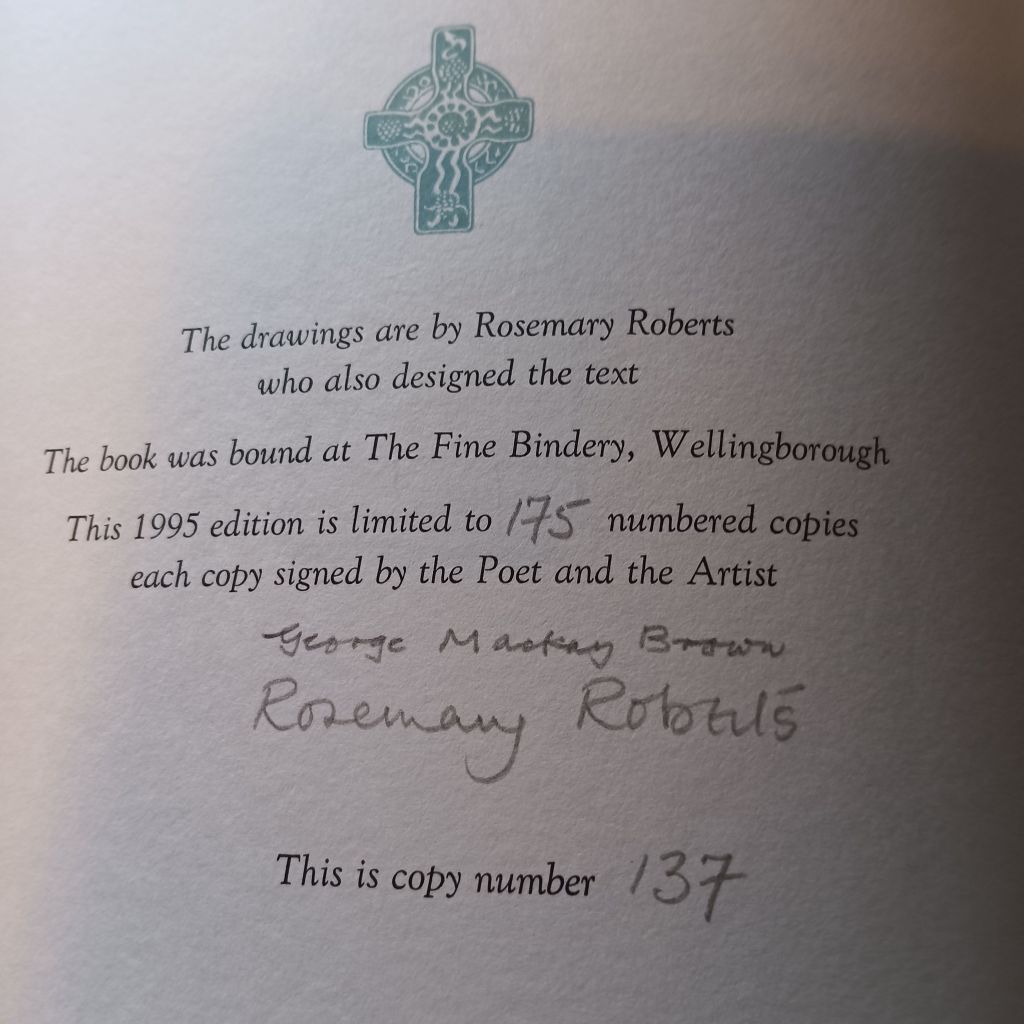
One cannot know if GMB ever referenced the queer life of the Orpheus of Classical Times after his failure with Eurydice. In Orfeo, the modern poet has him broken by poverty in the poorhouse and the victim of communal gossip, which he sees as that of older women. As Orpheus’ body is dismembered in Classical myth Orpheus ends, as quoted in GMB’s prose introduction ‘in the poor-house, torn to pieces by the tongues of the Voe women‘. Here is the version in the poem itself with Rosematy roberts illustrations from the limited edition in my library
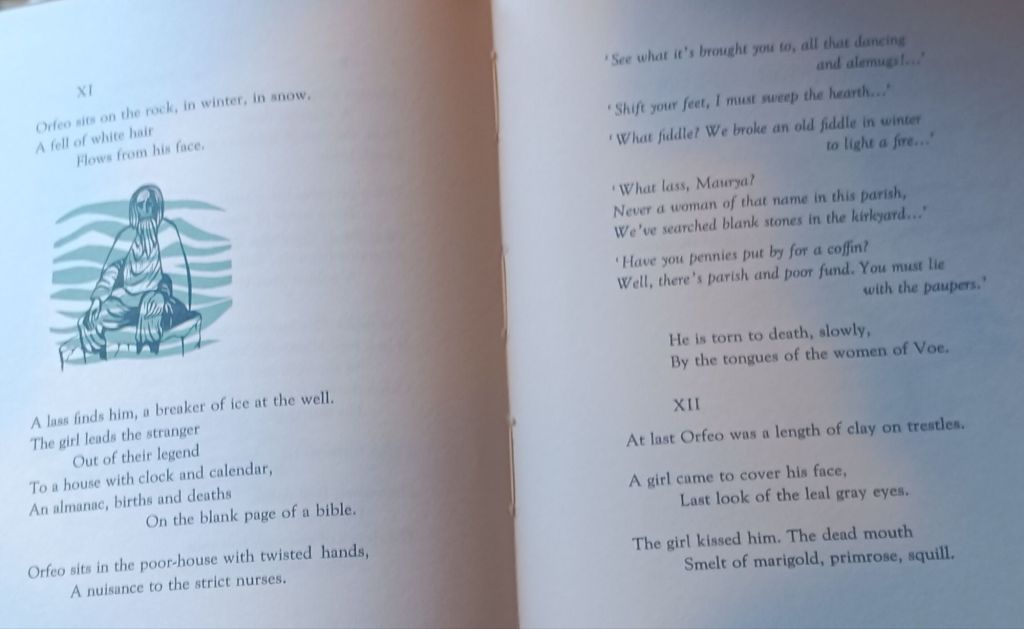
Roberts shows all the dramatis personal in the poem in this drowned state.
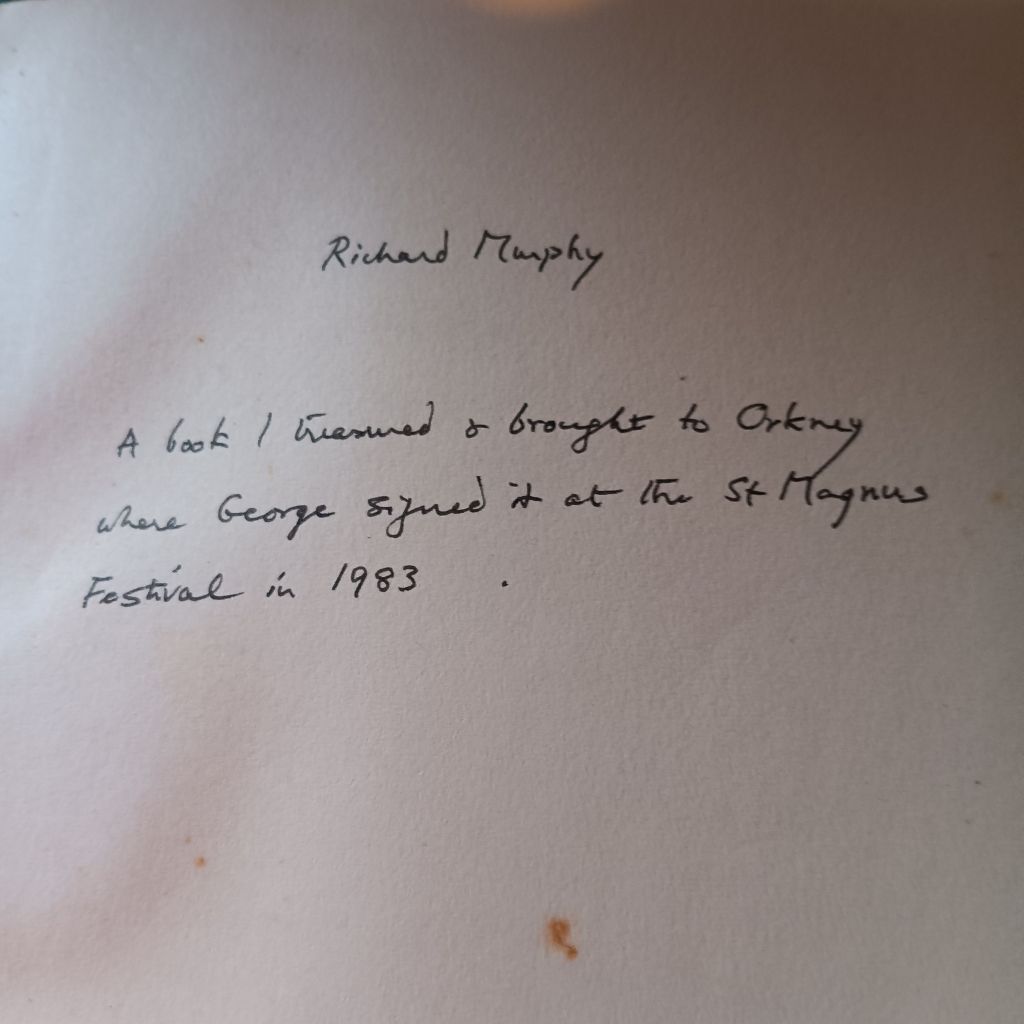
But this is not the first reference yo the myth. I found the first in my copy of The Year of the Whale. My copy once belonged to the queer Irish poet Richard Murphy. Here is his inscription to it:
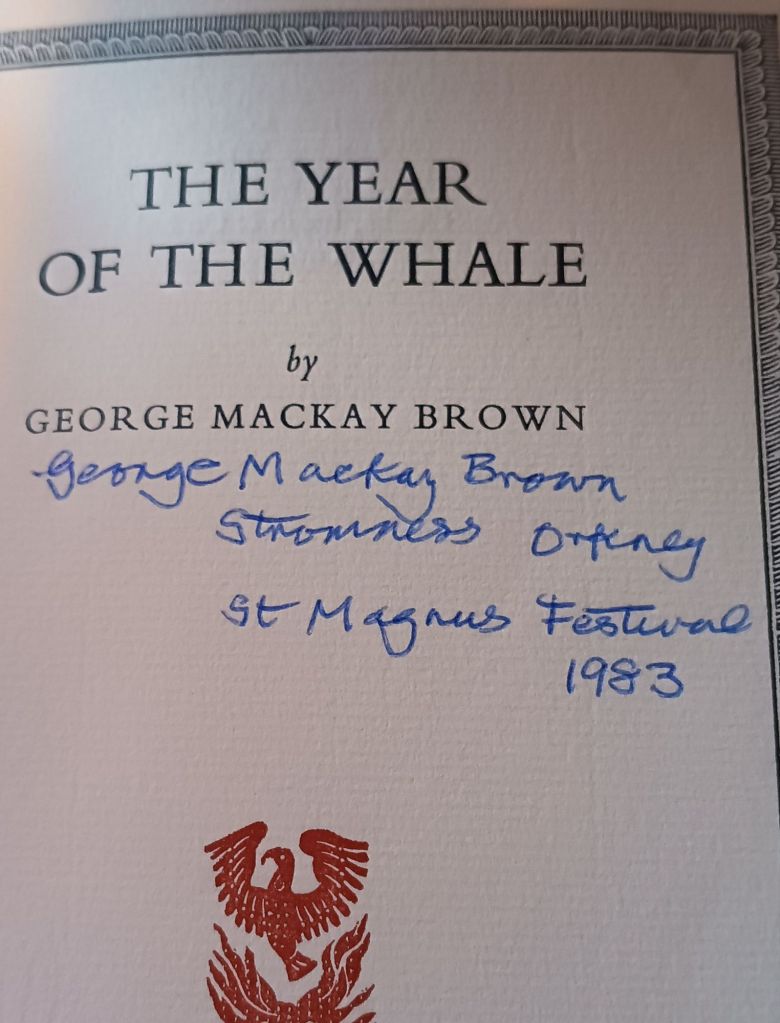
In it are two poems facing here other, as if forming a dirty heart of her and his stories of a romance : the first is Country Girl, the second Boy from the Shore. The placing seems to me a deliberate mask or evasion of the second poem’s queer beauty. Here it is:
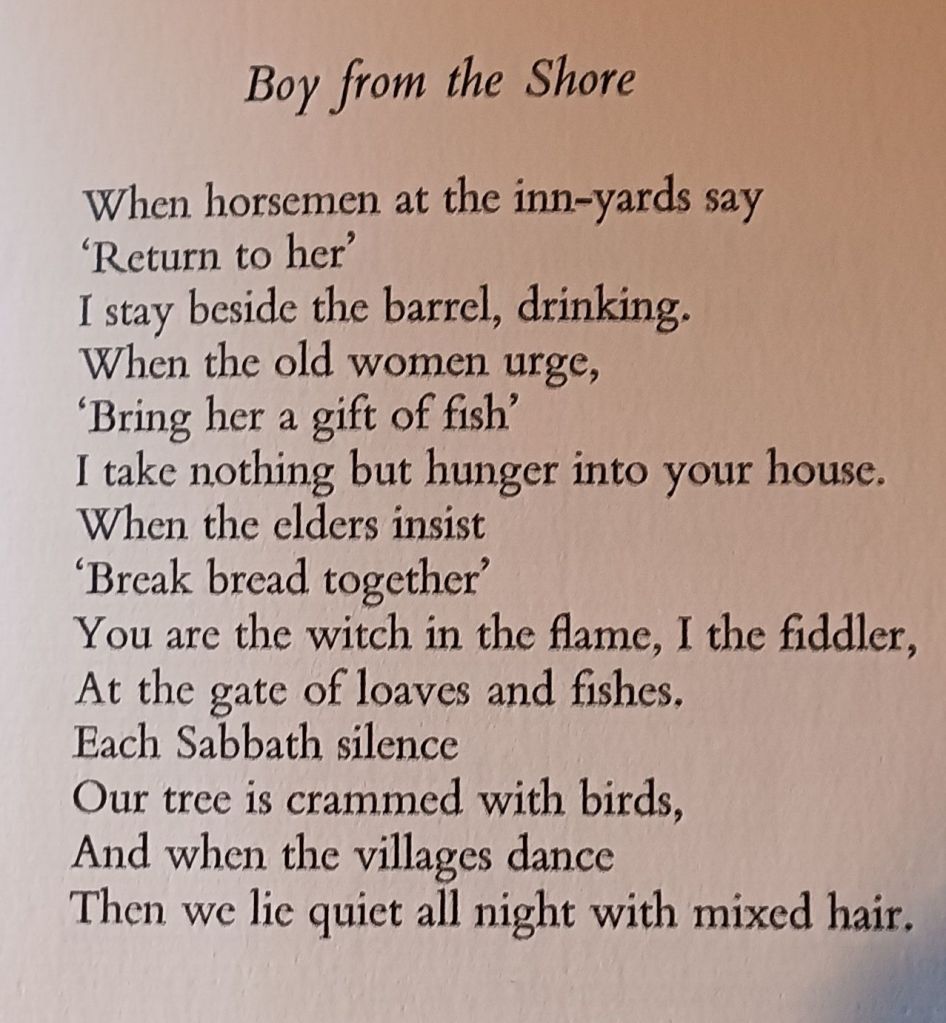
The whole ambiguity in the poem is whether the ‘boy from the shore’ names the singing voice of the poem or the beloved with whom we end the poem living ‘quiet all night with mixed hair’. Again, a narrow community is represented by the misogyny directed at older women and their heteronormative gossip. We have to forgive GMB that, I am afraid.
GMB’ s new Orpheus in this (1965 was the publication date) is a blasphemous mix of a Christ, an Anti-Christ, and the queer lover of a ‘witch’, a wanton ‘country-girl’ or the boy astray on the shore outside Stromness / (or as it preferred to call it Hamnavoe or just Voe. There is no doubt he would like to take part ‘when the villages dance’, just as GMB’s Orfeo did with his wanton fiddle, but he is left (and for him in its tree-full glow, ‘crammed with birds’ its loss is less) alone with his desire – barely real but his, and his alone )and leaving him thence alone). It is like the ending of Vinland with the Norse hero’s dream of an Native American boy in his dreams as he dies (see my blog on that here at this link). Who amongst can hate GMB, even though he brings ‘nothing but hunger’ to our door. He is the poet of desire – turned lately to an epiphanic religion, like the miraculous Christ in this poem feeding humger with his miracle of ‘loaves and fishes’. Well – plenty do!
Let’s bless chosen communities who ‘fall in love with ambiguity’.
With love
Steven xxxxxxxxxxxxxxx
 Steve_Bamlett_blog