


The model of behavioural change promoted by Prochaska and DiClemente to describe the usual process of escaping addiction provides the best model of how success occurs and is more durable in nature. It applies to any human behavioural task and suggests that only when serial occurrences of apparent failure in the task occur (failures which the model calls RELAPSE) can lasting success be expected.
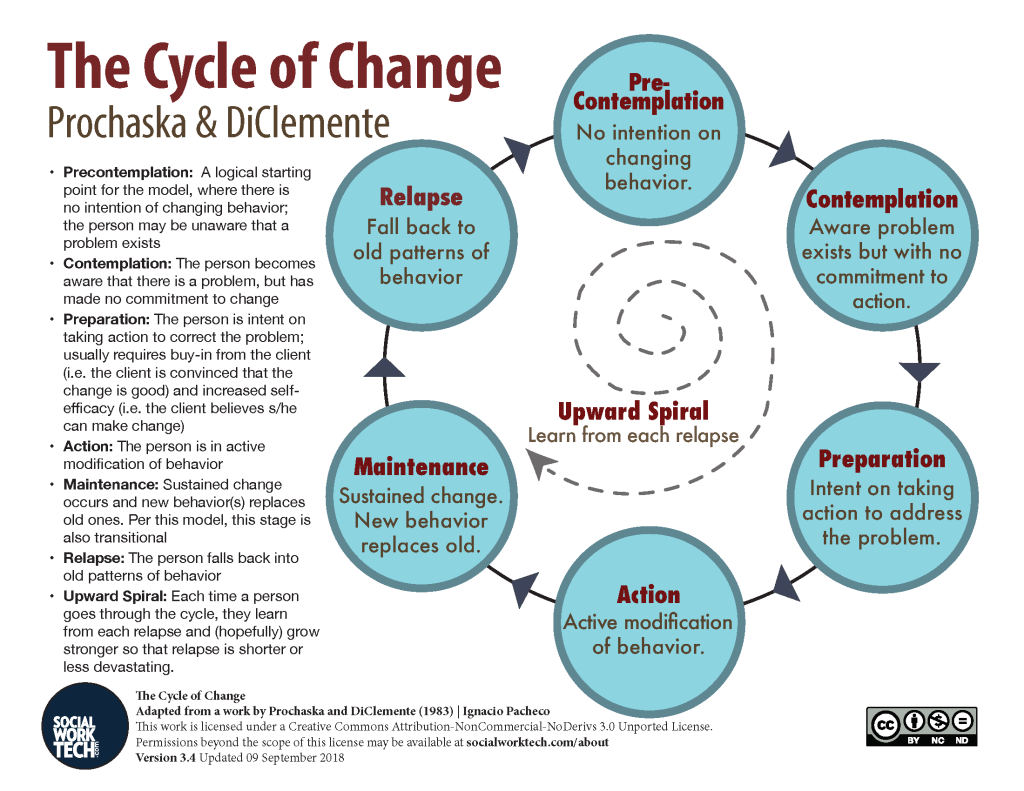
I think the model relates not only to behaviour like the achievement of a goal like freedom from substance abuse but to the growth of resilience and strength in matters of emotion and thought. It is, I suppose, what any realistic notion of human success might mean. The model proposes to me that all action and active learning, involving the necessary regulation and growth of knowledge, skill, and values, depends on cyclical exposure to lapse, and apparent loss of goal in order to promote learning in an upward course. That course is in an upward spiral where much learning occurs not in apparent success but in ‘apparent failure’. Each lapse involves learning about the triggers of that apparent failure and promotes targeted resilience in at least one area so that relapse when it occurs again will involve learning about new and different areas of vulnerability and a more comprehensive growth – more so as each lapse in the upward spiral occurs. Some spiritual enlightenment models use this concept, too.
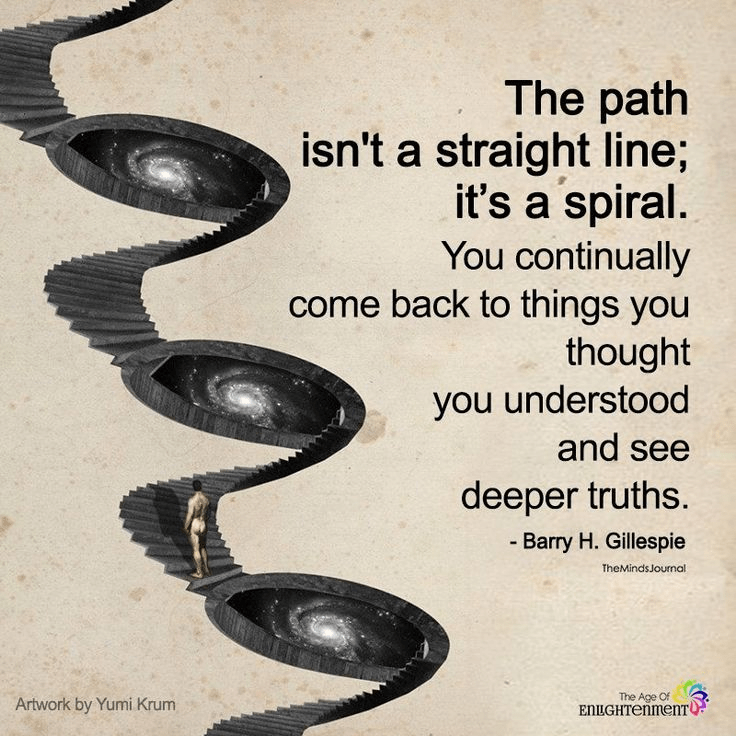
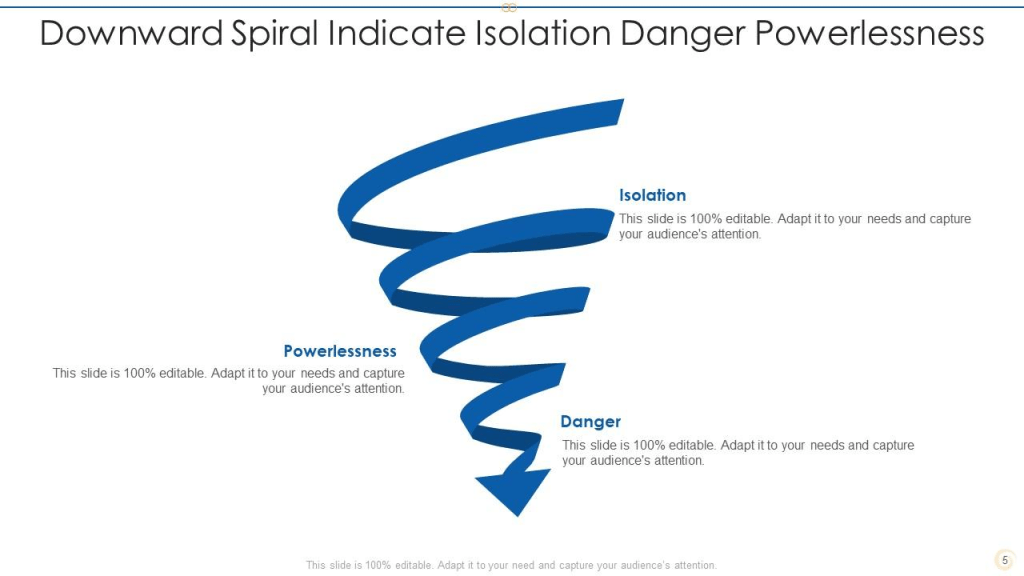
This does not mean, of course, an inevitable upward spiral in any life-project. Some relapse is permanent because the learning from it is entirely negative, proposing to the person acting that change or achievement is an impossibility – for them at least. Such negative learning can produce a downward spiral to not apparent but ultimate and final failure, death of hope and expectation of better life, and perhaps to death itself. Such processes are extremely painful to witness in persons you love and who you can not help. My own feeling is that such downward spirals are particularly problematic when the criteria for success are themselves chimerical and are never made available for resilient relearning and reformulation.
Of all the words ever said on this subject I find Robert Browning’s Childe Roland to The Dark Tower Came (the full text is linked here) best. It’s very proposition is based on a sequel of past failures that query the adventurer in life, unsure of their strength and unwilling to re-calibrate it:
Thus, I had so long suffered in this quest,
   Heard failure prophesied so oft, been writ
   So many times among "The Band"—to wit,
The knights who to the Dark Tower's search addressed
Their steps—that just to fail as they, seemed best,
   And all the doubt was now—should I be fit.
For Browning, the achievement was success as a poet, and he was fascinated by poets that succeeded – witness his essay on Shelley – and those who failed and spiralled down – witness his essay on Thomas Chatterton. In both of their endeavours , the main contextual drag was the jealousy of those who wanted to believe that no especial success was possible in human life, and his dramatic monologues are stuffed with failures who decide that they will give up earthly hope for dubious hope in Heaven, and a companionate believe that on earth only Might is Right!.
If there pushed any ragged thistle-stalk
    Above its mates, the head was chopped—the bents
    Were jealous else. What made those holes and rents
In the dock's harsh swarth leaves—bruised as to baulk
All hope of greenness? 'tis a brute must walk
    Pashing their life out, with a brute's intents.
Walter Crane seemed to understand that the quest was doomed but inevitable in his illustration of it:
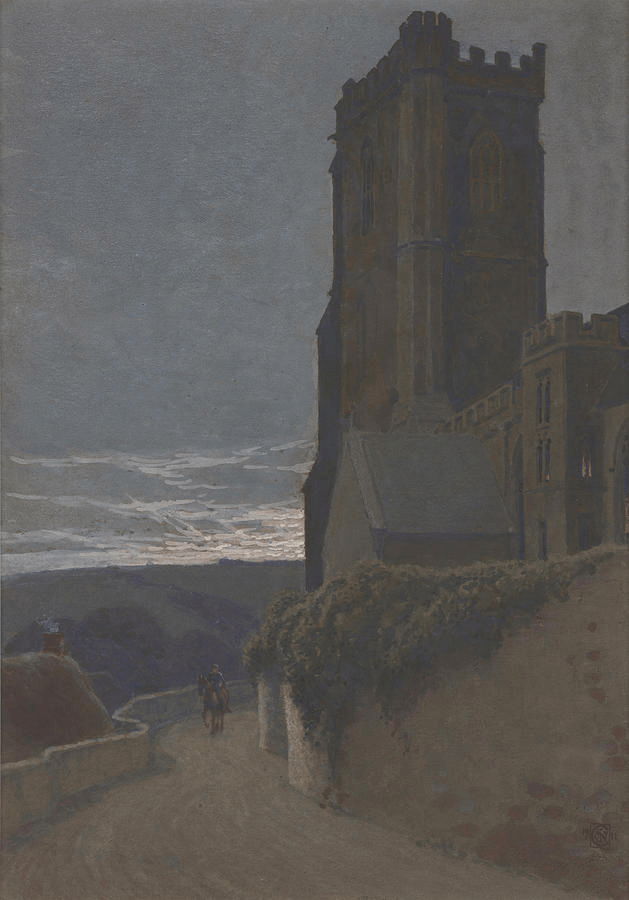
And yet, even in the dark poem about the pursuit of dark ends, the knight of the poem claims success in being at least one who tried and accepted the death and degradation that was his goal after all.
There they stood, ranged along the hill-sides—met
   To view the last of me, a living frame
   For one more picture! in a sheet of flame
I saw them and I knew them all. And yet
Dauntless the slug-horn to my lips I set
   And blew. "Childe Roland to the Dark Tower came."
In that poem, failure is success. In life for the rest of us, then failure must only be relapse in the hope of strengthened recovery – for, after all, we are not poets in the main. Yet there are mocking-birds still to kill.
With love
Steven xxxxxxxxxxxxxxx
 Steve_Bamlett_blog