


Making a man of yourself – the strain of the 1950s
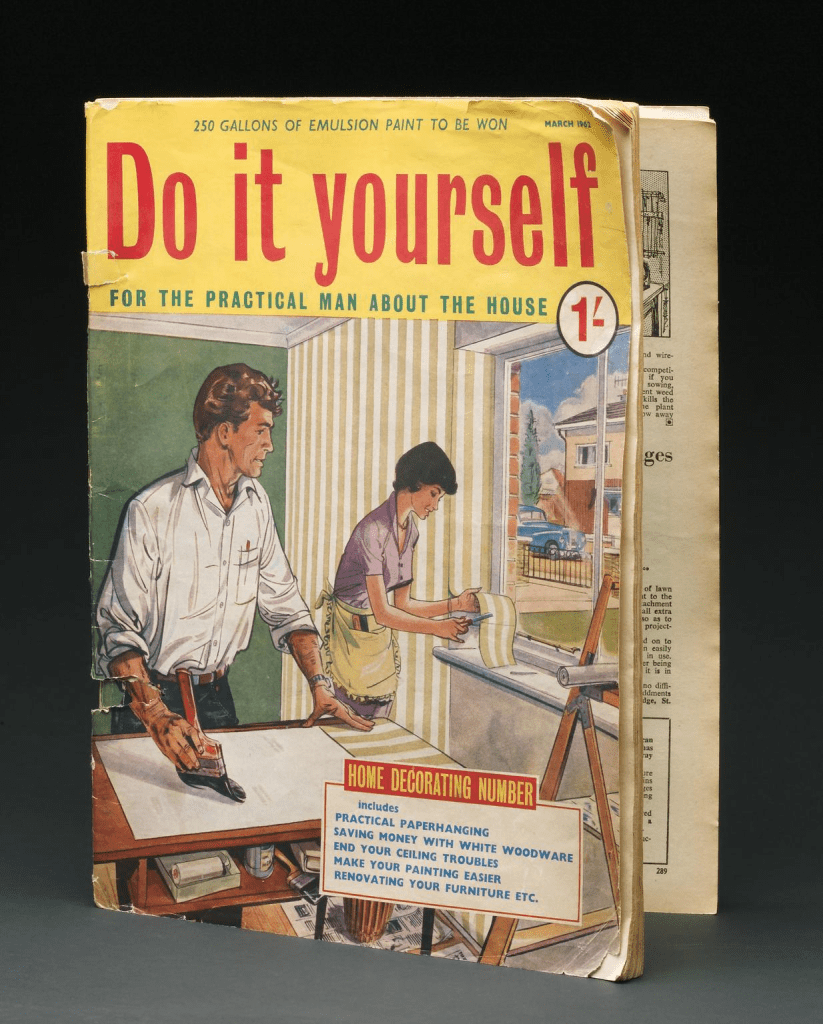
Image from The Science Museum archive: https://coimages.sciencemuseumgroup.org.uk/58/936/large_2000_0549.jpg (CC BY-NC-SA 4.0)
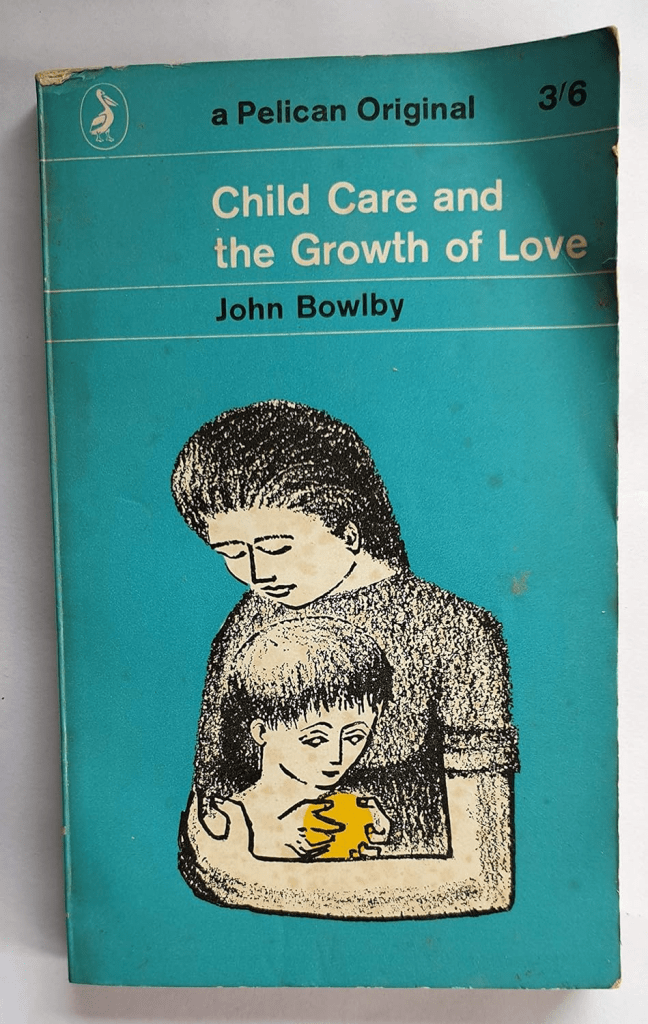
We all assume we know what DIY means (without troubling to extend the acronym to the term DO IT YOURSELF). However, it was not always thus as the ‘Brief History of DIY’ page from the glorious Science Museum tells us. Born after the war, the phrase complements the attempts in national culture to reshape the male role in a domestic setting just as the role of women was being divorced from public and paid work role and shaped by the need as post-war governments saw it, for secure child production and maintenance. Women’s role was to become synonymous in public discourse with the ‘care’ and ‘love’ of children. The theories of John Bowlby became its flagship, and his theories were popularised by the BBC.
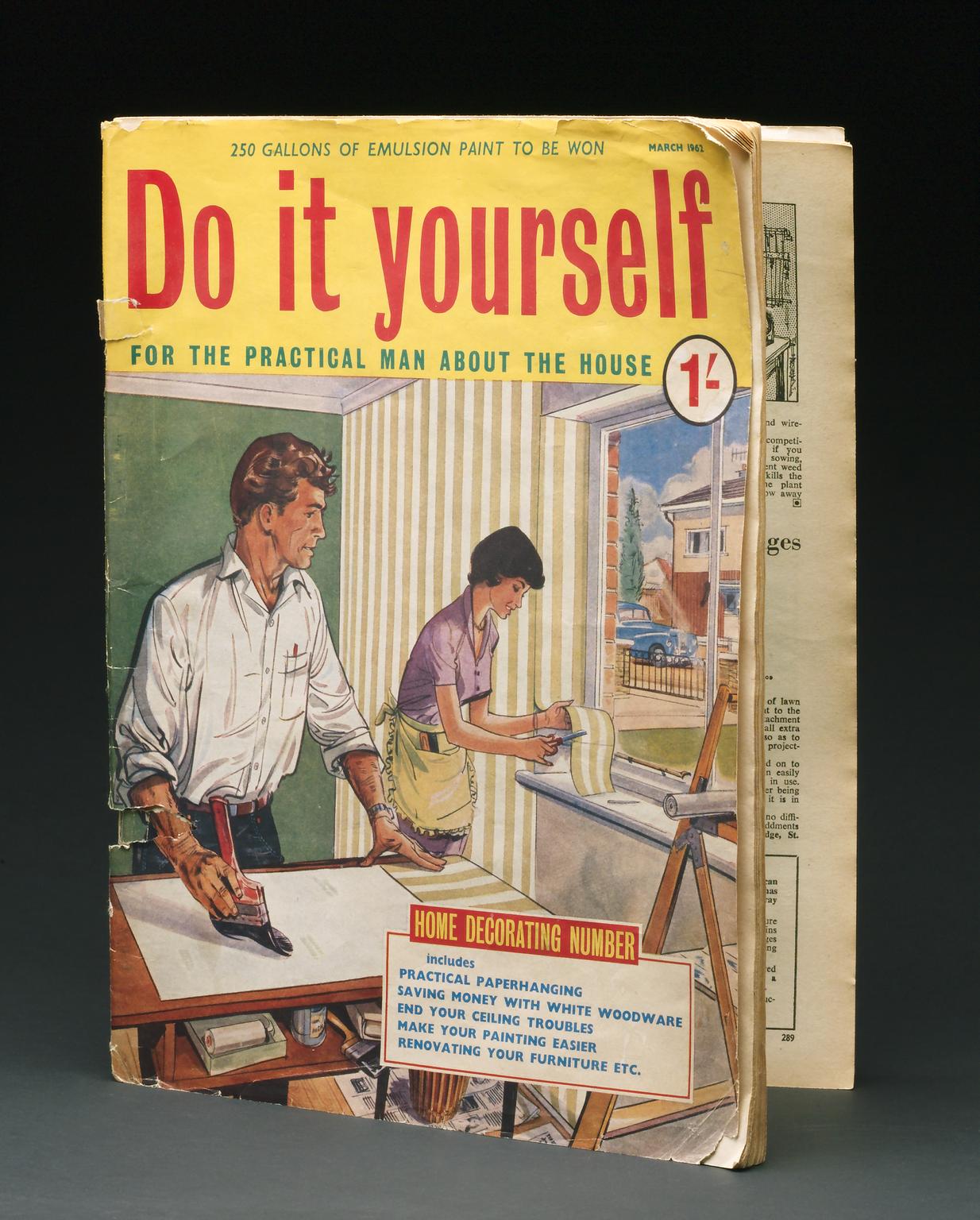
If women were to be urged to return to families as carers, men felt the same family ideology in terms of commitment to house and home as the everyday hero setting out to make the family home a place of practicable living. Look again at the cover of DIY magazine above, which boast a picture of DIY man in his new build home in a new housing estate who forefronts the DIY decorating experience with his wife as unpaid assistant for the less heavy jobs and still wearing her frilly pinny (pinafore). The sub-heading of DIY magazine is telling: For The Practical Man About The House. There is so much ideological stress in that sub-title.
The Science Museum addresses these issues with care later in the page – rather emphasizing the inclusion of women in the tasks – if not in lead role – except in domestic crafts that dealt with ‘soft’ things.
DIY brings us together

Science Museum Group Collection
Although DIY is often seen as a male-dominated pastime, its 1950s foundations were broad.
Many adverts from the period show men and women working together, albeit with the men tending towards jobs like sanding or woodwork, and women making curtains or soft furnishings.
These were stereotyped roles within the family, but the overall effect was to bring husbands back to the home from pubs and other ‘male’ pursuits, and encourage them to be with their families.
And, in DIY hobbies like railway modelling, close bonds between fathers and children were encouraged, which had previously been torn asunder by the burdens of heavy full-time work and even the dislocation of war.
IN practice, of course, there is little distinction in the difficulty or ‘hardness’ in the roles in the garden trellis mending scene above but it is necessary to see women as leaning and sitting not standing or holding hard tools. The equivalent is a knitting- needle and to somehow to enact a lower position (even inside from the window) so that your eyes are looking up at the man.
There was a lot of sex/gender ideology in DIY backed up by a simplistic binary understanding of biology, that is absent from the more modern ‘Maker’ movement, but I think I felt it as a boy who knew that he would never be the ‘man’ the state -supported heteronormative convention wanted but who was, in practical things, rather dyspraxic – a hammer or screwdriver in the hand was as alien as a football at my feet and neither subject could be made to function as it should. Even now in our chosen family, Geoff does the practical stuff and we both still joke about needing ‘to get a man in’ when things go wrong. When my husband was very seriously ill with bilateral pneumonia over two months, I coped but was pleased when I had to rebuild the downstairs living room as a bedroom for Geoff that my heterosexual married friend Rob offered to come round with his toolbox to help re screw the thread in the second-hand bed-base I bought to fit a headboard. OK. After stopping to laugh at my dependence on a man with a toolbox, I had to unpack the sex/gender ideological dynamics of those needs.
I would guess my dyspraxia relates to anxiety but it is hard to go in practical circumstances and may be a kind of minor disability that can be mitigated nowadays. It has nothing I believe to do with my psychosexual/psychogender status, though. The biggest DIY event in the queer community in my growing up was the building of the queer macho man – part tongue in cheek by the Village People.
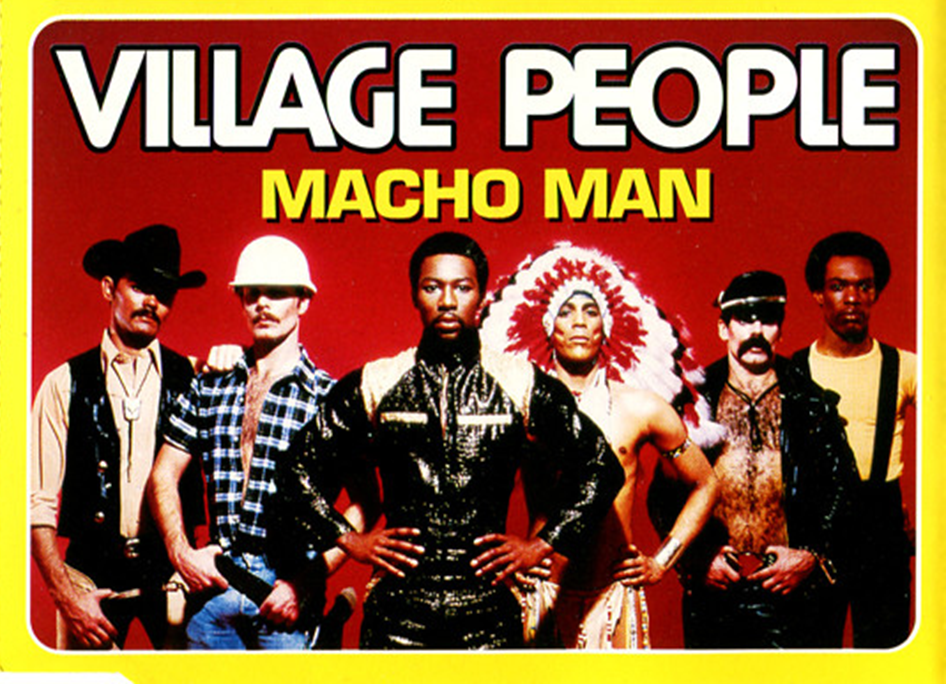
In truth the new stereotype helped me developmentally not at at all, except in that it existed in order to stress diversity – even within types of ‘macho’ for me. It took a rise of humour moreover out of the phrase used seriously in my youth of ‘Make yourself a man’. Now I only give credence to it when I offer, in joke the wool to someone more expect to make one for me. Indeed I did so to my lovely friend, Joanne, but as yet she can’t find enough wool to meet my requirements. LOL.
And if I have a DIY project is is to avoid all external and ‘expert’ advice on how to be as a sexed/gendered human being and pin my hopes on the co-construction of new diverse roles across boundaries. It’s a DIY task still in progress of course.
With love
Steven xxxxxxxxxxxxxxxxxx
PS Did anyone ever win the 250 Gallons of paint in the DIY magazine competition? What did they do with it?
 Steve_Bamlett_blog
This was a very interesting read, thanks for sharing your knowlegde!
LikeLike