What is good about having a pet?
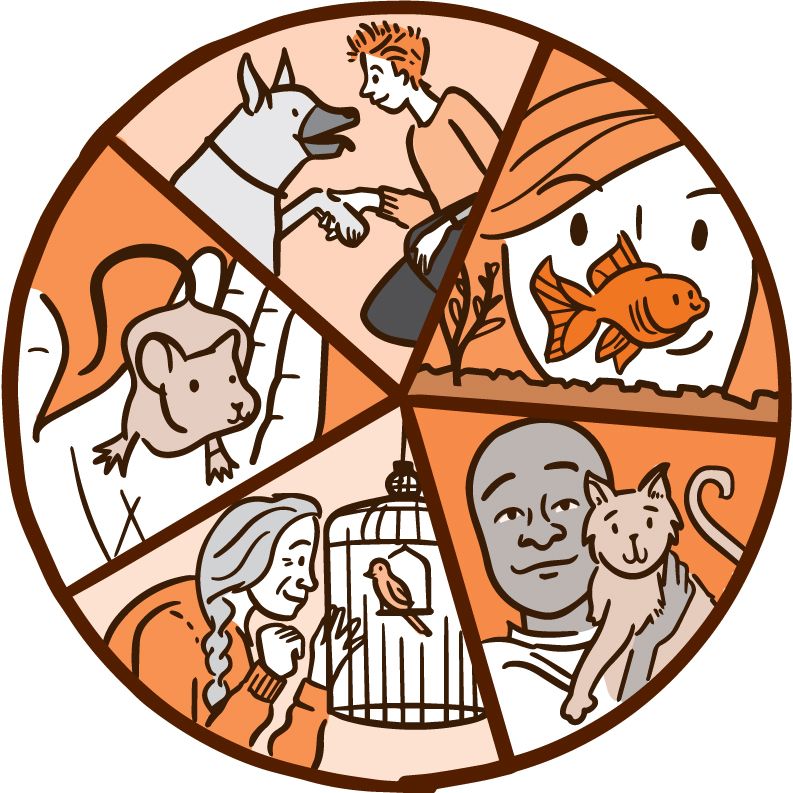
The NIH (National Institute of Heath) USA wheel graphic on the benefits of having a pet
Here I go again – harping on about the reification and commodification of everything that matters in life. Basically, I do it because the culture out of which WordPress prompts arise is silently and unconsciously obsessed with individuals and what they ‘have’ by virtue of some form of acquisition in the closely related words: inherit, buy or steal rather than what they ‘are’ – the quality and characteristics of their ‘being’. I can’t, therefore, answer this without first going back to the words that express and transform the question: the word ‘having’ in particular does that. I have mentioned Erich Fromm’s important book before, To Have or To Be, which Eric Matthias summarises thus in an online article (this link for full Matthias piece).

Erich Fromm thinks that we can capture a fundamental difference between two entirely different ways of living one’s life in the distinction between “having” and “being.”
In a naive, grammatical view, one might think that “having” would apply to possessions (“I have a car”), while “being” would be used to describe properties of a person (“I am a singer”). But things are not so clear-cut. How about “I have a cold”? We can express the same as “I am sick,” or “I feel ill.” Do these three really express precisely the same idea — or is there a subtle but important difference between these three that we usually tend to miss?
Erich Fromm thinks that we can capture a fundamental difference between two entirely different ways of living one’s life in the distinction between “having” and “being.”
And then: in what sense do I “have” a family? Do I “have” an education? I did “receive” one, so perhaps I should “have” it now, but does it really make sense to possess education? Isn’t it more like a skill? We also speak of “having” skills. But if you think about it, isn’t it more sensible to say that we “are” skilful in a particular way? A skill seems to be more like a property (“she can play the piano”) rather than a possession (“she has a piano-playing ability”). The opposite can also happen. “I am a house-owner,” although commonly said, seems mistaken. Being a house-owner is not a property that affects my person or that emanates from it. It is an external thing, a pure possession, so “I have a house,” seems more appropriate.
And although a dog can be bought or otherwise acquired in much the same way as a house is it, Matthias misunderstands that even a house has meaning beyond its mere possession by a speaker, as in that pregnant word ‘home’. Indeed, his strictures against “I am a house-owner,” are nonsensical since the ownership matter is mentioned in a way that merely translates ‘having’ into clearer terms of ‘ownership’ of a commodity. Moreover it is not so simple-minded as he suggests to equate ‘having’ with ownership and possession – for some people do treat abstract concepts like skills or even ‘life’ as things they own or possess rather things which constitute their being.
Hence when the American Kennel Club lists 10 benefits of pet ‘ownership are they really showing the benefits of ‘having’ or ‘being in relationship with’ a dog’. After all ‘pet ownership’ is the old ‘having a pet’ formula in more honest form. They give ‘scientific’ evidence that you can read for yourself in the full article (at this link). The National Institute for Health – USA has a more rigorous one relating to health effects alone but the same critique applies (see at this link).
- 1. Dogs Make Us Feel Less Alone
- 2. Dogs Are Good for Your Heart
- 3. Dogs Help You Stop Stressing Out
- 4. Dogs Can Help Us Cope in Times of Crisis
- 5. Dogs Encourage You to Move
- 6. Dogs Make You More Attractive
- 7. Dogs Make Us More Social
- 8. Dogs Are Made to Be Irrestible
- 9. Dogs Make Us Happier
- 10. Dogs Can Have Positive Effects on Seniors
There are items here that are very much about ‘having a dog’ rather than relating to and with a dog through your senses, emotion and cognition, especially item 6. Dogs as a visual sign of status and social vanity have a long history, such as in the case of eighteenth century lap-dogs (in The Rape of The Lock by Alexander Pope but still used by Lady Bertram much later in Mansfield Park as a substitute for her lack of real emotion for human beings in Austen’s view).
Literature tends to be hard on women who relate to lap-dogs in the same way they do their husbands – superficially! The sentiment is misogynistic in Pope but related to a critique of the trivialisation that was equated with normative femininity by intelligent resistive women like Austen (as in Mary Wollstonecraft). Both of the latter lack compassion for those women who accept their trivialised role and treat animals better than sentient humans.
The ‘scientific’ evidence for some of these 10 benefits of the American Kennel Club is of varying validity and reliability and makes too many assumptions (item 8 for instance). Nevertheless they constitute a broadly worthwhile perception. One that is missed is that it is known that children who experience the death of a pet in early life are better prepared for bereavement in later life as adults, though the effect is dependent on many conditions like the quality of support in each case. The main ‘benefit’ is that the child learns to face and appreciate the value of the psychological reaction to loss.
However, that issue and the rest only make sense if we see the benefit as not one of having (purchasing, owning, possessing) a dog as a thing with use value as well as exchange value but as that of a being with whom we relate with our own being, so that the features and characteristic of the lives and deaths impinge on us. We do not need to anthropomorphise them to do that, but we do need to NOT see them as ‘owned’ by us, ‘had’ by us.
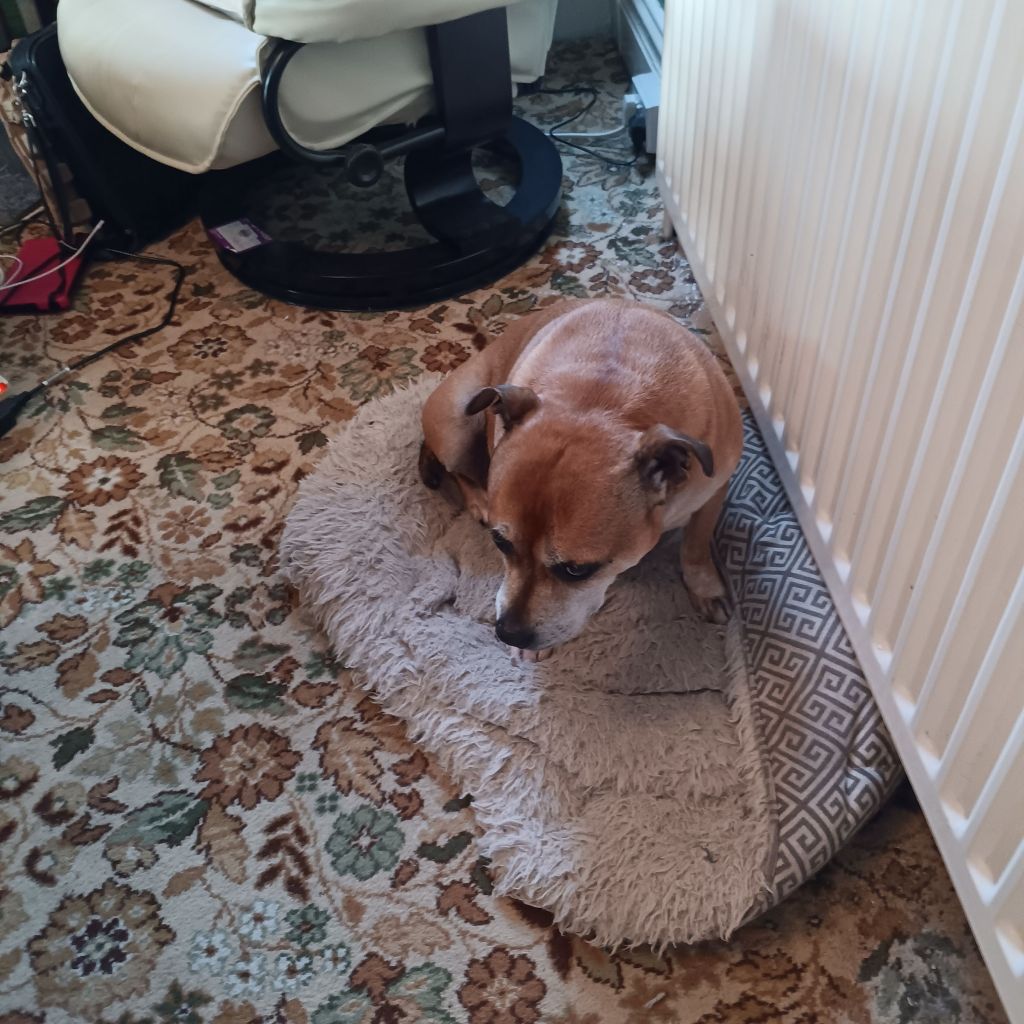
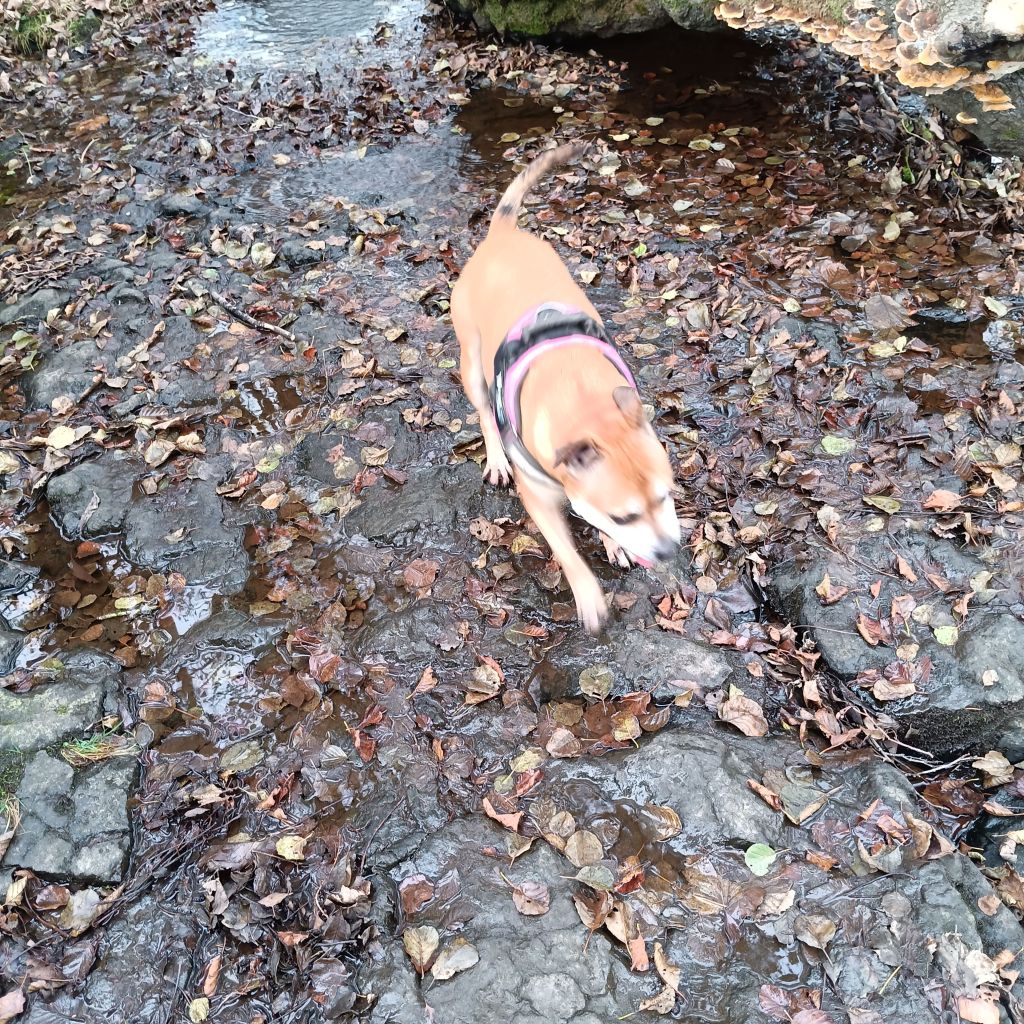
Walking with Daisy is not easy. She is picky about where she will walk. She has panic attacks and feels at the slightest angry noise (she is a rescue dog), especially bangs and shots. She is shy, even of us, as below, taken just now.
But when she lives, I live too. When she IS, I AM, qua Erich Fromm. My husband is ill in the hospital right now. She helps me. I help her. We both love him. Yesterday’s walk in Wolsingham village in Weardale was a case in point. We are together.
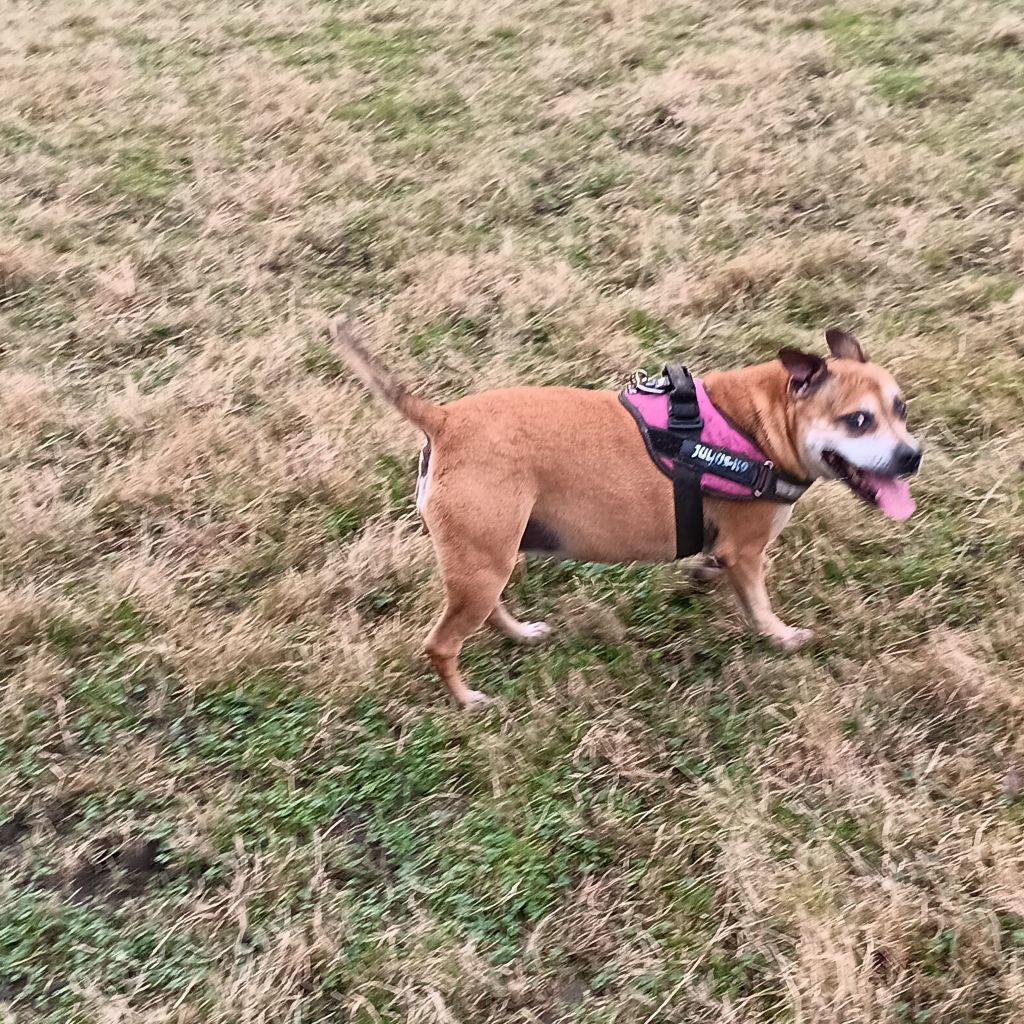

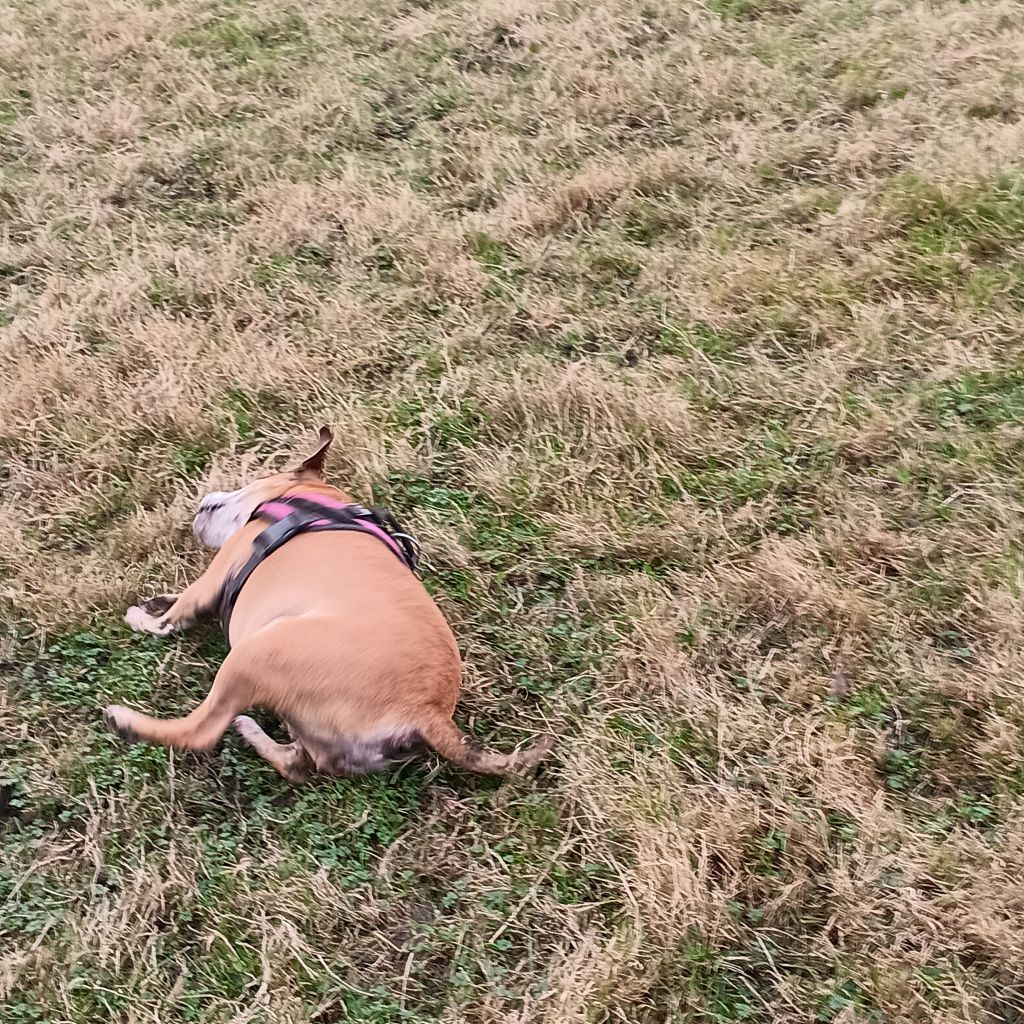
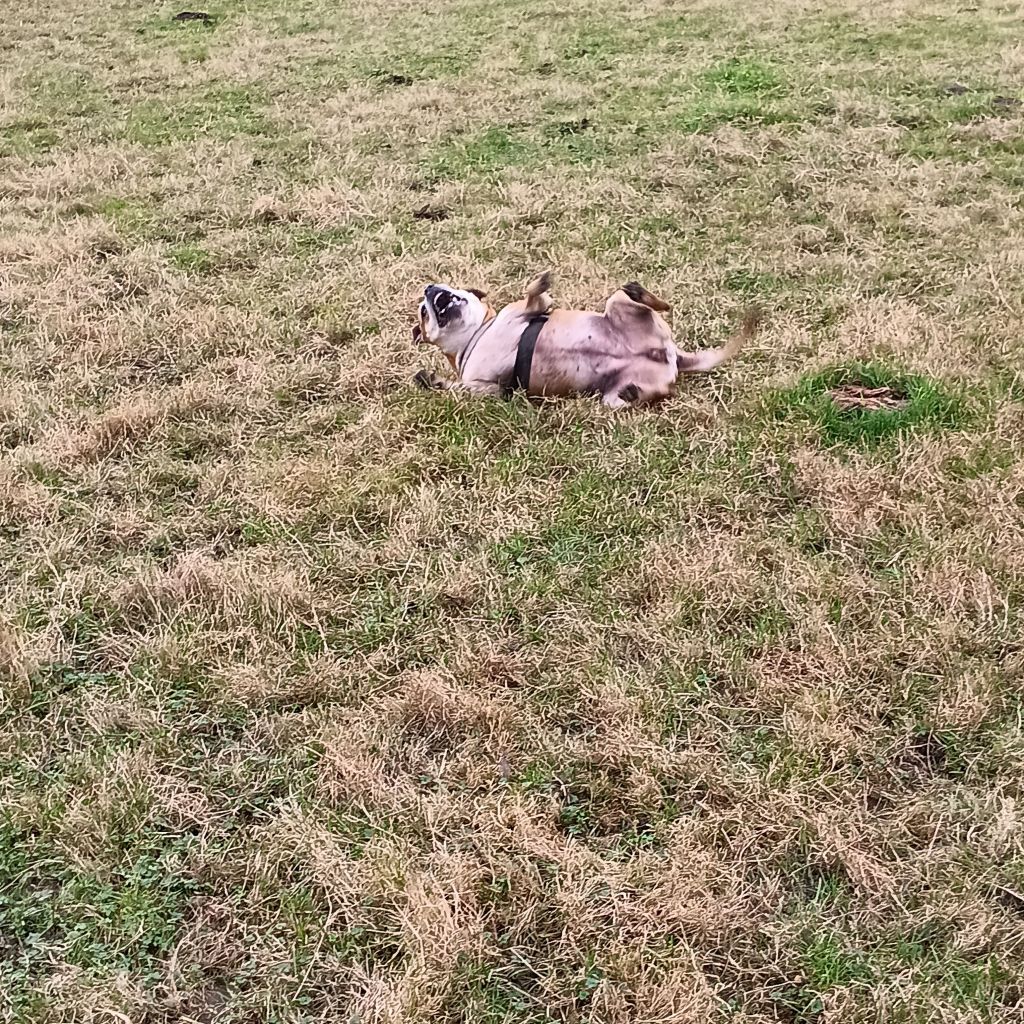
I have never known a dog who rolls so much and so often to express immediate joy. Roll, Daisy, roll!. I don’t have a dog that gives me benefits. I relate to one because we benefit each other in that relationship. Roll, Daisy, roll!
With love
Steven xxxxxxx


2 thoughts on “All the benefits of Daisy, so much more than ‘a pet’, come from ‘being with’ and relating to her; not to possessing her.”