‘Space’ explored in light at Durham Cathedral, 7 p.m. on 9th October 2024.
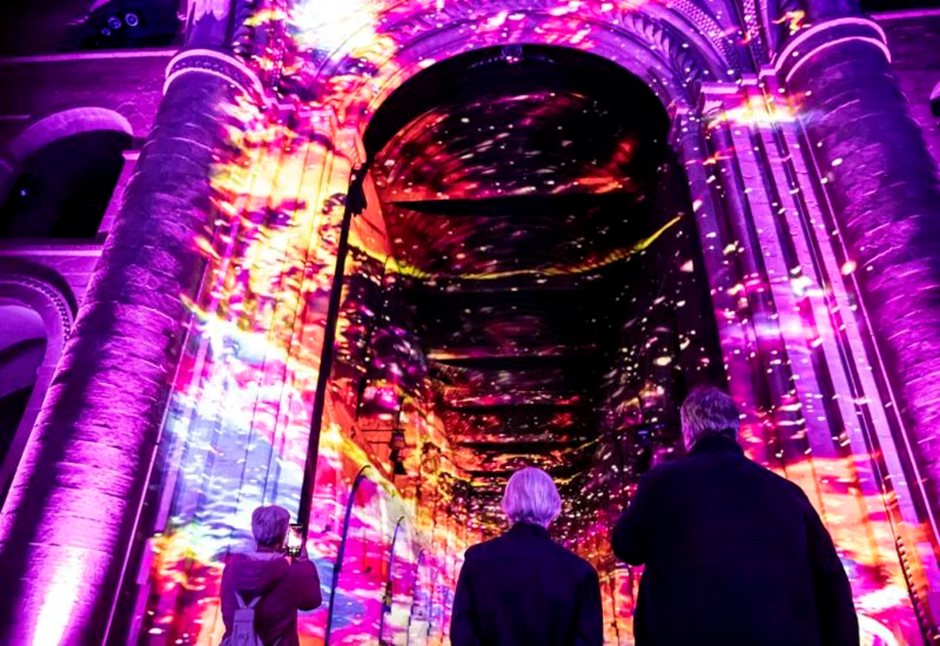
This week we are attending events at Durham’s Book Festival but our programme starts tonight with us going to see a revisit to Durham Cathedral of the moving light art exhibition group, Lux Muralis (use the link to read the group’s self-introduction). Their subject this year is Space of the Outer Space variety. Last time I saw the group their subject had been the danger to the Earth and its ecological systems. I thought I had done a blog on it but it appears not. Sad!.
Here is the Cathedral website blurb by the company for tonight’s performing lights. Geoff and I are going. I can’t wait. I am setting this up now to ensure there is a blog this time, even though photographs can’t really do spectacle created by light on revered walls due justice.
What is Space by Luxmuralis?
Space is a light and sound art installation created by artistic collaboration ‘Luxmuralis’. The experience will take visitors on an exploration through galaxies, outer-space and the ambition to adventure beyond.
Dazzling projections on Durham Cathedral’s centuries-old architecture will feature original footage of a rocket launch, and show the final image of Earth, looking back from space under a galaxy of stars.
There is no doubt that God will come into the mix. I am intrigued to find out just how. That is what I said at least on my way to the evening event However, the question seemed somewhat irrelevant when I got there. The phrase Fiat Lux (‘Let there be Light’) is already fully appropriated by spiritual meaning, as in Genesis 1, verses 1 – 4. The yoking of light to the concept of divine creation is even longer no doubt than the Judaeo-Christian version, although perhaps CREATION before that time in spiritual terms was not so binary – God starts by diving everything into two: light and darkness.
In the King James Bible, it reads, in context:

1In the beginning God created the heaven and the earth.
2And the earth was without form, and void; and darkness was upon the face of the deep. And the Spirit of God moved upon the face of the waters.
3And God said, Let there be light: and there was light.
4And God saw the light, and it was good; and God divided the light from the darkness.
But creation never does quite evade the fact that colour is the multiplicity that binary divisions push aside and in this light show colour was literally divine, not that good old black and white didn’t come up with some fabulous patterns on the relief of the gorgeous walls of Romanesque Durham:
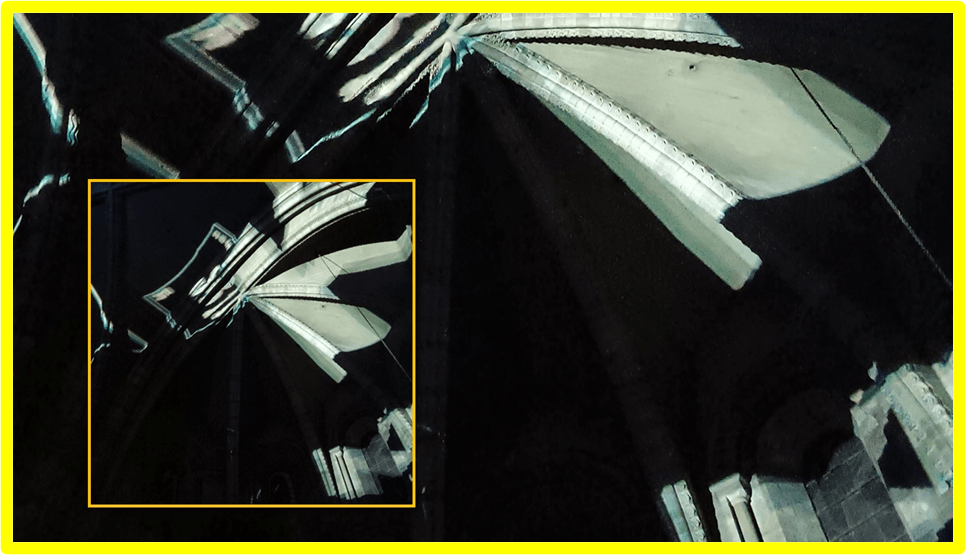
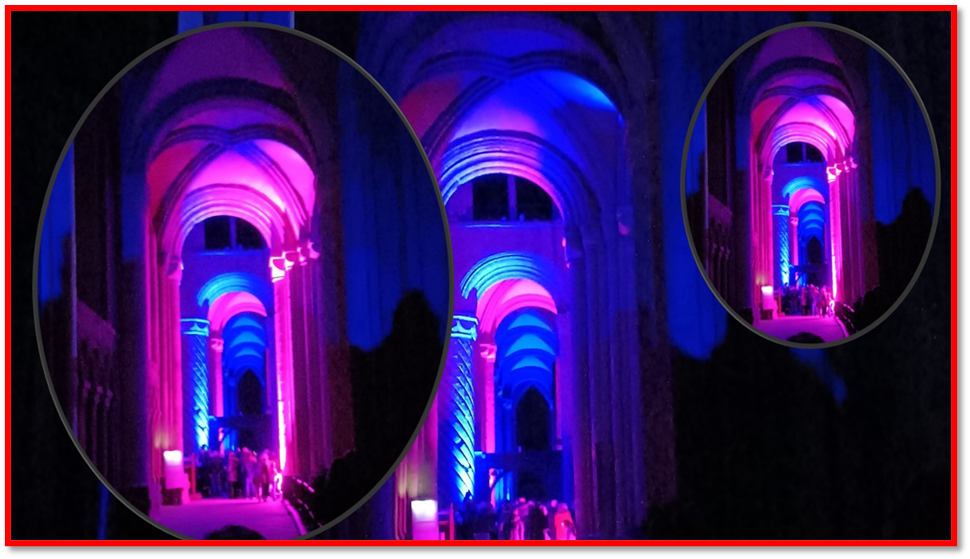
That kind of architectural and surface wall relief turns even sharply defined light and dark into ambiguous borders and variegated internal patches of multi-tones even if in ‘singular’ (if that is what it is) colour. Entering the cathedral introduces you to the signature sombre dualities of blue and pink however, variegated into rich Byzantine purples.
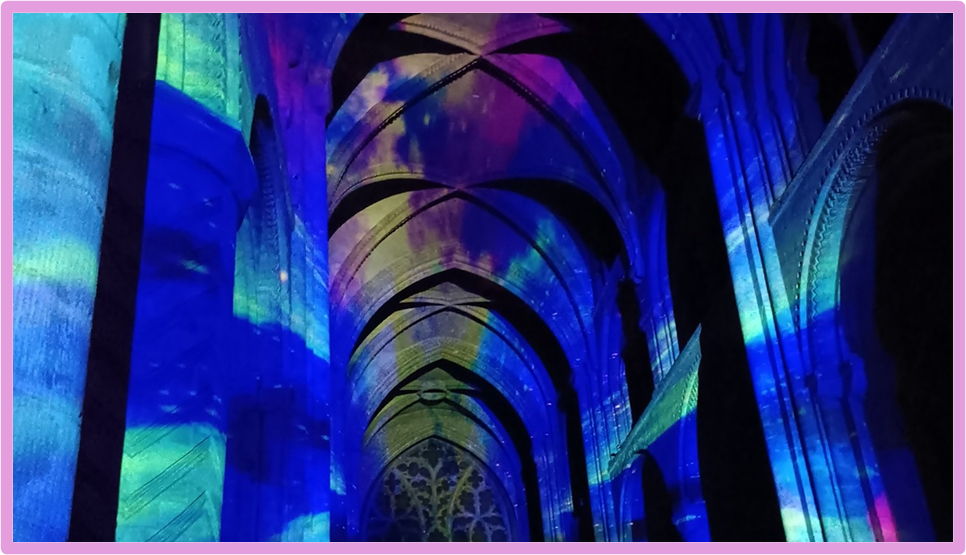
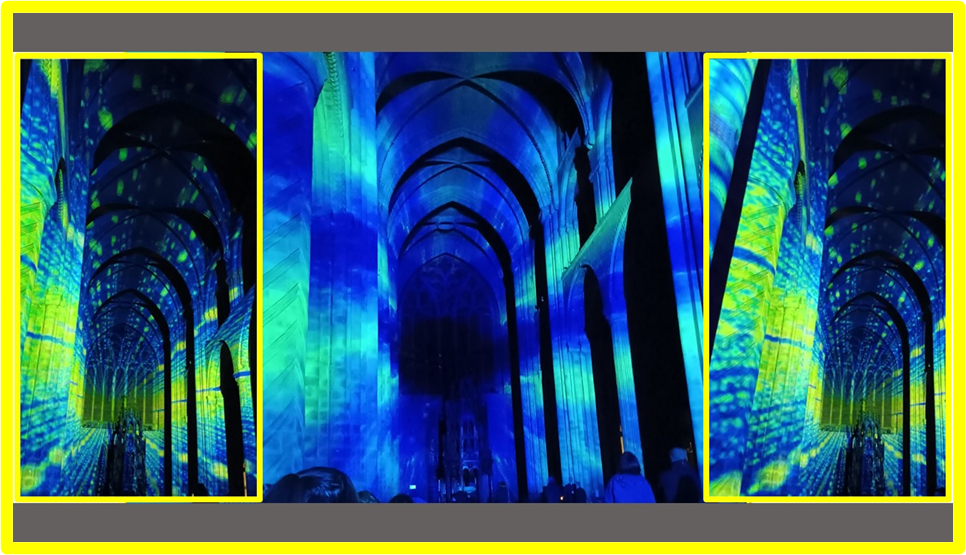
Blue is a signature theme however in its continual revival of hope, seeming to enrich anything that strikes across it like the azure and green tones below. At its edges it sometimes turns into lower-density shadows like those made by foliage. Such shadows heighten the stone relief that has escaped colour on the ceiling of the nave.
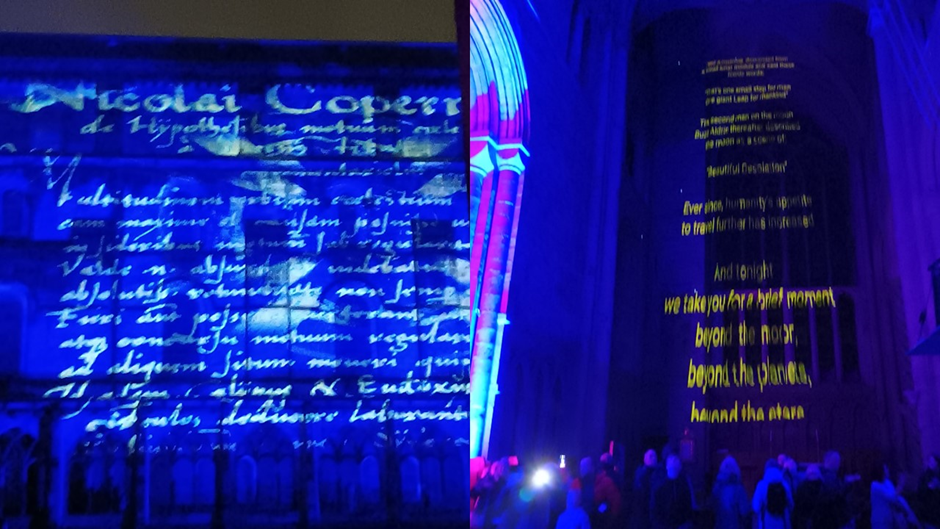
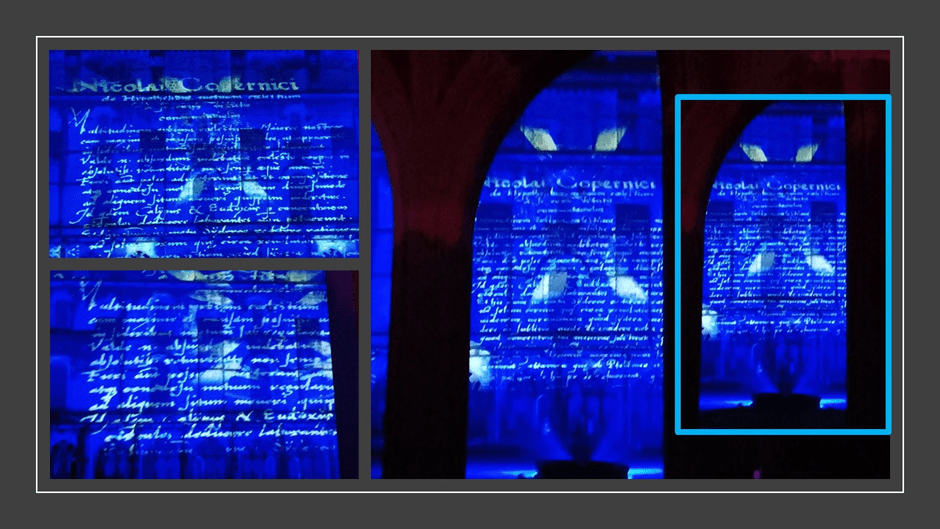
Even projected text welcomes variegation of blue in its background, as in this cursive script detailing Copernicus’ thinking about space and the solar system on the left of the collage below. In contrast the text that greets you after entry (on the right of the collage below) – my only feeling of disappointment in the show – is neither legible nor beautified in its appearance by being cast against a darkened Gothic window and its framing architecture.
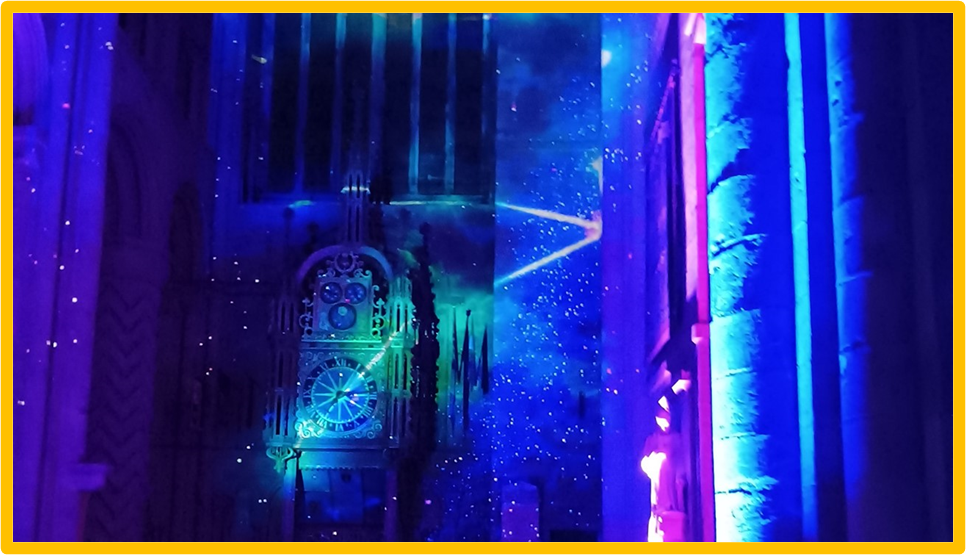
Turn around from that textual disappointment, however, and you view the scene at the other side of the transept just preceding the housing of lectern, choir and altar frame; onto which the central nave leads: you see how the elegant late medieval cathedral clock seems to both absorb and comment faintly on what is projected over its beautiful face and will eventually consume it into shadow. It fights back that lovely structure, just like time itself may try to do in confronting facets of the refracted eternal.
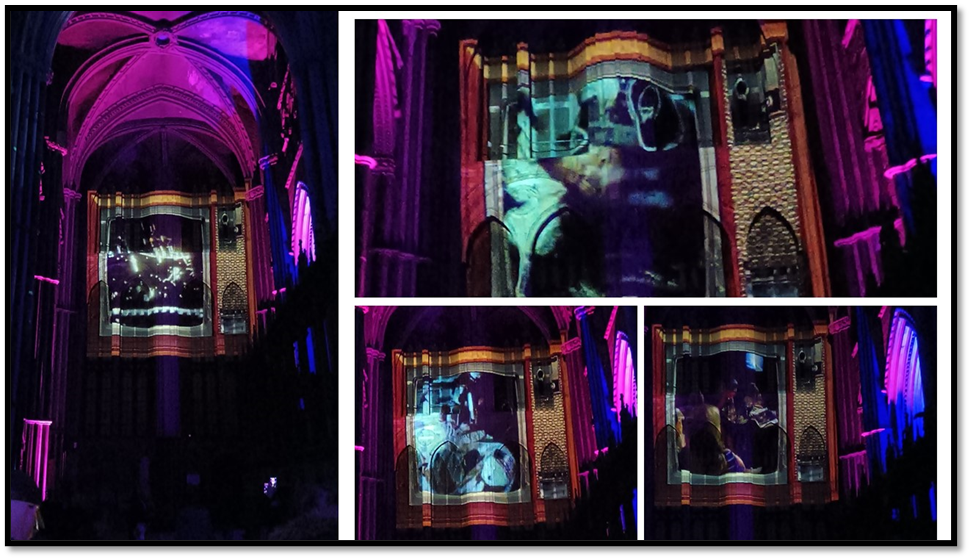
The rear of the cathedral is devoted to the Apollo mission. An abstraction of lift-off at one side window, and facing it across the wide rear-transept, an image you approach reverently, strangely enough for its commonplace subject (commonplace at least in its time). It is a projection of an old-fashioned TV screen carrying moving black-and-white images seen in ordinary homes from the Apollo mission and shot in space itself. These images move in another way if, like Geoff and I, you are old enough to remember seeing them first time through the backward and vast abysm of time.
You enter the altar space from the back of the cathedral before proceeding down the nave from there towards the wonderful Gothic font at the long distance at its other end. But I pass the mid-transept again in doing so still fixated with the medieval clock, here and now, as you see below, encountering the beauty of finite but abstracted geometric shapes, hoping but failing to find shelter in one away from a drifting cloud of star-like points that drift across it.

Sometimes the circumnambient blue is less like the arch of the sky than like the space imagined under a colossal sea, still shot through with light and colour from above its surface. The feelings evoked are near what, in the the eighteenth-century, they called the sublime – awesome in part because full of the fear it evokes as well as beauty as do the very highest Alpine mountains, deepest seas, or beings from fable that claim immortality without possessing obvious form, God perhaps again.
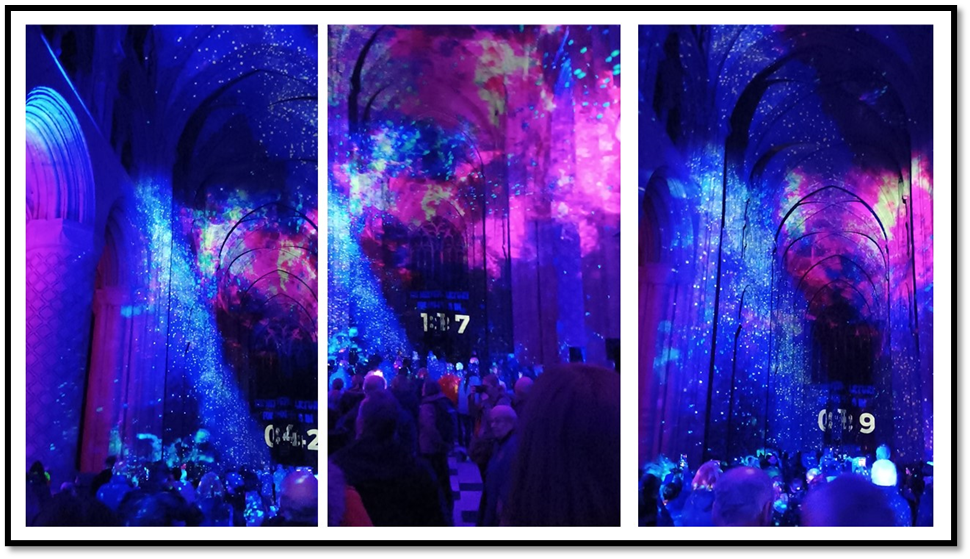
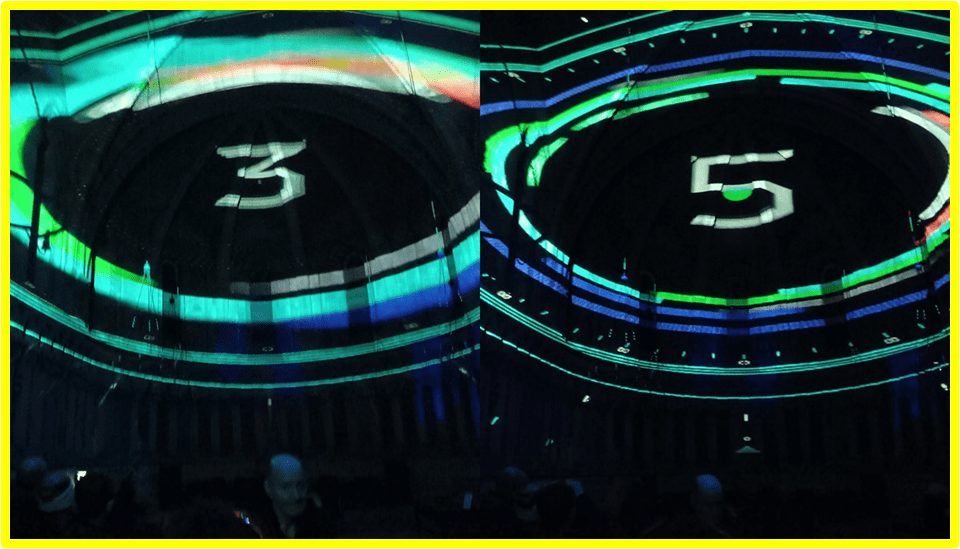
At least it might be God, except for the countdown of numbers, visible in the pictures ave [2 on the left, 7 in the centre, 9 in the one on the right] which evoke the measurable, or more measurable at least, human concepts of creation like the imagined countdown to the ‘Big Bang’ creation theory. The countdown actually, of course, indicates the next recycle of the light-show sequence, a quite other order of creativity, if not less laudable and to those without knowledge of its mysteries, like me, awesome (in the modern sense).
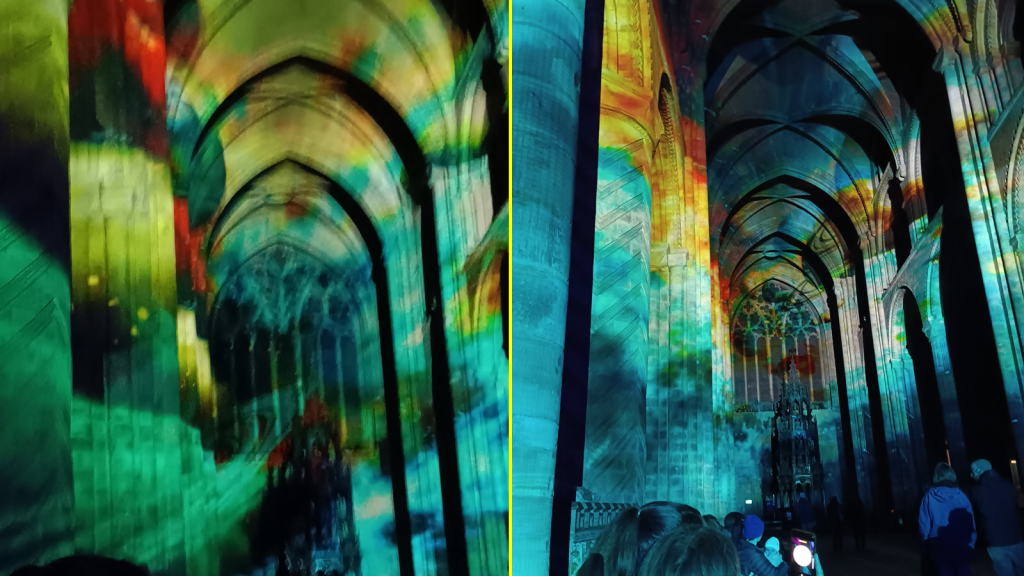
Sometimes, as above, the blues so soften they introduce themselves to the pastel forms of other colours. Are they almost embarrassed in this more vulgar form which their company allows them to manifest (on holiday perhaps) but lovely in their sometimes incongruous mix. And sometimes the dynamic forms are semi-representational. Below some of the stills effectively mute the ‘noise’ of the motion of stars and comets, with their tails still intact, shooting towards you from the screen behind the font but as if from an infinite distance.
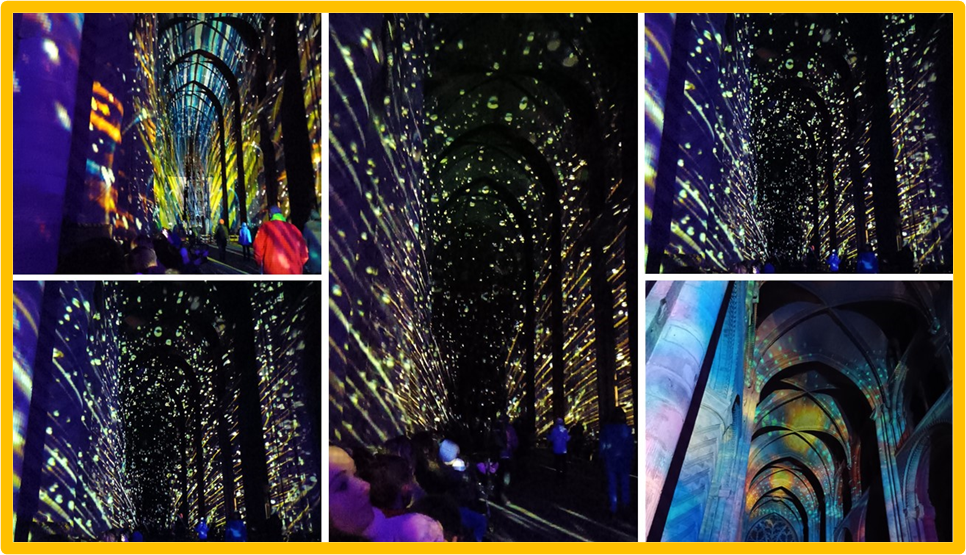
Sometimes, yet again, what we see is like the emergence of constellations from deep space.
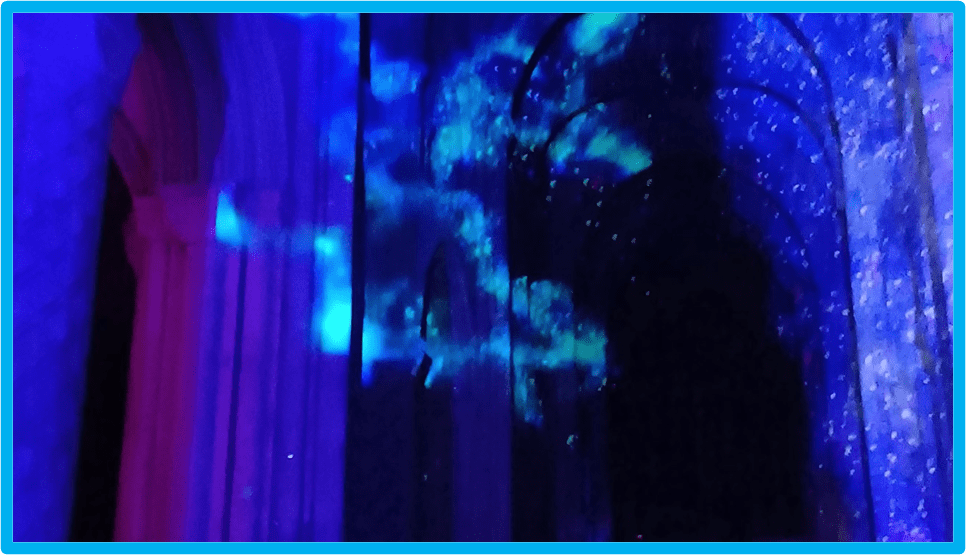
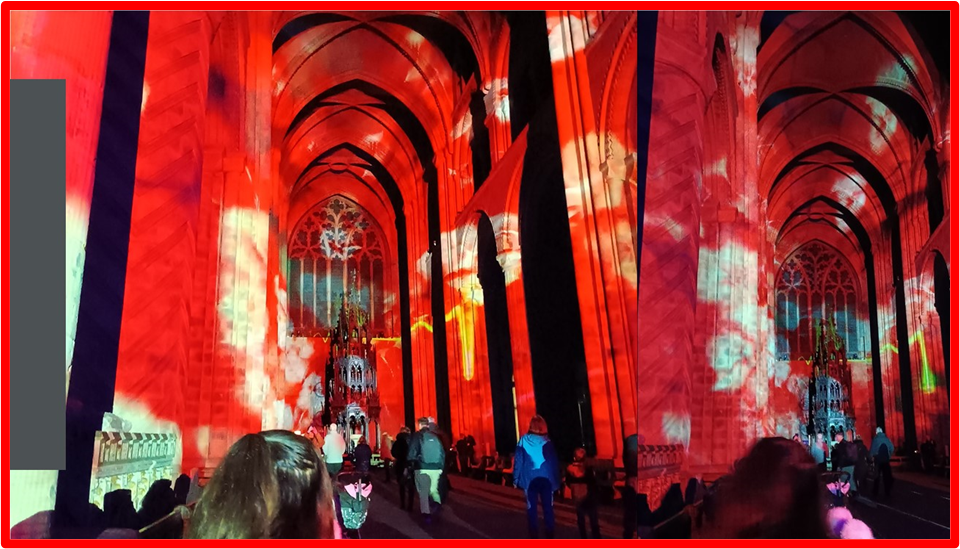
Blue isn’t always there to comfort us. At one point the entire nave and in stripes on the font is clothed in almost total blood-reds, that soon transform to deeper less disturbing scarlet tones, but crossed through with redemptive bare light patches.
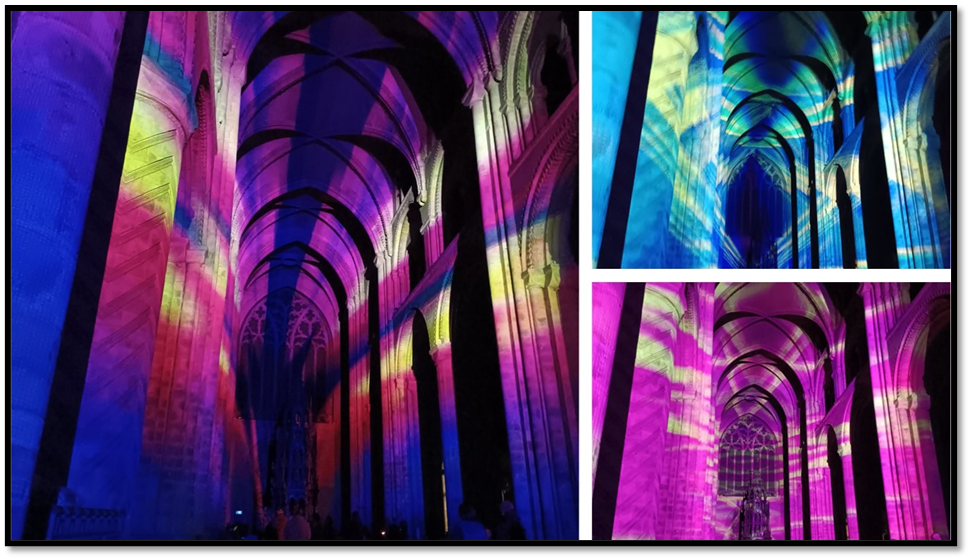
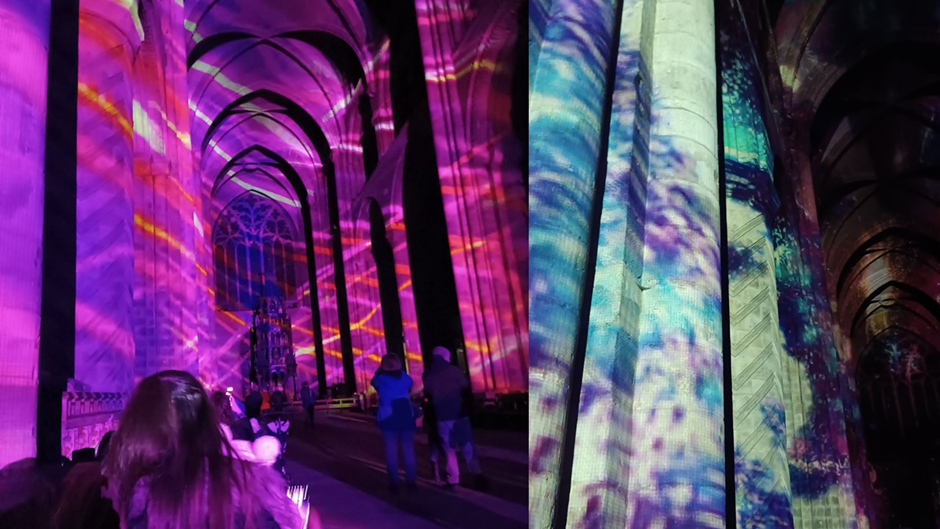
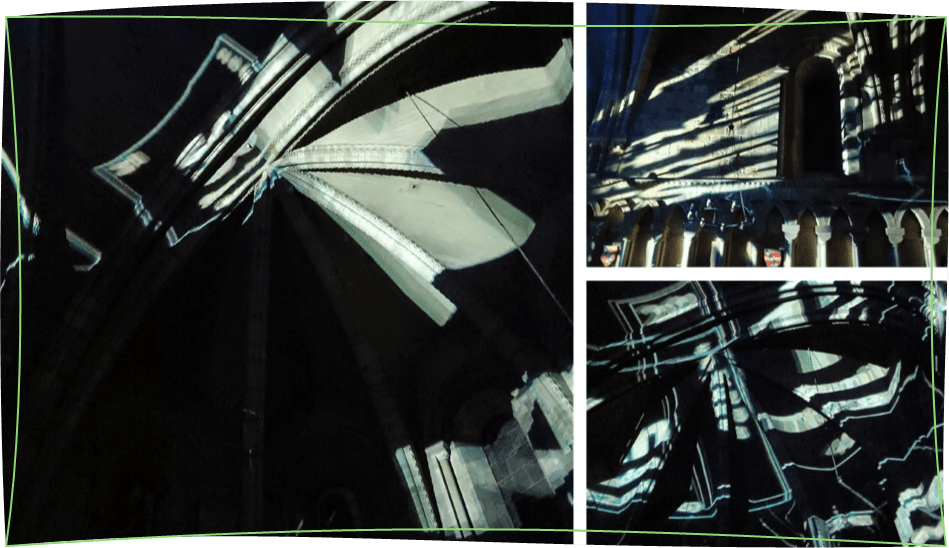
At other times, colour astounds because of the effects it creates on your sense pf perspective. Below, on the left, a central royal blue channel on the apex of the ceiling seems to help create the sense of an endless tunnel of the nave, a tunnel apparently descending downwards gently into dark space, or a black hole or a purgatory, depending on your interpretation. Sometime deep longitudinal lines are replaced by diagonal ones (blue and lemon in the top right below) that create a sense of longing around the central darkness they positively point out, at others bathed in pastel pink, te form of the ancient church comes back into its own, a effect of light that is common in Chartres Cathedral but unseen here since the Reformation.
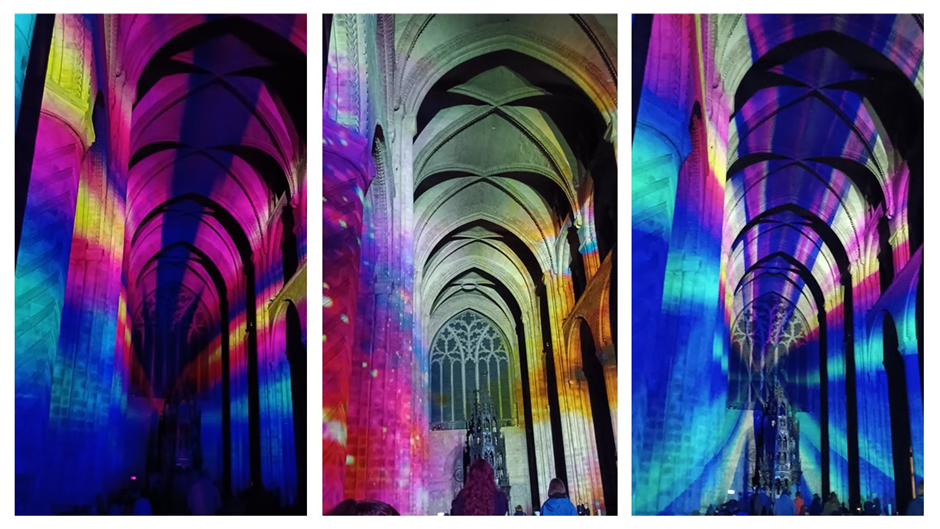
There are moments where an apparently natural light restores the Cathedral to its own tones and colours of rich stone , as in the central picture below, others where perspectives are distorted – bent to an apparent left in the picture on the left or dwindling backwards to a hole impossibly small, smaller even than the eye of a needle.
Or colour emphasises patterned motion, sometimes stilled, as in the central picture below into an image that looks like the shadow of a crucifix lying in our path forwards.
Distortion is so overwhelming sometimes that one’s whole body feels as if it might, in the long term of time to come – and perhaps sooner than we hope, squeezed into something so small that space feels the whole of being.
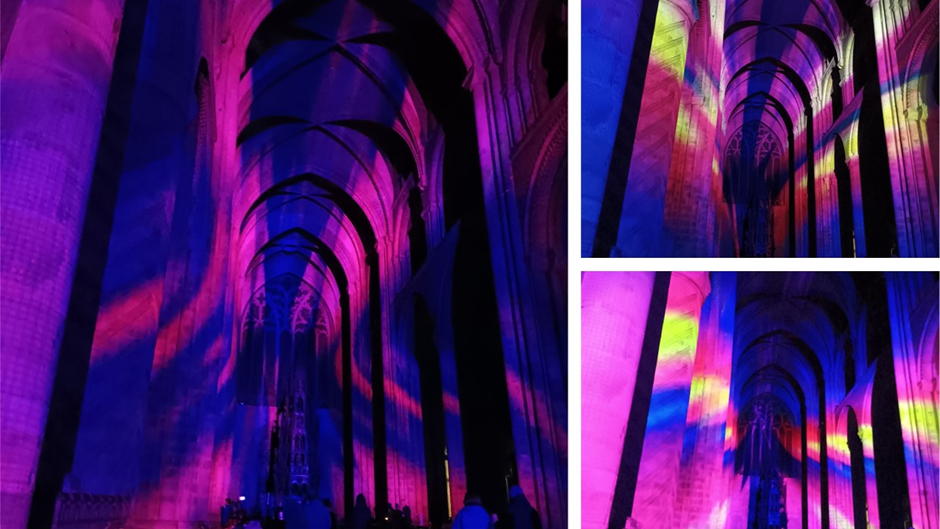
Later we will see some fine uses of diagonal lines at differing angles – between still moments or within each of those moments. These lines have to capacity to take on meanings that may or may not be there like the apparent double helix in the picture on the left below. There the lines of light are well defined, but lines of definition tend to fade and transform in the time of the projected show – the colours even overlay each other or merge (bottom right).
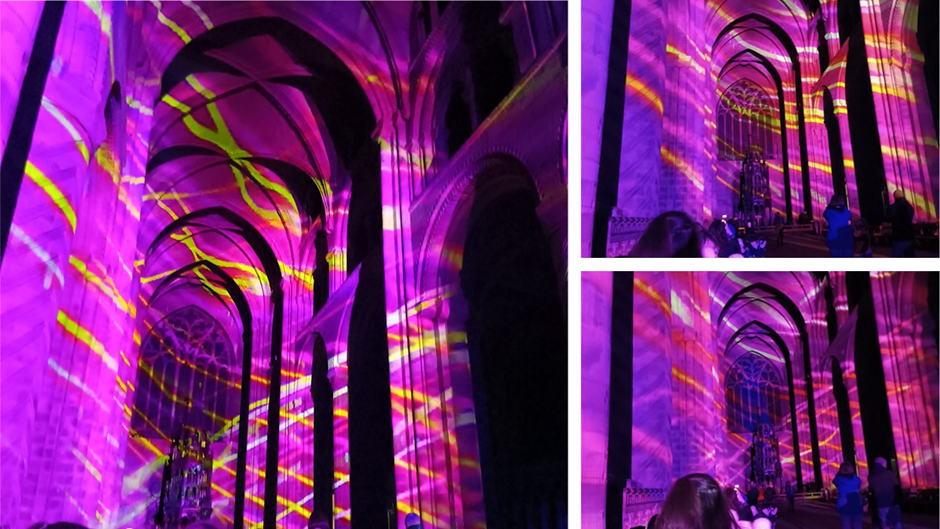
Of some uses of pattern in colour, I know not what to say but that they are beautiful.
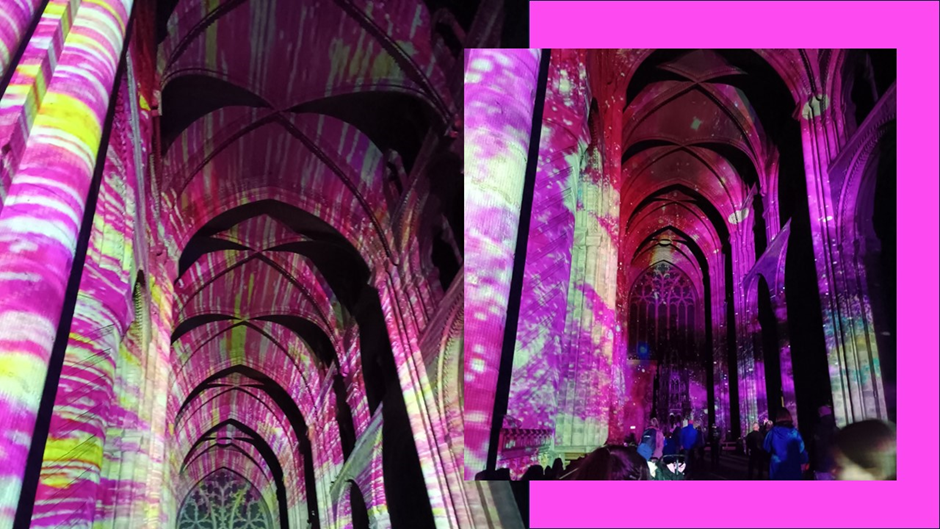
Sometimes a starry night however can become representational of a forest at evening, of, if not that, the abstract representation that shade and shadow offer to human consciousness. In the scene I photograph below there is a image so abstracted that it feels as if you are looking up through the shadow of foliage, rather than through foliage. Can you see the shadow at the apex of that imported Gothic window, still wide because it must fit in a Romanesque church nave.
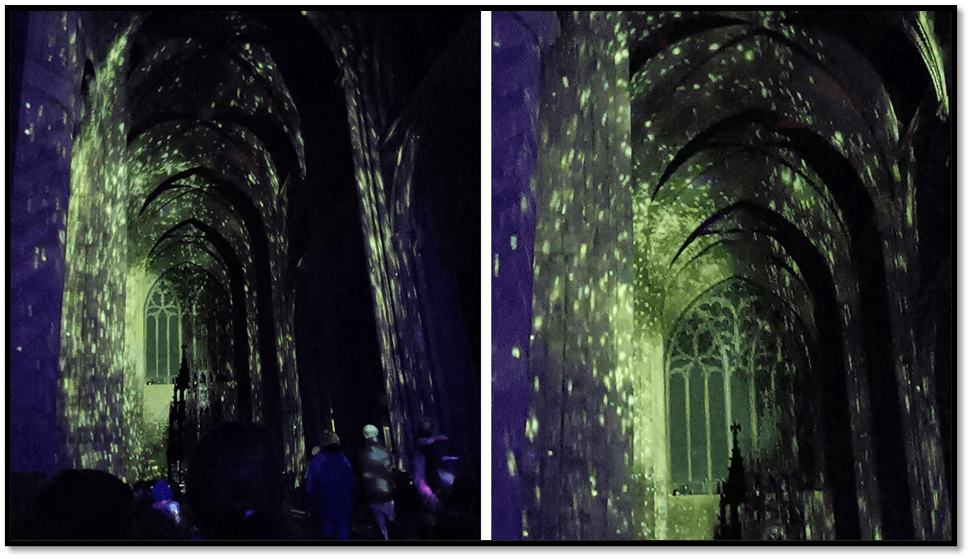
As part of the show a big bang effect in light births the Earth, which then abstracts and dissects. It is most beautiful.
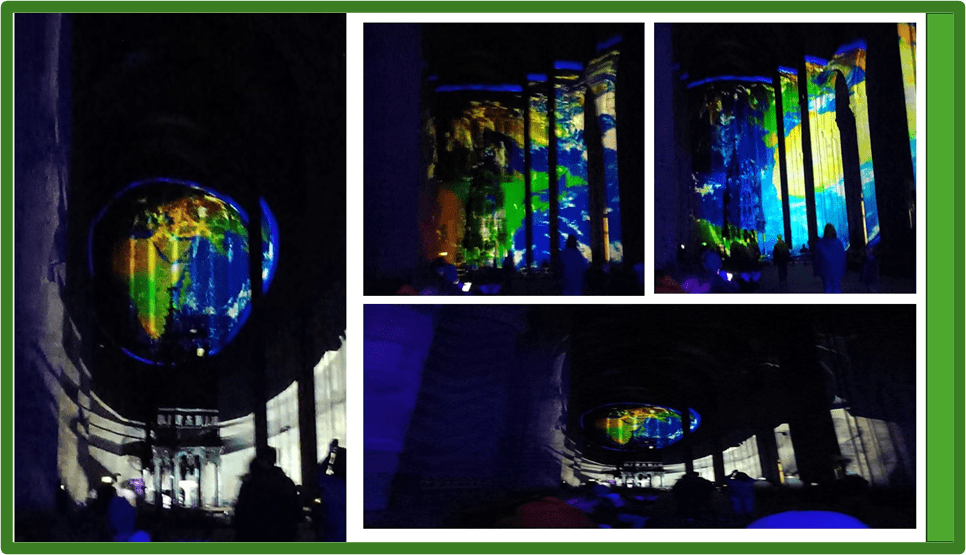
Before I move on, as we moved on, towards the font and then left to the cloisters of the old monastery building, remember through all the colours that intervene that even darkness and light or black and white are never in this show monochromes or definitive but shifting like the colours we remember better.
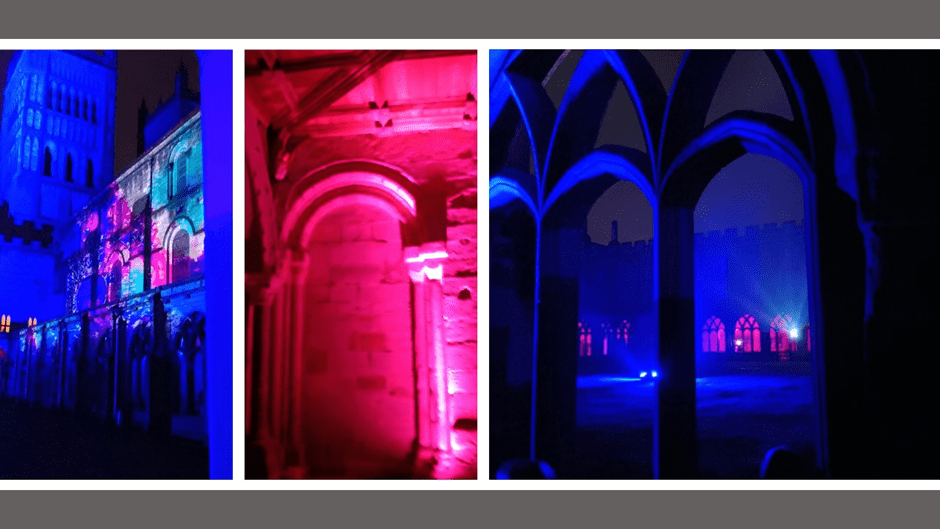
But we didn’t see any of those yet. We moved left along the corridor of the cloister, bathed in the signature colours of the show, sometimes variegate but sometimes stark. It was clear as we progressed that there were moving images cast on the outer wall of the Cathedral that we would not see until we got to the corridor facing the outer all and Gothic windows of the cloister by which we entered.
I remember being keen to get to that view, and somewhat disappointed by being pointed to enter an old medieval chapel off the cloister, until I saw the bodies spread across the floor, awaiting a show to restart. We took a pew, literally a pew seat, and a new countdown began.
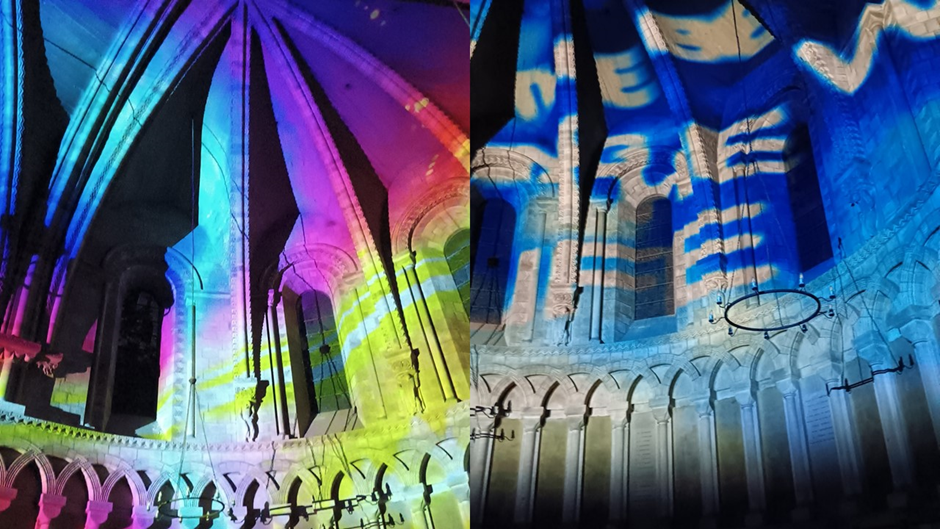
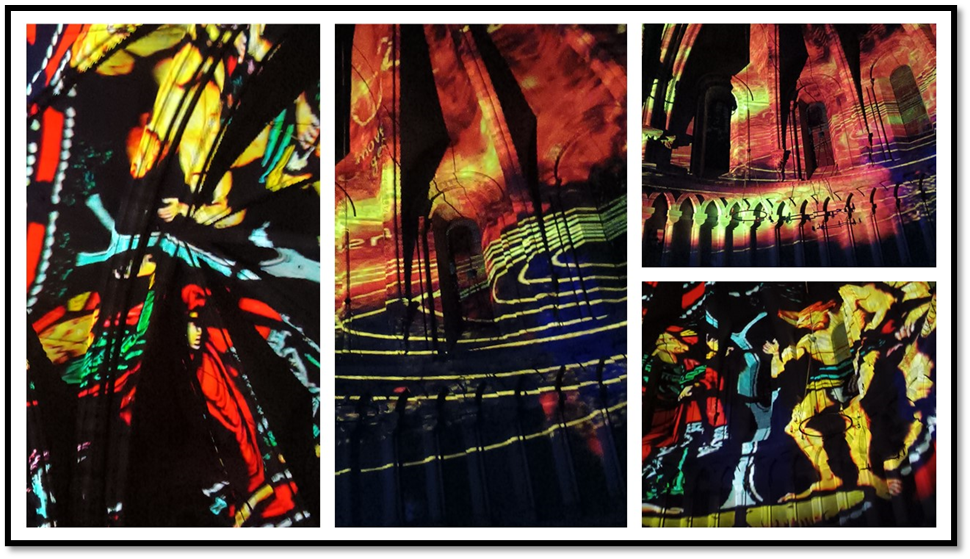
Cast onto spine roof of the domed apse of this chapel was a colour show that dwarfed those of the nave without excelling, as if the relative proportions of the architecture were cast into doubt by the images each was able to support. It started with a glow of colour contrasts, whether the passing images were totally fluid and abstract (centre below) or representational – sometimes of text from stained glass.
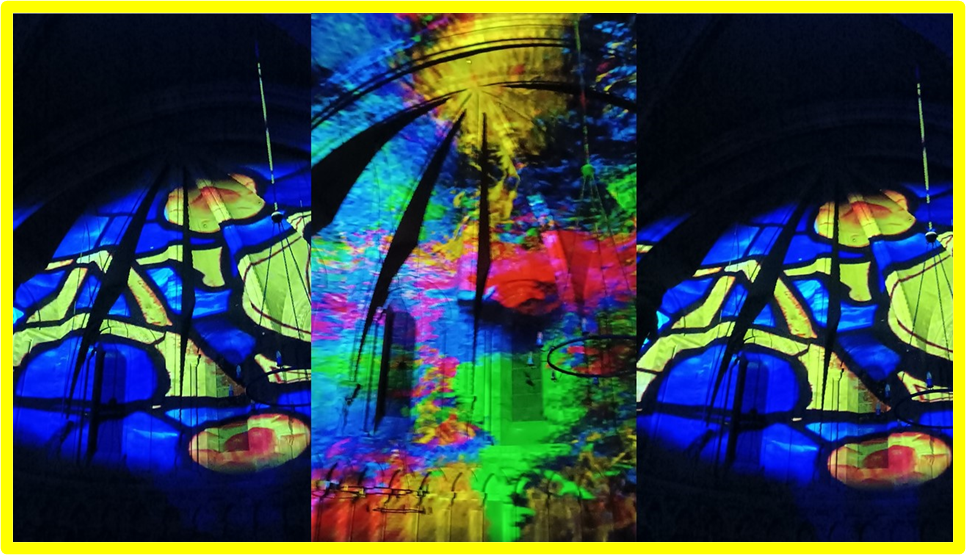
The collage below will give some idea of the metamorphoses this apse roof underwent. Images could be finely defined, like the cursive text of medieval manuscript or abstract and semi-geometrical. At other times tracery webs were painted on the stone by light merely by variations of tone of ‘one’ colour (the scare quotes indicate my view that the one is always diverse and ‘manifold.
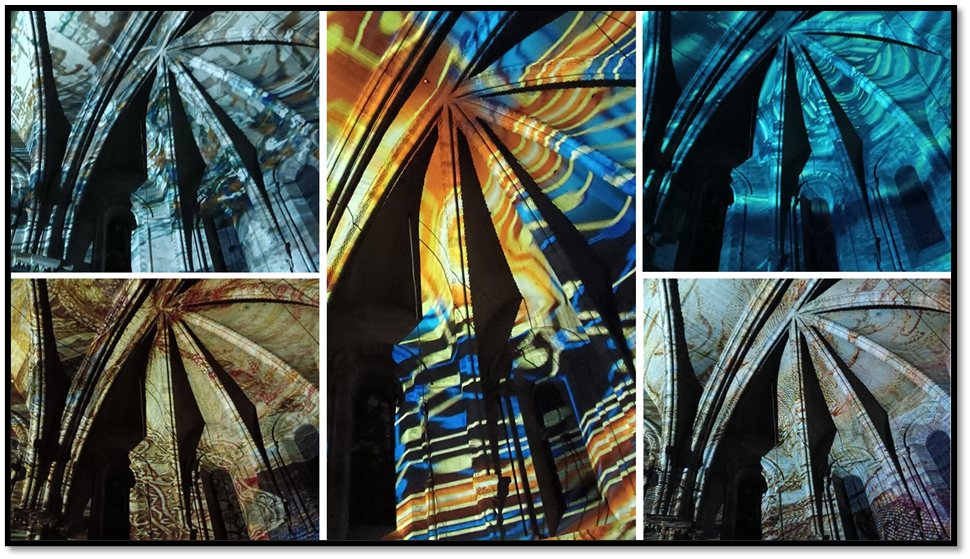
They weren’t always subtle effects, as in the two examples below.
Sometimes light as used to ‘draw’ linear but semi-abstract shapes in space. Below is a set I believe to be images of evolving lifeforms, from the simplest once cell to strings of cells in a fluid snaky lines, to shapes with volume (I see fish forms n the window on the middle left (clearer in the chapel)
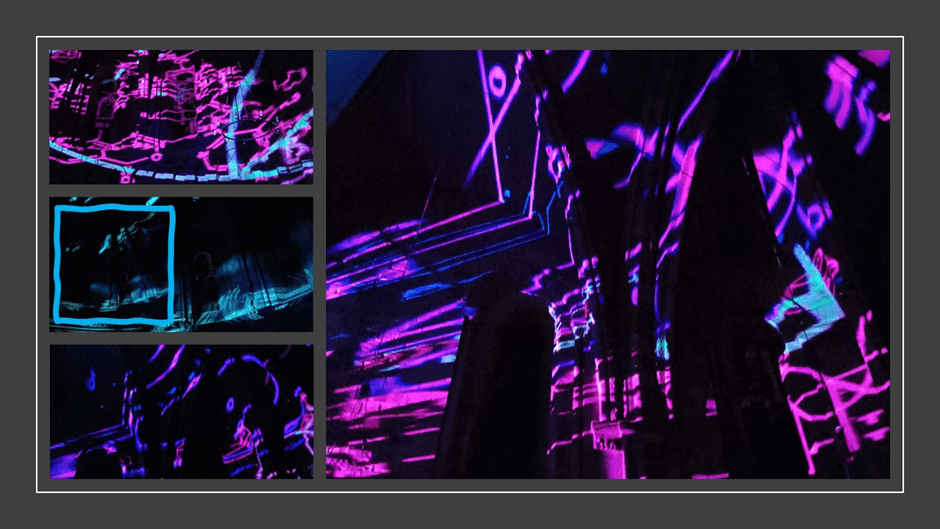
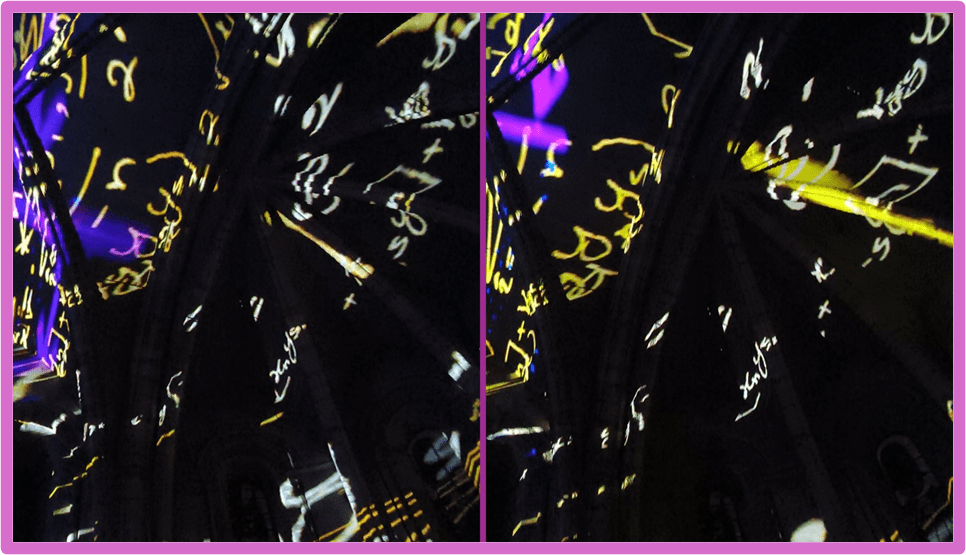
At other times the linear forms look like runes or the beginnings of symbolic codes that will birth the world of writing and text. These in themselves fuse with what i saw as lifeforms.
Some images – clearly taken (not always legibly so that the abstraction within the figurative form became apparent) were from medieval stained glass, and here a developed human life-form can be seen, looking as if he were born birthed ex nihilo (out of nothing), as maybe it seemed to him he was. And still curviform lines helped move on the spectacle. Do not miss the show in this chapel. It is astounding.
As we go out, back into the cloister, I get the view I had wanted earlier. The part of the show I illustrate is the discovery of the solar system and its effects on human conception of space. Sometimes merely geometric, you never lose sense that these defined forms may lose sight of the less-defined near-chaotic swirl of entities from which they are in fact formed. Space has been textualised and Copernicus’s text rides proud on the cathedral walls as we peer at it through the glass-less cloister windows.
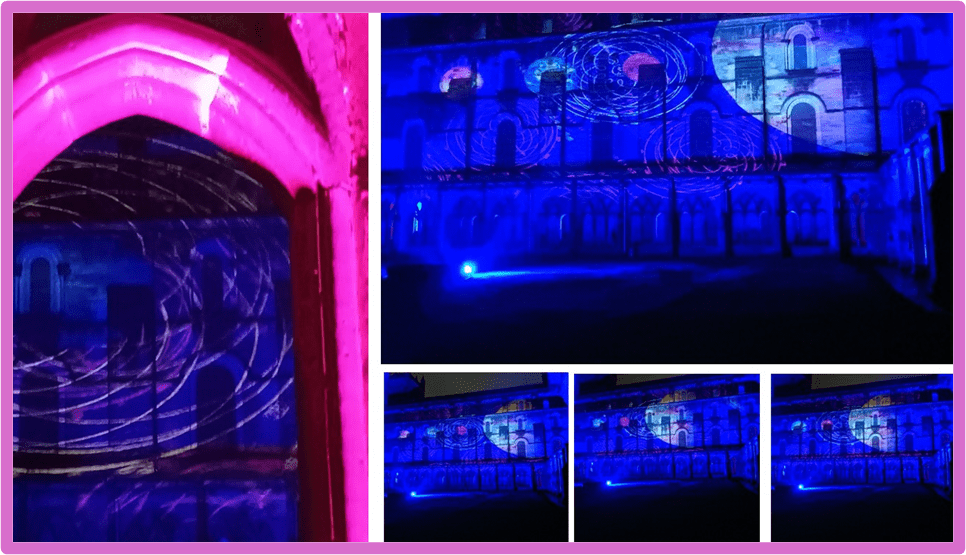
The view of the line of the solar system we are accustomed to, as we see it animated along this corridor. Never has it been shown so clearly that that straight line of independent planets hanging in empty space is a mere human intellectual construct, less real than the lights that shoot at you or run away from you or bath you in their formless semi-definition earlier in the show in the nave, one’s respect for which just grows here. Geometry is precise after all only because it is an abstract concept. That is not its reality.
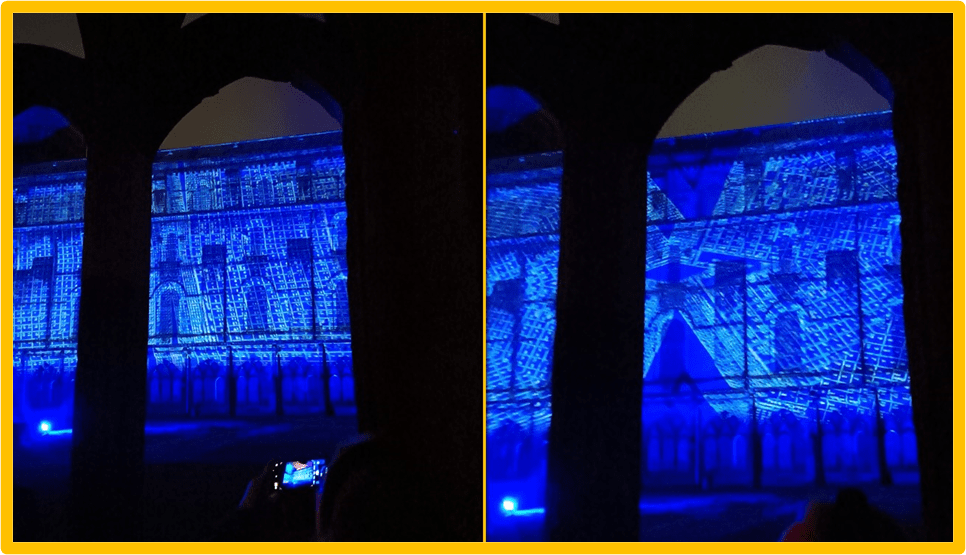
Text, even that of the divine Copernicus is equally an abstraction, though in cursive form we admire the creativity of the writing hand behind it. We are back in a different view of creation.
From there you return to the cathedral and then out by the chapel beyond the font. Do go if you can. Let’s even try and rewrite scripture, starting with Genesis 1:4:
And God saw the light, and it was good; and
God divided the light into many
Shapes of intercut colour. Like Titian
Am I, they said, that non-binary form.
Light is not dominance entitled white.
Diversity is all, form nothing: But
for a STILL moment, what helps us think that
About ourselves is something so sublime
We awe ourselves. A piece of work fulfilled
In man's not much methinks, without the rest
That makes us bless that darkness in us too.
Dearest Joanne, I hope that will be nearer in time than I can even guess at.
With love
Steven xxxxxxxxxxxx

