


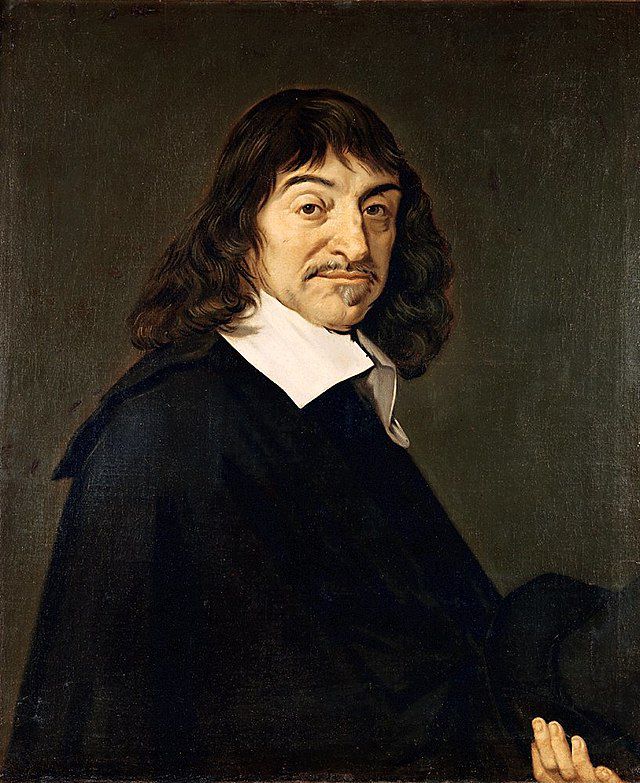
‘I think therefore I am’, the philosopher said, but he only became Rene Descartes by writing those words, or ones translatable into that English statement, and allowing them to be thoughtfully written about ever since.
Thinking is an entirely invisible thing on its own and hard to evidence, except in language. Sometimes spoken language hardens thought but only in conversation where it can be tested and refined as Plato insists by casting his thinking into a dialectic of interacting voices. But even then, talk dies in the symposium in which it happens if it is not recorded. The Plato we know is knowable only through the writing that embodies his Socrates.
I say Plato’s Socrates because that character constructed in written words and the imagined drama enabled by writing is a different Socrates from that other one embodied in the writing of Xenophon. Xenophon is known in contemporsry writing about his military exploits. Plato is known only because he has written the language of many voices in dialectic.
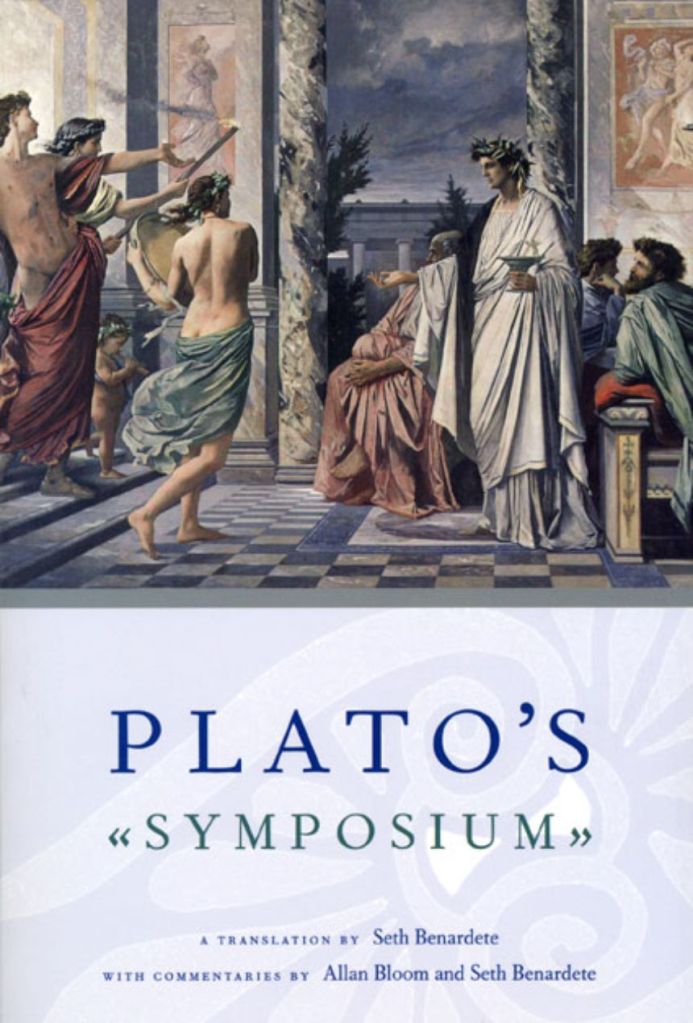
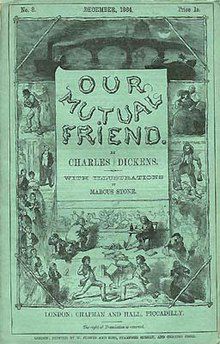
That is why I value writing. It allows thinking to test itself in the ‘different voices’ it records and / or invents. I say ‘and / or’ because record and inventing are, as far as the choices available in writing language concerned, not alternatives but things that occur simultaneously. Writing may not just be about the ability to ‘do the police in different voices’, a skill that amused Charles Dickens so much he invented a character, a boy of whom a mother is proud because of his ability to do these impressions of other voices, in Our Mutual Friend. He thought of this boy as possessing an analogy of his own skill as a inventor of voiced things and people (the phrase then so impacted on T.S. Eliot, he used it in The Waste Land). Ekphrasis happens when we choose to write about any topic. That is so because we actually invent the subject as a voice with which to converse.
This is at its best in the old rhetorical art of ekphrasis, the writing about a topic usually a painted or sculpted and silent about its own potential to meaning, for good or ill, in its use after its invention for wider purposes in Ancient Greece. If I have to think about how that is illustrated to me in my experience, it was in visiting last Friday the exhibition at the Bowes Museum in Barnard Castle that put together for comparison work by L S Lowry and Norman Cornish. One painting has haunted me since, and I think only writing about it. I think only writing will release those ghosts, embody them imaginatively as voices re-creatable in reading.
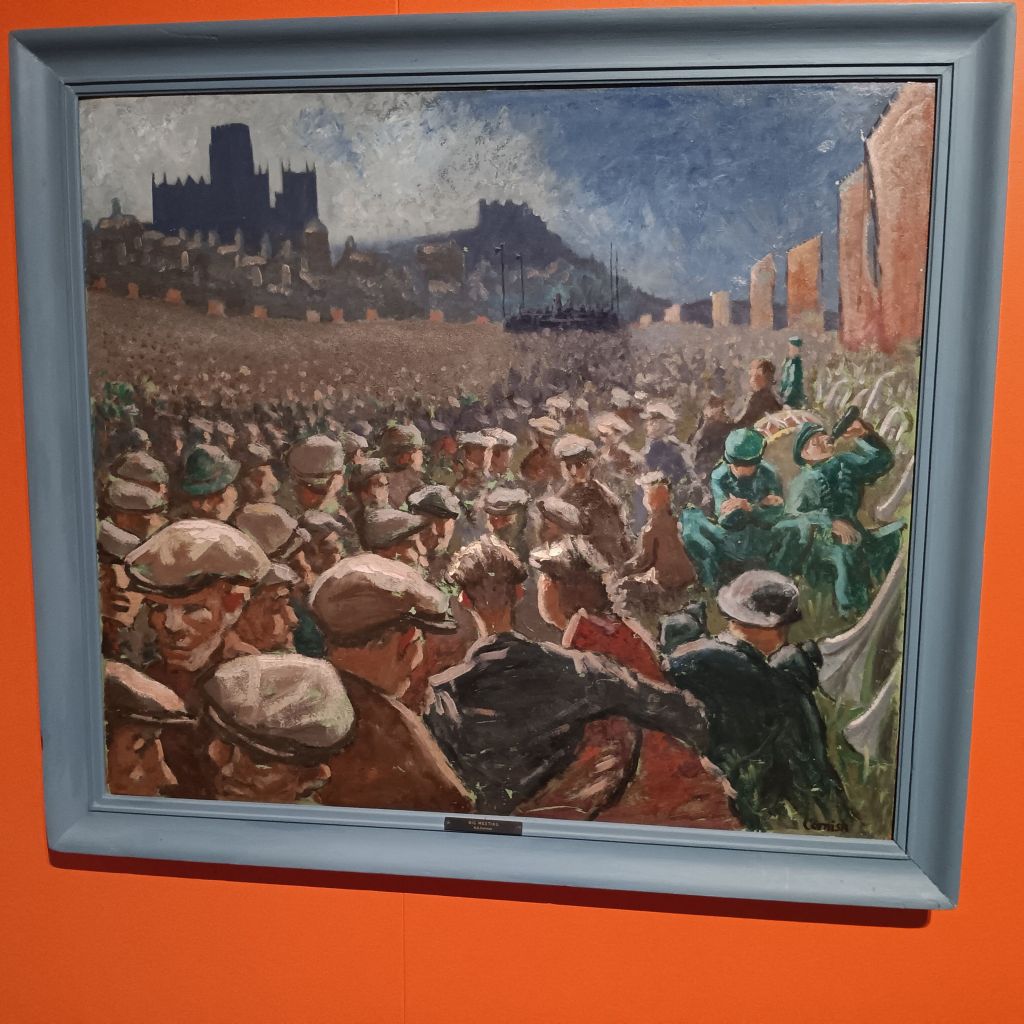
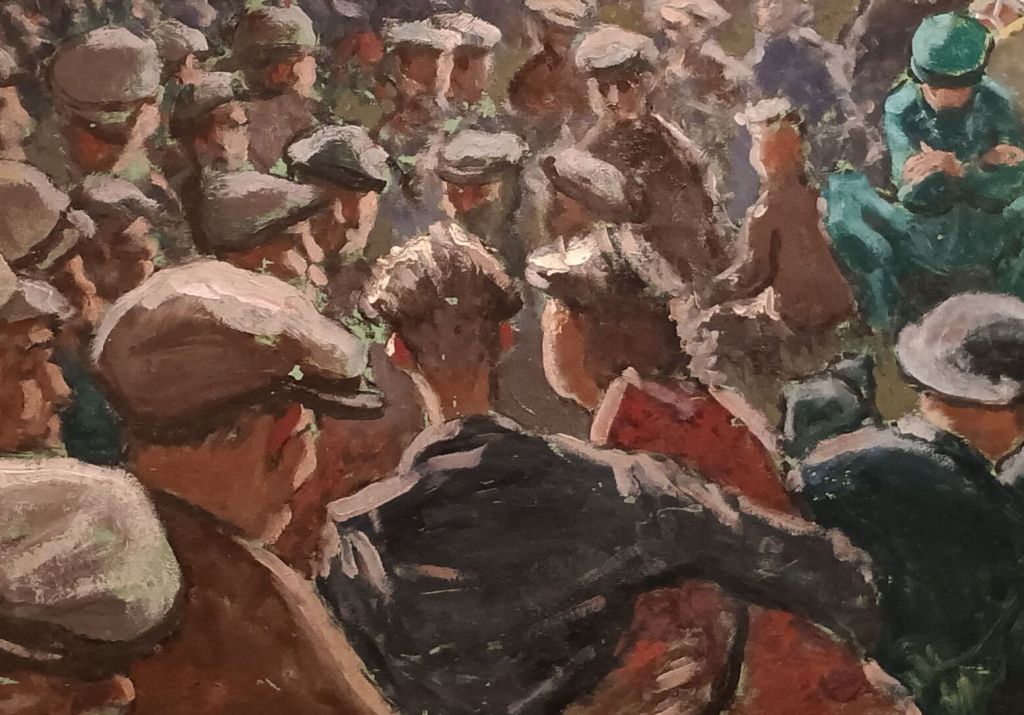
This is not a Cornish painting, I knew (it is in private hands), although it contains elements I knew, notably those Spennymoor miners in flat caps in tje foregroundspeaking together as they might in the many pubs full of them he drew and painted. What is new to me is the impossibly long perspective by which the masses attending Durham’s ‘Big Meeting ‘, the name local miners gave to the annual Miners’ Gala. There is a corridor here filled by the many that extends to an almost romanticised elevation in the background of the Durham Castle and the Cathedral.
What are the voices I want to hear and write down. They are millennial and liberatory. They extend from the conversation of those realistically painted foreground miners in Cornish’s usual realism that dares to create types from individual to the hardly figured masses in the distance that might just as well be a choir of angels, celebrating the move to the taking of power – Castle and Cathedral, the bodies and spirit of the Human City of the People – that might be the meaning of a true Revolutionary change. Those banners in red could be the Imperial Flags of a Roman army, we’re it not a picture humanised by those gentle men (not the class-based type of the gentleman) in the foreground.
They could be the mass of Angels surrounding God, except that, for a similar reason to that above, their ideal is the incarnated in human flesh, the flesh of many not just one humans in the ideal. The skies are like those in Turner, as are the architectural details, idealised as that very literary painter would also do.
I do not know another Cornish like this, and how different from another record of the Labour Movement in Lowry’s Manchester placed next to it.

The comparison works for Lowry atomised groups of workers into single people. Even if they converse, they do so from a distance. It reminds us how melded Gornish’s people are – almost merged with each other, their extremities touched by natural light that looks as if it were divine in orgin but is not.
Writing doesn’t create knowledge that we exist. It creates the potential and the knowledge that if we keep writing, we can be much, much more.
With love
Steven xxxxxxx
 Steve_Bamlett_blog
The amount of effort you put into your blogs will always amaze me. You’re doing so great ❤
LikeLike
Thank you Aaron. Much love for putting up with my driven behaviour.
LikeLiked by 1 person