


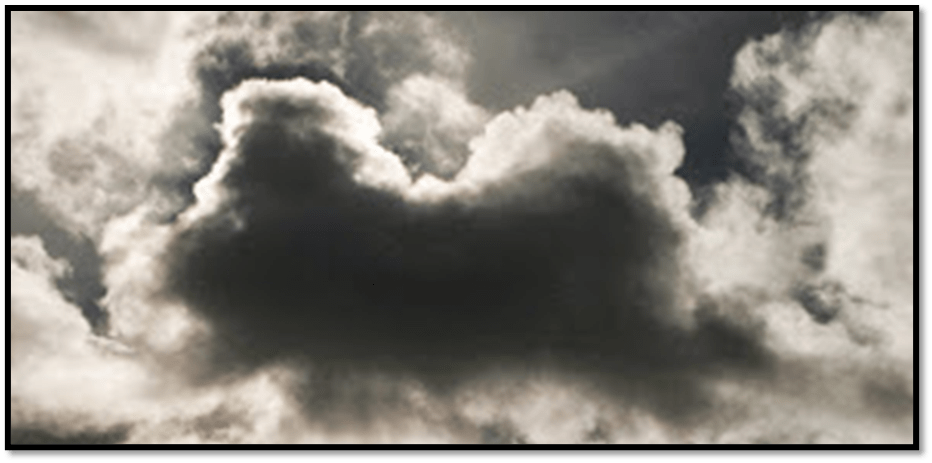
Look! Is it a camel or a whale?
Believe it or not the ‘most commonly used words in English have been tested against an authoritative body of samples (see Wikipedia on this here), called by linguists a ‘corpus’ and the most used word is ‘the’. The list goes down a long way before we confront anything that isn’t part of the machinery of language, such as articles (‘the’ obviously), pronouns, prepositions, determiners, or modifiers until you get to some verb, the first seems to be ‘get’ , or noun. Among the 100 most used is, however,’look’.
It is so often now on its own or as the preface to a declarative statement. In the first case, I often hear it used with a degree of angry and critical despair at someone refusing to understand the facts as you see them. That form of the verb, which in grammar is called the imperative, is always a command issued to someone. Commonly though with this verb, what it commands you do is not clear: ‘Look!, you might assertively say when you feel that your interlocutors are failing to understand you and / or the correctness of your perception. It means ‘why don’t you see things like I see them’.
With some people, the imperative form is necessary. The servile, or those masking that quality, are always ready to see how those more powerful than they see. Thus, they do not need the command to ‘look’ again. Hamlet plays with the King’s minister, Polonius, precisely to make that point:
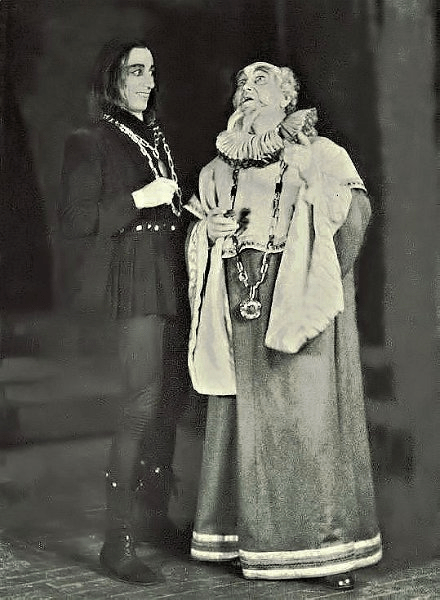
Hamlet: Do you see yonder cloud that’s almost in shape of a camel?
Polonius: By the mass, and ‘tis like a camel, indeed.
Hamlet: Methinks it is like a weasel.
Polonius: It is backed like a weasel.
Hamlet: Or like a whale?
Polonius: Very like a whale
Of course, correct perception of physical things is one thing, perception of abstract truths such as fundamental beliefs about life or authoritative interpretation another. It is the second case, where not looking in order to see is important. The whole problem is locked in the semantic convention wherein ‘understanding’ and ‘comprehension’ used the word for physical sight to signify the norm of mentally (intellectually and emotionally) understanding an abstract truth or one only deductible from evidence.
Only a culture that prioritises sight over other senses could perform this shift of meaning in verbs, and although the word is different, we owe the best examples to the classical Greeks, who, for instance, encapsulated the issue of a tragic hero who fails to see what he ought to have deduced, that he killed his father and married his mother, by making the outcome of his failure the loss of his eyes. Oedipus strikes I to his eyes using the brooch pin of his hanged wife and mother, Jocasta.
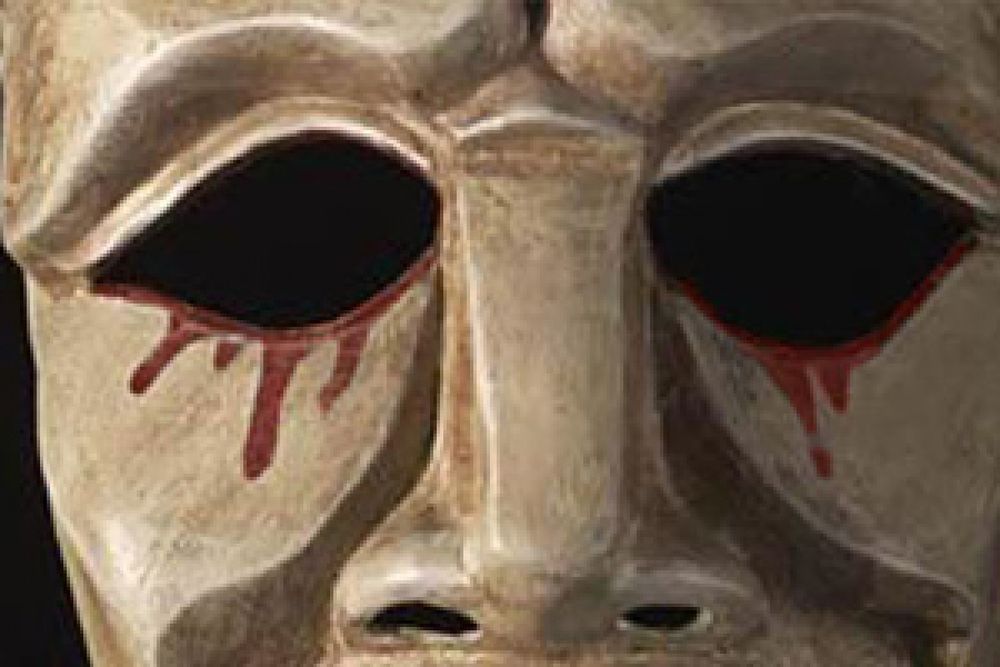
The only person who sees the truth in the play is a blind transgender ‘seer’, Tiresias, who cuts through the male hubris, pride in ones own significance that is, of a king who thought he saw and understood everything because he was good at solving riddles set by a Sphinx. That skill made him imperious in forcing people, his children, and his subjects, to see things exactly as he saw them. Shakespeare lifted the theme, including the blinding, but not of the tragic hero, for King Lear. He uses the imperative for ‘look’ only in the most poignant scene of the play where just before his death he refuses to ‘see’ that his visual evidence for his understanding that his daughter, Cordelia, still lives, is false:
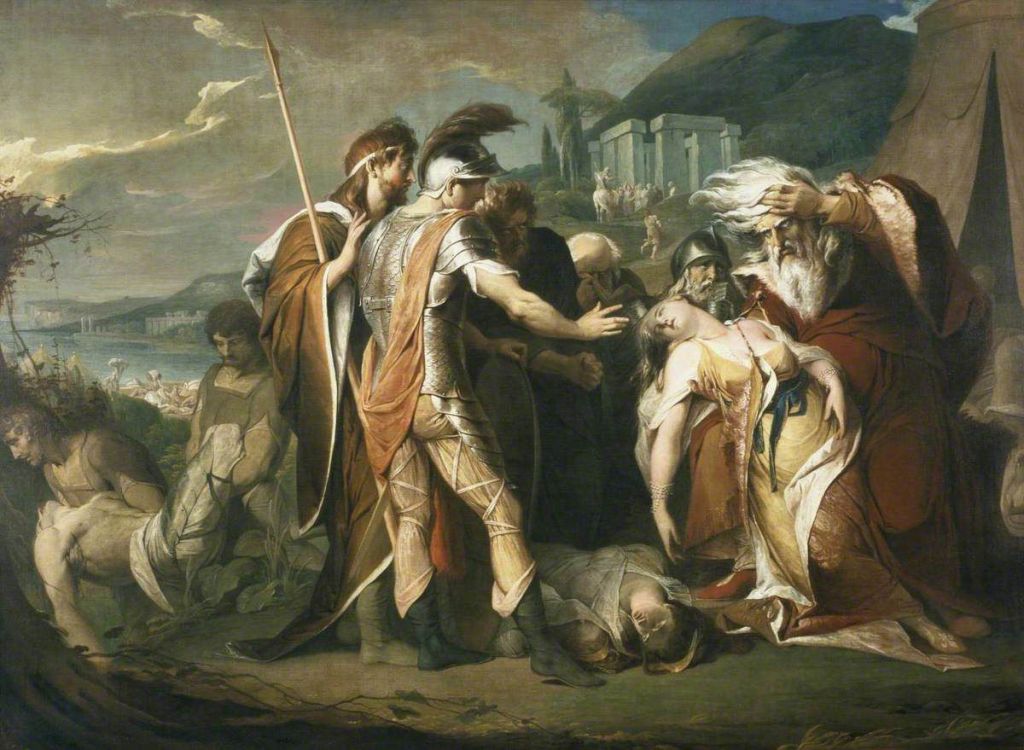
Why should a dog, a horse, a rat, have life,
And thou no breath at all? Thou'lt come no more,
Never, never, never, never, never!
Pray you, undo this button: thank you, sir.
Do you see this? Look on her, look, her lips,
Look there, look there!

(Act V, Scene iii, 304-309)
Sometimes, we use the imperative mood of the verb, ‘to look’ as a means of filling a gap before we explain what to us is obvious, however faulty our vision. That Lear does not is one of the contradictory mysteries of the play, wherein the King confuses the death of his truth-tellers, the Fool and youngest daughter, Cordelia, and then tries to ‘see’ and force others to look in the same way to understand that she still lives.
In modern political argument, we are urged to look to have it proven to us that what prejudices are, in fact, truths. The danger of this has been proven by Brexit, wherein the belief that the British nation would be great were it not for interference and immigration from the ‘foreign’ could be stopped. As a result of the repeated rhetoric of the threat posed by the foreign, we have now built a basis for the existence of the English Defence League, the Fascist group in the UK which still is unproscribed and peddles myths for what they want us to think, for the purposes of them gaining power, are visible truths.
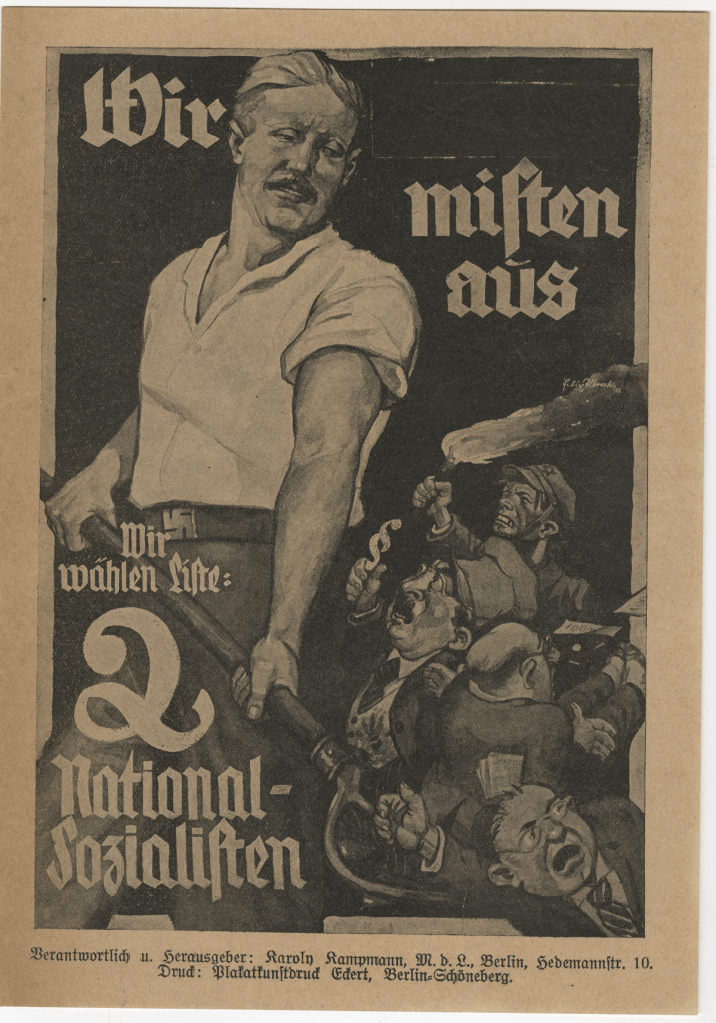
The people made powerful against powerful (and Jewish) liars as Fascists tried to make us SEE it, whilst accusing the latter of disguising the hard truths of working-class and ‘peasant’ common-sense (Fascist propaganda)
Mein Kampf was written by Hitler to show how truth he believed self-evident was visible through his own struggle towards power. ‘Look!’ He says; This book shows that we need to see clearly how foolish people fail to see what is great in me and the promise of a new Reich. He then makes you look again and see how ‘very like a whale’ the world is in Hitler’s gaze. Look again and see that by a ‘whale’ we understand the large ‘fact’,which will then perform as if it is established truth, that the ‘whale’ symbolises the even larger foundational truth that assert the total authority of the Third Reich over all uncertainties. Look! And see the outline visibly in your mind, the deceiver goes on to assert, and the truths of race and hierarchy: white Arian ascendancy over semitic or poor Southern others.
And in Brexit Britain, the right wing, in tne shape of that Juggernaut of its views, GB News, continues to validate the absurd prejudices in the shape of willful refusal to read the evidence carefully and see behind it not its ‘appearance’ of oversimplified surveys and their dubious statistical ‘proofs’. See the GB news story today by Hannah Ross brandishing this collaged photograph:

Now Hannah Ross seems rather a good person but GB News chooses its stance not from her bland under-interpretation of the ‘facts’ of this poll, that rarely points to the problems of validity and reliability in them (especially given the heightened emotion and prevalent myths on social media and street conversation) but from a photograph which makes the current prime Minister look rather afraid of the poll rating on the importance given to ‘immigration’ (purple line) and ‘crime’ (blue line) as an issue of most national importance. The purpose of fermenting violent public disorder by the Right, as Hitler’s burning of the Reichstag, whilst claiming that this was a left wing plot in process, should have taught us is precisely to see these ruses to make public opinion change for what they are – deception!.
We are asked to see a nation acting in its own defence against attack and intrusion from the ‘boats’. We are asked to see specific horrendous crimes, properly themselves most likely to be the product of racism and poor public services (and yet health and welfare reform has lowest priority for voters the same article says) as visible signs of the danger posed by other races, and justify the attacks on Muslim and Sikh temples.

The flag of England and of the United Kingdom has never ‘looked’ so sad as in the picture above. Men in masks with holes in their fabric replacing eyes are shouting ‘Look!’. And seeing nothing and understanding less. Like Lear ‘we stumble’ when we claim to ‘see’ and should ‘See better’. All of this comes I think from the same Attic Greek over-valuation of the ‘eyes’ though as the means of understanding, at least on the surface of communicative language. The point of Oedipus Rex is that the hero, Oedipus, should have read more analytically, not just concentrate on appearances (his own or that of the face of the situation) and looked better. This is true too of both Lear and Gloucester in the King Lear, where the phrase ‘See better, Lear’, is crucially important.
Greeks knew seeing involved more than looking. Plato created the Baroque machinery of his cave allegory to show us precisely that:
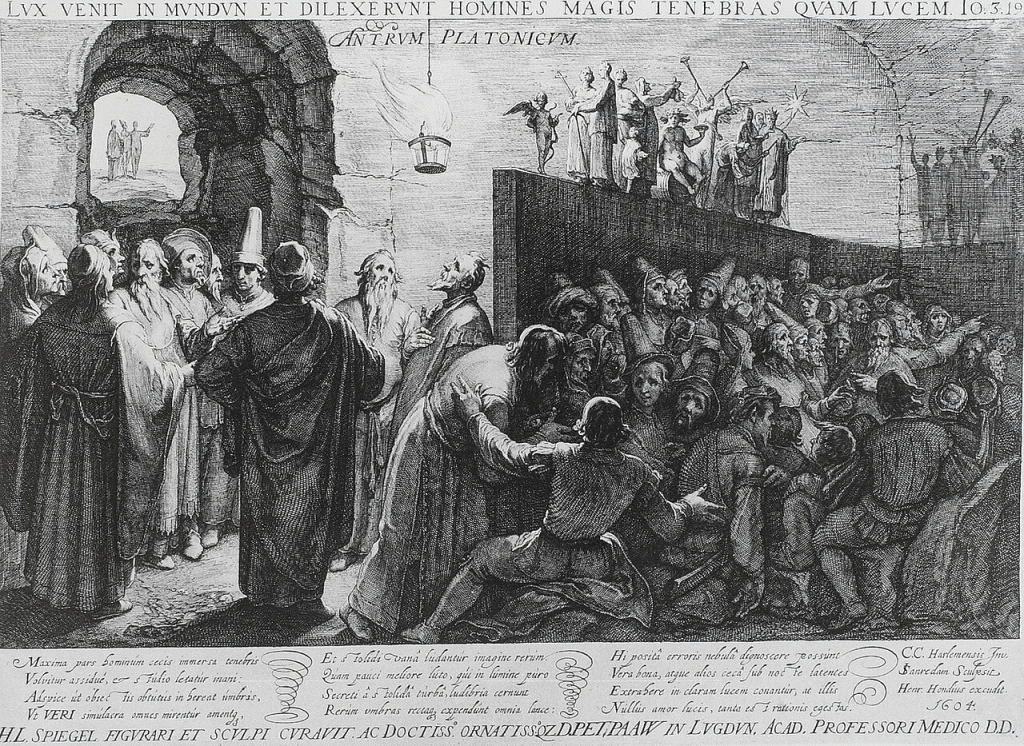
Plato’s allegory of the cave by Jan Saenredam, according to Cornelis van Haarlem, 1604, Albertina, Vienna
The English Defence League want everyone to sit in a darkened room seeing pictures on the wall reflected from the truth outside the cave they are confined to and to which they turn their backs. What they look at blinds them to truth. Certain philosophers out to be nearer to the truth , the Sun outside the cave as in the seventeenth-century Saenredam print, but even they dispute in a ring we know access to the real truth. Those that have such access, seen on a mound outside, are too remote to even speak to οἱ πολλοί (hoi polloi), the people or the ‘many’. No wonder Plato was not a democrat.
But that democracy is a difficult form of governance needs no more proof. 5 means that we need constantly to refine it – a truth that gets ignored. Greek democracy was a direct democracy. Every free male was involved in each decision of the city-state in person. This not being possible for us, and still difficult even to do what we do, we need to expose the myth that representational parliamentary democracy, necessitating two party systems, is a viable option. Yes PR would mean the Reform Party (and its de facto military wing in the EDL) had a say in pre-governance decisions (in parliament) but this would ensure that we could legitimately police the difference between acceptable and unacceptable ways of making political statements of agreement or ‘protest’, excluding those based on violent force and eventually, through education, ignorance. The establishment of education in ‘civics’ would then become an issue: leaders would no longer lead without having to justify their decisions and ground them, of whatever party, and would not evoke false ‘centres’ in order to do so.

Let’s not say ‘Look!’. But let’s say ‘Look, see, taste, smell, hear and touch, test the evidence and then think it out’. That not is to say we do not need foundational truths too. But these need to be about respect for the person established in its network of expanding relations with others and of the ‘other’ (that we need to perfect our knowledge and vision). We are still a long way from such truths. We won’t see them just by ‘looking!’
With love
Steven xxxxxxx

