


Turn where you will for advice with regard to how to conduct yourself (whether in a formal job interview or life generally), you will, in the end, get advised that you need to ‘Be Yourself!’, or so some formula that boils down to the same thing. But ‘being yourself’ implies that you have one unitary self and that it dictates your action in body, word and skill, and that the world is sufficiently ‘open’ to any self that presents itself to it. Some selves are manifestly thought to be acceptable, yet others are given short shrift. In exploring why the ‘broad path’ to salvation is wrong, and thus praising his own dour Protestant narrowness of being saved on a ‘narrow path’, Bunyan has his allegorical character Faith, seen in a dream by Christian, meet the rather suspect, Talkative:
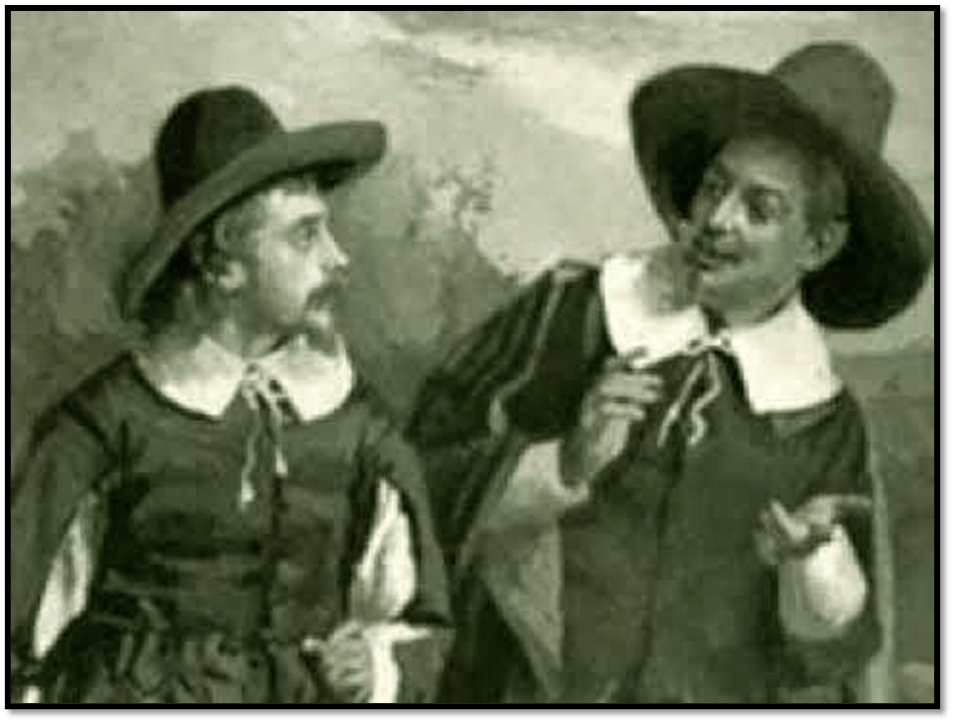
… Faithful, as he chanced to look on one side, saw a man whose name is Talkative, walking at a distance beside them; for in this place there was room enough for them all to walk. He was a tall man, and something more comely at a distance than at hand.
Even in the apt illustration, Talkative can’t help but be, frankly, talkative. He intrudes onto the shyer Faith, yet there is a storm in the air behind him. He inhabits the broad way to salvation, for he looks nicer at a distance than near to and knows it. He illustrates the usual double bind of Judaeo-Christian morality of the more fundamentalist kind that you follow your own nature by choice. Talkative cannot, after all, be anything other than himself, which is – well – ‘talkative’. So being FREE to ‘be yourself’ gets you nowhere for Bunyan, your fate anywhere being predestined.
God really enjoys that double-bind in Milton’s Paradise Lost. In Book 3, God predicts that man will be tempted and will to temptation Fall:
… : so will fall
He and his faithless progeny : whose fault?
Whose but his own ?
Paradise Lost, Book 3 lls. 95ff.
God says these words to his son, without yet revealing the consequences of their narrative to the son’s future role on the cross, that though Man is bound to ‘fall’, that fall is Man’s ‘fault’ (including in that fault both the present human beings in Paradise, Adam and Eve, and ‘their progeny – even those yet unborn) and Man’s ‘fault’ alone. Double-bind indeed!
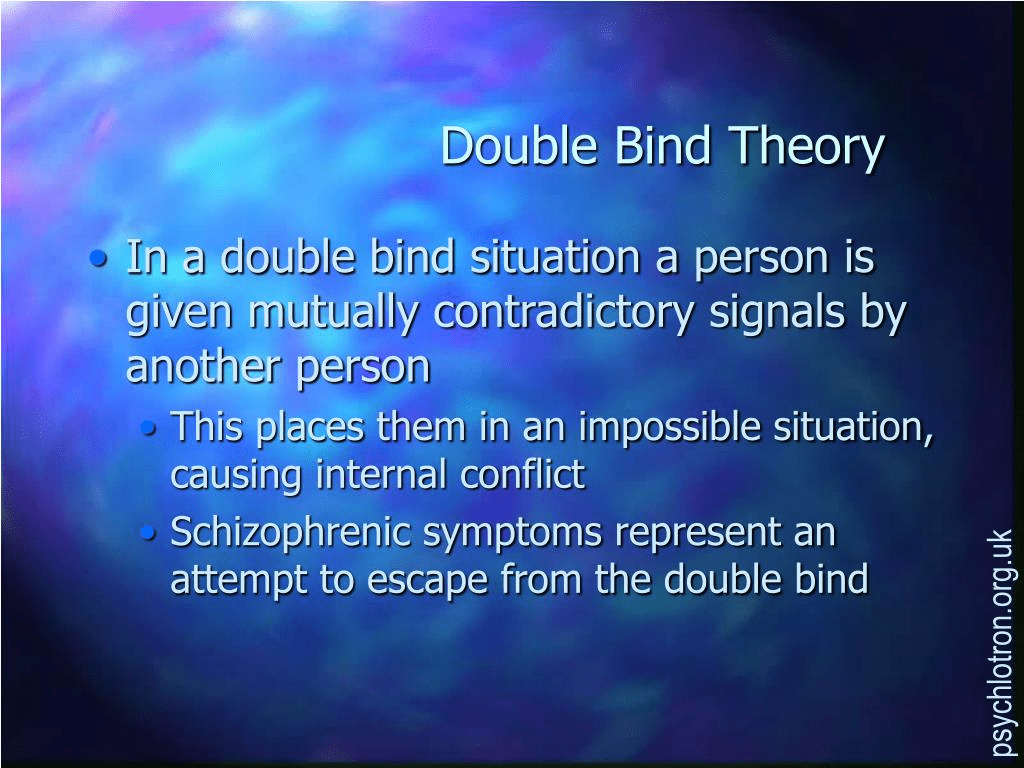
People who want to see everything that happens to other people than themselves (psychologists call it self-justifying bias) revel in the fact that people fail and fall both because of their own fault – they could have chosen otherwise – but still affirm the important thing is to ‘be yourself’. The same double-bind plays around the idea of ‘openness’, although it is subtler. I examined that in a blog in 2015. Here is the text (for it is on another site):
Openness Examined: Recent Books
Sunday, 26 Apr 2015, 22:08
Visible to anyone in the world
Edited by Steve Bamlett, Tuesday, 11 Aug 2015, 09:21
An informal comparative review of Taylor, A. (2014) The People’s Platform: Taking Back Power and Culture in the Digital Age London, Fourth Estate & Tkacz, N. (2015) Wikipedia and the Politics of Openness Chicago, University of Chicago Press.
“Openness is a philosophy that can easily rationalize its own failure, chalking people’s inability to participate up to choice… “(Taylor 2014:139)
It is open season, so to speak, on ‘openness’. Both of these important, and very differently orientated, books stress that whether something is described as ‘open’ or ‘closed’ (whether it be a society – as in Popper’s anti-Marxist philosophy – or any other system) is far less important than other features of its political structure and organisation.
Openness in late twentieth-century thought has stood for freedom, radicalism but above all for meritocracy – the notion that in ‘free’ exchanges (whether in a market economy or an internet forum) the best will rise to the top by a process that appears entirely spontaneous and unplanned. Not so, say both writers: Taylor from the perspective of the philosophic and documentary artist and Tkacz from that of an analytic media academic.
Tkacz’s post-modern analysis is careful and astute and argues from close involvement with the most ‘open’ system of all, Wikipedia. Taylor (2014:221) exempts Wikipedia from her strictures about the limits of openness, which makes Tkacz’s (2015;65) argument all the more urgent since he argues, that ‘Wikipedia is defined through the systematic exclusion of certain kinds of knowledge.’ However, based in very urgent cultural struggle it is Taylor that throws out more light, even if of a very diffuse kind. Whilst Tkacz’s argument is controlled and ‘academic’ in its generic conventions, Taylor throws out tough-minded apercus’ of considerable brilliance that ring in the mind and which speak to the H800 experience better than anything I have read:
“Strategically constructing an identity requires a kind of feigned authenticity” (OUCH! – that hurts!) “that involves continual management and monitoring of audience feedback. Self-censorship is inevitable; one must be ‘liked’ above all … It puts a premium on quickness and sensation, on the emotions of anger and awe proven to trigger virality. If slow-moving and sometimes solitary work was always at a disadvantage, now it is even more so.” (Taylor 2014:208)
Hence, she claims that art and certain constructions based in patience and passive experience are its victims. Hence that brilliant pun! ‘Virality’ is a criteria of noisy, timely and crowded success that just nearly sounds like ‘virility’. Taylor’s is a highly sophisticated and gendered argument but it works like art more than it does the philosophers she so admires (and about whom she made very ‘edgy’ documentaries: Zizeck! and Examined Life). Tkacz, with its careful discriminations about conceptions of knowledge and truth in relation to ‘point of view’ and ‘exit’, is another thing, but it has its moments that might sound like Taylor:
“To be ‘well-behaved’ is to produce statements that stick to the topic at hand and the rules in play. Well-behaved statements are ones that ‘find consensus’ and ‘avoid edit-wars.’ (Tkacz 2015:101)
Above all what both point out is that certain aspects of the world as we have known it are at risk and that we allow them to pass without comment at peril to the quality of our lives together.
Tkacz above poses Talkative’s problem in Bunyan precisely. Talkative needs to be himself but ‘well-behaved’, which means not being ‘talkative’ but bearing his faith silently and narrowly like Faith does, and Christian is told by this dream story he must continue so to do. So much for being yourself!
In another 2015 blog , I examined my own blogs to find out what I was learning from a course, an MA in Open and Distance Learning that required open blogging. The course obviously opened me up to anxiety about my own self presentation. Here is what I said in full:
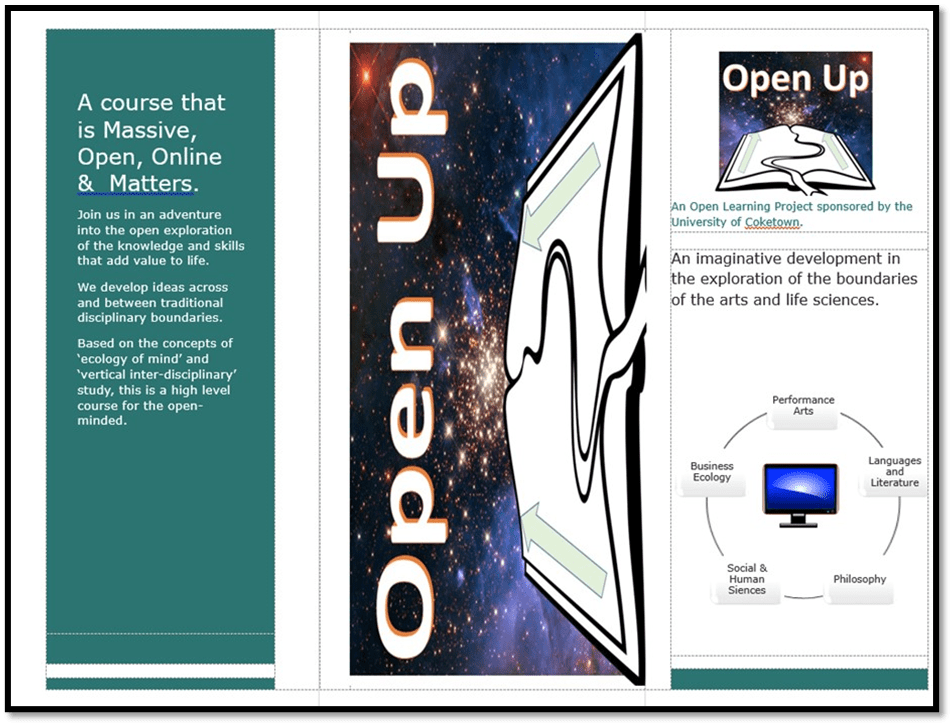
- Another project of mine from the same course (see below quoted blog too)
A blog on Reading my own blogs – what have I learned?
Wednesday, 9 Sep 2015, 21:59
Visible to anyone in the world
Edited by Steve Bamlett, Wednesday, 9 Sep 2015, 22:01
Extract from TMA04
Owning Up to Blogs
During H800 to date, I completed 9 blog postings (Bamlett 2015). My first related to the course itself and to anxieties about being observed, monitored and judged. As a direct response to a design initiative it focused on an identity that was neither certain nor, at this point, developing – seeing intervention from the module design structure and personnel, and perhaps even peers, mainly as a ‘challenge’ without any particular dynamic of development that ‘learning’ requires. Hence the writer and picture-maker here takes distanced metaphoric identification with a manipulated learning ‘subject’, a rat in a Skinner box (Figure E) that is explicitly compared to the ‘experimental subjects’ of an early version of H800 reported by Conole (2013), one of the module’s earliest design authors. Bayne (2004) makes an appearance but only the negative and fearful identifications that I found there:
‘the subject of study: yourself, yourself in groups, yourself opting out of groups’.
The term ‘subject’ is less affirmative of ‘self’ here than it is subjected and enclosed by controls. There is a hint of the narrative to follow – the sense that what controls, by overseeing and monitoring is not just course design features and other support mechanisms (that sometimes don’t look like support) but a self-regulating avatar:
‘detecting things in my own behaviours that I wasn’t all that fully aware of before’.
Looking at that now, this ghostly self-monitor is the self-regulating capacity that the course was aiming to bring into being as one of the products of ‘learning’.
There is no even development in the learning in these blogs. Later ones set myself tasks in order to explore blogging itself (a review of Taylor 2014 and Tkacz 2015, a summary of a technology used in my current teaching F2F that was new to me or tasks developed from the module activities). In retrospect, it feels to me that there is open experimentation here not only with blogs but different varieties of self-display and authorial role, which occasionally do not derive from fear and anxiety but playful joy. Tone begins to variegate. In May 25th, the focus is metacognitive: on changing ‘selves’ as product of learning that is neither playful nor fearful but merely an emergent and more rational subjectivity judging more fairly the support systems around its growth:
“this is a matter not only of personal identity – but how we should think about personal identity – … on ways the ‘self’ changes by learning more appropriate ways of assessing (judging) its own judgements.”
These issues feedback from experiences in forums and interactions, including feedback from TMA02, which had explored ‘self-display’ constraints in the group and self. However, now with partners in a learning process that are beginning to be highly esteemed, the process is meta-cognitive (a way of thinking about how thinking happens). On 27 June, after a conscious decision to return to blogging, now with more positivity, the post feeds forward to the concerns of TMA04, reflects forum discussion but also situating parts of my own life-narrative in that process without a disabling sense of threat about facilitating your own observance by others – perhaps even greater comfort with, and less fear of, self-judgements.
Hence on the 3rd July, I chose to make my own failure in a wiki task part of the learning process for myself and others. Fuelled by feed-forward to TMA05, it also opened self to later reflection BY self AND others. The last piece to date (19 July) alluded to elements of my autobiography (some of which would be recognised ONLY by those closest to me (who were not reading them) and myself) and blending within them elements of self I valued – the love of literature, language (now feeding forward to E854) and the world of co-production (which for me meant teaching I was doing elsewhere on the Social Care Act UK 2014).
I might now reify this process as ‘metacognitive autopoesis (self-making)’, were I not still hesitant about regarding the survival of the emergent product through change. However, there is a recognizable narrative here of a learner growing into ownership of a rich kind, aware that that ownership owes much to, and is still buttressed by, collaboration with others, and, particularly moderator support.
Of course, this analysis does not facilitate my full ownership of the records of that process. The OU holds personal blogs accessible to its learners on its LMS for 3 years after study ends. Of course these could be transferred to an independent blog provider but that might break the important sense of historical connection of self to other(s). Anderson (2006) shows that such narratives facilitate coming to terms with ‘owning’ one’s own process of self-owning, and its ‘persistence’ across metamorphoses:
“Persistence: The reflective posting of a blog are a digital record of the learning process. They can be an integral part of the lifelong learning accomplishment and e-portfolio of the learner. They should not disappear at the end of a course.”
In this essay I discussed various forms in which ‘ownership’ of learning is judged relative to a number of stakeholders. One of these stakeholders remains to be discussed in a pending EMA – the products and process of participatory and co-productive groupwork. In looking at the tension between the claims of LMS and PLE to provide a route to ownership, the ‘autopoetic’ and ‘metacognitive’ function of one Web 2.0 tool has been analysed in relation to what it might show about how, and whether, I ‘own’ my ‘own’ learning. This is not a completed task and may not be till mortality is fulfilled.
What all of this adds up to is that freedom is a most ‘edgy’ thing where identity is a responsibility and depends on changing commitments based on authentic study of the elements of reality, including your own ‘talkative’ intrusion into those elements which allow you to perceive and articulate them. We might envy Faith in Bunyan, for he can be himself, but only because his creator made the choice of being himself easy for him – Faith cannot be other than faithful. I think in a world where all we have left is ethical discourse, we are all ‘talkative’, even the ones who believe in simple faith who have their own propaganda programmes – narrow in ideology but loud in blazon of ignorance of the world around them.
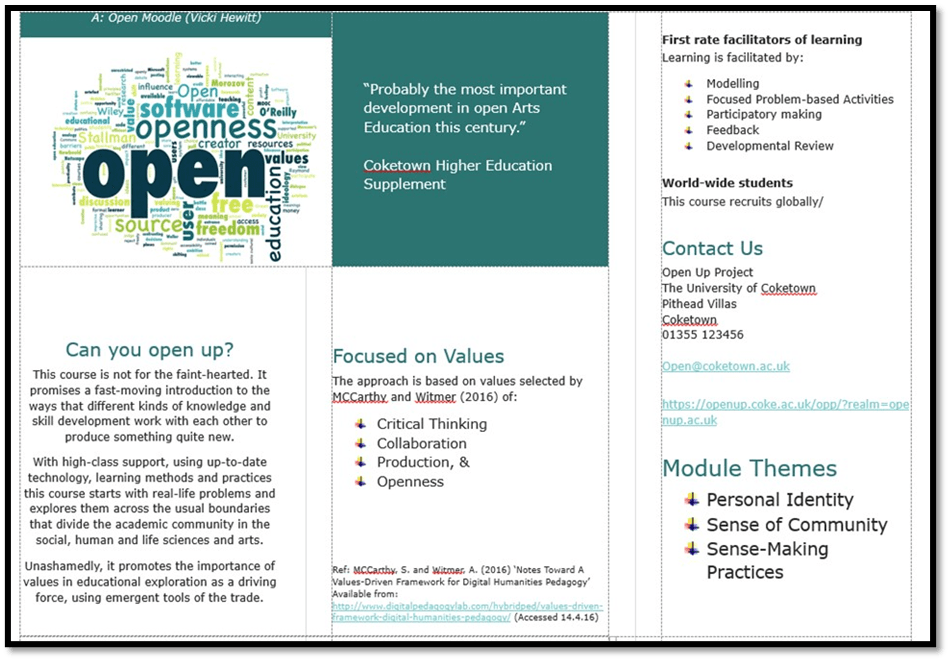
2. Other half of Another project of mine from the same course (see abovemquoted blog too)
We cannot just be our self. To be free is to be anxious about the consequences of our freedom and to bind our self to some way of changing the world, as in Camus’ L’Etranger, where Mersault chooses common cause in Algerian freedom fighting.
Ain’t freedom a bind!. Lol.
With love
Steven xxxxxxxx

