If you could have something named after you, what would it be?
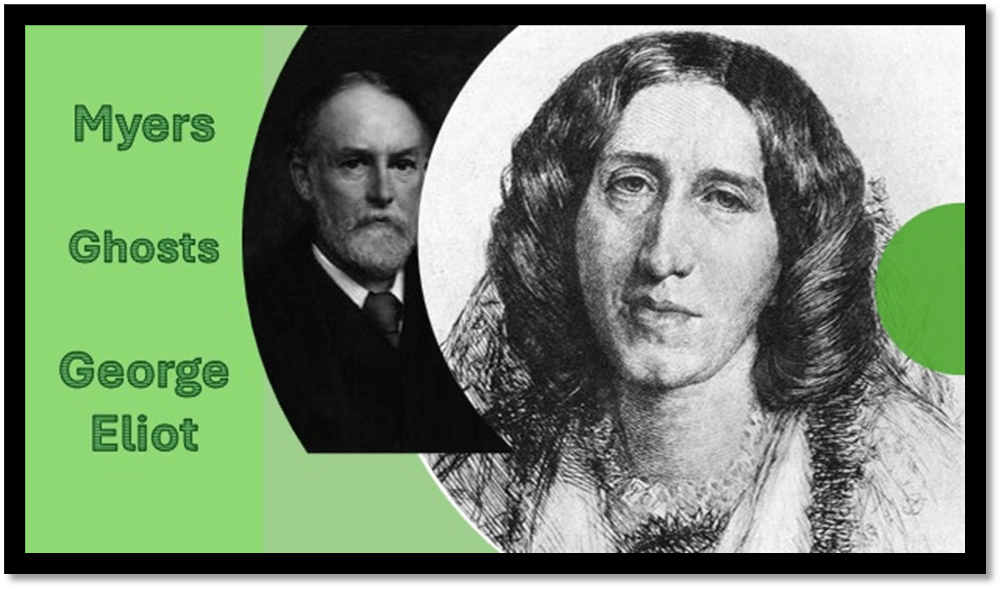
I, the Stevie in question, was just about to start the process of registering my patent in this belief system when I realised yet again there is nothing new under the sun, and the best things have been said many times. The words at least mirror the famous and self-defining quotations of George Eliot, speaking it appears very much ex cathedra, if we can believe at least the testimony of F. W. H. Myers in 1873 speaking of conversation with her in the garden of Trinity College Cambridge.
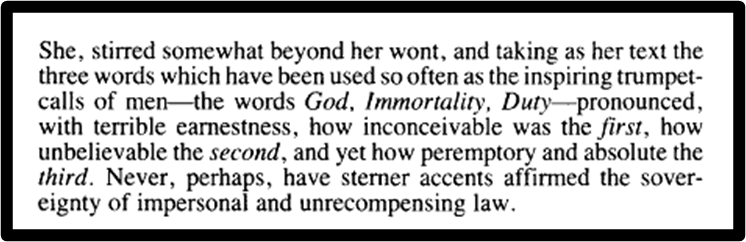
It is characteristic of the quote-reproducing industry that this account, very much in reported speech and therefore not even trying to pretend to the exact words of the sage, is given to us as words from the mouth of the Sibyl itself, a Sybilline Oracle.

A Sibyl, by Domenichino (c. 1616–17) Web Gallery of Art: Image Info about artwork, Public Domain, https://commons.wikimedia.org/w/index.php?curid=3787323
The phenomenon of putting words into the mouths of greater minds by lesser ones is the life blood of the human liking for ‘quotations’: the pithier the better. It is interesting to note that the Wikipedia account of Myers says that, before taking residence in Trinity, he had been forced in 1863 to renounce the Camden medal for his scholarship because of accusations of plagiarism. I do not know what the truth of the case was, but there is always something of plagiarism in taking on and broadcasting the thought of Sibyls. This is not to say that Myers wanted to speak as if he were George Eliot, though the sex-gender ambiguities therein would have excited him, for his main legacy is precisely a belief in the immortal endurance of one version of someone else’s TRUTH – the very thing here that Eliot declared ‘unbelievable’.
Here is how Goodreads reproduces the ‘quote:
Three words have often been used as the trumpet-call of men – the words God, Immortality, Duty – pronounced with terrible earnestness. How inconceivable was the first, how unbelievable was the second, and yet how peremptory and absolute the third.
https://www.goodreads.com/quotes/27296-three-words-have-often-been-used-as-the-trumpet-call-of#.
I have emboldened the font in that bit of text that had stuck with me when I framed the title of this blog. George Eliot is surely both ahead and stuck decisively within her time (as yet another Victorian sage) if she indeed said these words attributed to her. Truth used to require that there be a final divine arbiter for it (she calls it ‘GOD’) or, at least, a worldly self-styled version thereof in the form of his church. The latter in the form of the Western Catholic Church even declared its titular Papa, the Daddy of them all, ‘infallible’ in his interpretation of God’s truth. Where it placed God, it also placed ‘Immortality’ as a model of a truth that lasts forever, unchallenged, or able to endure and outface challenge, often by stereotyping its challengers using iconology from that evil fairy-story, Revelations. So far so modern. Yet to place DUTY in such a strong position – supported by an impersonal law of ethics is the very definition of Victorian moral earnestness for most of us.
Yet it is that last bit that appeals. For what it portends is the clear view that though there may be no authority for determining one’s duty in making moral decisions, it is necessary that we act as if they were unchallenged truths. We are near to what Sartre in philosophy, Rogers in existential psychology and certainly Iris Murdoch as novelist and philosopher, called engagement and authenticity in making a choice. Whether I like it or not then, a ‘Stevieism’ is never going to be a ‘thing’.
The thing that hath been, it is that which shall be; and that which is done is that which shall be done: and there is no new thing under the sun.
Ecclesiastes 1:9 King James Version
But let’s not be a party-pooper, or rain on everyone’s parade as Ecclesiastes does, even our own. Perhaps, maybe certainly, very few make original contribution to thought (laughably so as this defines the duty of writers of PhD theses) but it does not mean we can’t energise our beliefs with such self-defining passion that they seem to be our contribution to at least a few other witnesses.
My experience is not salutary. What truths I have tried to articulate OPENLY to myself and to others are often made impure by feelings of my own but of which I have less control than I would like to have to commit to them, or even when said in a manner as near to what seemed free of the influence of closed self-interested systems in my make-up (who is free of them) they are received in a way that further distorts them. I think this is a common experience and sometimes leads people to believe that staying silent, or worse confirming error in others, is the best policy and long-term strategy for an easy, and some say more effective, life. But not for me the valuing of the Keir Starmers of this world, for whom truth is secondary to their own authority and who therefore believe in literally nothing but those things that uphold the status quo, whatever they say of their aspirations. And whether an accurate ‘quotation’ or not the words of Ambrose Bierce below are probably salient.
One of the key mechanisms of that tendency is Twitter / X and other social media sites. They close down listening and openness, not because as Elon Musk would have it, they tolerate intolerance to the intolerant, whose name ought be ‘closed system of thinking’ such as that of that very psychologically damaged person that is J.K. Rowling. For we need intolerance to closed-up-ness – to beliefs in constructs like ‘biological sex’ – as if biology WERE the God and Immortality Eliot spoke about. In truth the trans-exclusive fraternity are not even talking about ‘biology’ for all science depend on uncertainty not the ‘facts’ that people like Rowling bruit and which are in fact temporary closures of debate awaiting more sound research. It always irked me that The Open University in its STEM teaching constantly recycled that myth even about neuroscience – what is OPEN about such an idea of the university especially about such a wide-open topic that resists closure by its very nature. Science supports hypotheses, it does not confirm either truth or fact – the unexamined, even unseen, variables are always too great, until we have the means to see them. This is why science NEVER could uphold what is our duty to think and we need those thing we call ARTS to interpret our life and seek truth with its more (so many more, than Seven Types of Ambiguity.
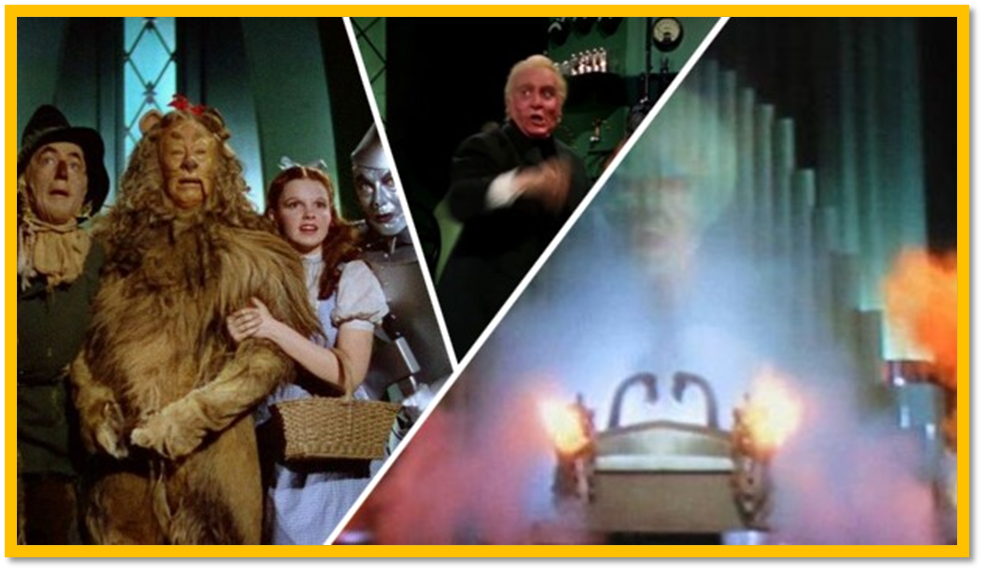
So forget Twitter (and especially that musk smelling X) if you rely on that for backing for a poor version of truth that is no more than a set of closed-system beliefs. Forget perhaps the need for popular backing at all in the light of the inconceivability and unbelievability of God and the immortal respectively. Look instead to accept the mix of success and failure, pleasure and pain, achievement and failure, and, finally, well-being and suffering that being open involves, as you realise your own limits as a truth-teller and the failures of communication that are inevitable in the way your own words are received in unreliable receptors though more unreliable media. But most of all do not use social media as a means of creating public opinion in lieu of truth. You can do without all that falsity. But like all authority remember that the Wizard says ‘The great Oz has spoken'” just before the curtain hiding his poor stick-thin humanity, if not stick-thin flesh, is pulled back.
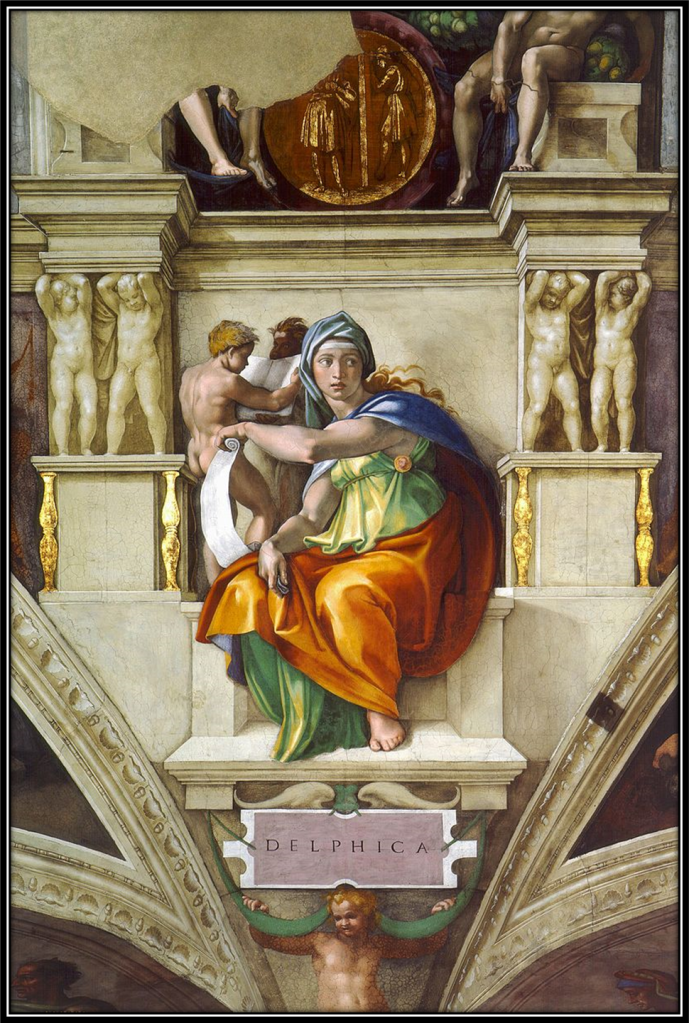
So chose Sybilline truth with Michelangelo above or be a friend of Dorothy and doubt pretension to truth. It is all about openness.
With love and Stevieism in excess
Steven xxxxxxxxx
 Steve_Bamlett_blog